Dubai: Thumbay Group launches Thumbay Medicity Dubai in Al Qusais
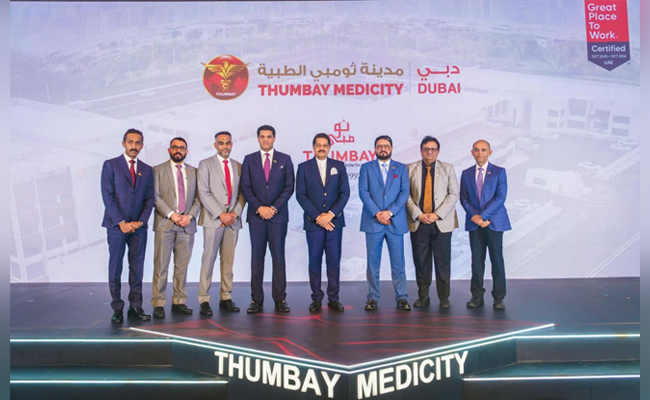
Dubai: Thumbay Group on Monday announced the launch of Thumbay Medicity Dubai, a large academic healthcare destination in Al Qusais that integrates education, healthcare and research under one campus.
The medical city has the capacity to train nearly 3,000 students, generate 1,000 employment opportunities, and support a daily floating population of around 6,000 people, the group said.
Designed as a “city within a city”, Thumbay Medicity Dubai brings together a branch campus of Gulf Medical University, Thumbay University Hospital Dubai, research centres, simulation and skills labs, laboratories, pharmacies, alternative medicine facilities, home care services and support infrastructure.
According to the group, the project marks a major milestone in building integrated academic healthcare ecosystems, where students learn in real clinical environments and patients access to care that is directly supported by education and research.
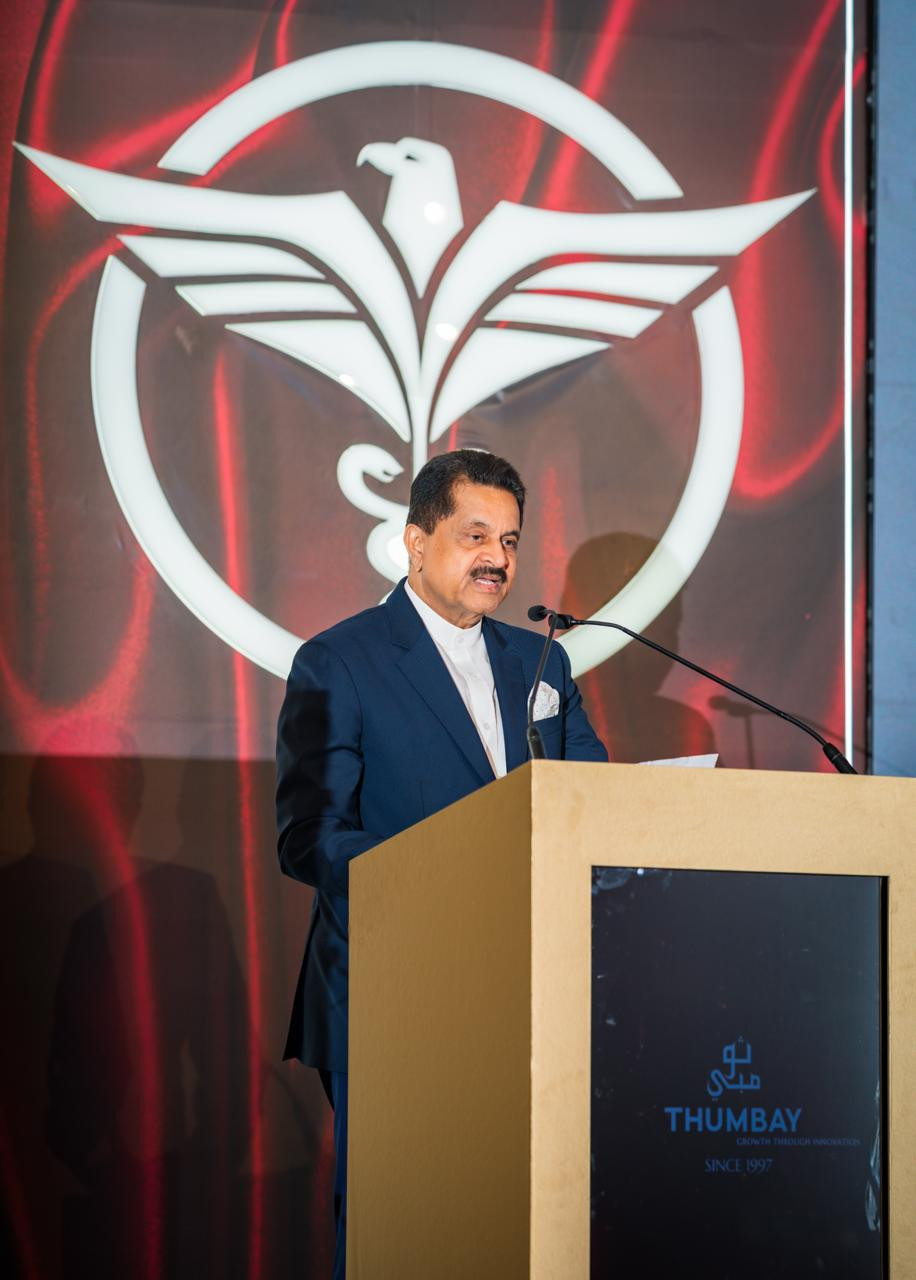
Speaking at the launch, Dr. Thumbay Moideen, Founder President of Thumbay Group, said the project reflects the group’s long-term vision.
“Thumbay Medicity Dubai is more than an expansion. It is the next chapter of a dream that began with one clear belief, education, healthcare, and research must grow together. We are very much Aligned with the Vision of Dubai, and the city now gains an integrated academic medical city built to shape future professionals, elevate patient care, and fuel new discoveries. Our vision has always been global, but deeply human,” he said.
The education zone will house Gulf Medical University’s Dubai campus, including the Thumbay College of Management and AI in Healthcare, advanced simulation laboratories, surgical skills centres, international foundation programmes and AI-driven learning environment, and specialized colleges.
Prof. Manda Venkatramana, Chancellor of Gulf Medical University said, “This campus gives students access to a second fully equipped academic location in one of the world’s most dynamic cities. It reflects our commitment to contemporary education, global exposure, and building the next generation of healthcare leaders.”
The healthcare zone will be anchored by Thumbay University Hospital Dubai, which will begin Phase One operations with services such as renal dialysis, cardiology, orthopaedics and rehabilitation. The hospital will later expand into a full multi-specialty academic hospital.
Mr. Akbar Moideen Thumbay, Vice President, Healthcare Division, Thumbay Group said, “Dubai becomes a major hub for our healthcare system. With hospitals, labs, pharmacies and medical tourism programs integrated into one destination, our focus remains clear, accessible, compassionate care backed by academic excellence.”
Strategically located on the Dubai-Sharjah border in Al Qusais, Thumbay Medicity Dubai offers access to major residential areas and transport connectivity. With this launch, Thumbay Group said it aims to strengthen its presence as one of the region’s comprehensive academic healthcare networks, building not just institutions, but environments where learning heals, research advance care, and communities grow.
Let the Truth be known. If you read VB and like VB, please be a VB Supporter and Help us deliver the Truth to one and all.
Rickelton's ton in vain as SRH beat MI by 6 wickets
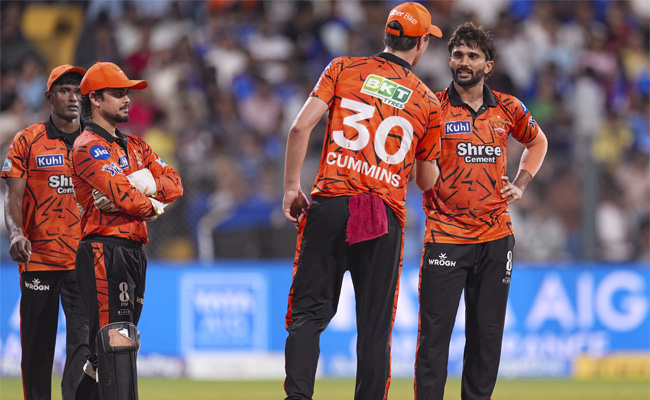
Mumbai (PTI): Ryan Rickelton's whirlwind unbeaten ton was overshadowed by Heinrich Klaasen's unbeaten 65 as Sunrisers Hyderabad defeated Mumbai Indians by six wickets in an IPL match here on Wednesday.
Chasing an imposing 244-run target, Travis Head (76 off 30) and Abhishek Sharma (45 off 24) shared 129 runs for the opening wicket to set the platform for SRH.
Klaasen (65 not out off 30 balls) then displayed his all-round hitting abilities to guide SRH home with the help of Nitish Kumar Reddy (21) and Salil Arora (30 not out off 10) in 18.4 overs.
Earlier, Rickelton's knock powered MI to 243 for five.
MI rode on a 93-run stand between Rickelton (123 not out off 55 balls) and Will Jacks (46 off 22) in 7.1 overs for the opening stand to power the side.
MI skipper Hardik Pandya scored a valuable 31 off 15 balls before being dismissed.
Praful Hinge (2/54), Eshan Malinga (1/29), Sakib Hasan (1/39) and Nitish Kumar Reddy (1/31) were the wicket-takers for SRH.
Brief Scores:
Mumbai Indian: 243 for 5 in 20 overs (Ryan Rickelton 123 not out; Praful Hinge 2/54).
Sunrisers Hyderabad: 249 for 4 in 18.4 overs (Travis Head 76, Heinrich Klaasen 65 not out; AM Ghazanfar 2/51).