Dubai world's first govt to become 100% paperless: Crown Prince Sheikh Hamdan

Dubai, Dec 12: Dubai has become the world's first government to turn 100 per cent paperless, the Emirate's Crown Prince, Sheikh Hamdan bin Mohammed bin Rashid Al Maktoum, has announced, pointing at savings of 1.3 billion Dirham (USD 350 million) and 14-million-man hours.
All internal, external transactions and procedures in the Government of Dubai are now 100 per cent digital and managed from a comprehensive digital government services platform.
"The achievement of this target marks the beginning of a new stage in Dubai's journey to digitise life in all its aspects a journey rooted in innovation, creativity, and a focus on the future," said Sheikh Hamdan in a statement on Saturday.
"This accomplishment also reinforces Dubai's status as a world-leading digital capital and its status as a role model in designing government operations and services that enhance customer happiness," he said.
The US, UK, Europe and Canada have expressed plans to digitise government operation on a larger scale, which encompass government procedures and citizen identifications. However, sceptics have argues its vulnerability to cyber attacks.
The Dubai Crown Prince said the government plans to implement advanced strategies to create and enhance digital life in Dubai over the next five decades.
"The new phase of Dubai's digital journey will enable and empower future governments to meet the expectations of the residents of a thriving smart city and provide them with renewed opportunities for prosperity, sustainable development, and happiness," he said.
The Dubai Paperless Strategy was implemented in five consecutive phases, each of which enlisted a different group of the Dubai Government's entities.
By the end of the fifth phase, the strategy was fully implemented across all 45 government entities in the emirate.
These entities provide more than 1,800 digital services and over 10,500 key transactions.
Collaboration and integration among participating entities enabled the automation of processes and services provided to customers, cutting paper consumption by more than 336 million papers, the statement added.
The strategy also helped save more than 1.3 billion Dirham (USD 350 million) and over 14-million-man hours across the Dubai Government.
The complete digital transformation in the Dubai Government will enrich the smart city experience for all residents, entirely removing the need for paper transactions and documents be they handed out to customers or exchanged between employees across government entities.
Digitalisation will also help provide exceptional experiences for residents through the DubaiNow application, which allows access to more than 130 smart city services in 12 major categories, it added.
Let the Truth be known. If you read VB and like VB, please be a VB Supporter and Help us deliver the Truth to one and all.
Gujarat builds 870 MW battery power backup network to stabilise renewable energy grid
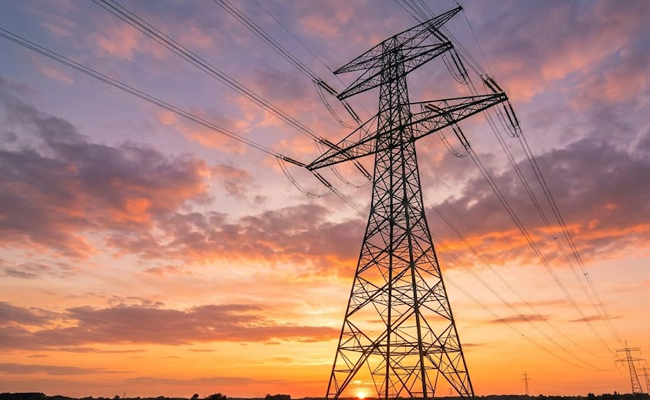
Gandhinagar (PTI): Gujarat has initiated battery storage systems at five locations in the state, with a total capacity of 870 MW, to maintain the stability of the renewable power grid, officials said on Saturday.
Battery Energy Storage Systems (BESS) are essential for storing electricity generated from solar and other renewable sources. They help manage additional load and maintain grid stability.
“Gujarat has initiated battery storage systems at five locations with a total capacity of 870 MW,” an official release stated.
The state has also registered 13 projects across Ahmedabad, Gandhinagar, Banaskantha, Patan and Kutch districts to set up additional battery storage systems, it said.
Modhera in Gujarat, India’s first solar village, has launched the country’s first BESS integrated with a solar power plant, it said.
"Under the leadership of Chief Minister Bhupendra Patel, the state has continued to advance in this direction and has strengthened its position among the leading states driving battery storage systems in India,” the release said.
Recently, a battery storage system was commissioned at Charal in the Sanand taluka of Ahmedabad, it said.
Four systems are operational at Modhera in Mehsana and Lakhpat in Kutch. The state government has also included advanced energy storage systems as a key component in the Gujarat Integrated Renewable Energy Policy, 2025, the release said.
Accordingly, standalone battery storage projects, works linked with new renewable energy installations, and those integrated with existing renewable energy systems are being approved, it said.
Once the Standard Operating Procedure is approved, registrations for battery storage will open for commercial and industrial users, it said, adding that the move will allow them to set up battery storage alongside their solar or wind projects.
The state government is developing battery storage systems across Gujarat, with companies being invited in through a competitive bidding process.
GETCO (Gujarat Energy Transmission Corporation) and power distribution companies strategically identify locations for battery storage systems based on grid capacity and operational requirements, the release said.
Power generation from solar and other renewable sources fluctuates throughout the day. Excess energy generated during peak hours can be stored and supplied later during periods of high demand, especially in the evening when solar output declines. Battery storage systems help reduce stress on the grid and improve grid stability, it added.