GMU College of Pharmacy hosts conference to drive pharmacists-administered vaccination
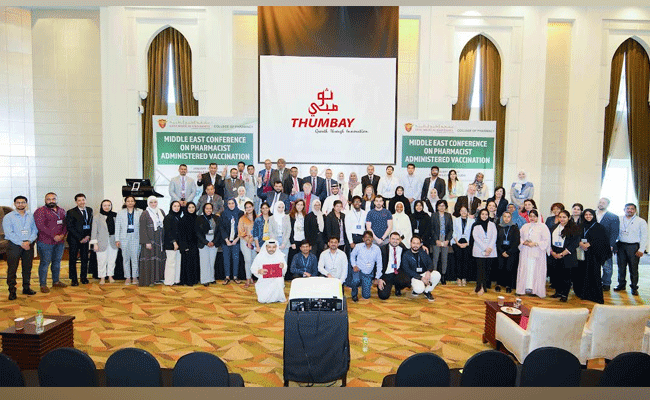
Dubai (Press release): With an aim to advance public health, pharmacists across UAE joined hands to develop one more layer of primary prevention by vaccinating people in community pharmacies, wherein a pharmacist-administered vaccination is being considered as a convenient and new gateway for the public to receive immunizations .Gulf Medical University’s College of Pharmacy with the support of Pfizer organized the Middle East Conference on Pharmacist-Administered Vaccination at Shangri-La Hotel Dubai. The event, which acted as a knowledge hub for pharmacy veterans, discussed the latest community pharmacy trends across the globe, highlighting the cost-effectiveness of the model and its role in boosting the healthcare economy.
The event, which included participation from over 350 individuals from pharmacies, hospitals, pharmaceutical industry, academia and government entities, set the scene for widespread adoption of vaccination services by pharmacists. Experts from the UAE, Saudi Arabia, Jordan and USA, shared experiences, best practices, education and training of pharmacists, government regulations, all backed by research analysis from local, regional and international studies, and its contribution in improving public health. Vaccination services by pharmacists in the community pharmacy setting are changing the face of pharmacy from retail outlets to patient care centers.
Dr. Sherief Khalifa, Dean of the College of Pharmacy, Gulf Medical University, commented on the initiative, “The Middle East Conference on Pharmacist Administered Vaccination is a milestone event marking the expansion of the role of the UAE pharmacist to serve the public and enhance population health. The global and regional support to this initiative has been overwhelming. The cost saving on the country’s healthcare budget adds to the attractiveness of this important and historic initiative. Over the past three years, the College of Pharmacy at Gulf Medical University delivered several workshops and training courses to prepare pharmacists to become immunizers for the COVID and Flu vaccines. We are excited to be part of this initiative and to see the UAE advancing population health and leading the change in the Pharmacy profession.”
Notable speakers at the conference included: Dr Lalila Hussain Al Jasmi, Ministry of Health and Prevention, UAE, Professor David Holdford, Virginia Commonwealth University, USA, Prof. Daniel Baker, Washington State University, USA, Dr. Kimberly McKeiman, Washington State University, USA, Dr. Ahmed Aldemerdash, King Saudi University, Saudi Arabia, Dr. Barry Bleidt, Nova Southeastern University, USA, Dr. Ziad A Saleh, Al Ain Pharmacy, UAE, Dr. Rula M Darwish, the University of Jordan, Jordan, Dr Saeed Hussain, Emirates Medical Association, Dr. Amin Elshamy, Ministry of Health and Prevention, UAE, Dr. Mira Alhooti, Aster Pharmacy Group, Dr Zakieh Abuekhair, Al Thiqa Pharmacy Group.
Dr. Yasser El Derbashy, Russia and Africa Medical Affairs Lead, Pfizer, commented, "As valuable members of the health care team, pharmacists are well-positioned to advance public health in the communities they serve by providing convenient access to vaccinations. Pfizer is firmly committed to work with governments all around the world as well .as global health partners to achieve an equitable and affordable access for vaccines for all people”
The Middle East Conference on Pharmacist Administered Vaccination is the regions first-of-its kind event, attracting attendees from international academia, local companies, government entities, research analysts and advisors, insurance service providers, as well as officials from the regions regulatory bodies.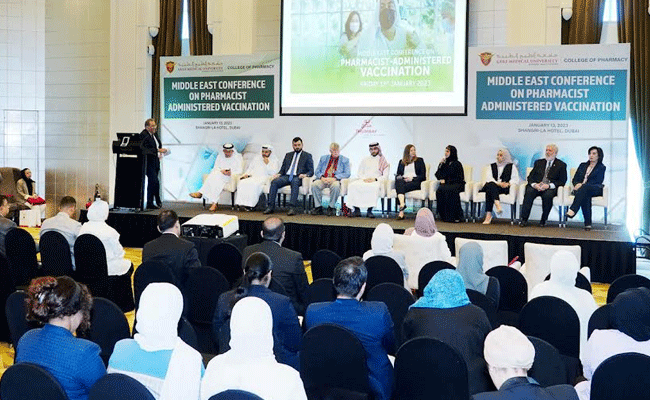
Let the Truth be known. If you read VB and like VB, please be a VB Supporter and Help us deliver the Truth to one and all.
Mamata accuses BJP of trying to 'rig' Bengal polls, alleges central forces acting at its behest
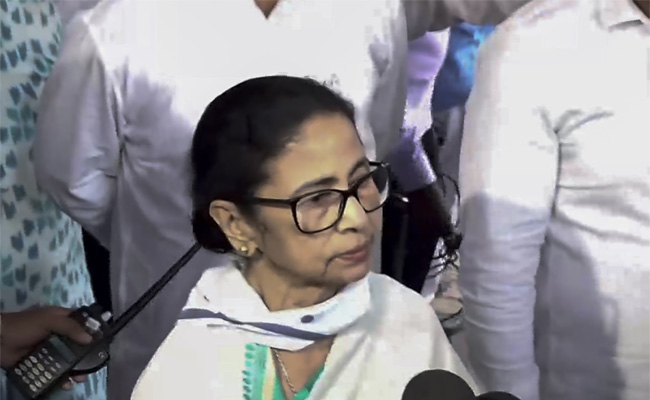
Kolkata (PTI): West Bengal Chief Minister Mamata Banerjee on Wednesday accused the BJP of trying to "rig" the West Bengal assembly elections, alleging that central forces and election observers were acting at the behest of the saffron party.
The BJP, however, dismissed her allegations, accusing her of "trying to create confusion sensing public anger against the TMC".
Visiting several polling booths in her Bhabanipur assembly constituency where voting is underway, Banerjee alleged that democratic norms have been severely compromised by the authorities this assembly election.
The Bhabanipur assembly segment is Banerjee's political bastion, where she is locked in a prestige battle against Leader of the Opposition, Suvendu Adhikari, in what is being seen as a symbolic rematch of Nandigram, where he had defeated her in the 2021 assembly polls.
ALSO READ: 4 held for sexually assaulting woman, girl on moving bus after social media alert in UP's Agra
"BJP wants to rig this election," she told reporters.
Stating that elections are held in West Bengal in a peaceful manner, Banerjee asked, "Is there goonda raj here?"
West Bengal has had a tradition of poll-related violence with the Calcutta High Court having ordered CBI investigations into post-poll violence after the 2021 assembly elections.
Alleging that TMC workers and leaders were facing atrocities at the hands of police and CAPF personnel, Banerjee said her party cadres "were ready to die".
The TMC supremo, who usually steps out of her Kalighat residence in the afternoon on polling day to cast her vote at Mitra Institution School, went out before 8 am and visited several polling stations in the constituency, including those in the Chetla area of south Kolkata.
She later sat outside a polling station at Chakraberia in Bhabanipur and spoke to reporters, alleging irregularities and accusing the BJP of trying to influence the polling process through central forces and observers.
"Several observers have come from outside and are acting as per the BJP's directions. People are supposed to cast their votes -- can voting take place like this?" Banerjee said.
She also alleged that all TMC party flags had been removed beforehand and claimed that outsiders were interfering with the polling process.
"They are not allowing the councillor of ward number 70 to step out. They are picking up all our boys. Abhishek and I stayed awake the entire night," she said.
Banerjee further claimed that some people from outside the state were trying to create disturbances in the constituency and sought immediate intervention from the Election Commission.
The BJP, however, dismissed her allegations, claiming that the ruling party was trying to create confusion after sensing public anger against it.
Adhikari said the CM will lose the election.
The LoP offered prayers at two temples in the constituency's Khidirpur area.
Adhikari said people are coming out in large numbers to vote, with the Election Commission making proper arrangements for ensuring free and fair election.
"Does not matter, she will lose," Adhikari told reporters about the TMC chief venturing out on polling day early in the morning in a departure from her practice of going out only in the afternoon to cast her vote.
The party's de facto second-in-command Abhishek Banerjee, on the other hand, asserted that the TMC will win with a higher number of seats than in 2021.
The Diamond Harbour MP, after casting his vote at Mitra Institution, accused the poll observers of highhandedness in different places.
"But these things will not matter, we will win by a higher number of seats this election," he told reporters.
Voting is underway in 142 constituencies in the second and final phase of the West Bengal assembly elections amid unprecedented security arrangements.
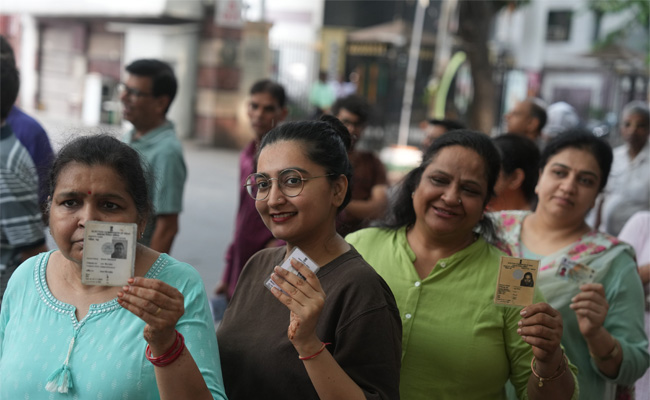
Polling began at 7 am with voters lining up outside booths across Kolkata, Howrah, North and South 24 Parganas, Nadia, Hooghly and Purba Bardhaman -- districts that together form the political and electoral core of the state.
The outcome of this phase is expected to be crucial as it covers south Bengal, considered the TMC's traditional stronghold, where the BJP is seeking major inroads.
Polling will continue till 6 pm.
The first phase of the assembly elections on April 23 had recorded a turnout of 93.19 per cent -- the highest ever in the state.
Counting of votes will take place on May 4.