GMU honored for ‘Outstanding Student Support’ at the Times Higher Education Awards MENA 2023
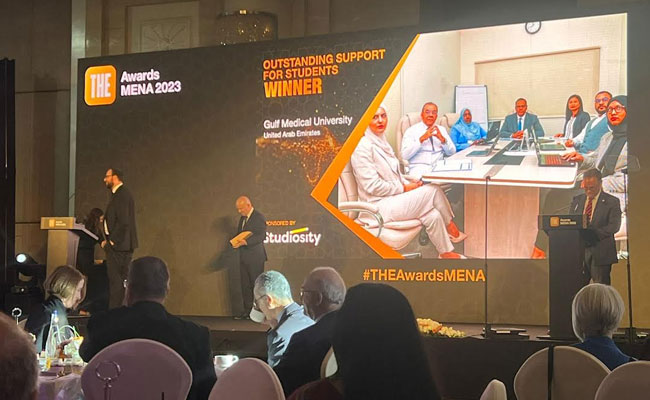
Ajman (Press Release): In a remarkable accomplishment, Gulf Medical University (GMU) has been honored at the Times Higher Education (THE) Awards MENA 2023, earning acclaim in the category of "Outstanding Support for Students." The projects submitted for consideration were developed internally by the University Quality Assurance and Institutional Effectiveness Unit, in collaboration with the entire GMU community and under the guidance of university leadership.
The initiative titled "Empowering Student Success: A Holistic Approach to Mentorship and E-Portfolio Support" highlights the university's commitment to nurturing a supportive and nurturing learning environment. Through this initiative, Gulf Medical University has implemented a comprehensive approach to mentorship, offering personalized guidance to students to facilitate their academic and professional growth. Moreover, the university's innovative ‘e-portfolio support system’ enables students to curate and exhibit their academic accomplishments, extracurricular activities, and professional development, instilling a sense of ownership over their educational journey and future career prospects.
Speaking about the recognition, Prof. Hossam Hamdy, the Chancellor of Gulf Medical University, said, "Our achievements at the Times Higher Education MENA Awards are truly an honor. It reflects the dedication and hard work of our faculty, staff, and students, as well as the continuous support from Dr. Thumbay Moideen, the founder and president of the Thumbay Group. Recognizing this significant milestone in Gulf Medical University's 25th-year history, we are inspired to keep up with innovation, expansion, and continuous improvement."
In addition, Professor Sherief Khalifa, Vice Chancellor for Quality & Institutional Effectiveness and Dean, College of Pharmacy at Gulf Medical University, emphasized, “The recognition for Gulf Medical University in the Times Higher Education rankings for providing exceptional student support is remarkable. Our commitment to offering a supportive learning environment is demonstrated by our initiative, "Empowering Student Success: A Holistic Approach to Mentorship and E-Portfolio Support." Through personalized mentorship and our pioneering e- portfolio system, we empower students to excel academically and professionally, instilling a sense of ownership over their educational journey. This award inspires us to continue innovating and ensuring the holistic development of every student at Gulf Medical University."
Similarly, Prof. Manda Venkatraman, Vice Chancellor Academics and Dean of Gulf Medical University's College of Medicine, expressed, "Gulf Medical University's recognition in the 'Outstanding Support for Students' category signifies our commitment to maintaining academic excellence, high-quality education, and noteworthy contributions to healthcare research and innovation. Being an essential component of a renowned academic institution in these subjects is something we are proud of.”
Let the Truth be known. If you read VB and like VB, please be a VB Supporter and Help us deliver the Truth to one and all.
Put petty politics aside; it's not about one party, but India: Rahul on TMC's loss in polls
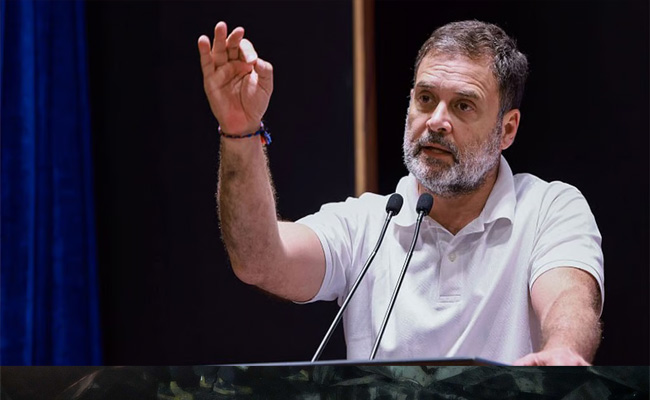
New Delhi (PTI): Congress leader Rahul Gandhi on Tuesday termed the BJP's victory in Bengal and Assam assembly polls a "theft" of the mandate, and a big step forward in the saffron party's mission to "destroy" Indian democracy.
Gandhi also came out in support of the TMC, which has been trounced by the BJP in the polls, and urged those gloating over the loss of Mamata Banerjee's party to put petty politics aside.
"Some in the Congress, and others, are gloating about TMC's loss.They need to understand this clearly - the theft of Assam and Bengal's mandate is a big step forward by the BJP in its mission to destroy Indian democracy," Gandhi said in a post on X.
"Put petty politics aside. This is not about one party or another. This is about India," he said in his post.
The BJP ousted Trinamool Congress from power in Bengal and captured power for the third time in a row in Assam in results of assembly polls declared on Monday.