Gulf Medical University ensures uninterrupted academic session during COVID-19 precautionary period
Surpasses Standard Learning Practices and Launches Distance E-Learning
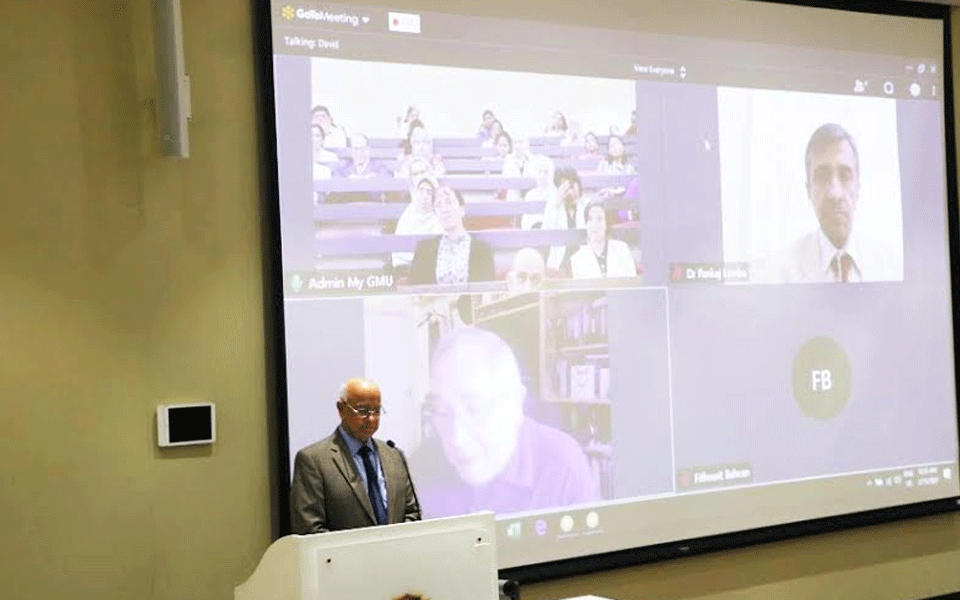
►Faculty-learner engagement and continuous learner feedback are key to successful implementation of distance e-learning, says GMU Chancellor
►‘Blended learning’ combining the best of traditional and e-learning methodologies to become part of GMU’s standard educational methodology, in future
Ajman: Gulf Medical University (GMU), Ajman, is using the COVID-19 precautionary period as an opportunity to evolve beyond standard learning practices, by implementing advanced e-learning capabilities.
Commenting on the University’s preparations and preparedness for e-learning, Prof. Hossam Hamdy, the Chancellor of GMU said, “For the successful implementation of e-learning, two important issues need to be addressed; an increased degree of engagement between the faculty and the learners, and the provision for giving continuous feedback to the learner and responding quickly to their queries. We are already in communications with the students of all colleges and programs, explaining the new learning process. We have produced guides for students and teachers, to ensure seamless progression on this path, incorporating multiple layers of activities and feedback and good learning resources. Or students are provided with continuous support.”
The university conducted a workshop to train its faculty with the skills to use different types of e-learning technologies – synchronous (faculty and students connected to the teaching channel at the same time) and asynchronous (students learning independently from resources uploaded online) – to ensure seamless learning for students of the 6 colleges under GMU, pursuing 26 different programs.
GMU already has an electronic learning management system, through which the students access the content of each learning event, electronically. However, the addition of the new distance e-learning features significantly enhances the university’s electronic learning capabilities, taking it to a whole new level of technology-enabled learning. “Simply uploading the lessons/course online using a technology platform is not e-learning, per se. What is delivered to the students using technology, and how effectively it enriches their learning process, are the key aspects. At GMU, our focus is on enabling ‘good learning’ regardless of whether it is imparted through the distance mode or in campus,” Prof. Hossam Hamdy explained.
Indicating that this new initiative would pave the way for the inclusion of a new ‘blended’ mode of learning in GMU, combining the best attributes of traditional and e-learning methodologies, Prof. Hossam Hamdy added, “This is an example of how an unfortunate event like the Coronovirus outbreak has the power to shift standard practices, bringing forth a heightened ability to think and act, creating a new and better way of doing things.”
Let the Truth be known. If you read VB and like VB, please be a VB Supporter and Help us deliver the Truth to one and all.
Cong leader Joseph criticises public tussle by party supporters over Kerala CM post
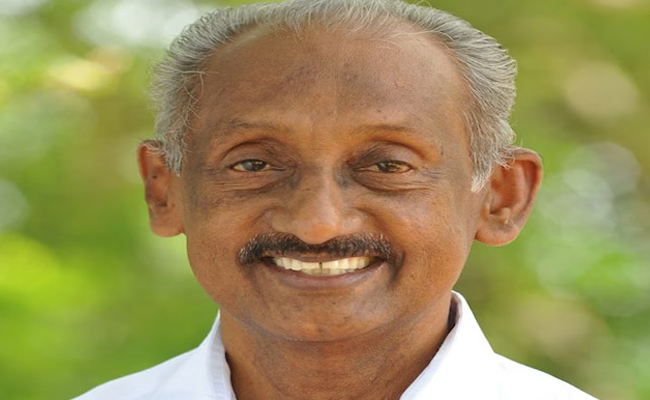
Kottayam (Kerala) (PTI): Senior Congress leader K C Joseph on Saturday criticised the public tussle by party supporters over the Kerala chief minister post, warning that taking internal matters to the streets could have dangerous consequences.
He was referring to protests, flex boards and posters put up by supporters of Congress leaders V D Satheesan, K C Venugopal and Ramesh Chennithala, who are being considered for the chief minister’s post.
Joseph was a Congress MLA for 39 years, representing the Irikkur constituency in Kannur and had served as a minister in the Oommen Chandy-led UDF government.
In a Facebook post, Joseph said he was remaining silent because "silence is preferable".
He said everyone should realise that taking the internal affairs of the Congress onto the streets would create dangerous consequences.
Joseph also remarked that "if one spits while lying down, it will fall on one’s own face".
According to him, such public disagreements would ultimately harm the party itself.
He further criticised the protest demonstrations held in Thiruvananthapuram, saying that they had hurt many party supporters, as the image of former Chief Minister Oommen Chandy was allegedly torn, knowingly or unknowingly.
"This is not good for anyone. Trying to scratch one’s head with a burning stick will be disastrous," he said in the post.
The Congress won 63 seats of its own in the 140-member assembly, while the United Democratic Front (UDF) alliance has won 102 seats, staging a comeback in the southern state.