Gulf Medical University secures global quality accreditation
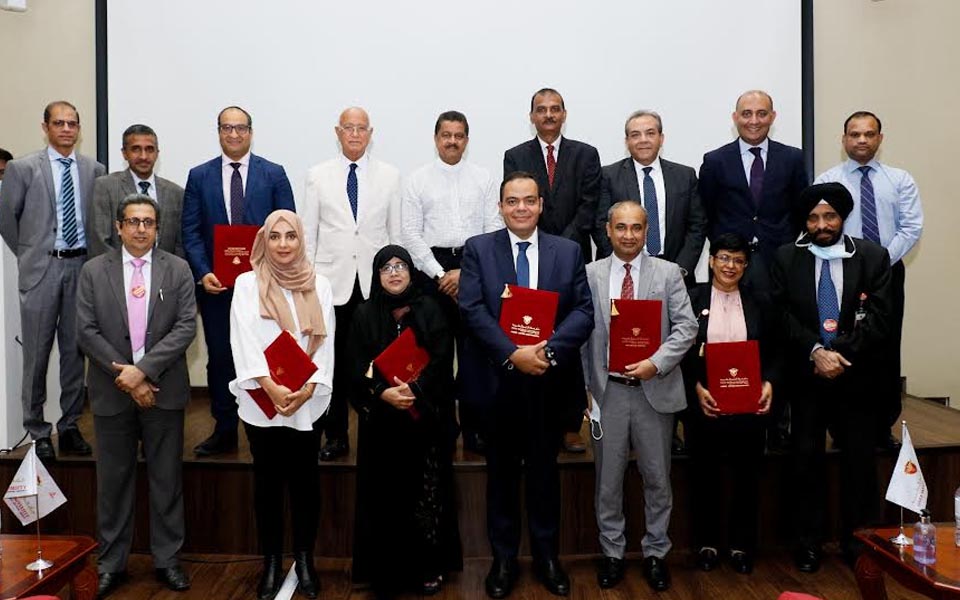
Press Release- Gulf Medical University has become one of the latest international institutions to receive global accreditation from the Quality Assurance Agency for Higher Education (QAA), the UK’s independent quality body and a global leader in quality assurance for higher education.
Global accreditation is awarded to international institutions who have passed QAA’s rigorous International Quality Review [IQR], which measures global institutions against international quality assurance standards set out in Part 1 of the Standards and Guidelines for Quality Assurance in the European Higher Education Area (ESG).
The review, which took place in April 2021, was completed by a team of three independent reviewers, including an international expert and a student reviewer appointed by QAA. In making their conclusions, the independent review teams confirmed that Gulf Medical University meets all 10 of the ESG.
The review team also identified a number of features of good practice:
-
Effective use of external examiners, and externality more broadly, in assuring assessment standards and external benchmarking.
-
Multiple opportunities for students to provide feedback, which has positively impacted on the overall learning experience.
-
GMU’s Quality Assurance and Institutional Effectiveness portal, which provides staff at all levels easy access to data and information.
Professor Hossam Hamdy, Chancellor, Gulf Medical University said:
“The accreditation of Gulf Medical University (GMU) by the Quality Assurance Agency (QAA) is an important milestone in the history of the University. We were pleased that the report indicated that we have met all the 10 standards of the ESG, the few desirable suggestions for improvement will certainly help us develop further.
Engaging over 1 year in the process for getting the accreditation was a very constructive journey with many positive outcomes to our institute!”
Vicki Stott, QAA Executive Director of Operations and Deputy Chief Executive said: “This is a fantastic achievement for Gulf Medical University, demonstrating that they meet standards of international best practice. Successful institutions rely on collaboration and benchmarking, and that’s exactly what IQR provides: allowing international institutions to measure their own approach to quality assurance against European quality standards. It also allows international institutions to demonstrate and improve their effectiveness, improve public perception and to develop new partnerships with UK and European institutions.”
Gulf Medical University have obtained QAA institutional accreditation for a period of five years, subject to a satisfactory mid-cycle review. This allows them to display QAA’s IQR Accreditation Badge, demonstrating that their quality assurance procedures are comparable with international best practice.
By securing global accreditation from QAA, international institutions can clearly spotlight their quality standards internationally, and more easily open dialogue with institutions outside their own country. For more information about the IQR process, visit our website. If you are interested in signing your institution up and wish to discuss further, contact Stephanie Sandford, Director of International and Professional Services on s.sandford@qaa.ac.uk.
Let the Truth be known. If you read VB and like VB, please be a VB Supporter and Help us deliver the Truth to one and all.
Allahabad HC orders probe into 'reinstatement' of teacher in UP's Barabanki
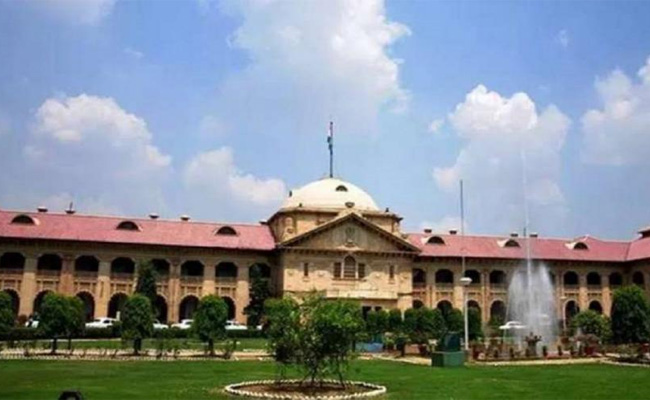
Lucknow (PTI): The Lucknow Bench of the Allahabad High Court on Friday ordered a probe by the special task force (STF) into alleged irregularities in the rejoining of a teacher at City Intermediate College in Barabanki, observing that the reinstatement appeared to be prima facie illegal.
The court also directed the recovery of the salary paid to the teacher during the disputed period.
A bench of Justice Rajeev Singh passed the order on a petition filed by the college management committee. The court expressed doubts over the roles of the District Inspector of Schools (DIOS), Barabanki, the college principal and the teacher concerned and hence, directed a detailed inquiry into the matter.
Taking note of alleged manipulation of records and misleading submissions, the court ordered the immediate transfer of the Barabanki DIOS to ensure a fair probe. It also directed the initiation of disciplinary proceedings against the then joint director of education of the Ayodhya division.
In its order, the court found that the teacher, Abhay Kumar, was initially appointed as an assistant teacher in 2018 but joined an Eklavya Model Residential School in Chhattisgarh as a lecturer in June 2024 without obtaining permission from the management. His subsequent request to retain the lien was rejected.
Despite this, he was allowed to rejoin the Barabanki College in September 2025 on the directions of the joint director of education and the DIOS, and was even paid the salary for October 2025. The court termed the rejoining "wholly illegal" and lacking any legal basis.
The bench also expressed concern over lapses in communication within the education department and directed the Uttar Pradesh chief secretary to ensure that official orders are communicated through email and WhatsApp as well, to prevent disputes.
The matter is next listed for hearing on May 28 when a compliance report is sought.