Gulf Medical University to accommodate Indian Medical Students returning from Ukraine
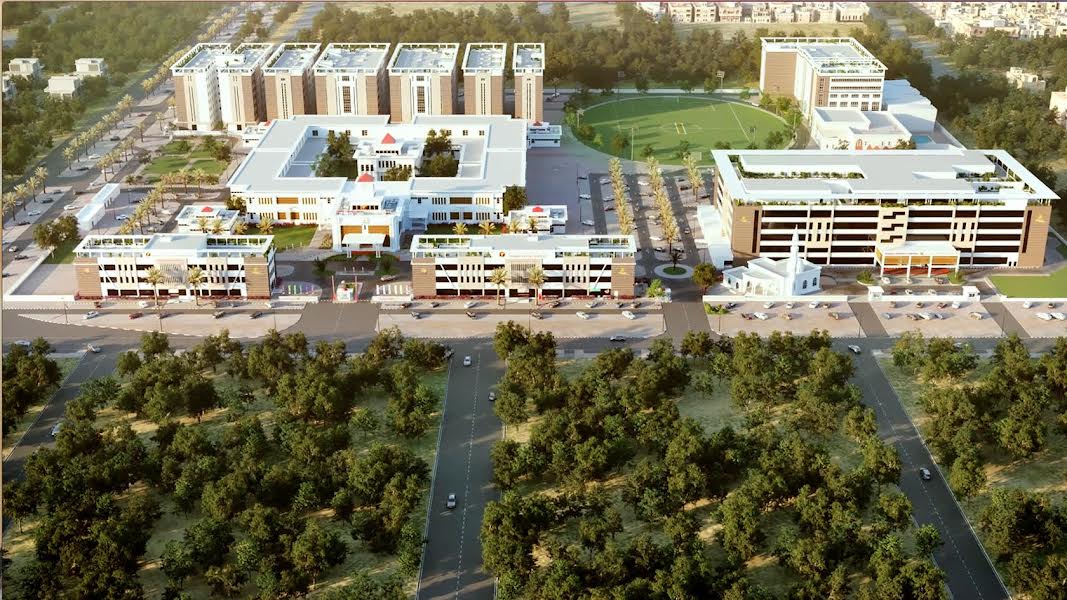
Dubai: (Press Release) Offering a major relief to Indian medical students displaced from Ukrainian universities, the Gulf Medical University (GMU) is prepared to accommodate the displaced students with free seats and scholarships based on merit criteria and admission policies of the University. This effort aims to ensure that the education is not interrupted for students who are affected.
Through a team of dedicated admission counselors, GMU aims to help students make well-informed decisions regarding their remainder course, assistance in paperwork, and smooth transfer. Providing Visa and Accommodation facilities “As an Indian it becomes my duty to help our fellow Indians during this difficult situation, we trying to help secure the dreams and future of several displaced students,” said Dr. Thumbay Moideen, Founder President of Thumbay Group & President – Board of Trustees, Gulf Medical University – Ajman, UAE.
Founded in the year 1998, GMU is owned and managed by the multi-business conglomerate Thumbay Group –a widely renowned institution, which offers its students access to state-of-the-art medical education, healthcare, and research in addition to clinical training through various academic health centres, including Thumbay University Hospital, Thumbay Dental Hospital, and Thumbay Physical Therapy & Rehabilitation Hospitals located in the Campus. The Group also owns and manages 8 Hospitals, 10 Clinics, 48 Pharmacies, and 5 Labs under the Healthcare Division.
The initiative aims to offer free seats and scholarship support to displaced students from Ukraine, ensuring an opportunity to pursue education at GMU upon fulfilling the merit criteria and admission policies. Recognizing these students as vital contributors to the future of healthcare delivery, GMU would like to focus on ensuring that there is no gap in their education. Students can directly communicate with the director of admissions, Ms. Sherly Koshy, and mail their documents to helpline@gmu.ac.ae with their credentials.
The University’s unflinching commitment to providing quality education along with world-class infrastructure and facilities has been the cornerstone of its growth story. The curriculum incorporates the latest industry needs while maintaining the highest standards.
Over the last 24 years, GMU has strived relentlessly to scale new heights by fostering brilliance to over 2600 students plus 2000 part-time from more than 90 different nationalities and 29 accredited Undergraduate and Graduate programs run by the 6 constituent colleges in the field of medicine, dentistry, pharmacy, nursing, biomedical sciences, healthcare management and economics, anesthesia technology, medical laboratory sciences, physiotherapy and healthcare management, and economics. In addition, the university also offers short-term certificate courses for health workforce development and career enhancement.
The university's extensive accreditation credentials demonstrate robust quality standards, guaranteeing a qualification that is recognized globally-the university’s Bachelor of Medicine and Bachelor of Surgery (MBBS) Programme outcome is aligned to the World Federation of Medical Education (WFME) standards, the Bachelor of Biomedical Sciences Programme is accredited by the Institute of Biomedical Science (IBMS), UK and PharmD Programme is certified by Accreditation Council for Pharmacy Education (ACPE), USA. Furthermore, the university-affiliated teaching hospital is JCI accredited, and laboratories are CAP accredited. The national, international, and regional engagements exceed 70 collaborations with leading international universities in Europe, the US, Japan, Malaysia, and the Far East.
For more information on various programs, students can visit the university website www.gmu.ac.ae
Dr. Thumbay Moideen, Founder President of Thumbay Group
Let the Truth be known. If you read VB and like VB, please be a VB Supporter and Help us deliver the Truth to one and all.
Gujarat builds 870 MW battery power backup network to stabilise renewable energy grid
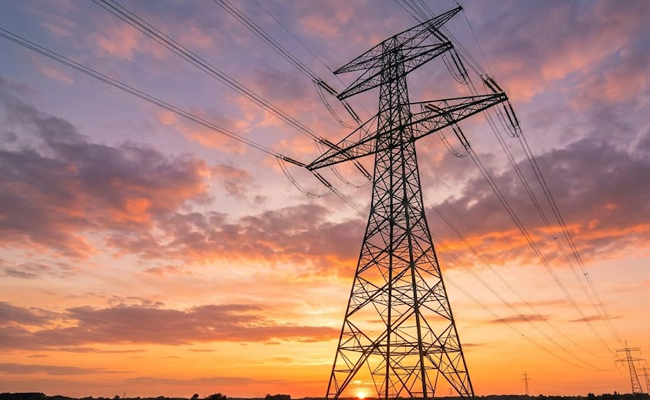
Gandhinagar (PTI): Gujarat has initiated battery storage systems at five locations in the state, with a total capacity of 870 MW, to maintain the stability of the renewable power grid, officials said on Saturday.
Battery Energy Storage Systems (BESS) are essential for storing electricity generated from solar and other renewable sources. They help manage additional load and maintain grid stability.
“Gujarat has initiated battery storage systems at five locations with a total capacity of 870 MW,” an official release stated.
The state has also registered 13 projects across Ahmedabad, Gandhinagar, Banaskantha, Patan and Kutch districts to set up additional battery storage systems, it said.
Modhera in Gujarat, India’s first solar village, has launched the country’s first BESS integrated with a solar power plant, it said.
"Under the leadership of Chief Minister Bhupendra Patel, the state has continued to advance in this direction and has strengthened its position among the leading states driving battery storage systems in India,” the release said.
Recently, a battery storage system was commissioned at Charal in the Sanand taluka of Ahmedabad, it said.
Four systems are operational at Modhera in Mehsana and Lakhpat in Kutch. The state government has also included advanced energy storage systems as a key component in the Gujarat Integrated Renewable Energy Policy, 2025, the release said.
Accordingly, standalone battery storage projects, works linked with new renewable energy installations, and those integrated with existing renewable energy systems are being approved, it said.
Once the Standard Operating Procedure is approved, registrations for battery storage will open for commercial and industrial users, it said, adding that the move will allow them to set up battery storage alongside their solar or wind projects.
The state government is developing battery storage systems across Gujarat, with companies being invited in through a competitive bidding process.
GETCO (Gujarat Energy Transmission Corporation) and power distribution companies strategically identify locations for battery storage systems based on grid capacity and operational requirements, the release said.
Power generation from solar and other renewable sources fluctuates throughout the day. Excess energy generated during peak hours can be stored and supplied later during periods of high demand, especially in the evening when solar output declines. Battery storage systems help reduce stress on the grid and improve grid stability, it added.