Hidayath Addoor re-elected as UAE BCCI president; Mushtaq Kadri named general secretary
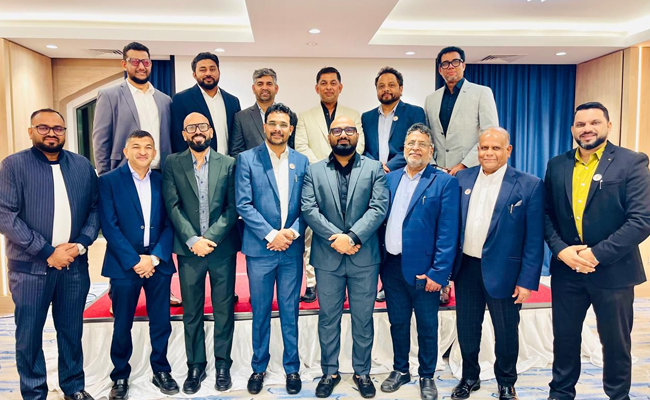
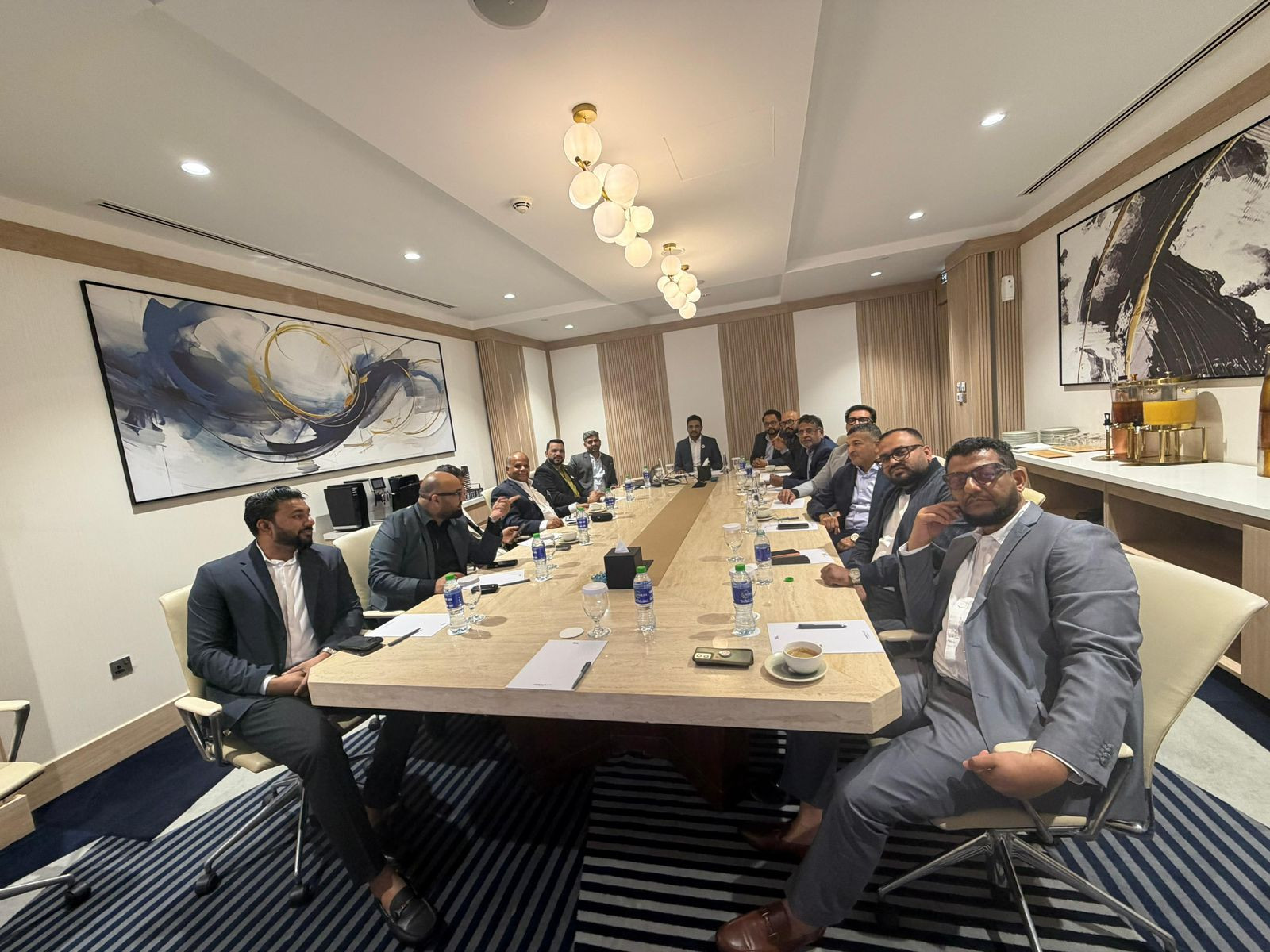
Dubai: Hidayath Addoor has been re-elected as president of the UAE unit of the Bearys Chamber of Commerce and Industry (BCCI) for the 2026–2028 term. The decision was taken at the organisation’s annual general body meeting held on Sunday at the Crowne Plaza Hotel, Jumeirah, Dubai.
The meeting was held under the patronage of Dr Thumbay Moideen, founder chairman of the Thumbay Group and chief patron of BCCI. This marks Hidayath Addoor’s second consecutive term as president. During his previous tenure, BCCI had organised the ‘Beary Sammelana’ in Dubai in February 2025, which was widely described as a landmark event for the community’s business network.
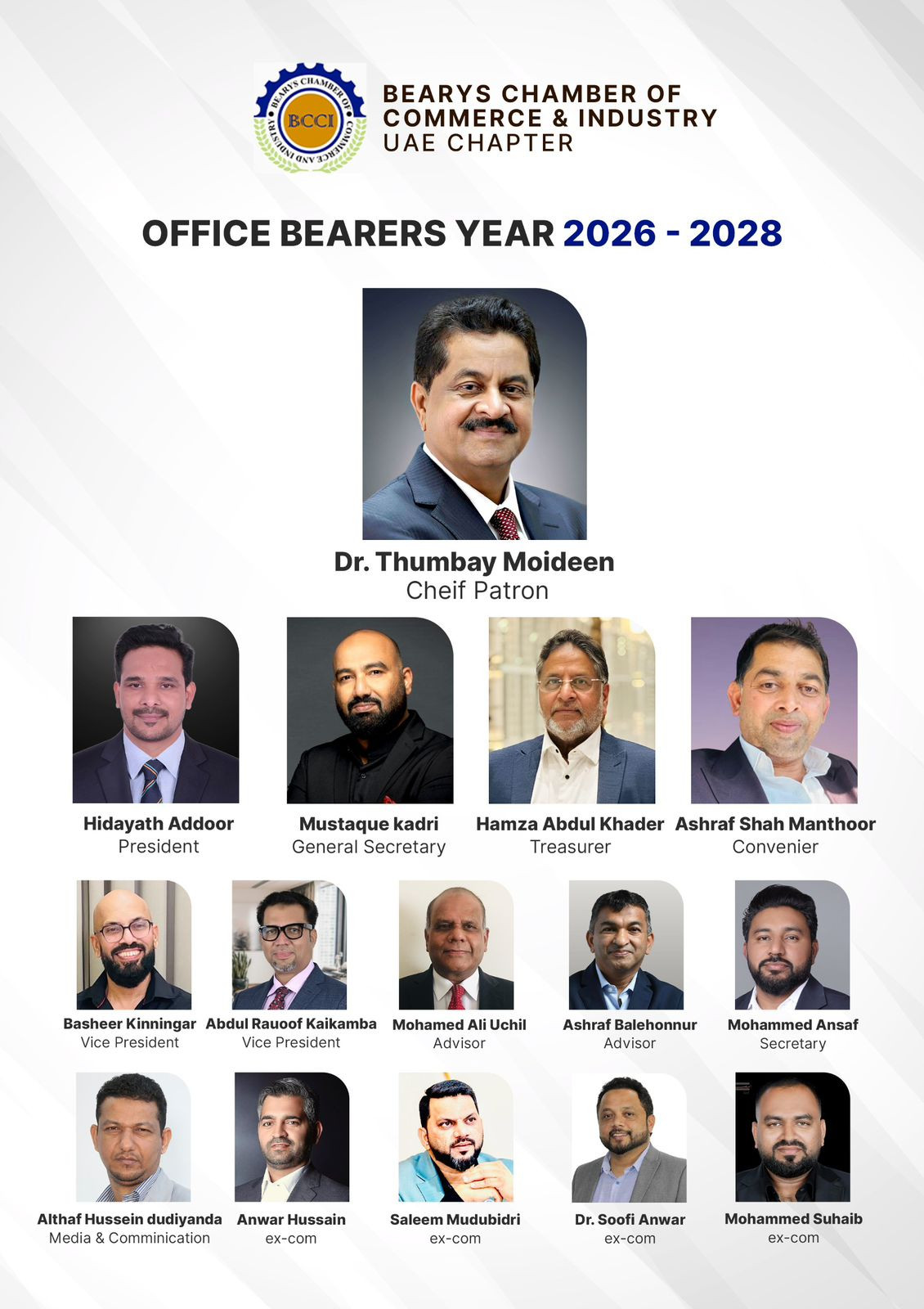
At the same meeting, Mushtaq Kadri was elected as general secretary, while Hamza A. Khader was chosen as treasurer. Ashraf Shah Mantur was elected as convener.
Basheer Kinningar and Abdul Rauf (Abu Dhabi) were elected as vice-presidents, while Ansaf was chosen as secretary. Altaf M. was appointed in charge of media and communication. Mohammed Ali Uchil and Ashraf Balehonnur were named advisors.
Anwar Hussain Addoor, Saleem Moodbidri, Sufi Anwar and Shoaib were elected to the executive committee of the UAE unit of BCCI.
The meeting began with a recitation from the Quran by Ashraf, following which Ashraf Shah Mantur welcomed the members. Anwar Hussain Addoor presented the annual report, and Hamza A. Khader tabled the statement of accounts.
During the meeting, BCCI announced that entrepreneurs from the Beary community who are doing business in the UAE can register with the organisation. Interested business owners can contact BCCI and apply for membership by writing to bcciemirates@gmail.com.
BCCI said it will support newly registered members through business empowerment initiatives, networking events, seminars, business promotion activities and guidance for new start-ups. The organisation also plans to help entrepreneurs adopt new technologies, including artificial intelligence-based business tools, and provide guidance on dealing with present-day business challenges. BCCI has appealed to Beary entrepreneurs in the UAE to extend their cooperation and support to strengthen the platform.
Let the Truth be known. If you read VB and like VB, please be a VB Supporter and Help us deliver the Truth to one and all.
PM arrives at Brigade Parade Grounds for swearing-in ceremony of BJP's first govt in Bengal
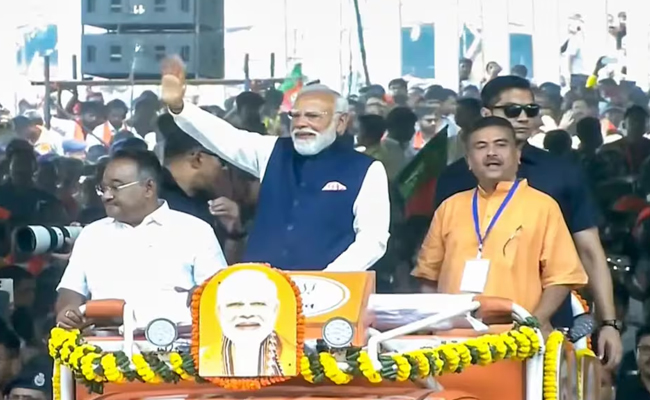
Kolkata (PTI): Prime Minister Narendra Modi arrived at the Brigade Parade Grounds here on Saturday to attend the swearing-in ceremony of the BJP's first government in West Bengal.
Accompanied by state BJP president Samik Bhattacharya and CM-elect Suvendu Adhikari, Modi was accorded a rousing welcome.
Amid the 'Jay Shri Ram' slogan, Modi entered the venue on an open vehicle and was seen waving at the crowd.
The Prime Minister landed at Netaji Subhas Chandra Bose International Airport here a little before 10 am and took a helicopter to reach the Race Course ground before proceeding by road to the venue.
Thousands of BJP supporters gathered at the Brigade Parade Grounds since early morning to witness the oath-taking ceremony.
The BJP secured 207 seats in the 294-member Assembly, ending the Trinamool Congress' 15-year rule in the state.