India urges Gulf nations to facilitate return of Indian workers willing to resume work
New Delhi: India on Tuesday urged the Gulf countries to facilitate the return of Indian workers and professionals who are now eager to resume their work following the easing of coronavirus-related restrictions.
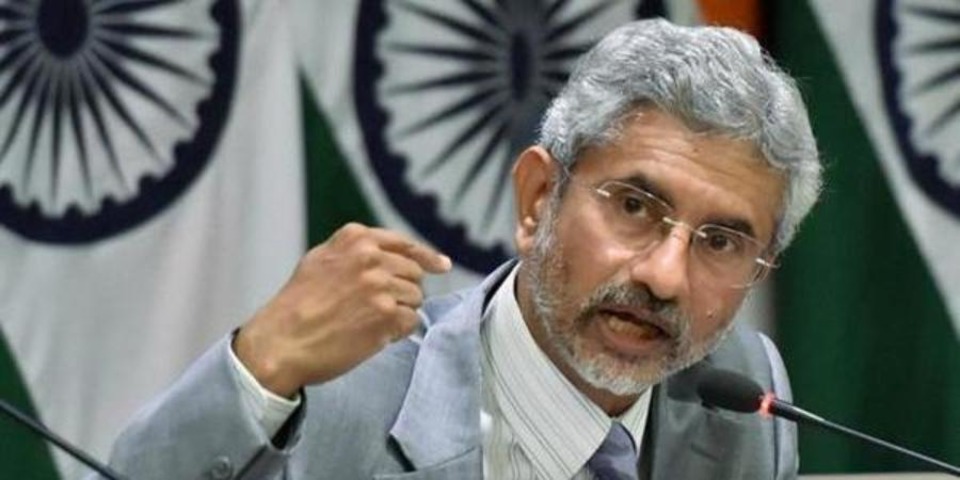
The issue figured at a virtual meeting External Affairs Minister S Jaishankar held with the Gulf Cooperation Council (GCC), a leading regional organization comprising almost all Arab countries.
In the meeting, Jaishankar assured the Gulf nations on continuing the supply of food, medicines, and essential items from India.
The Ministry of External Affairs said Jaishankar thanked the GCC countries for taking care of the large Indian diaspora during the COVID-19 pandemic.
"The External Affairs Minister mentioned that a large number of Indian workers and professionals are now eager to return to the GCC countries to resume their work.
"He urged the GCC leadership to facilitate their return through sustainable travel bubble arrangements with India," the MEA said.
Thousands of Indians had returned home from the Gulf region in the last few months following the coronavirus pandemic.
The MEA said the leaders also exchanged views on regional and international issues of mutual concern.
While the Indian delegation was led by Jaishankar, the GCC was represented by Secretary-General of GCC Nayef Falah M Al-Hajraf, Foreign Minister of Bahrain Abdullatif bin Rashid Al Zayani and Foreign Minister of UAE Anwar bin Mohammed Gargash.
Senior representatives from Saudi Arabia, Kuwait, and Qatar also participated in the meeting.
"They agreed that the India-GCC partnership in political, economic, and other domains would be further strengthened. The GCC welcomed India's inclusion in the UNSC as a non-permanent member from January 2021," the MEA said.
"Both sides affirmed their commitment to reform multilateral institutions to reflect the realities of the 21st century and to work together to address contemporary challenges such as the COVID-19 pandemic, climate change, sustainable development, and terrorism," it added.
In a series of tweets, Jaishankar said that continuing the flow of food, medicines and essential items were assured to the Gulf region.
The MEA said Jaishankar also apprised the GCC leaders about the progress made by India in vaccine development as well as in the development and manufacturing of diagnostic and other equipment related to COVID-19.
"Both sides reaffirmed that they will continue to work together to tackle COVID-19 situation," it said.
Jaishankar also apprised the GCC leaders of the improving situation in India, both on the health and the economic side.
He hoped for an early return to trade normalcy between India and the GCC.
India had ensured that the supply chains from India to the Gulf were not disrupted despite the lockdowns during the pandemic.
Let the Truth be known. If you read VB and like VB, please be a VB Supporter and Help us deliver the Truth to one and all.
Gujarat builds 870 MW battery power backup network to stabilise renewable energy grid
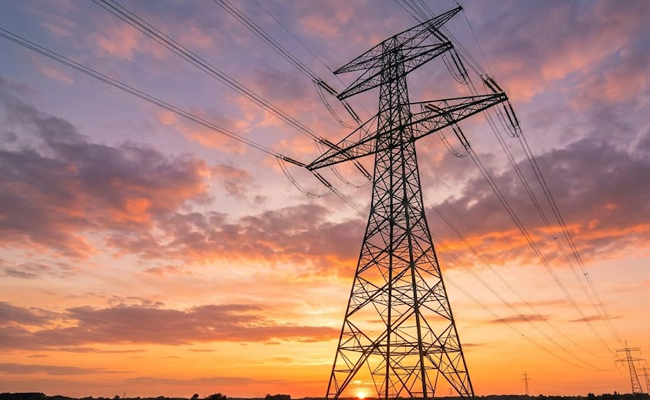
Gandhinagar (PTI): Gujarat has initiated battery storage systems at five locations in the state, with a total capacity of 870 MW, to maintain the stability of the renewable power grid, officials said on Saturday.
Battery Energy Storage Systems (BESS) are essential for storing electricity generated from solar and other renewable sources. They help manage additional load and maintain grid stability.
“Gujarat has initiated battery storage systems at five locations with a total capacity of 870 MW,” an official release stated.
The state has also registered 13 projects across Ahmedabad, Gandhinagar, Banaskantha, Patan and Kutch districts to set up additional battery storage systems, it said.
Modhera in Gujarat, India’s first solar village, has launched the country’s first BESS integrated with a solar power plant, it said.
"Under the leadership of Chief Minister Bhupendra Patel, the state has continued to advance in this direction and has strengthened its position among the leading states driving battery storage systems in India,” the release said.
Recently, a battery storage system was commissioned at Charal in the Sanand taluka of Ahmedabad, it said.
Four systems are operational at Modhera in Mehsana and Lakhpat in Kutch. The state government has also included advanced energy storage systems as a key component in the Gujarat Integrated Renewable Energy Policy, 2025, the release said.
Accordingly, standalone battery storage projects, works linked with new renewable energy installations, and those integrated with existing renewable energy systems are being approved, it said.
Once the Standard Operating Procedure is approved, registrations for battery storage will open for commercial and industrial users, it said, adding that the move will allow them to set up battery storage alongside their solar or wind projects.
The state government is developing battery storage systems across Gujarat, with companies being invited in through a competitive bidding process.
GETCO (Gujarat Energy Transmission Corporation) and power distribution companies strategically identify locations for battery storage systems based on grid capacity and operational requirements, the release said.
Power generation from solar and other renewable sources fluctuates throughout the day. Excess energy generated during peak hours can be stored and supplied later during periods of high demand, especially in the evening when solar output declines. Battery storage systems help reduce stress on the grid and improve grid stability, it added.