New Delhi: Since the closure of airspace in West Asia, Indian airlines have brought back around 15,000 stranded passengers from the UAE, Saudi Arabia, and Oman.
According to the Ministry of Civil Aviation (India), recovery flights began on March 2. These figures cover operations through March 5. On Friday, March 6, a total of 40 inbound flights returned people to India.
As many as 51 flights are scheduled to arrive on Saturday, March 7 which is the highest number since airstrikes in the region began on February 28, according to The Hindu.
Besides Indian carriers, Gulf airlines are also engaged in the airlifting activity. The Emirates, flydubai and Etihad Airways have operated some special flights and limited commercial services.
The ministry has set up a control room and helpline for passengers seeking travel assistance and can be contacted on 011-24604283 and 011-24632987.
Let the Truth be known. If you read VB and like VB, please be a VB Supporter and Help us deliver the Truth to one and all.
Court can reject anticipatory bail but cannot direct accused to surrender: SC
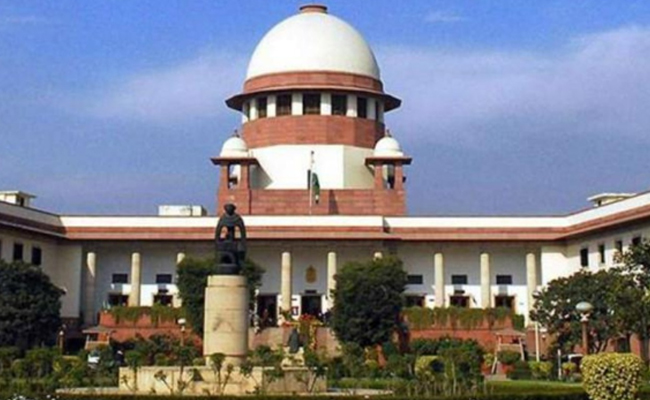
New Delhi (PTI): A court can reject anticipatory bail of an accused but it has no jurisdiction to direct him to surrender before the trial court, the Supreme Court has said.
A bench of Justices J B Pardiwala and Ujjal Bhuyan made the observation while hearing a plea filed by a man accused of cheating and forgery.
"If the court wants to reject the anticipatory bail, it may do so, but the court has no jurisdiction to say that the petitioner should now surrender," the bench said.
The Jharkhand High Court had rejected anticipatory bail plea of the accused and asked him to surrender and seek regular bail.
In this case, a complaint had been filed before a magistrate alleging offences under Sections 323 (voluntarily causing hurt), 420 (cheating), 467 (forgery of valuable security), 468 (forgery for purpose of cheating), 471 (using forged document) and 120B read with 34 of the IPC, in connection with a land dispute.
The high court had dismissed the second anticipatory bail application of the accused on the ground that no new circumstances were shown.
It had relied on its earlier order rejecting his first anticipatory bail plea, in which the court directed the petitioner to surrender before the trial court and seek regular bail in terms of the decision in Satender Kumar Antil v. CBI.
The top court said such a direction was wholly without jurisdiction and said that if a court chooses to reject anticipatory bail, it may do so, but it cannot compel the accused to surrender.