Indian man returns home after UAE govt waives 500,000 dirhams in visa fine

Dubai: A 47-year-old Indian man, who stayed in the UAE without any documents for over 13 years, has been repatriated home after getting a waiver of half a million Dirhams (Rs 1,00,21,000) in visa dues, according to a media report on Tuesday.
Pothugonda Medi, a migrant labourer from Telangana, approached the Indian Consulate here after he lost his job following the coronavirus outbreak, the Gulf News reported.
"During the COVID-19 pandemic, he came to us as he could not find any odd jobs that he used to do earlier for his survival," Jithendra Negi, Consul, Labour and Consular, at the Indian Consulate, was quoted as saying by the paper.
Pothugonda told the Indian mission that he had come to the Gulf on a visit visa in 2007, however his agent abandoned him soon after.
The agent had not returned Medi's passport, the paper reported.
The mission found it difficult to assist Medi as there were no documents to prove his citizenship.
The consulate sought the help of a charity group in Hyderabad to track down his family.
With the support of social worker Sriniwas we managed to get the copies of his old ration card and election ID card from his native place. Some of the details that he gave were not matching, but still we could establish that he is an Indian, Negi said.
After the consulate provided a free flight ticket to Medi, the officials applied under the UAE government's visa expiration exemption scheme.
According to the scheme, expatriates whose visas have expired before March 1, 2020 can leave the country before November 17 without paying visa dues.
The General Directorate of Residency and Foreign Affairs in Dubai has so far waived millions of dirhams in visa penalties.
The coronavirus has claimed the lives of 399 people with over 80,000 confirmed cases in the UAE so far.
Let the Truth be known. If you read VB and like VB, please be a VB Supporter and Help us deliver the Truth to one and all.
Gujarat builds 870 MW battery power backup network to stabilise renewable energy grid
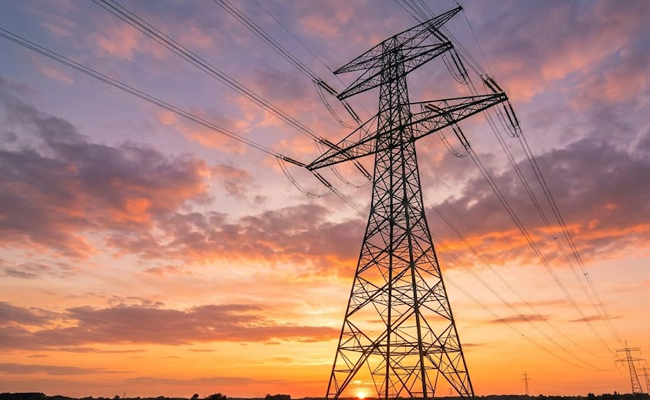
Gandhinagar (PTI): Gujarat has initiated battery storage systems at five locations in the state, with a total capacity of 870 MW, to maintain the stability of the renewable power grid, officials said on Saturday.
Battery Energy Storage Systems (BESS) are essential for storing electricity generated from solar and other renewable sources. They help manage additional load and maintain grid stability.
“Gujarat has initiated battery storage systems at five locations with a total capacity of 870 MW,” an official release stated.
The state has also registered 13 projects across Ahmedabad, Gandhinagar, Banaskantha, Patan and Kutch districts to set up additional battery storage systems, it said.
Modhera in Gujarat, India’s first solar village, has launched the country’s first BESS integrated with a solar power plant, it said.
"Under the leadership of Chief Minister Bhupendra Patel, the state has continued to advance in this direction and has strengthened its position among the leading states driving battery storage systems in India,” the release said.
Recently, a battery storage system was commissioned at Charal in the Sanand taluka of Ahmedabad, it said.
Four systems are operational at Modhera in Mehsana and Lakhpat in Kutch. The state government has also included advanced energy storage systems as a key component in the Gujarat Integrated Renewable Energy Policy, 2025, the release said.
Accordingly, standalone battery storage projects, works linked with new renewable energy installations, and those integrated with existing renewable energy systems are being approved, it said.
Once the Standard Operating Procedure is approved, registrations for battery storage will open for commercial and industrial users, it said, adding that the move will allow them to set up battery storage alongside their solar or wind projects.
The state government is developing battery storage systems across Gujarat, with companies being invited in through a competitive bidding process.
GETCO (Gujarat Energy Transmission Corporation) and power distribution companies strategically identify locations for battery storage systems based on grid capacity and operational requirements, the release said.
Power generation from solar and other renewable sources fluctuates throughout the day. Excess energy generated during peak hours can be stored and supplied later during periods of high demand, especially in the evening when solar output declines. Battery storage systems help reduce stress on the grid and improve grid stability, it added.