Indians convene in Abu Dhabi for interfaith iftar
The annual iftar is a reminder of the tolerance shared by Indians: Navdeep Singh Suri
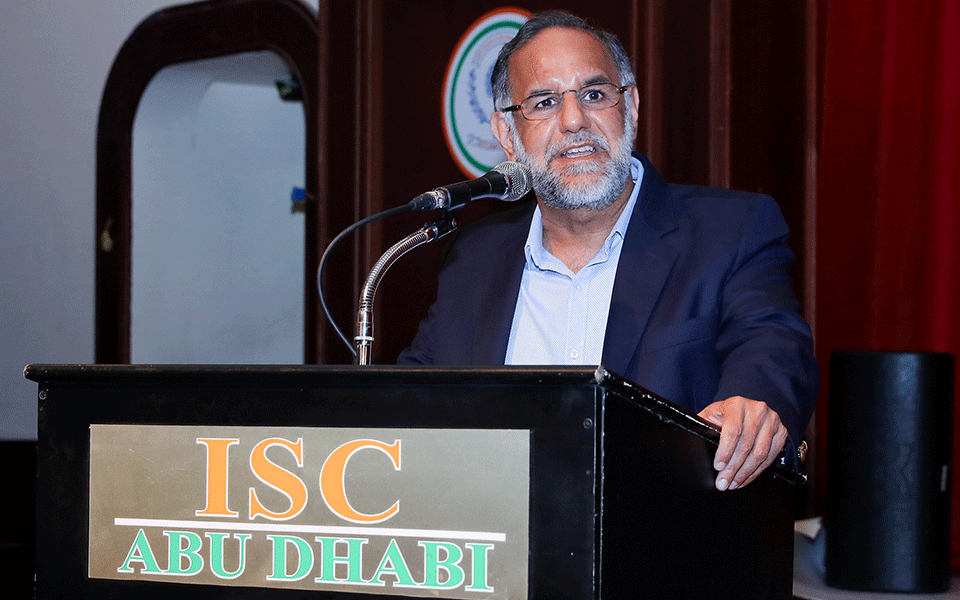
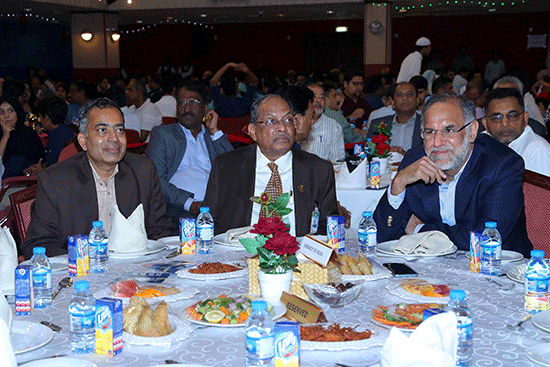
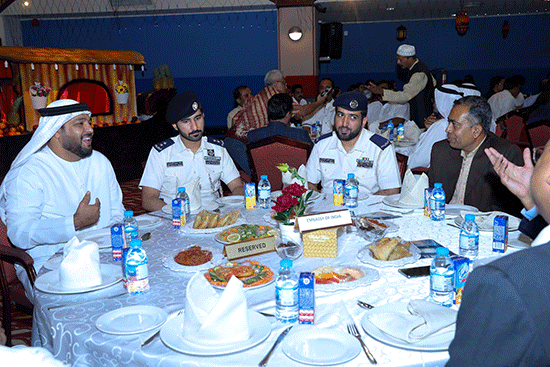
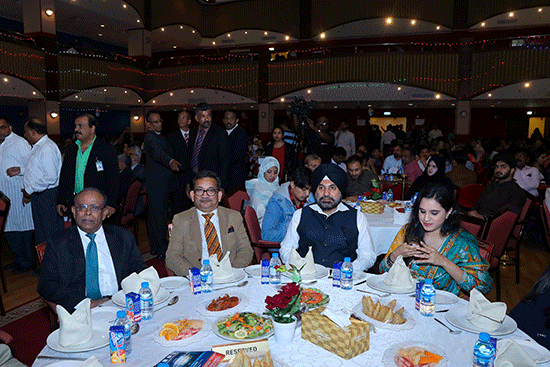
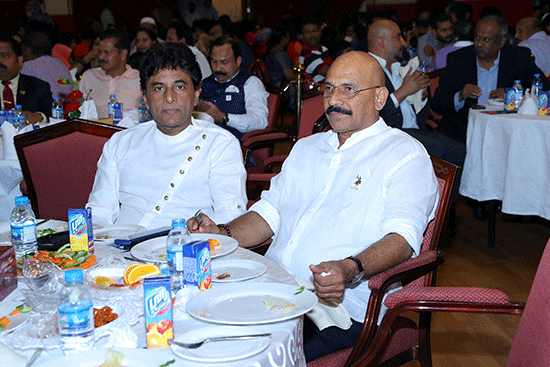
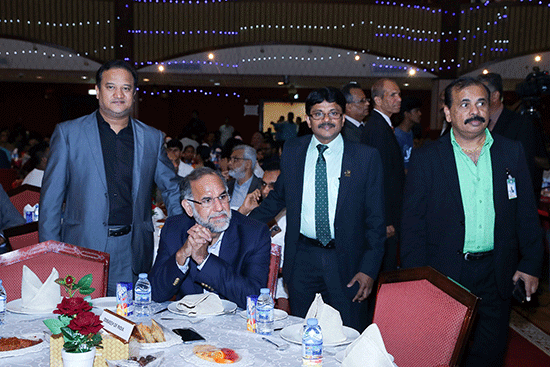
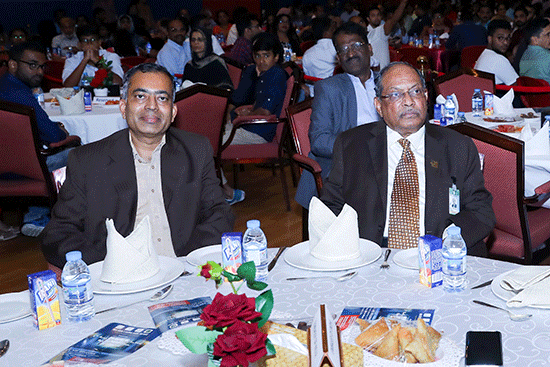
Dubai: From turban-wearing Sikhs to sari-clad Keralites, a mini-India converged at the annual iftar of the Indian Social and Cultural Centre in Abu Dhabi last week.
India’s ambassador to the UAE, Navdeep Singh Suri, said of the mood of the multi-faith and multilingual evening that “Indians have it in their DNA to celebrate and respect the faith and culture of one another”.
A crowd gathered around the iftar table, waiting patiently for the evening prayer call to break the fast.
“I grew up in a culture where we celebrate every festival, from [the Hindu] Diwali and Navaratri to [the Muslim] Eid and [Christian] Christmas. As a young boy, I looked forward to all these festivals with great excitement. This is part of our tradition,” he said.
“The presence of large numbers of both fasting and non-fasting people in the audience highlights not only the spirit of Ramadan, but also the spirit of India.”
The ongoing celebrations surrounding the Year of Tolerance in the UAE provided a perfect backdrop for the evening’s deliberations. “Nobody in the world epitomises the value of tolerance better than Indians do,” Mr Suri said.
“It comes very naturally to them. India is a land that has hosted followers of every religion in the world besides giving birth to four major religions.”
Mr Suri believes Indians have an inherently pluralistic worldview and could contribute greatly to the UAE's march towards becoming a modern nation that celebrates diversity.
“For me personally, the visit of the Pope to the UAE was of great significance. The signing of the Human Fraternity Document by the Pope and the Grand Imam of Al Azhar is also a powerful example to the world.”
The Indian ambassador also hailed the UAE's leadership for facilitating the construction of the first Hindu temple in Abu Dhabi.
“The country’s commitment to the values of tolerance and harmony is manifested in the speedy construction of the Hindu temple,” he said.
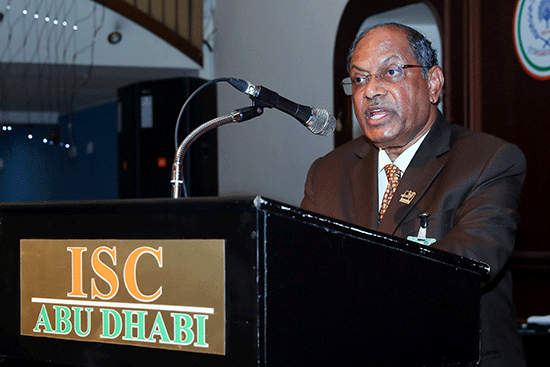
Mr D Natarajan, president of the Indian Social and Cultural Centre, emphasised the need to follow the values of fraternity, equality and tolerance, which, according to him, are central to the Islamic faith.
“The five pillars of Islam – Shahada, salah, fasting, zakat and Hajj – are prescribed by God to inculcate a strong sense of equality and brotherhood among Muslims. There is no special preference given during the obligatory prayer to anyone based on his social or economic status. Anyone who comes late, even if he is the ruler of the country, will have to stand in the last row in the mosque,” he said.
Mr Suri also inaugurated the sixth Quran recitation competition, which will conclude with a prize distribution ceremony on May 24.



courtesy: thenational.ae
Let the Truth be known. If you read VB and like VB, please be a VB Supporter and Help us deliver the Truth to one and all.
Case registered against associate film director for sexual assault of model in Kochi

Kochi (PTI): Police on Saturday said they had registered a case against an associate director in the film industry for "sexually assaulting" a model here.
The case was registered against Jojo Kurishinkal of Chengannur in Alappuzha district at the Maradu police station on May 6.
Kurishinkal has worked in several films as an assistant and associate director.
According to the FIR, the complainant, a model based in Kochi, met Kurishinkal through a dating app in July 2023.
The FIR stated that the accused told the complainant he was a film director and had separated from his wife before proposing marriage to her.
He later allegedly assured the complainant and her mother that he would go ahead with the marriage once the legal procedures related to his divorce were completed, the FIR said.
According to the FIR, the accused later invited the complainant to his apartment in Vyttila on April 18, 2024, where he "sexually assaulted" her.
The FIR further alleged that he continued to sexually harass the woman thereafter. It also stated that the accused had "physically assaulted" the complainant on multiple occasions before later refusing to marry her.
Based on the complaint, police registered a case under Section 376(2)(n) of the Indian Penal Code for repeatedly raping the same woman.
Police said the woman’s confidential statement would be recorded, following which the accused would be summoned for questioning.