KEF Holdings to set up Quaternary care Heart and Orthopaedics Centre in Dubai by October 2021
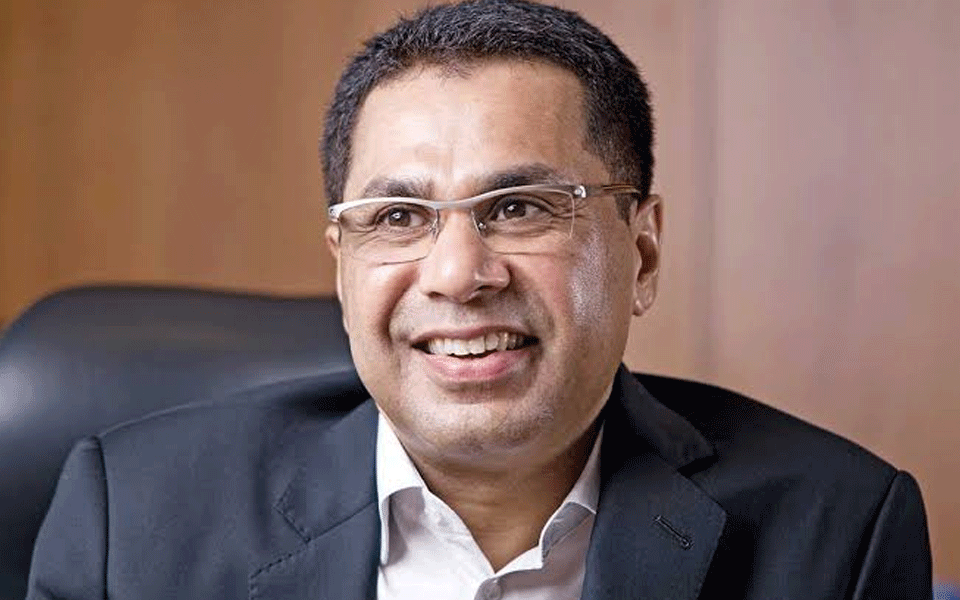
Dubai: KEF Holdings has announced that it will set up the first Quaternary care Heart and Orthopaedics Centre in Dubai. The Centre, it said will be opened in October 2021 and will link five countries UAE, Kuwait, Oman, Iraq and Qatar to bring efficient, world class and affordable health care to the people.
The Centre will be headquartered at the Canadian Specialty Hospital in Dubai and will cater to patients looking for cardiac and orthopedic care from all these countries.
The announcement was made virtually at Arab Health, titled ‘Future Proofing health care — the challenges and the opportunities’.
Faizal Kottikollon, the founder and chairman of KEF Holdings, said: “The health-care industry has been under increasing strain across the value-chain, as the recent pandemic has illustrated. We need to strengthen our health-care systems right from infrastructure readiness, talent availability to financial stability and build a health-care ecosystem that will be preventative in nature. At present, the patient is outside this eco-system and with Meitra Care Network, in collaboration with MGM Health Care in India and Canadian Specialty Hospital, Dubai, we aim to bring the patient at the centre of this system, making worldclass health care affordable.”
Kottikollon explained: “The way this will work is with the coining of a new term: ‘Phygital’. This refers to the physical and digital consultation. For instance, if a person in Iraq requires cardiac consultation, he will be able to contact the local care centre set up by KEF Holding in his or her country and get a detailed consultation digitally with a cardiac specialist in Dubai. The patient can reach the centre in his country and get all vital parameters checked via tele-health, digitally, which will be recorded in real time with the centre here in UAE. The doctor can then prescribe treatment to the patient if this can be handled remotely.”
He continued: “However, if the patient is assessed to require personal consultation, he or she will be flown in here, operated, physically rehabilitated at the hub, to be stationed at the Centre of Excellence at the Canadian Specialty Hospital. This kind of facility will be available in all the countries under this hub-and-spoke and home model.”
“We want to optimise the availability of specialist facilities, advance cardiac and orthopaedic care and rehabilitation, so that we reach out to the needy patients in the region,” explained Kottikollon, who already has a successful model working at Meitra Hospital, Kozhikode, Kerala, India.
Let the Truth be known. If you read VB and like VB, please be a VB Supporter and Help us deliver the Truth to one and all.
Allahabad HC orders probe into 'reinstatement' of teacher in UP's Barabanki
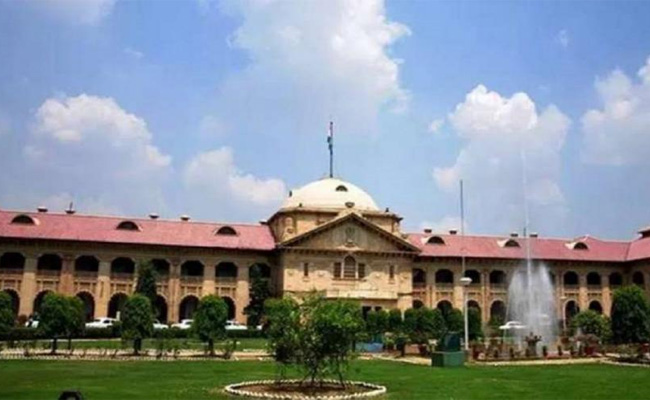
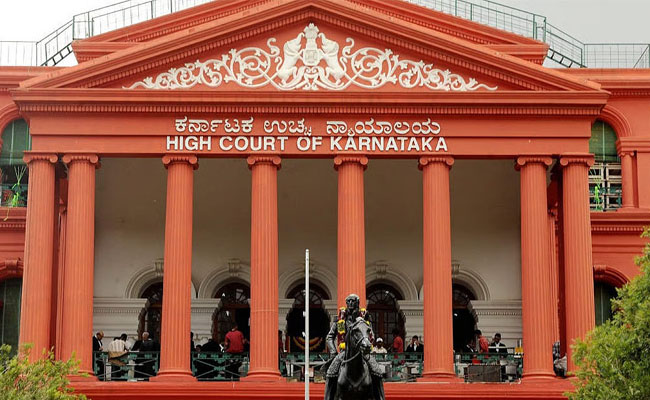
Lucknow (PTI): The Lucknow Bench of the Allahabad High Court on Friday ordered a probe by the special task force (STF) into alleged irregularities in the rejoining of a teacher at City Intermediate College in Barabanki, observing that the reinstatement appeared to be prima facie illegal.
The court also directed the recovery of the salary paid to the teacher during the disputed period.
A bench of Justice Rajeev Singh passed the order on a petition filed by the college management committee. The court expressed doubts over the roles of the District Inspector of Schools (DIOS), Barabanki, the college principal and the teacher concerned and hence, directed a detailed inquiry into the matter.
Taking note of alleged manipulation of records and misleading submissions, the court ordered the immediate transfer of the Barabanki DIOS to ensure a fair probe. It also directed the initiation of disciplinary proceedings against the then joint director of education of the Ayodhya division.
In its order, the court found that the teacher, Abhay Kumar, was initially appointed as an assistant teacher in 2018 but joined an Eklavya Model Residential School in Chhattisgarh as a lecturer in June 2024 without obtaining permission from the management. His subsequent request to retain the lien was rejected.
Despite this, he was allowed to rejoin the Barabanki College in September 2025 on the directions of the joint director of education and the DIOS, and was even paid the salary for October 2025. The court termed the rejoining "wholly illegal" and lacking any legal basis.
The bench also expressed concern over lapses in communication within the education department and directed the Uttar Pradesh chief secretary to ensure that official orders are communicated through email and WhatsApp as well, to prevent disputes.
The matter is next listed for hearing on May 28 when a compliance report is sought.