Over thousand Kannadigas attend Bearys Cultural Forum's Iftar meet in Dubai
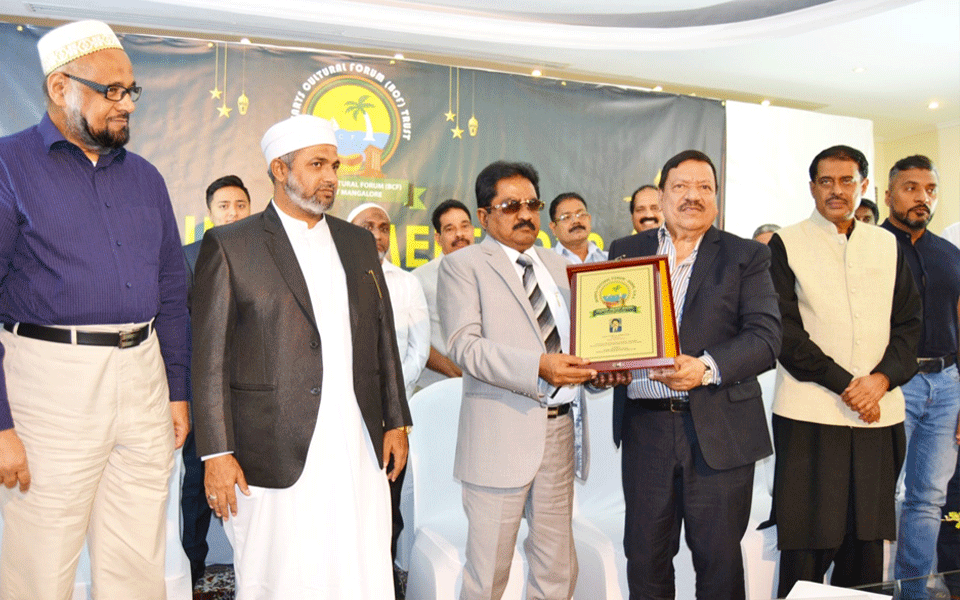
Dubai: Bearys Cultural Forum (BCF) a social welfare organisation of NRI Kannadigas, recently organised an ‘Iftar Meet’ for its members at Dubai’s Iranian Club Hall here.
Over a thousand members of the organisation including Muslims, Hindus, Christians, Kannadigas and non-Kannadigas participated in the Iftar meet organised by the organisation.
Ahead of the Iftar Iqbal Kundapur and Ashraf Sattikal along with Abdul Rahman, Amir Halayangadi and Riyaz Surathkal organised an Islamic Quiz Competition for the guests present at the event. DKSC Honorary President Taha Bafaqui Thangal made supplications followed by an scholarship announcement program of BCF.
The event began with the recitation of Holy Quran by Afraz Afeek Hussain, while BCF General Secretary Dr. Kapu Muhammad welcomed the guests to the event that was presided over by BCF President Dr. B K Yousuf.
In his presidential address Dr. Yousuf added that he was grateful that he was serving an organisation like BCF, a platform from where he was able to connect and serve other countrymen. He thanked Allah for making him the part of the organisation.
Speaking of the plans and projects of the organisation in the coming years, he asserted that the organisation will extensively focus of Academic sector and will come up with projects with an aim to provide better academic services to the society.
Chairman of the organising committee and BCF Vice President Abdul Lateef Mulki also addressed the event on the occasion.
Speaking at the meet BCF Scholarship Committee and BCF Vice President M E Muloor informed that the organisation has been over the years offering scholarships to nearly 600-700 poor and deserving students from Karnataka without any discrimination on the basis of caste, religion etc for their studies from PUC to Master Degrees.
Prominent businessman of UAE, Social Worker and BCF Patron Zafarullah Khan, who is also the chairman of Karnataka Minority Development Corporation was present at the event as the chief guest. He addressed the gathering and congratulated the organisers for organising such an event to bring together over thousand people on platform. He was later felicitated by the BCF.
Fiza Group Chairman and Prominent businessman Shabbir Saifuddin, Emirates Glass President Rizwanullah Khan, Zafarullah Khan, Ashraf KM, Naveed, Dr. Sameer Yousuf, Islam of Al Bahar Hotel, Irshad, Nafees, Nawaz Kotekar, Shukoor Manila and others were present at the iftar meet.
Representatives of prominent Kannada organisations in UAE including Karnataka Sunni Center, KCF, KNRI, Dubai Karnataka Sangha, Sharjah Karnataka Sangha, Saadiya, KIC, Muloor Association, Kundapur Association, Tawakkal Overseas, Kannangar Association, Al Qamar Association, Al Islamiya, Billavas Dubai, Mangalore Konkans, Bunts Association and others were also present.
BCF Iftar Committee Chairman Abdul Lateef Mulki, Rafeeq Hussain, Ameeruddin S I, Abdul Lateef Puttur, Abdul Rahman, Aslam Karaje, Usman Muloor, Riyaz Surathkal, Ameer Haleyangadi, Iqbal Mepha, Sulaiman Muloor, Rafeeq Mulki, Sattikal Ashraf and team of volunteer from Ullal volunteered in organising of the Iftar meet.
BCF Vice President Ameeruddin S I presented vote of thanks towards the end of the event.


Let the Truth be known. If you read VB and like VB, please be a VB Supporter and Help us deliver the Truth to one and all.
Marxism will remain relevant despite Left electoral's losses, says general secretary M A Baby
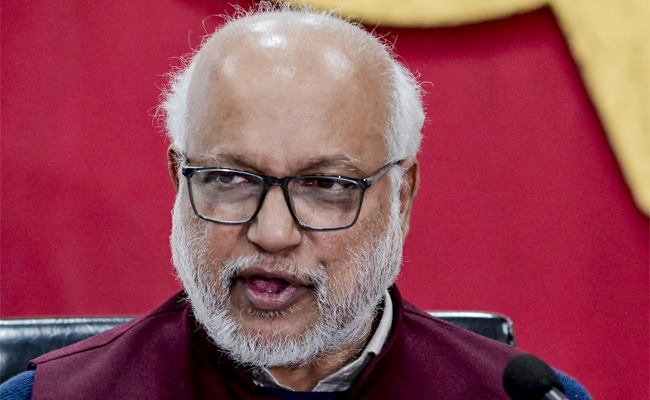
New Delhi (PTI): CPI(M) General Secretary M A Baby on Thursday asserted that the Left movement would remain relevant despite not being in power in any state, saying the ideology would continue to endure as long as social and economic inequalities persist.
Hitting back at BJP leader Rajeev Chandrasekhar over his reported remarks that Marxism had become irrelevant, Baby, in an interview with PTI Videos, said, "So long as there is division in society, so long as there is exploitation of the majority of workers, peasants and ordinary masses by a handful of billionaires, Marxism will remain relevant."
"That perhaps Mr Rajeev Chandrasekhar may not be able to understand, but this is the fact of the matter," he said.
Baby acknowledged that the CPI(M)-led Left was currently without an elected government in any state, but maintained that electoral setbacks would not diminish the movement's role.
"We may not have an elected government in any state. There were occasions when we didn't have a government. But the red flag and the commitment to organise and struggle for the rights of the dispossessed, marginalised and exploited will always be upheld by CPI(M) and the Left movement," he said.
He said the Left continued to enjoy support among workers, peasants, agricultural labourers, youth, students and women, and argued that the movement remained necessary because "oppression and assault" continued in society.
"So long as such problems exist in society, the red flag and the working class movement will continue to work among the masses," the Left leader said.
Exuding confidence on the Left's revival, Baby said the party would reflect on the reasons behind its electoral loss.
"We may be rejected in one election, but we will stage our comeback by understanding what went wrong with us," he said, adding, "We will listen to people and we will come back with higher strength."
Baby also criticised the Congress over reported factional tensions in Kerala after the Congress-led United Democratic Front's victory in the state.
"The way they are behaving is being watched by the people of Kerala," he said, referring to infighting within the Congress.
"Those who have given a massive majority to Congress and UDF would be watching all this," he added, while urging party leaders to "settle the problem in an amicable, democratic manner".
Referring to West Bengal, Baby alleged that violence had escalated following the BJP's victory in the state assembly polls.
"It is quite unfortunate that the moment BJP snatched a massive victory in West Bengal, violence has also started on a big scale," he said.
He also accused the Trinamool Congress of being "notorious for violent activities" and alleged that the "RSS-controlled BJP" had "unleashed violence in many places" after the election results.
"This is not good for Bengal, not good for the country. We wish and hope that normalcy would be restored as soon as possible," he said.
Baby said the CPI(M) and the Left in West Bengal would continue efforts to "pacify people" and avoid violence and confrontation.
Asked about former Kerala chief minister Pinarayi Vijayan not reacting publicly to the election results, Baby said Vijayan would respond "at an appropriate time".