Qatar: Indian embassy starts collecting data of Indian expats seeking repatriation
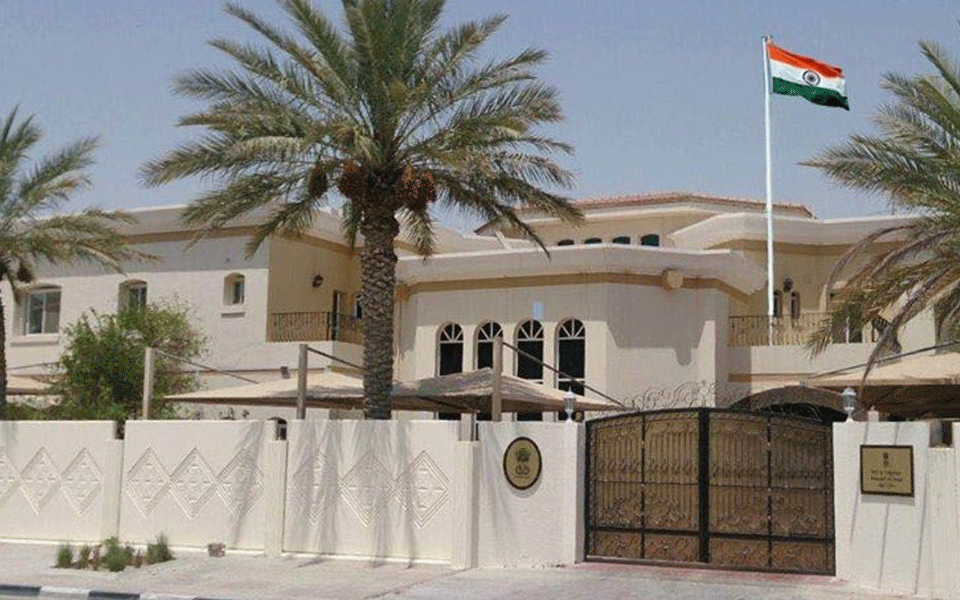
Doha: The Indian Embassy in Qatar has reportedly started collecting the data of Indian expatriates who are seeking repatriation due to various reasons. The embassy however has clarified that the data is being collected for information purpose and that there was no immediate clarity or information about the resumption of flights to India.
“We are collecting data about people requesting repatriation to India. Please follow this link and answer the questions. At this stage, the purpose is only to compile information. No decision or details yet on resumption of flights to India,” the embassy said in a twitter post.
The embassy seeks the basic information of the expats including name, passport number, age and the type of visa a person holds – Residence Permit, Visa on Arrival, Tourist Visa, Business visa or Family visa.
The procedure also seeks to know the reason behind the expatriate wanting to travel back to India. Be it Medical Emergency (Self), Medical Emergency (Family Member), Death of Family Member, Stranded Tourist/ Visitor, Amnesty/ Deportation, Loss of Employment, Expiry of Visa or Stranded Student.
“As and when a decision is taken (regarding flights to India), Embassy of India will make an announcement. This form is to be filled for a single individual at a time. For addition of details of family members, you are requested to fill the form again for each member.” Indian Embassy added.
Let the Truth be known. If you read VB and like VB, please be a VB Supporter and Help us deliver the Truth to one and all.
No need for guv: DMK leader Kanimozhi
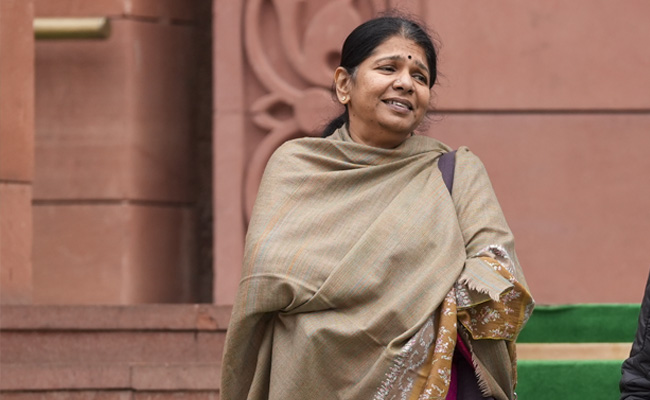
Chennai (PTI): Senior DMK leader Kanimozhi Karunanidhi on Friday reiterated her party’s opposition to the office of the governor amid uncertainty over government formation in Tamil Nadu after a fractured election mandate.
Speaking to PTI Videos, Kanimozhi emphasised that the DMK’s demand for the abolition of the governor’s post remained unchanged, especially as questions arise over constitutional propriety during the current political transition.
"Our position that we do not need a governor at all is something the DMK has never changed at any point in time," she said.
When asked about the governor’s actions following the election results—particularly the delay in inviting the leading party to form the government—Kanimozhi pointed to what she described as the "inherent friction" between the office of the governor and the political interests of the state.
She said the current situation "raises a lot of questions" and requires introspection regarding constitutional procedures.
Kanimozhi described the election results as lacking a "clear mandate", which she identified as the primary reason for the prevailing political uncertainty in the state.
"What the people decide is supreme," she said, adding that while the mandate was not decisive, it must be respected.
The Thoothukudi MP attributed the ongoing delays and "many confusions" to the absence of a decisive majority for any single party.
She firmly dismissed rumours about the DMK potentially supporting the AIADMK from outside to help stabilise the government.
She described such reports as mere "speculation" and "rumours".
"We can’t be responding to every rumour," she said, declining to comment on the AIADMK’s claims regarding its numbers to form the government.
The political situation in Tamil Nadu remains fluid as stakeholders await the governor’s next constitutional step in an Assembly where no party has secured a clear majority.
The DMK and AIADMK—both of which suffered significant losses to the TVK—are reportedly exploring tactical manoeuvres to navigate the hung Assembly.
The TVK, with 108 seats and the support of Congress’s five MLAs, is still short of the majority mark. The DMK and AIADMK secured 59 and 47 seats, respectively.