Revolutionary Research on Personalized Cancer Treatment Using Zebrafish Avatar discussed at GMU
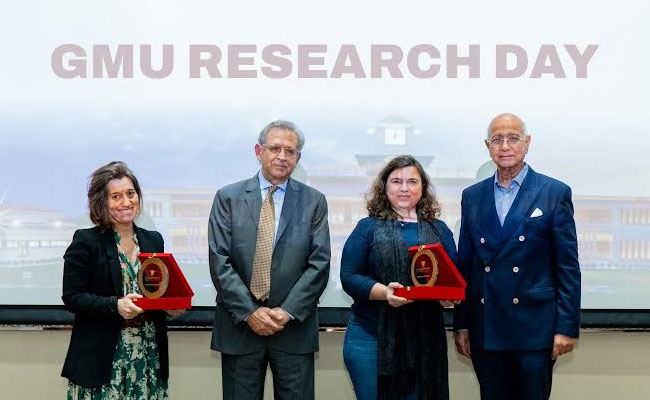
Ajman (Press Release): Gulf Medical's University and Thumbay Research Institute of Precision Medicine marked the Research Day, sharing insights from leading minds on the region’s first pilot research on personalized precision medicine programme using the Zebrafish Avatars to treat cancer- with the first phase focusing on the care of patients suffering from colorectal and breast cancer. The study’s findings aim to help researchers and oncology healthcare providers to design more tailored and effective treatments based on genetic screening, data on tumor progression and subsequently assessing the need and efficacy of chemotherapy versus other advanced surgical alternatives. In this way, the research further intends to reduce the trial-and-error response in oncology medicine combined with the preservation of organ function and, improve the overall quality of life.
Dr. Rita Fior, PhD, Group Leader Champalimaud Center for the Unknown, elaborated, “The research has been conducted by developing Zebrafish xenografts with a very clear goal of personalized medicine. We live in a world with such amazing technology that helps us to go to the moon, fly planes, zoom over the world, advanced technologies in biology, sequencing of whole genomes, etc. However, once a patient is diagnosed with cancer, they are most likely to be treated with chemo or radiotherapy- although many new amazing targeted therapies are being developed and great advances have been made. By directly challenging the cells and measuring the response to direct perturbation, we have found good predictive analysis that can aid the entire process of diagnostics, therapy, and tailor it to the needs of the specific
individual.”
An avatar is an animal that has been incubated with a person’s cancer cells so that doctors can test drug effectiveness on the animal tumor first. With several avatars, doctors can test several treatments. But obtaining a tumor assay from a mouse avatar could take months. And people fighting cancer don’t have months. In recent times, the Zebrafish has successfully created human cancer avatars where the tumors are ready to be assayed in just four days.
Speaking about the research, Professor Hossam Hamdy, chancellor, Gulf Medical University, said, “As the leading health professions’ education institution in UAE, Gulf Medical University looks forward to playing a central role in the advancement of oncology diseases research landscape, incorporating the rich multi-factorial data to tailor treatment and significantly reduce the risks associated with chemotherapy. We are confident that our work will contribute to UAE’s efforts in spearheading the growth and development of the healthcare sector.”
On similar lines, Prof. Salem Chouaib, Director of the Thumbay Research Institute for Precision Medicine, stated, “In every area of cancer, treatments have largely functioned on a one-size-fits-all basis because we didn’t have tools to do any better. Going forward, the advancements in precision medicine will help in determining whether patients are likely to benefit from a particular therapy, longer survival and fewer toxic effects of chemotherapy.”

Let the Truth be known. If you read VB and like VB, please be a VB Supporter and Help us deliver the Truth to one and all.
Confident we are going to win Kerala: Shashi Tharoor
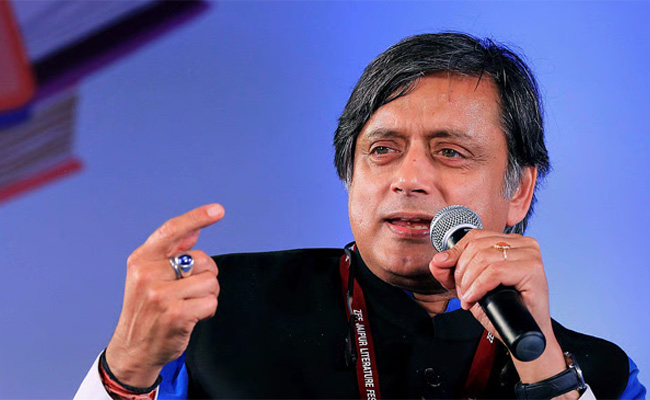
New Delhi (PTI): Congress leader Shashi Tharoor on Thursday expressed confidence in the victory of the United Democratic Front (UDF) in Kerala, saying the Congress-led alliance will win more than 75 seats out of the total 140 in the state.
Tharoor, who hails from Kerala, said he was not surprised to see the results of the exit polls, most of which predicted a victory for the UDF that has been out of power for 10 years in the state.
"We have been on the ground. I have campaigned in 59 constituencies across 12 districts out of 14. I was very confident we are going to win.
"Everything that I have picked up from not just my party colleagues and workers but also from other observers, media and others have always convinced me that we were going to score a comfortable win of above 75 seats. And all the (exit) polls have confirmed the same thing," he told reporters here.
The Thiruvananthapuram MP said he was not surprised to see the results of the exit polls but in general he was not a big fan of exit polls in India.
"Because ours is not purely a homogenous society. We have to take into account gender issue, caste issue, class issue, regional disparities. You never get a convincingly large enough sample to give an accurate poll and now there is the additional complication that we have heard about in West Bengal this year that many people are unwilling to answer the questions of the pollsters," he said.
The Congress leader said normally, it used to be below 10 per cent that people said that they would not answer.
"Even if you are a reputable exit pollster, in Bengal, one polling company has said 60 per cent of people refused to answer. So, what is the worth of a poll where 60 per cent of your respondents have not answered," he said.
Several exit polls on Wednesday predicted a comeback by the Congress-led UDF in Kerala after 10 years, dethroning the CPI(M)-led Left Democratic Front (LDF).
Polling for the 140-member Kerala assembly was held on April 9. Results of assembly elections in West Bengal, Tamil Nadu, Assam, Puducherry, besides Kerala, will be announced on May 4.