RuPay card in Bahrain soon: PM Modi

Manama, Aug 24: Prime Minister Narendra Modi on Saturday said the RuPay card will soon be launched in Bahrain after India and the Gulf nation signed a MoU to allow the Indian expatriates hassle-free money transfer at cheaper costs.
RuPay card scheme was launched in 2012 to fulfil the Reserve Bank of India's vision to have a domestic, open and multilateral system of payments.
"I am glad that you will be able to transact in Bahrain soon with RuPay card. Today there is a MoU signed for use of RuPay card," the prime minister told thousands of Indians assembled at the Bahrain National Stadium here.
"Our intention is to provide you the facility to send money to your home in India through RuPay Card. Now you will be able to say that "Bahrain - Pay with RuPay," he said.
This will also allow the Indian community in Bahrain to transact at cheaper, he said.
RuPay facilitates electronic payment at all Indian banks and financial institutions.
Earlier in the day, Modi launched the RuPay card in Abu Dhabi, making the UAE the first country in the Middle East to initiate the Indian indigenous system of electronic payment.
India has already launched the RuPay card in Singapore, Bhutan and the UAE.
The UAE was added to the list on Saturday during the prime minister's visit to Abu Dhabi.
RuPay is a highly secure network that protects against cyberhacks and is India's version of Master Card and Visa.
Today, there are close to 500 million RuPay cards in circulation in India.
Let the Truth be known. If you read VB and like VB, please be a VB Supporter and Help us deliver the Truth to one and all.
CSOH founder urges US panel to act on persecution of Muslims, Christians in India
Says BJP, RSS enabling persecution of Muslims, Christians
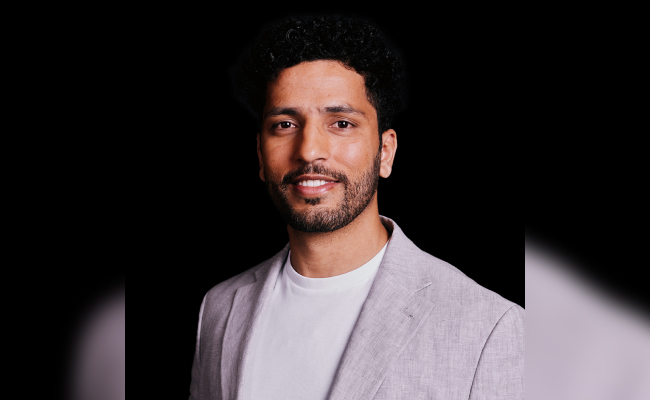
Washington, D.C.: Raqib Hameed Naik, founder and executive director of the Center for the Study of Organized Hate (CSOH), has urged the United States government to consider sanctions against certain Indian political leaders and Hindu nationalist organisations, alleging systematic persecution of Muslims and Christians in India.
Naik made the remarks while testifying before the United States Commission on International Religious Freedom (USCIRF) on the condition of religious minorities in India.
In his testimony, Naik alleged that the persecution of Muslims and Christians in India is being enabled by senior leaders of the Bharatiya Janata Party and networks linked to the Rashtriya Swayamsevak Sangh (RSS).
“The persecution of Muslims and Christians in India bears the sanction of the country’s top political leadership led by Prime Minister Modi and is implemented through both the state and the militant networks of the Hindu nationalist movement anchored by the RSS,” he said.
Naik named Narendra Modi, Himanta Biswa Sarma and Yogi Adityanath while discussing demolitions, hate speech and alleged discrimination against minorities.
He alleged that “this persecution is now embedded in bureaucracy, codified in law, shielded by absolute impunity, and steadily more ruthless in execution.”
Referring to Assam, Naik claimed that over the last five years the state government had demolished more than 22,000 structures and displaced nearly 100,000 people, mostly Bengali Muslims who were “falsely labelled as Bangladeshi infiltrators.”
“Forty per cent of those displaced lost their homes in 2025 alone,” he said, adding that there were documented cases of Muslims allegedly being taken to the Bangladesh border and forced across.
Naik also raised concerns over bulldozer demolitions in other BJP-ruled states, saying they continued despite a 2024 order of the Supreme Court of India prohibiting such punitive actions.
He named several companies, including JCB, Caterpillar Inc., Tata Motors and Mahindra & Mahindra, alleging that their machinery was used in demolition drives targeting Muslim homes.
The testimony also highlighted alleged violence linked to beef consumption and cattle transport.
“Organized cow vigilante groups now operate in almost 17 states,” Naik said.
He further alleged a rise in public events where swords and knives are distributed and in programmes where Hindu nationalist recruits receive firearms training.
Speaking about Christians, Naik said they face “assaults on pastors and worshippers, the forcible closure of churches, denial of burial rights, and arrests on fabricated conversion charges.”
Naik also criticised social media platforms, stating that “US-based social media platforms like Facebook, Instagram, YouTube and X serve as a central infrastructure for spreading this hate and bigotry and incitement to violence.”
According to CSOH’s 2025 report, Naik said the organisation documented 1,318 in-person hate speech events targeting Muslims and Christians in 21 Indian states.
“That is a shocking four hate speeches per day, and a 97 per cent increase over 2023,” he said.
During his testimony, Naik called on the US government to consider sanctions against certain BJP leaders and organisations such as the RSS, Bajrang Dal and Vishwa Hindu Parishad (VHP).
He also urged greater scrutiny of social media platforms and companies whose equipment he alleged had been used in demolition operations.