Thumbay University Hospital launches 24-hour ‘DRIVE-THRU Pharmacy’ to enable social distancing
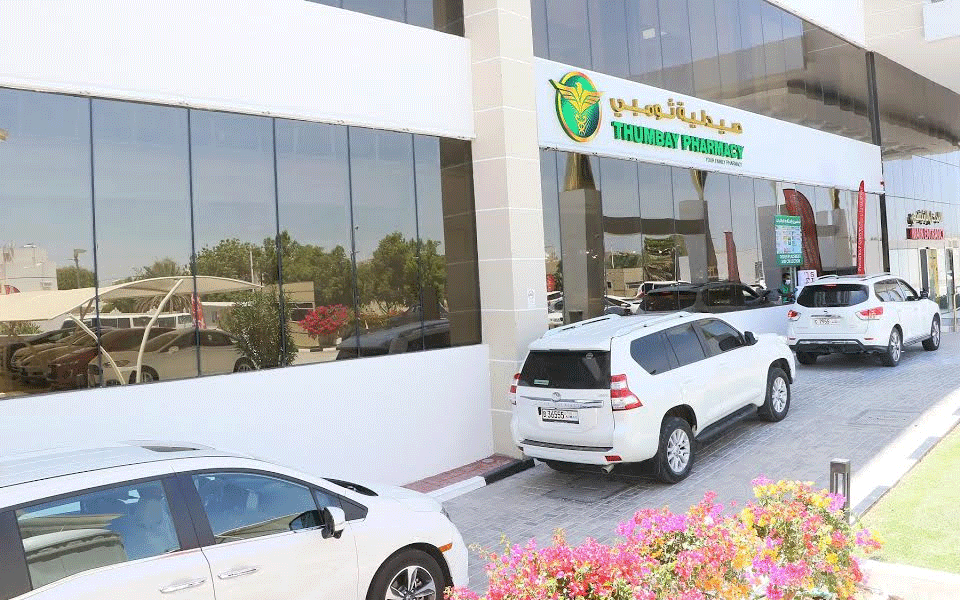
Thumbay University Hospital, the largest private academic hospital in the region located at Thumbay Medicity, Al Jurf, Ajman, has launched 24-hour drive-through pharmacy service at the hospital premises, enabling patients and customers to collect their medication without stepping out of their cars. The move comes as part of the hospital’s series of measures to improve customer convenience and safety, in the wake of the social distancing and hygiene regulations mandated by the UAE authorities and WHO due to the COVID-19 pandemic.
Customers can drive in and place their orders or present their prescriptions and collect the medications without having to physically enter the pharmacy, and by maintaining the stipulated social distance with the pharmacy staff handling their request. Direction signage have been installed at the hospital entrance and at other relevant places, ensuring that people have no difficulties accessing the drive-through service.
“Pharmacies play a vital role in the healthcare system, providing critical services to the public, especially in times like these when the world is dealing with a pandemic. It is important for Thumbay University Hospital to ensure the safe and continuous functioning of our pharmacy. By launching drive-through service, we intend to minimize risks for our staff as well as patients and customers, through infection prevention and social distancing measures. This also ensures round-the-clock availability of medicines and other pharmacy essentials,” said Dr. Mohammad Faisal, the COO of Thumbay University Hospital.
Moreover, the hospital has also enabled chronic medication refill for insurance patients by just making a phone call to 054-9955415. “We want to assure our patients that they will always have easy access to enough chronic medications including cardiac medications, diabetic medications or any potentially important medication that they need on a routine basis. Patients can get their medicines at home through the home delivery of medicines being done by Thumbay University Hospitalpharmacy,” said Dr. Mohammad Faisal.
Elaborating on the efforts of the Thumbay Pharmacy network to ensure the safety of its staff and customers, Ravi K Gannavarapu, General Manager of the Retail Division of Thumbay Group said, “All Thumbay Pharmacies in the UAE are taking active steps to facilitate social distancing and hygiene, thereby reducing risks of exposure. All our pharmacy outlets frequently clean and disinfect customer service counters, waiting areas and customer contact areas. Thumbay Pharmacy’s drive-through service at Thumbay University Hospital is the latest step in this direction.”
Thumbay University Hospital has a robotic pharmacy with automated robotic technology to prepare and dispense medicines. This smart pharmacy, part of the Thumbay Pharmacy network, ensures zero dispensing errors and achieves considerable reduction in waiting times. Spread across 4700 sq. ft. area, it is equipped with robotic and pneumatic tube system, and has been designed for high density storage up to 42,000 units and hassle-free retrieval of medications. It is equipped with medication safety bar-code scanning, ensuring that the medications and strengths are correct during both the carousel stocking and dispensing process.
Let the Truth be known. If you read VB and like VB, please be a VB Supporter and Help us deliver the Truth to one and all.
TCS case: AIMIM chief Owaisi decries 'media trial' of Nida Khan; asks if possessing burqa is crime
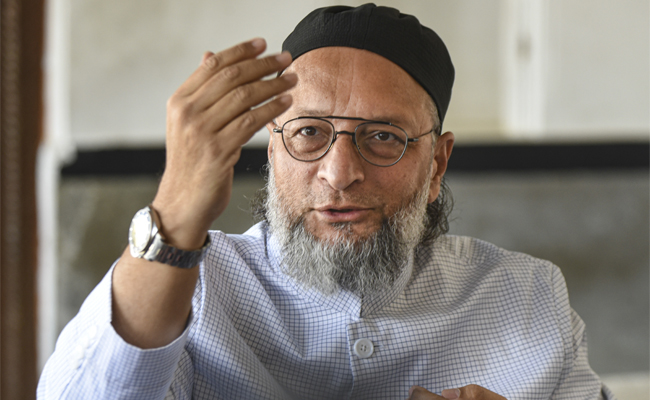
Chhatrapati Sambhajinagar (PTI): All India Majlis E Ittehadul Muslimeen president Asaduddin Owaisi on Saturday said it was wrong to associate his party to TCS case accused Nida Khan and asserted the latter will be proven innocent in court.
Khan, a key accused in the TCS sexual harassment-forced conversion case, was arrested from Chhatrapati Sambhajinagar on Thursday by Nashik police, following which AIMIM corporator Matin Patel was booked for sheltering her while she was on the run.
The developments have evoked sharp reactions from ruling Mahayuti leaders, including ministers Sanjay Shirsat and Nitesh Rane, who have called for a deeper probe against the AIMIM in the case.
Addressing reporters after a meeting of his party in connection with the upcoming Special Intensive Revision (SIR) of electoral rolls in the state, Owaisi said Nida Khan is being subjected to a "media trial".
"Nida Khan was transferred from her job before the FIR was registered. We all have seen the statement of TCS. It says she is not connected in any manner to the HR department. Nine FIRs have been registered so far and in one of them, Nida Khan has been named for allegedly hurting religious sentiments," he said.
Asserting that the complainant in the case is a "member of the ruling party", the Lok Sabha MP questioned whether possession of a burqa or a book on Prophet Mohammad was illegal, adding that it is available in every Muslim household.
Earlier, in Delhi, police dubbed some youth as terrorists because a book of (legendary poet) Mirza Ghalib was found in their home, he pointed out.
"This is a media trial and if the media acts like judge and jury, it is dangerous. It will not serve the purpose of justice. We have faith that the court will deliver justice and the girl (Nida Khan) will be proven innocent. This case will not stand in court," Owaisi emphasised.
"This is being done with an intention to harass educated persons from the Muslim community. The allegations are coming out of hatred. The judiciary will play its role. But connecting a party with this case is completely wrong," he further said.
On his party colleague and corporator Matin Patel being booked, Owaisi said the charges will be contested in court.
He claimed such an environment was created after the blasts in Malegaon and Mumbai, but no one went to the families of those incarcerated once the judgement (of acquittal) was delivered.
The allegations against his party in the case at least means "we are not the B team of the BJP", the AIMIM chief added.
A Special Investigation Team (SIT) of the Nashik police is probing nine cases of molestation and harassment at the IT major's Nashik unit.
It had arrested eight persons, including a female operations manager, by registering nine FIRs after allegations of exploitation, attempt of forceful conversion, hurting religious sentiments, molestation and mental harassment of female employees at the TCS unit came to light.
Nida Khan is accused of targeting employees in a WhatsApp group, pressuring them to pray and eat non-vegetarian food. According to the FIR, she also allegedly advised women employees to dress and behave in accordance with Islamic traditions.
TCS has clarified that it has adopted a zero-tolerance policy towards harassment and coercion of any form for a long time, and the employees allegedly involved in sexual harassment at the Nashik office have been suspended.