Trump delays Strait of Hormuz deadline as Wall Street sees its biggest loss of war
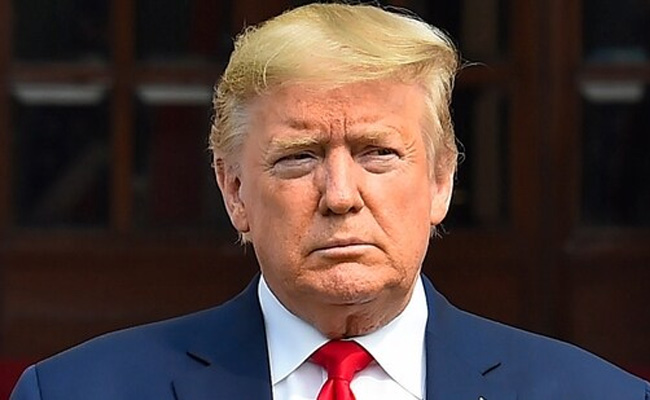
Dubai (AP): US President Donald Trump said Thursday he will delay a threatened strike on Iran's energy infrastructure and extend his deadline for Tehran to reopen the Strait of Hormuz until April 6, saying talks to end the war are “going very well”.
The move marks a pullback from Trump's earlier warning that the US would target Iran's energy plants if the crucial shipping lane remained closed. Iran has threatened to retaliate against regional infrastructure, including desalination facilities, if the US follows through.
A day after Tehran dismissed Trump's 15-point ceasefire plan, the president said Iran was “begging to make a deal” and urged its leaders to “get serious soon” about negotiations.
Trump's announcement on social media came after US stocks fell sharply and oil prices rose, as doubt took over again on Wall Street about a possible end to the war.
The war has killed more than 1,900 people in Iran and nearly 1,100 in Lebanon, 22 Israelis and 13 US military members, as well as a number of civilians on land and sea in the Gulf region. Millions of people in Lebanon and Iran have been displaced.
Here is the latest:
Iran sends letter to UN over threats against Araghchi and Qalibaf
=============================
Iran sent a letter to the United Nations over claims that the country's foreign minister and parliament speaker had been “targets for assassination”.
The letter, dated Thursday and signed by Ambassador Amir Saeid Iravani, focused on media reports that Foreign Minister Abbas Araghchi and Speaker Mohammad Bagher Qalibaf both had been spared for the time being by Israel and the US as negotiations to reach a ceasefire in the war go on.
“The reports indicate the existence of an operational framework contemplating the assassination of the highest-ranking political officials of the Islamic Republic of Iran,” the letter reads.
It added “The conditional nature of the purported suspension' further underscores that the threat remains real, deliberate and ongoing.”
The letter called any such programme “state-sponsored terrorism”.
The war's opening airstrikes by Israel killed Supreme Leader Ayatollah Ali Khamenei. Other military commanders have been killed as well.
Qalibaf has been considered as a possible negotiating partner to the US, while Araghchi has continued diplomatic outreach.
Pakistan is leading an indirect exchange of positions between Tehran and Washington, supported by Egypt and Turkey.
Latest reports of live fire
================
Israel's military said early Friday that it had conducted a wave of strikes “in the heart of Tehran”.
Smoke was seen billowing in the Beirut skyline early Friday. There was no advance warning of a strike from Israel's military, which didn't immediately provide information.
Kuwait said early Friday that it shot down Iranian drones in an attack targeting the small, oil-rich nation. The United Arab Emirates sounded a missile alert over Dubai around the same time, though there was no sound of an interception heard in the city-state as rain blanketed it.
Israel's military said it was working to intercept a missile launch from Iran early Friday. Sirens sounded in Tel Aviv, surrounding communities and central parts of the occupied West Bank. Emergency services said later that there were no reports of impacts or casualties. There were 10 salvos from Iran on Thursday, and Hezbollah fired at northern Israel throughout the day.
After markets rattle, Trump once again punts on following through with threat on Iran power plants
==============================
Facing a convulsing stock market, the president moved Thursday to buy himself more time and hold off, once again, on carrying out a threat to obliterate Iran's energy plants over its effective closure of the Strait of Hormuz.
Trump said he was delaying taking potential action because talks aimed at ending the conflict are going “very well”, despite the fact that Iran continues to publicly insist it is not negotiating with the White House on a 15-point proposal — delivered by Pakistani intermediaries — to end the war. He said Iran asked for the grace period.
“They asked for seven (days),” Trump said in an appearance on Fox News Channel's “The Five,” shortly after he announced on social media that he would give Iran until April 6 to reopen the strait. “And I said, 'I'm going to give you 10.'”
This was not the first time Trump has appeared to have been jostled into adjusting policy in the face of market volatility.
In a southern Lebanese city emptied by Israel's offensive, some vow to stay put
=============================
The ancient coastal city of Tyre — famed for its Roman ruins and white sandy beaches — is almost a ghost town.
Abandoned dogs roam vacant streets dotted with apartment buildings blasted by recent Israeli airstrikes. The city largely emptied last week as Israel escalated its attacks against Iran-backed militant group Hezbollah and issued sweeping evacuation orders for everywhere south of the Litani River.
In recent days Israeli airstrikes have also destroyed most of the bridges over the Litani, severing wide swaths of the country — including Tyre — from the rest of Lebanon.
But several thousand residents linger here in Tyre, refusing to be expelled from their land.
Fishermen who say they can't afford to abandon their work cast lines into the Mediterranean on Thursday, complaining that a strict curfew and scarcity of customers mean their daily catch yields a pittance.
Draft UN resolution on free navigation in Strait of Hormuz under discussion, French foreign minister says
==============================
Jean-Noël Barrot said at a news conference that the discussions are continuing in New York on the resolution for what he called a “strictly defensive” international mission for the vital waterway.
Barrot said the mission would escort ships and ensure traffic can resume as quickly as possible once “calm” is restored. The hope is that such a multilateral mission would help lower energy prices.
Barrot added he has been consulting with his counterparts in the Gulf, especially Bahrain, the Arab representative to the UN's most powerful body and one of several countries targeted by Iranian drones or missiles since the US and Israel began striking Iran on February 28.
Israel's military says it is short thousands of troops as it fights on multiple fronts
==============================
Brig. Gen. Effie Defrin, an Israeli military spokesperson, said Thursday that the army needs about 15,000 soldiers, roughly half of them combat troops, to be at full strength for its multiple missions.
Israel can call up tens of thousands of reservists, but repeated deployments have prompted past pushback, with many citing exhaustion and the financial strain of leaving work and family behind.
With tens of thousands still deployed in Gaza and more sent to Lebanon, Defrin said Israel expected to broaden operations on several fronts. Defrin also pointed to the occupied West Bank.
Lt. Gen. Eyal Zamir, the military's chief of staff, warned last week that the army should not have to divert forces to the West Bank during a multifront war to contend with attacks by Israeli settlers on Palestinians and unauthorized outposts in military-controlled zones.
UN food and agriculture agency's top economist warns of serious impact if Iran war lasts 3-6 months
=============================
Maximo Torero said markets will absorb the Iran war's impact if the conflict ends in the next two weeks or so. But if it continues for three to six months it will not only impact food security and energy but other sectors as well because prices will rise.
And those rising prices, and the fall in remittances from overseas workers, will affect economic development and growth across the globe, the chief economist for the UN Food and Agriculture Organization told a UN press conference Thursday.
He said an El Nino climate phenomenon, which tends to increase global temperatures, is also expected soon. A strong El Nino could significantly exacerbate the economic situation, he said.
“My message is, we need to find a way to resolve this problem as soon as possible,” Torero said in the video press conference. “Because, if not, the consequences … could be very dramatic, even worse that what happened in the Ukraine war.”
Experts see different shades' of Israeli control in southern Lebanon
==============================
“The first line of borders is a no-man zone. This is basically a large parking lot that is facing Israel,” said Mohanad Hage Ali, a senior fellow at the Carnegie Middle East think tank in Beirut.
“There is nothing there, no movement, nothing at all,” he said.
Lebanese movement is restricted farther north. During last year's olive harvest, farmers struggled to reach groves because of Israeli strikes and had to be accompanied by Lebanese troops and UN peacekeepers, who coordinated with Israel.
Sarit Zehavi, the founder and president of the Alma Institute and a retired Israeli military officer, said Israel will likely establish a more extensive area of control stretching farther north.
She acknowledged that Israel was unlikely to defeat Hezbollah and was at risk of having to maintain a long-term presence in southern Lebanon.
“But the other alternative is to take the risk that we will be slaughtered. It's as simple as that,” she said.
Israel invaded southern Lebanon in 1982 during the country's civil war. Hezbollah, established that year, waged a guerrilla campaign that eventually ended the Israeli occupation in 2000.
Lebanon fears another occupation as Israel threatens to use Gaza tactics
==============================
As Israel's leaders hint at a long-term occupation of southern Lebanon modelled on the devastating conquest of much of Gaza, many Lebanese who fled their homes are in limbo.
Some fear they may never return.
Elias Konsol and his neighbors fled the Christian border village of Alma al-Shaab with UN peacekeepers' help. He was reunited with his mother, who cried in his arms, at a church near Beirut where funeral services were being held for a resident killed in an Israeli strike.
Konsol said there were no weapons or Hezbollah fighters in his village, but it was forced to evacuate anyway.
“We no longer know our fate,” he said. “We don't know if we will see our homes and village again.”
US inflation projected to reach 4.2 per cent this year
==============================
The Iran war's disruption of oil exports from the Middle East will substantially boost consumer prices while also slowing growth in the United States and many other developed countries, the Paris-based Organization for Economic Cooperation and Development said Thursday.
The OECD expects US inflation to jump to an annual average of 4.2 per cent this year, from about 2.6 per cent in 2025. The increase will manly be driven by spiking gas costs, but fertilizer exports have also been interrupted and could raise food prices in coming months, the OECD said.
“In the United States, the impact of higher energy prices on inflation will more than offset the effect from the decline in effective tariff rates on imports,” the OECD's interim outlook report said.
Growth is expected to slip to 2% this year from 2.1 per cent in 2025, then decline further next year to 1.7 per cent. In 20 of the largest countries, referred to as the Group of 20, which includes Japan, Europe, and large emerging economies such as Brazil, inflation is forecast to rise to 4 per cent from 3.4 per cent.
Renewables-rich Spain cuts fuel tax to soften energy blow caused by Iran war
==============================
Even though Spain generated over half its electricity last year from renewable sources, its government is still concerned that a global scarcity of oil and natural gas coming from the Middle East will impact consumers with higher prices at the pump.
So parliament has approved a package of emergency economic measures, including slashing the sales tax on gas and electricity bills from 21 per cent to 10 per cent. The government estimates that car owners will save 30 cents on the euro for every litre of gas, or around 20 euros per tank.
Truck drivers, farmers, herders and fishermen will be able to claim refunds of 20 cents per each litre for diesel from the government. The same refund will apply to fertilizers. Spain is also freezing the price of butane and propane.
The government says the measures total 5 billion euros (USD 5.7 billion) and will help 20 million of Spain's 49 million residents.
Israel adds an armoured division to its invasion of southern Lebanon
==============================
The 162nd Division's deployment is the latest expansion of Israel's ground offensive against Hezbollah, as senior officials say the army aims to control territory up to the Litani River.
Israel does not disclose division sizes but previously described three divisions in Gaza as “tens of thousands” of troops.
The move comes a day after Israeli Defense Minister Israel Katz said the country would expand its control and establish a “security zone” up to the Litani River. He drew parallels to Gaza, where many areas have been depopulated.
The Israeli military has destroyed bridges and homes in southern Lebanon and set up new positions in recent weeks. Lebanon says over 1 million people have been displaced and more than 1,000 people killed.
France says 35 countries joined military talks on reopening Hormuz shipping
==============================
Thursday's videoconference of defense staff chiefs focused on how to reopen shipping “once the intensity of hostilities has sufficiently decreased,” France's Defense Ministry said.
That could entail a “strictly defensive” mission to escort commercial vessels and restore freedom of navigation, the ministry said.
Let the Truth be known. If you read VB and like VB, please be a VB Supporter and Help us deliver the Truth to one and all.
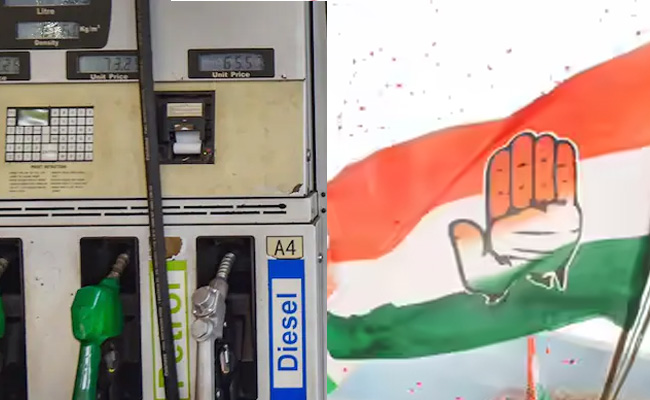
Excise cuts won't change fuel price for consumers, relief only in narrative: Congress
New Delhi (PTI): The Congress on Friday claimed that the government's
excise cuts will not change prices for dealers and consumers, and that the relief exists only in the narrative, not in reality.
The government has slashed excise duty on petrol to Rs 3 per litre and exempted diesel fully from the duty.
The Congress said the government should focus on delivering actual relief to consumers, instead of "manufacturing headlines and fooling people."
The party's media and publicity department head, Pawan Khera, said, "If you saw the headlines about petrol and diesel prices 'coming down' and thought the government had offered relief to your pocket, you'd be mistaken."
As of now, prices remain the same for dealers and for consumers, he claimed.
"What has actually been reduced is the 'special additional excise duty' — a levy paid by Oil Marketing Companies to the government. The words 'special' and 'additional' reveal how unnecessary this tax is," Khera said on X.
He pointed out that these companies have been absorbing losses since the outbreak of the conflict in West Asia.
"The government has now merely agreed to share a small part of that burden but reducing the 'special additional' levy - that too almost a month later," the Congress leader said.
"Relief exists but only in the narrative -- not in reality. Instead of manufacturing headlines and fooling people, the government should focus on delivering actual relief to consumers," Khera said.
Global crude prices have risen by almost 50 per cent since the United States and Israel launched military strikes against Iran on February 28, triggering sweeping retaliation from Tehran.
In a notification issued late on March 26, the Finance ministry cut excise duty to Rs 3 a litre, from Rs 13 a litre earlier, while the levy on diesel was slashed to nil from Rs 10 earlier. The duty cuts are effective immediately, the ministry said.
Despite the spike in international prices, retail pump rates have not been changed, putting a strain on the finances of oil companies.
The government cuts stand to give some relief to oil companies.
Tracking the excise duty cut notification, shares of fuel retailers IOC, BPCL and HPCL opened higher on BSE.
International oil prices touched USD 119 per barrel earlier this month, before pulling back to around USD 100 per barrel.
India imports 88 per cent of its crude oil and roughly half of its natural gas. These mostly come via the Strait of Hormuz.