UAE announces relaxing of Islamic laws for personal freedoms
Dubai: The United Arab Emirates announced on Saturday a major overhaul of the country's Islamic personal laws, allowing unmarried couples to cohabitate, loosening alcohol restrictions and criminalising so-called honour killings.
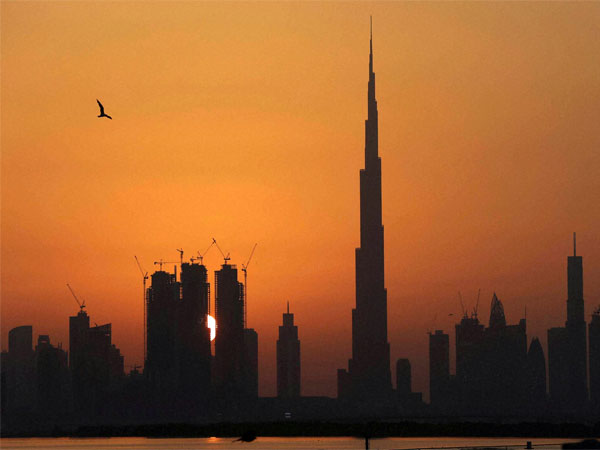
The broadening of personal freedoms reflects the changing profile of a country that has sought to bill itself as a skyscraper-studded destination for Western tourists, fortune-seekers and businesses despite its legal system based on a hard-line interpretation of Islamic law.
The changes also reflect the efforts of the Emirates' rulers to keep pace with a rapidly changing society at home.
The announcement also follows a historic US-brokered deal to normalise relations between the UAE and Israel, which is expected to bring an influx of Israeli tourists and investment.
Changes include scrapping penalties for alcohol consumption, sales and possession for those 21 and over. The legal reforms were announced on state-run WAM news agency and detailed in state-linked newspaper The National.
Previously, individuals needed a liquor license to purchase, transport or have alcohol in their homes. The new rule would apparently allow Muslims who have been barred from obtaining licenses to drink alcoholic beverages freely.
Another amendment allows for cohabitation of unmarried couples, which has long been a crime in the UAE. Authorities, especially in the more free-wheeling financial hub of Dubai, tend to look the other way when it comes to foreigners, but the threat of punishment still lingered for such behavior.
The government also decided to get rid of laws protecting honour crimes, a widely criticized tribal custom in which a male relative may evade prosecution for assaulting a woman seen as dishonoring a family. The punishment for a crime committed to eradicate a woman's shame," for promiscuity or disobeying religious and cultural strictures, will now be the same for any other kind of assault.
In a country where expatriates outnumber citizens nearly nine to one, the amendments will permit foreigners to avoid Islamic Shariah courts on issues like marriage, divorce and inheritance.
The reforms come as the UAE gets ready to host the high-stakes World Expo. The event is planned to bring a flurry of commercial activity and some 25 million visitors to the country, after it was pushed back a year because of the coronavirus pandemic. (AP)
Let the Truth be known. If you read VB and like VB, please be a VB Supporter and Help us deliver the Truth to one and all.
Gujarat builds 870 MW battery power backup network to stabilise renewable energy grid
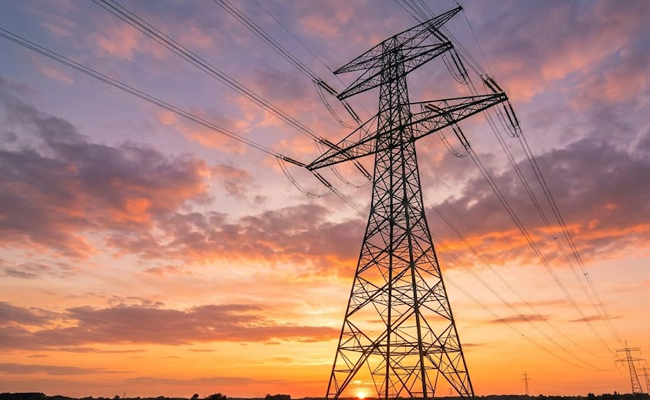
Gandhinagar (PTI): Gujarat has initiated battery storage systems at five locations in the state, with a total capacity of 870 MW, to maintain the stability of the renewable power grid, officials said on Saturday.
Battery Energy Storage Systems (BESS) are essential for storing electricity generated from solar and other renewable sources. They help manage additional load and maintain grid stability.
“Gujarat has initiated battery storage systems at five locations with a total capacity of 870 MW,” an official release stated.
The state has also registered 13 projects across Ahmedabad, Gandhinagar, Banaskantha, Patan and Kutch districts to set up additional battery storage systems, it said.
Modhera in Gujarat, India’s first solar village, has launched the country’s first BESS integrated with a solar power plant, it said.
"Under the leadership of Chief Minister Bhupendra Patel, the state has continued to advance in this direction and has strengthened its position among the leading states driving battery storage systems in India,” the release said.
Recently, a battery storage system was commissioned at Charal in the Sanand taluka of Ahmedabad, it said.
Four systems are operational at Modhera in Mehsana and Lakhpat in Kutch. The state government has also included advanced energy storage systems as a key component in the Gujarat Integrated Renewable Energy Policy, 2025, the release said.
Accordingly, standalone battery storage projects, works linked with new renewable energy installations, and those integrated with existing renewable energy systems are being approved, it said.
Once the Standard Operating Procedure is approved, registrations for battery storage will open for commercial and industrial users, it said, adding that the move will allow them to set up battery storage alongside their solar or wind projects.
The state government is developing battery storage systems across Gujarat, with companies being invited in through a competitive bidding process.
GETCO (Gujarat Energy Transmission Corporation) and power distribution companies strategically identify locations for battery storage systems based on grid capacity and operational requirements, the release said.
Power generation from solar and other renewable sources fluctuates throughout the day. Excess energy generated during peak hours can be stored and supplied later during periods of high demand, especially in the evening when solar output declines. Battery storage systems help reduce stress on the grid and improve grid stability, it added.