UAE bans private drones for a month after deadly attack on Abu Dhabi

Dubai, Jan 23: The UAE government has ordered to stop all flying operations of private drones and light sports aircraft in the Gulf country for a month, days after two Indians and a Pakistani national were killed in Abu Dhabi in a rare drone and missile attack claimed by Yemen's Houthi rebels.
In a statement, the Ministry of Interior ordered to stop all flying operations of drones and light sports aircraft for owners, practitioners and enthusiasts from January 22.
According to the statement, the ban also encompasses air and sail spots.
"The decision came after the misuse spotted recently, not limiting the practice of these sports to the areas identified in the user permits and trespassing into areas where these types of activities are prohibited, said the statement released by the UAE's official news agency Wam.
The regulations were put in place in coordination with the General Authority for Civil Aviation and in line with the relative guidelines, it said.
It said that exceptions might be granted for filming. The entities that have work contracts or commercial or advertising projects that rely on filming using drones must communicate with the permit authorities to take the necessary exceptions and permits to carry out their work and projects, it said.
The ministry reminded users that anyone performing these activities during that period and disregarding guidelines will be subject to legal liabilities.
Last week, Yemen's Houthi rebels targeted a fuel depot in Abu Dhabi and the city's main airport, heightening tensions in the oil-exporting region.
The UAE blamed the attack on Yemen's Houthi rebels, saying this sinful targeting will not go unpunished.
The UAE "reserves its right to retaliate to these terrorist attacks and this sinful criminal escalation", said a statement issued by the Ministry of Foreign Affairs and International Cooperation.
The Houthi rebels have taken responsibility for several drone attacks on Saudi Arabian oil facilities in the past. The UAE is part of the Saudi-led coalition in Yemen fighting Houthis.
Let the Truth be known. If you read VB and like VB, please be a VB Supporter and Help us deliver the Truth to one and all.
Gujarat builds 870 MW battery power backup network to stabilise renewable energy grid
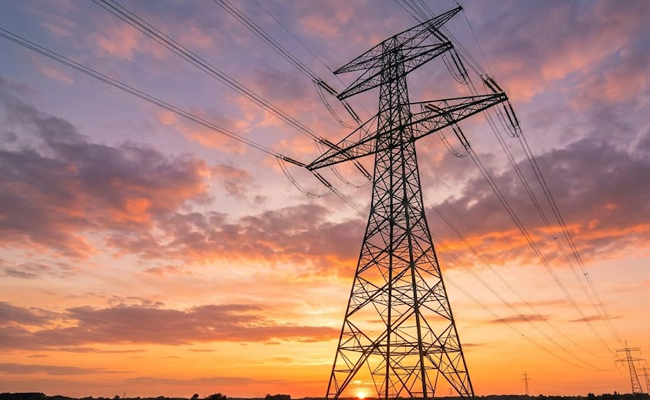
Gandhinagar (PTI): Gujarat has initiated battery storage systems at five locations in the state, with a total capacity of 870 MW, to maintain the stability of the renewable power grid, officials said on Saturday.
Battery Energy Storage Systems (BESS) are essential for storing electricity generated from solar and other renewable sources. They help manage additional load and maintain grid stability.
“Gujarat has initiated battery storage systems at five locations with a total capacity of 870 MW,” an official release stated.
The state has also registered 13 projects across Ahmedabad, Gandhinagar, Banaskantha, Patan and Kutch districts to set up additional battery storage systems, it said.
Modhera in Gujarat, India’s first solar village, has launched the country’s first BESS integrated with a solar power plant, it said.
"Under the leadership of Chief Minister Bhupendra Patel, the state has continued to advance in this direction and has strengthened its position among the leading states driving battery storage systems in India,” the release said.
Recently, a battery storage system was commissioned at Charal in the Sanand taluka of Ahmedabad, it said.
Four systems are operational at Modhera in Mehsana and Lakhpat in Kutch. The state government has also included advanced energy storage systems as a key component in the Gujarat Integrated Renewable Energy Policy, 2025, the release said.
Accordingly, standalone battery storage projects, works linked with new renewable energy installations, and those integrated with existing renewable energy systems are being approved, it said.
Once the Standard Operating Procedure is approved, registrations for battery storage will open for commercial and industrial users, it said, adding that the move will allow them to set up battery storage alongside their solar or wind projects.
The state government is developing battery storage systems across Gujarat, with companies being invited in through a competitive bidding process.
GETCO (Gujarat Energy Transmission Corporation) and power distribution companies strategically identify locations for battery storage systems based on grid capacity and operational requirements, the release said.
Power generation from solar and other renewable sources fluctuates throughout the day. Excess energy generated during peak hours can be stored and supplied later during periods of high demand, especially in the evening when solar output declines. Battery storage systems help reduce stress on the grid and improve grid stability, it added.