UAE issues Kerala travel warning over Nipah virus
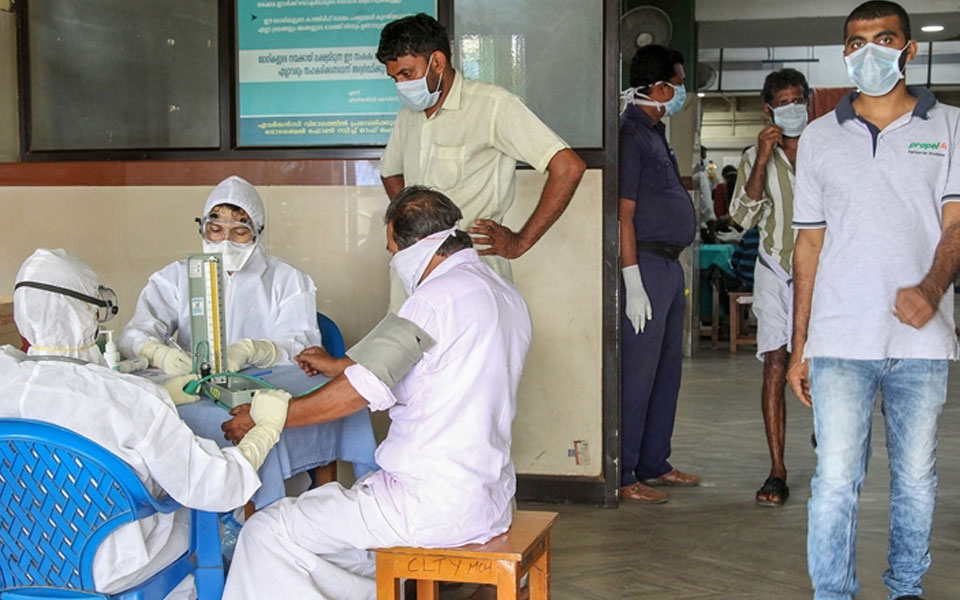
Abu Dhabi, May 25 : The UAE Ministry of Health and Prevention (Mohap) has asked people to put off unnecessary travel to Kerala where a Nipah virus (NiV) outbreak has claimed 10 lives and at least 40 others have been quarantined.
"The Mohap alerts the people travelling to Kerala to be aware of contracting the infection and advises them to postpone unnecessary travel till the situation is controlled," the Khaleej Times quoted a Ministry statement as saying on Thursday.
"The Ministry works with its strategic partners to assess the risk of importation of Nipah cases to the country and put the necessary control measures. Also, Mohap is in continuous coordination with the World Health Organisation (WHO) to implement the global recommendations," it added. Dubai-based Emirates airlines said that they were monitoring the situation closely.
"With regards to preventive or other measures, we will take guidance from the WHO and other international bodies. At this time, there are no recommended actions for airlines," it said.
The WHO has not issued any specific advice to countries that have not been affected by the Nipah but has asked them to enhance the level of preparedness.
Among the advisories given, the world body has advised countries to enhance surveillance at healthcare facilities including at points of entry and give case definitions among healthcare workers.
It said that Nipah symptoms are not specific and include flu-like illness and hence can be confused with any respiratory illness.
Nipah was first detected in Malaysia in 1998, followed by Bangladesh in 2001 and annual outbreaks have occurred in that country since, with the disease also occurring periodically in eastern India, making it the third country. The fourth country reporting Nipah virus infection is the Philippines.
The natural host of the virus are fruit bats. Human infections can result from contacts with infected pigs. Also, humans become infected with Nipah as a result of consuming food products contaminated by secretions of infected fruit bats.
Human-to-human transmission has also been documented.
Let the Truth be known. If you read VB and like VB, please be a VB Supporter and Help us deliver the Truth to one and all.
Allahabad HC orders probe into 'reinstatement' of teacher in UP's Barabanki
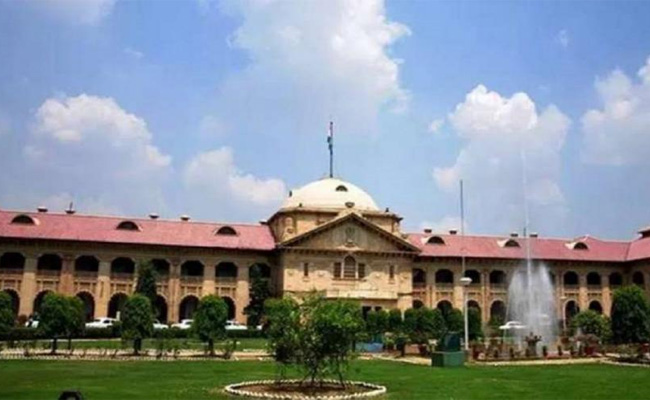
Lucknow (PTI): The Lucknow Bench of the Allahabad High Court on Friday ordered a probe by the special task force (STF) into alleged irregularities in the rejoining of a teacher at City Intermediate College in Barabanki, observing that the reinstatement appeared to be prima facie illegal.
The court also directed the recovery of the salary paid to the teacher during the disputed period.
A bench of Justice Rajeev Singh passed the order on a petition filed by the college management committee. The court expressed doubts over the roles of the District Inspector of Schools (DIOS), Barabanki, the college principal and the teacher concerned and hence, directed a detailed inquiry into the matter.
Taking note of alleged manipulation of records and misleading submissions, the court ordered the immediate transfer of the Barabanki DIOS to ensure a fair probe. It also directed the initiation of disciplinary proceedings against the then joint director of education of the Ayodhya division.
In its order, the court found that the teacher, Abhay Kumar, was initially appointed as an assistant teacher in 2018 but joined an Eklavya Model Residential School in Chhattisgarh as a lecturer in June 2024 without obtaining permission from the management. His subsequent request to retain the lien was rejected.
Despite this, he was allowed to rejoin the Barabanki College in September 2025 on the directions of the joint director of education and the DIOS, and was even paid the salary for October 2025. The court termed the rejoining "wholly illegal" and lacking any legal basis.
The bench also expressed concern over lapses in communication within the education department and directed the Uttar Pradesh chief secretary to ensure that official orders are communicated through email and WhatsApp as well, to prevent disputes.
The matter is next listed for hearing on May 28 when a compliance report is sought.