UAE rolls out plan to invest in economy, liberalise laws

Dubai, Sep 5: The United Arab Emirates announced Sunday a major plan to stimulate its economy and liberalise stringent residency laws for expatriates, as the country seeks to overhaul its finances and attract foreign residents and capital.
The country's plan to lure foreign talent reflects a growing contrast with the other oil-rich economies of the Persian Gulf that are becoming increasingly protectionist.
Although many of the Emirati ministers' promised overhauls remained vague at a press conference, their intentions to boost spending after the devastation of the pandemic and loosen laws to draw more residents was clear.
Abdulla bin Touq, the minister of the economy, pledged that the Emirati government would pour some USD 13.6 billion into the economy over the next year. He laid out a raft of investment opportunities for countries to boost development by 10 per cent in the coming years.
We are confident that these projects in the support of investment will make (the UAE) one of the most competent economies in the world, he proclaimed at the government's first large in-person press conference since the pandemic.
The UAE for years since its independence has tied employment to residency status, giving employers outsized power and forcing people to immediately leave the country once they lost their jobs.
The new plans give residents more time to seek other jobs after termination, allow youth over age 15 to gain employment as they live with their parents, and enable widows and divorced couples to live longer without visa restrictions in the country.
Let the Truth be known. If you read VB and like VB, please be a VB Supporter and Help us deliver the Truth to one and all.
TVK chief Vijay appointed Tamil Nadu CM, to be sworn-in on May 10
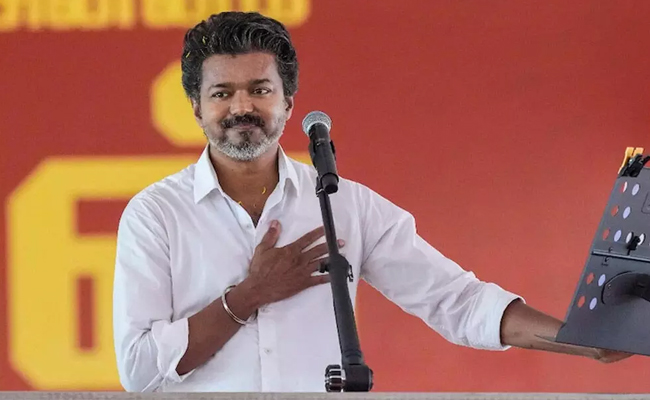
Chennai (PTI): Governor Rajendra Vishwanath Arlekar on Saturday appointed TVK chief C Joseph Vijay as Chief Minister of Tamil Nadu and and the leader will take oath on Sunday, the Lok Bhavan said.
The swearing-in of the Vijay-led ministry will be held on Sunday at 10 am here at Nehru Stadium.
Vijay was appointed CM after he presented letters of support from the VCK and the IUML who have two MLAs each. The governor held talks for about an hour over the requisite support.
According to a Lok Bhavan press release, Vijay was appointed the chief minister by Governor Arlekar as per the provisions of the Constitution. The governor also invited Vijay to form ministry.
Further, Arlekar asked Vijay to seek the vote of confidence on or before May 13.
The TVK chief met the governor along with Congress top leader K Selvaperunthagai and leaders of supporting parties including the CPI(M) State Secretary P Shanmugam.
Taking into account support from VCK and IUML, who have 2 seats each, the TVK's seat tally has now touched 120 in the 234-member Assembly.