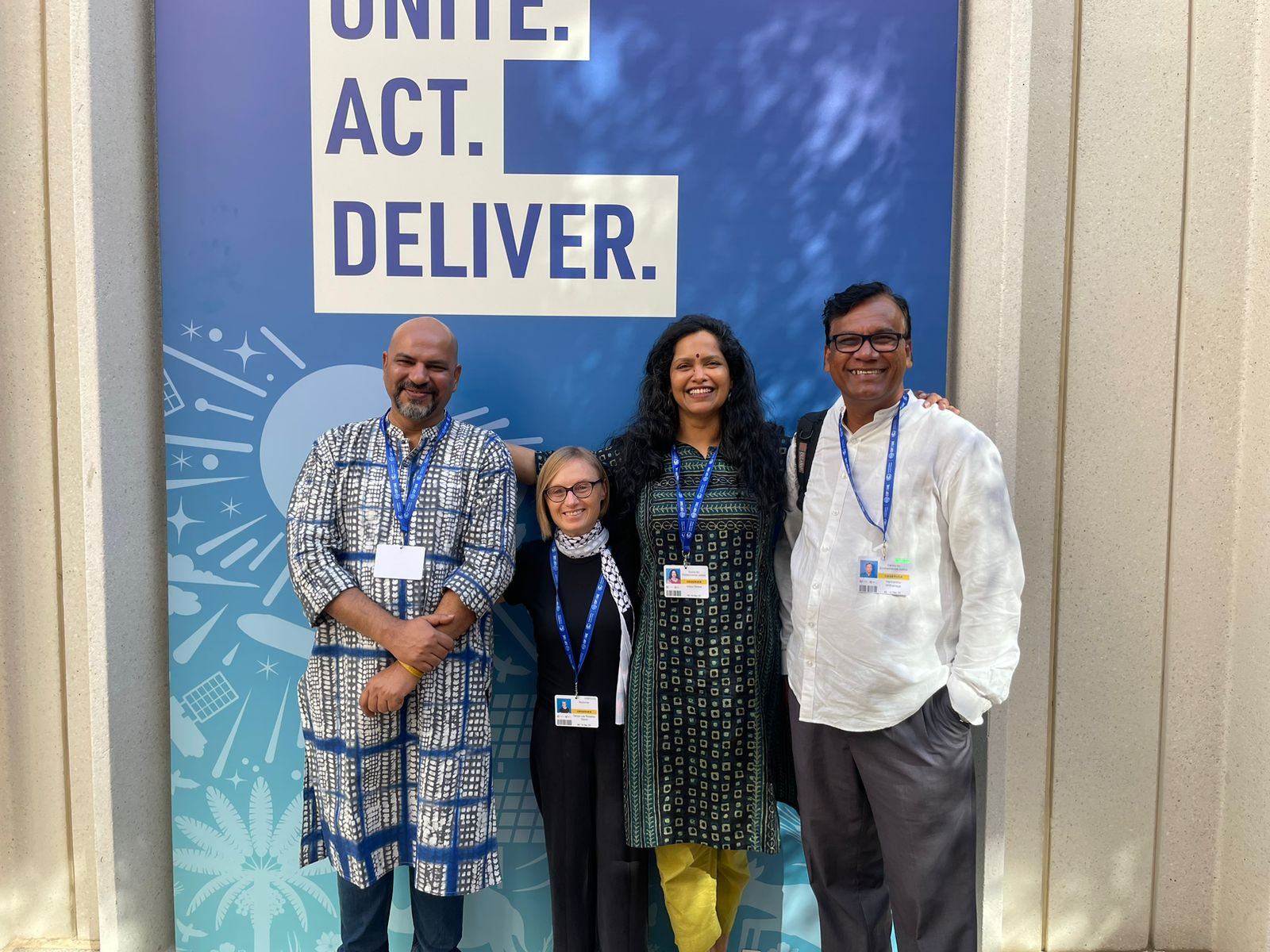
Urgency, equity in environmental struggle against climate colonialism discussed at COP-28

Dubai: The culmination of the Just Transition in South Asia press conference, which took place on December 11 at COP-28 in Dubai, has illuminated the pressing need for immediate action to confront the i mpending climate crisis. The event delivered a stark call for decisive decisions and collaborative endeavors by major economies to ensure an equitable and just transition in South Asia.
Key insights from the conference include a global south's call for urgent action, emphasizing concrete decisions to curb excessive emissions and meet the 1.5-degree goal by 2050, as outlined in the Paris Agreement. The conference underscored that 83% of the carbon budget has already been exhausted, leaving a precarious 50:50 chance of achieving the Paris Agreement goals by 2030.
Further, the Climate Risk Index revealed that six South Asian nations, including Bangladesh, India, Nepal, Pakistan and Sri Lanka, are among the top 10 most vulnerable countries impacted by climate change. The region bore witness to the devastating impact of seven cyclones in 2023 alone, resulting in loss of lives, destruction of homes, and severe economic repercussions.
Hasan Mehedi from CLEAN (Coastal Livelihood and Environmental Action Network), Bangladesh, firmly stated, "The people of South Asia are bearing the brunt of climate change impacts, and their plea for urgent action is a call to the global community. The decisions we make today will determine the fate of vulnerable communities and the sustainability of our planet."
Recognizing the challenges faced by South Asian countries, representing a quarter of the global population and nearly a third of the world's poor, the conference shed light on the intricacies of energy poverty. The imperative to decarbonize the energy sector is acknowledged, yet challenges persist in meeting basic electricity needs and overcoming economic crises, particularly in Sri Lanka, Pakistan and Bangladesh.
A positive development emerged with the signing of the Global Renewables and Energy Efficiency Pledge (GREEP) by 123 countries, including Bangladesh, Bhutan and Maldives. However, concerns were voiced about the adequacy of the target, considering the escalating global electricity demand and the need for more ambitious goals to achieve a just transition by 2030.
The event underscored challenges such as the concentration of renewable energy technologies in specific countries, giving rise to a form of 'Climate Colonialism'. The dominance of large corporations in renewable energy projects, notably hydro-power, raised serious environmental and human rights issues, with indigenous communities facing the imminent threat of displacement.
Hemantha Withanage from the Centre for Environmental Justice (CEJ), Sri Lanka, shared, "South Asian nations face a delicate balancing act: meeting the basic electricity needs of their citizens while navigating economic challenges. Big economies must acknowledge and support our transition efforts, ensuring a just and equitable pathway towards sustainability."
Opposition was against false solutions like hydrogen, ammonia, and carbon capture and storage (CCS) technologies. The conference emphasized the need for proven, affordable and sustainable alternatives, rejecting the promotion of unproven technologies.
In the aftermath of the conference, key demands were outlined to address the climate crisis in South Asia. Organizers called for an ambitious target to generate at least 60 per cent of global electricity demand from renewable sources, a cut-off date for using coal, gas, and petroleum in the power sector, cessation of financing for liquified natural gas (LNG) as a transition fuel, and support for South Asian countries in building national renewable energy institutions.
"The concentration of renewable energy technologies in specific countries is a form of 'Climate Colonialism.' We must shift focus towards community-owned decentralized systems to ensure not just environmental sustainability but also uphold the rights of local communities," says Vidya Dinker of Growthwatch, India.
Furthermore, the demands included financing for community-owned distributed renewable energy systems, ensuring local communities' human and environmental rights during the energy transition and discontinuing the promotion of false solutions like hydrogen, ammonia and CCS technologies.
Let the Truth be known. If you read VB and like VB, please be a VB Supporter and Help us deliver the Truth to one and all.
Two brothers drown while swimming in lake in Kolar district
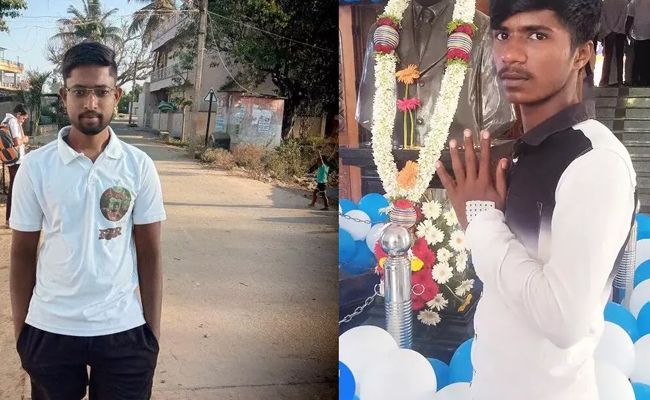
Kolar: Two brothers died after drowning in a village lake near Paccharamakalahalli in Srinivaspur taluk of Kolar district.
The deceased have been identified as Narendra (25) and Chandan (23), residents of Champalli in Ronur hobli.
According to sources, the two had come to Paccharamakalahalli, which falls under the Lakshmipura Gram Panchayat limits, for manual labour work.
They reportedly entered the lake to swim and cool off from the intense afternoon heat but drowned in the water.
The incident occurred within the jurisdiction of the Rayalpad Police Station.