World's oldest pearl, nearly 8,000-years-old, found in Abu Dhabi
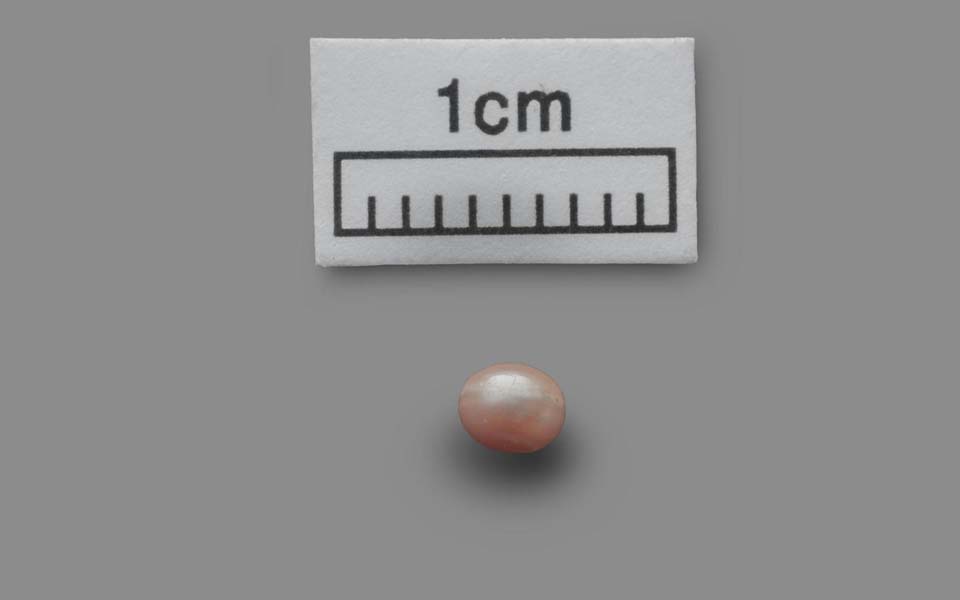
Abu Dhabi, Oct 20: An 8,000-year-old pearl that archaeologists say is the world's oldest will be displayed in Abu Dhabi, according to authorities who said Sunday it is proof the objects have been traded since Neolithic times.
The natural pearl was found in the floor of a room discovered during excavations at Marawah Island, off the capital of the United Arab Emirates, which revealed the earliest architecture found in the country.

The oldest natural pearl in the world is less than a centimetre long. Courtesy Department of Culture and Tourism Abu Dhabi
"The layers from which the pearl came have been carbon dated to 5800-5600 BC, during the Neolithic period," Abu Dhabi's Department of Culture and Tourism said.
"The discovery of the oldest pearl in the world in Abu Dhabi makes it clear that so much of our recent economic and cultural history has deep roots that stretch back to the dawn of prehistory," said its chairman Mohamed Al-Muabarak.
The excavation of the Marawah site, which is made up of numerous collapsed Neolithic stone structures, has also yielded ceramics, beads made from shell and stone, and flint arrowheads.
The "Abu Dhabi Pearl" will be shown for the first time in the exhibition "10,000 years of Luxury" which is opening on October 30 at the Louvre Abu Dhabi -- the outpost of the famous Paris museum.
Emirati experts believe that the pearls were traded with Mesopotamia -- ancient Iraq -- in exchange for ceramics and other goods. They were also likely worn as jewellery.
"The Venetian jewel merchant Gasparo Balbi, who travelled through the region, mentions the islands off the coast of Abu Dhabi as a source of pearls in the 16th century," the culture department said.
The pearl industry once underpinned the economy of the United Arab Emirates, but the trade collapsed in the 1930s with the advent of Japanese cultured pearls, and as conflicts rocked global economies.
Instead, the Gulf nations turned to the oil industry which dominates their economies to this day.
Let the Truth be known. If you read VB and like VB, please be a VB Supporter and Help us deliver the Truth to one and all.
4 workers die after being buried under coal slurry in Jharkhand's Dhanbad
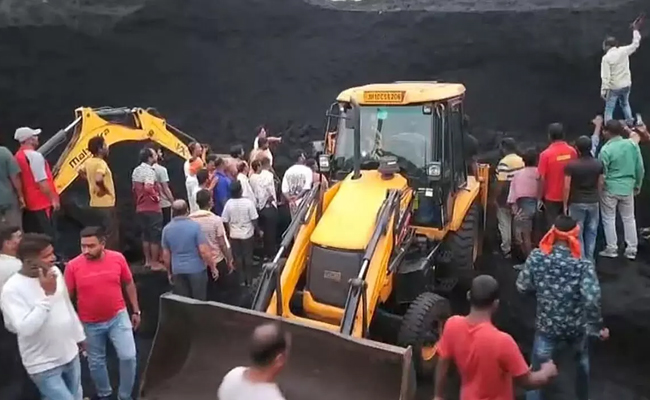
Dhanbad (Jharkhand) (PTI): At least four workers died after being buried under coal slurry in Jharkhand's Dhanbad district on Saturday, a police official said.
The incident took place at Moonidih coal washery in the command area of Bharat Coking Coal Limited (BCCL).
"Bodies of all four workers were dug out of debris during a rescue operation," Putki police station in-charge Waqar Hussain told PTI.
The incident took place when coal slurry was being loaded into trucks by workers, during which a large chunk of slurry fell and trapped several workers underneath, officials said.
The deceased have been identified as Manik Bauri, Dinesh Bauri, Deepak Bauri, and Hemlal Gope.
Meanwhile, the family members of the deceased and local villagers placed the bodies in front of the washery gate and began a protest.
They demanded compensation, jobs for dependents and action against those responsible for the incident.
Police and administration officials are trying to pacify the protesters, an official said.