BF.7 variant of coronavirus not worrisome for India, assures senior scientist Rakesh Mishra
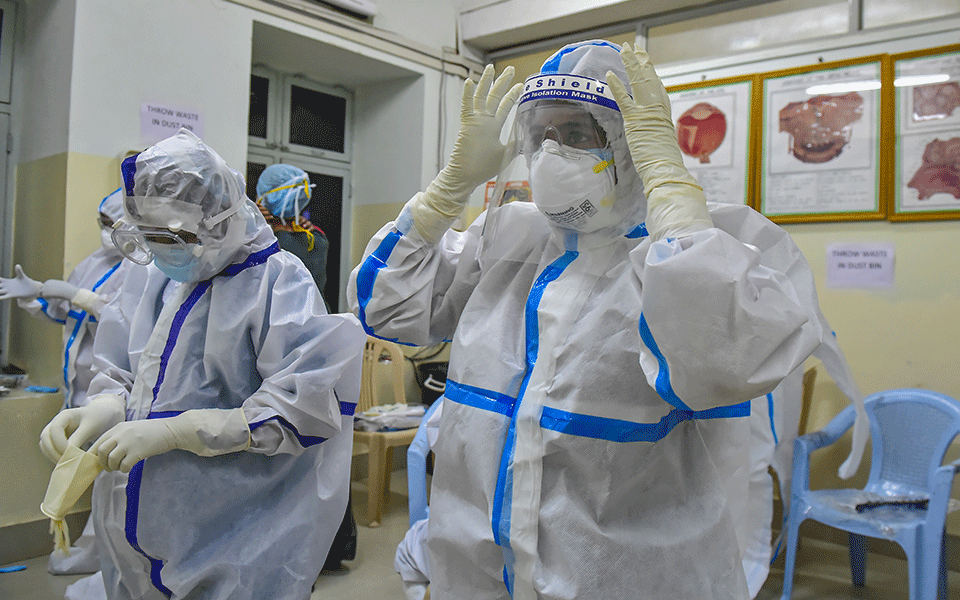
Hyderabad (PTI): Allaying fears about BF.7 variant of coronavirus, a prominent scientist on Friday said it is a sub-variant of Omicron strain and that India need not worry too much about its severity on the population.
Speaking to PTI, Rakesh Mishra, Director, Tata Institute for Genetics and Society (TIGS), Bangalore, however cautioned that wearing face masks and avoiding unnecessary crowds is always advisable.
The former director of CSIR-Centre for Cellular and Molecular Biology further said China has been witnessing an unprecedented surge in COVID-19 cases as the neighbouring country has not passed through different waves of the infection that India had faced.
"This is a sub-variant of Omicron. Main features will be like Omicron except some small changes, there is no big difference. Most of us have gone through the Omicron wave. So, we don't have to worry about it. Essentially, it is the same virus," he said.
China is experiencing a surge in infections due to its "zero-Covid policy", under which authorities block apartment buildings or even cordon off a neighbourhood once a resident tests positive, causing great inconvenience to the people, the scientist said.
Mishra added that the Chinese population is not exposed to natural infection and they did not use the time to vaccinate the elderly people.
"So what is happening to those guys is, since they're not vaccinated, their symptoms are severe. Younger people still do not have any problem. But among older people who were not vaccinated, it is spreading very fast," he said about the situation in China.
According to him, most Indians have acquired hybrid immunity which means immunity developed through vaccines and also natural infection protecting them from different COVID-19 variants.
The scientist said the existing vaccines in India are good to prevent or thwart different Omicron variants also as several studies indicated that even in the big wave of Omicron earlier this year, India did not see many hospitalisations.
In view of the sudden spurt, in cases being witnessed in Japan, United States of America, Republic of Korea, Brazil and China, the Union Health Secretary Rajesh Bhushan on December 20, wrote a letter to all the state and Union territories.
He requested them to ensure that as far as possible samples of all positive cases, on a daily basis, are sent to designated INSACOG (Indian SARS-CoV-2 Genomic Consortium) genome sequencing laboratories that are mapped to the states and UTs.
Let the Truth be known. If you read VB and like VB, please be a VB Supporter and Help us deliver the Truth to one and all.
US VP JD Vance says Lebanon not part of ceasefire, calls it ‘misunderstanding’
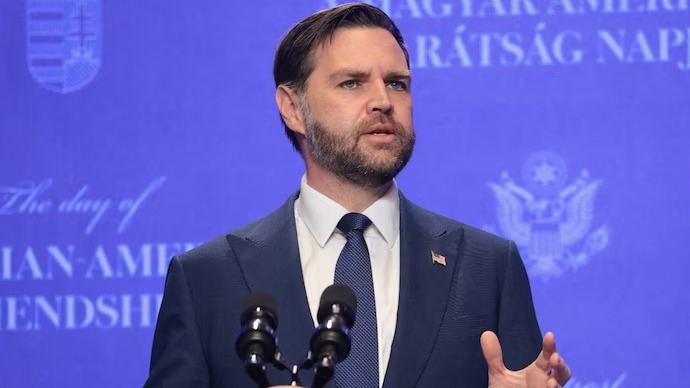
Budapest/Washington: US Vice President J D Vance has said that Lebanon was never included in the ceasefire understanding with Iran, describing the confusion as a “legitimate misunderstanding”.
Speaking to reporters before departing from Hungary, Vance said, “I think the Iranians thought that the ceasefire included Lebanon and it just didn’t. We never made that promise.”
He stressed that the United States had not included Lebanon in the scope of the ceasefire at any stage.
His remarks come amid continued Israeli strikes in Lebanon, where more than 200 people were reported killed, even as ceasefire talks between Iran and the US move forward.
Vance said Israel had “offered … to check themselves a little bit in Lebanon because they want to make sure that our negotiation is successful”.
He warned that if Iran allows the situation in Lebanon to affect the negotiations, it could derail the talks.
“If Iran wants to let this negotiation fall apart in a conflict where they were getting hammered over Lebanon, which has nothing to do with them and which the United States never once said was part of the ceasefire, that’s ultimately their choice,” he said.