Early Smartphone use linked to poorer mental health in young adults: Study

A recent research study, published in the Journal of Human Development and Capabilities, found that individuals who received smartphones before the age of 13 reported poorer mental health outcomes in early adulthood.
One of the study’s lead authors, Tara Thiagarajan informed in a report by ABC News, “The younger the child gets a smartphone, the more exposure to all this impacts them psychologically and shapes the way they think and view the world.
The study analysed responses from over 100,000 individuals aged 18 to 24, who answered questions related to their mental health, including experiences of aggression, detachment, hallucinations and suicidal thoughts.
Girls who had access to smartphones at ages 5 or 6 reported higher levels of suicidal thoughts, with 48% acknowledging severe ideation, compared to 28% among those who received phones at age 13 or later.31% of boys who used phones early in their lives had these thoughts, compared to 20% of those who received phones later. The report also mentions that early phone access can result in lower self-worth, reduced emotional resilience in girls and would decreased empathy and emotional stability in boys.
Experts involved in the study cited the heightened social media use, cyberbullying, disrupted sleep patterns and strained family relationships as contributing factors, urging parents to delay smartphone access until children are at least 14 years old and advised them to engage in discussions around responsible digital behaviour.
In guidance shared by the American Academy of Pediatrics, families are encouraged to adopt a framework known as the “5 C’s” to manage children’s media use: understanding the Child, assessing Content, fostering Calm, avoiding Crowding out other activities and maintaining open Communication.
Let the Truth be known. If you read VB and like VB, please be a VB Supporter and Help us deliver the Truth to one and all.
Confident we are going to win Kerala: Shashi Tharoor
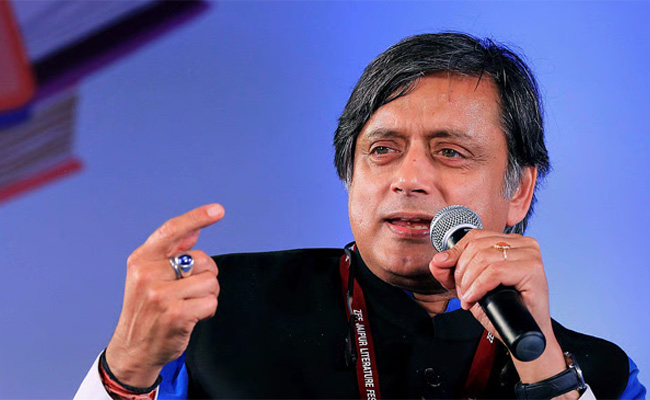
New Delhi (PTI): Congress leader Shashi Tharoor on Thursday expressed confidence in the victory of the United Democratic Front (UDF) in Kerala, saying the Congress-led alliance will win more than 75 seats out of the total 140 in the state.
Tharoor, who hails from Kerala, said he was not surprised to see the results of the exit polls, most of which predicted a victory for the UDF that has been out of power for 10 years in the state.
"We have been on the ground. I have campaigned in 59 constituencies across 12 districts out of 14. I was very confident we are going to win.
"Everything that I have picked up from not just my party colleagues and workers but also from other observers, media and others have always convinced me that we were going to score a comfortable win of above 75 seats. And all the (exit) polls have confirmed the same thing," he told reporters here.
The Thiruvananthapuram MP said he was not surprised to see the results of the exit polls but in general he was not a big fan of exit polls in India.
"Because ours is not purely a homogenous society. We have to take into account gender issue, caste issue, class issue, regional disparities. You never get a convincingly large enough sample to give an accurate poll and now there is the additional complication that we have heard about in West Bengal this year that many people are unwilling to answer the questions of the pollsters," he said.
The Congress leader said normally, it used to be below 10 per cent that people said that they would not answer.
"Even if you are a reputable exit pollster, in Bengal, one polling company has said 60 per cent of people refused to answer. So, what is the worth of a poll where 60 per cent of your respondents have not answered," he said.
Several exit polls on Wednesday predicted a comeback by the Congress-led UDF in Kerala after 10 years, dethroning the CPI(M)-led Left Democratic Front (LDF).
Polling for the 140-member Kerala assembly was held on April 9. Results of assembly elections in West Bengal, Tamil Nadu, Assam, Puducherry, besides Kerala, will be announced on May 4.