High Vitamin D levels may reduce breast cancer risk

New York, June 16: Higher levels of Vitamin D among women may reduce their risk of developing breast cancer post menopause, claimed a new study.
The study found that women with blood levels of serum 25-hydroxyvitamin D (OH) -- the main form of vitamin D in blood -- above 60 ng/ml (nanograms per millilitre) had one-fifth the risk of breast cancer compared to those with less than 20 ng/ml.
Thus, researchers from the University of California-San Diego determined that the minimum healthy level of 25(OH) in blood plasma should be 60 ng/ml, instead of the earlier recommended higher than the 20 ng/ml.
"Increasing Vitamin D blood levels substantially above 20 ng/ml appears to be important for the prevention of breast cancer," said lead author Sharon McDonnell from GrassrootsHealth, a non-profit public health research organisation.
The study, published in the journal PLOS ONE, analysed data from two randomised clinical trials with 3,325 combined women and a prospective study involving 1,713 women with average age of 63.
Participants were free of cancer at enrollment and were followed for a mean period of four years. Vitamin D levels in blood were measured during study visits.
"This study was limited to postmenopausal breast cancer. Further research is needed on whether high 25(OH)D levels might prevent premenopausal breast cancer," said Cedric F. Garland from UC-San Diego.
Let the Truth be known. If you read VB and like VB, please be a VB Supporter and Help us deliver the Truth to one and all.
US VP JD Vance says Lebanon not part of ceasefire, calls it ‘misunderstanding’
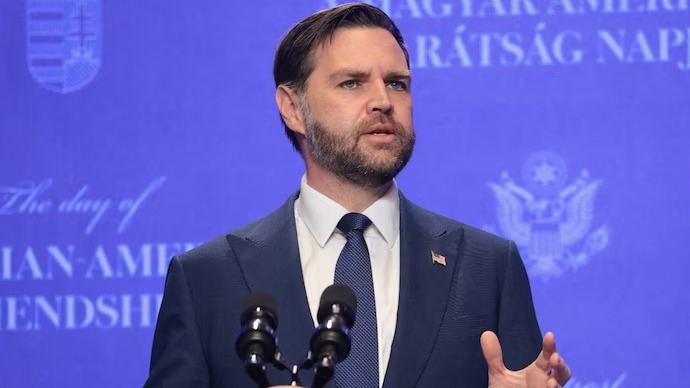
Budapest/Washington: US Vice President J D Vance has said that Lebanon was never included in the ceasefire understanding with Iran, describing the confusion as a “legitimate misunderstanding”.
Speaking to reporters before departing from Hungary, Vance said, “I think the Iranians thought that the ceasefire included Lebanon and it just didn’t. We never made that promise.”
He stressed that the United States had not included Lebanon in the scope of the ceasefire at any stage.
His remarks come amid continued Israeli strikes in Lebanon, where more than 200 people were reported killed, even as ceasefire talks between Iran and the US move forward.
Vance said Israel had “offered … to check themselves a little bit in Lebanon because they want to make sure that our negotiation is successful”.
He warned that if Iran allows the situation in Lebanon to affect the negotiations, it could derail the talks.
“If Iran wants to let this negotiation fall apart in a conflict where they were getting hammered over Lebanon, which has nothing to do with them and which the United States never once said was part of the ceasefire, that’s ultimately their choice,” he said.