How social isolation may increase stress

New York, May 18: Researchers have found that long term chronic isolation cause the build-up of a chemical in the brain, that increases stress, aggression and fear.
The mice isolated for two weeks showed behavioural changes like, increased aggressiveness towards unfamiliar mice, persistent fear, and hypersensitivity to threatening stimuli.
When encountering a threatening stimulus, mice that have been socially isolated remain frozen in place long after the threat has passed, whereas normal mice stop freezing soon after the threat is removed, the research said.
Although the study was done in mice, it has potential implications for understanding how chronic stress affects humans and has potential applications for treating mental health disorders, said lead author Moriel Zelikowsky, postdoctoral scholar at the California Institute of Technology in the US.
Previous studies have determined that social isolation for two weeks in mice resulted in the upregulation of the signalling molecule neuropeptide, tachykinin 2 (Tac2)/neurokinin B (NkB) -- a short protein molecule.
In the new study, published in the journal Cell, the team found that chronic isolation leads to an increase in Tac2 gene expression and the production of a neuropeptide called neurokinin B (NkB) throughout the brain.
But, administration of a drug that chemically blocks NkB-specific receptors enabled the stressed mice to behave normally, eliminating the negative effects of social isolation.
On the other hand, artificially increasing Tac2 levels and activating the corresponding neurons in normal, animals led them to behave like isolated and stressed, the research showed.
Suppressing the Tac2 gene in certain different brain parts, increased fear behaviours, or aggression accordingly, implying that it must increase in different brain regions to produce the various effects of social isolation, the researchers said.
Let the Truth be known. If you read VB and like VB, please be a VB Supporter and Help us deliver the Truth to one and all.
Karnataka launches state-led Centre of Excellence for Space Technology in Bengaluru
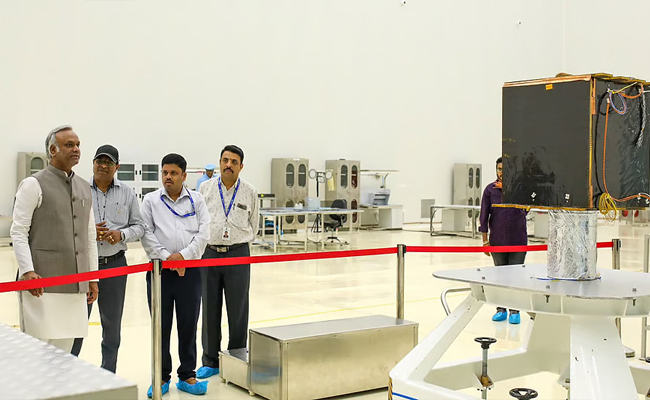
Bengaluru (PTI): In a significant boost to India’s rapidly expanding space economy, the Karnataka government on Friday launched the country’s first state-led Centre of Excellence for Space Technology here, officials said.
The initiative is aimed at strengthening India’s capabilities to translate space innovation into scalable commercial outcomes, they said.
The Centre, established by the Government of Karnataka through the Karnataka Innovation and Technology Society in collaboration with SIA (Satcom Industry Association India) -India, was inaugurated by Minister for Electronics, IT/BT, and Rural Development and Panchayat Raj, Priyank Kharge, in the presence of senior officials and industry leaders, officials said.
Speaking at the launch, Minister Kharge said that Karnataka has consistently been at the forefront of India's technology and innovation journey. With the launch of this Centre of Excellence for Space Technology, we are extending that leadership into one of the most strategic sectors of the future.
"Our focus is not just on advancing research, but on creating an ecosystem where innovation can translate into real-world applications, economic growth, and high-quality jobs. This Centre will play a critical role in positioning Karnataka as a key driver of India's space economy," he said.
According to an official statement, the CoE SpaceTech Foundation has been established under a Memorandum of Agreement between KITS and SIA-India to drive research and innovation in space technologies, industry-aligned training, startup incubation and cross-sector applications, it said.
The Centre has also formalised strategic MoUs with multiple industry and academic partners to support research in space biotech and microgravity, enable collaboration, build talent pipelines, and provide startups with training and market access, it added.