Lancet study says long Covid has more than 200 symptoms
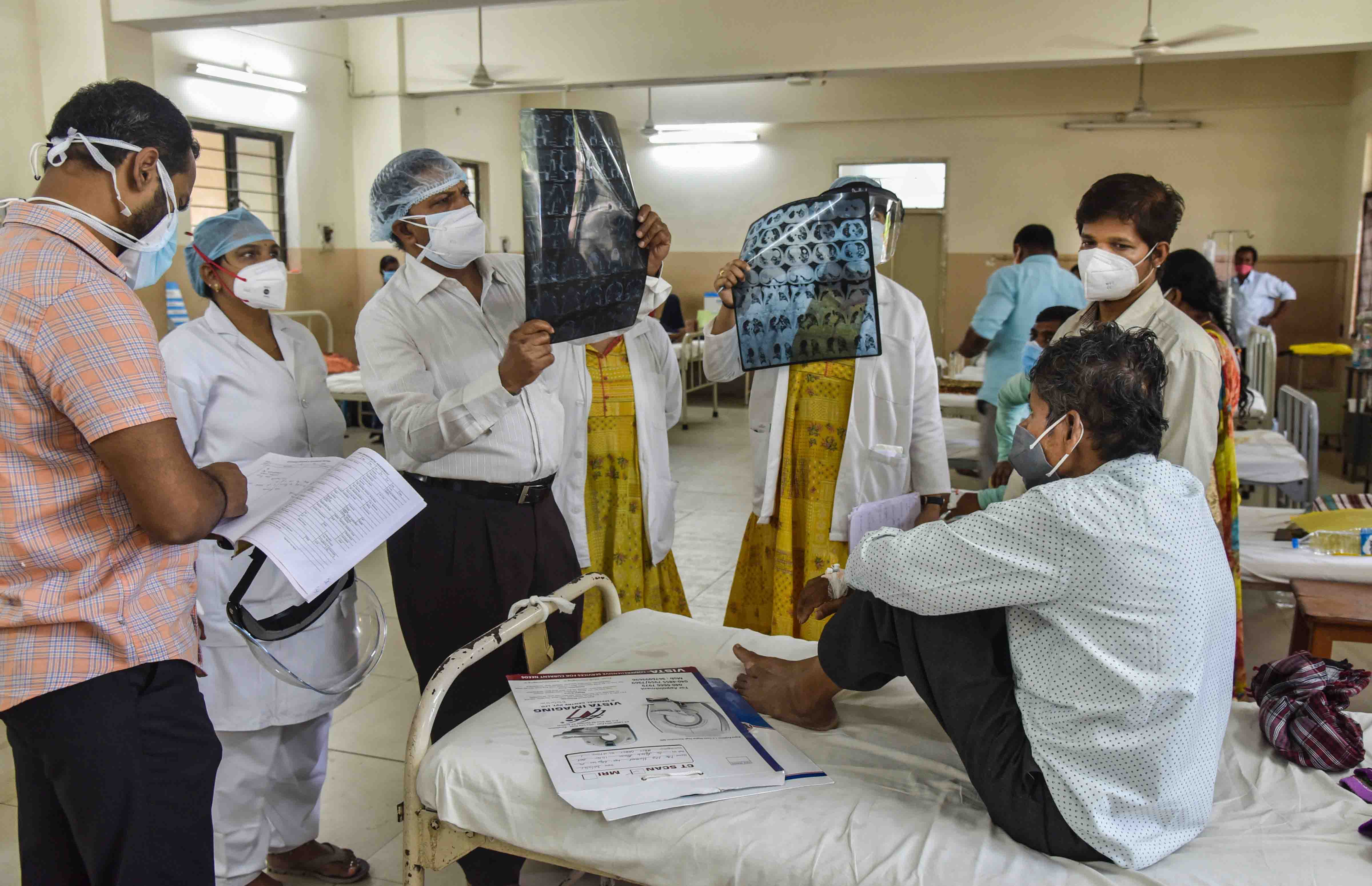
London, Jul 15: Patients who experience long Covid can report more than 200 symptoms across 10 organ systems, according to a study published in the Lancet’s journal EClinicalMedicine on Thursday.
The study, led by University College London (UCL) scientists together with a patient-led research collaborative, found the most common symptoms of long-term COVID effects as fatigue, post-exertional malaise (the worsening of symptoms after physical or mental exertion), and cognitive dysfunction, often called brain fog.
Of the diverse range of symptoms, others included: visual hallucinations, tremors, itchy skin, changes to the menstrual cycle, sexual dysfunction, heart palpitations, bladder control issues, shingles, memory loss, blurred vision, diarrhoea, and tinnitus.
While there has been a lot of public discussion around long COVID, there are few systematic studies investigating this population; hence relatively little is known about its range of symptoms, and their progression over time, the severity, and expected clinical course (longevity), its impact on daily functioning, and expected return to baseline health, said Dr Athena Akrami, neuroscientist at the Sainsbury Wellcome Centre at UCL and senior of the study published in the Lancet's EClinicalMedicine'.
In this unique approach, we have gone directly to long haulers' around the world in order to establish a foundation of evidence for medical investigation, improvement of care, and advocacy for the long COVID population. This is the most comprehensive characterisation of long COVID symptoms, so far, she said.
For the study, patient researchers connected through the Body Politic online COVID-19 support group and created a web-based survey designed to characterise the symptom profile and time course in patients with confirmed or suspected long COVID, along with the impact on daily life, work, and return to health.
With responses from 3,762 eligible participants from 56 countries, the researchers identified a total of 203 symptoms in 10 organ systems; of these, 66 symptoms were tracked for seven months.
The research team, who have all had or continue to have long COVID, are now calling for clinical guidelines on assessing long COVID to be significantly widened beyond currently advised cardiovascular and respiratory function tests to include neuropsychiatric, neurological, and activity intolerance symptoms.
The authors also advocate that a national screening programme, accessible to anyone who thinks they have long COVID, should be undertaken.
Given the heterogeneous and diverse make-up of symptoms that affect multiple organ systems, it is only by detecting the root cause that patients will receive the correct treatment, they note.
Dr Akrami added: For the first time this study shines a light on the vast spectrum of symptoms, particularly neurological, prevalent and persistent in patients with long COVID.
Memory and cognitive dysfunction, experienced by over 85 per cent of respondents, were the most pervasive and persisting neurologic symptoms, equally common across all ages, and with substantial impact on work. Headaches, insomnia, vertigo, neuralgia, neuropsychiatric changes, tremors, sensitivity to noise and light, hallucinations (olfactory and other), tinnitus, and other sensorimotor symptoms were also all common, and may point to larger neurological issues involving both the central and peripheral nervous system.
The survey was open to those aged 18 or over who had experienced symptoms consistent with COVID-19, including those with and without a positive SARS-CoV-2 test. It consisted of 257 questions.
In order to characterise long COVID symptoms over an extended duration, analysis of survey data was limited to respondents with illnesses lasting longer than 28 days and whose onset of symptoms occurred between December 2019 and May 2020, allowing analysis of symptoms from week one to month seven.
Let the Truth be known. If you read VB and like VB, please be a VB Supporter and Help us deliver the Truth to one and all.
Seven killed, three injured in separate road accidents in UP

Mainpuri/Muzaffarnagar/Deoria (UP) (PTI): Seven people were killed and three others injured in separate road accidents in Mainpuri, Muzaffarnagar and Deoria districts of Uttar Pradesh, police said on Wednesday.
All incidents took place on Tuesday night.
In Mainpuri, three persons, including a couple, were killed near the Shitala Devi Temple on Devi Road under Kotwali police circle when a pickup vehicle hit a motorcycle head-on, Superintendent of Police Ganesh Saha said.
The victims, Dharmendra Singh (50), his wife Baby (48), both residents of Ferozabad, and Sanjay Singh (40) of Tavepur village, were on the two-wheeler and were on their way to attend the cremation of a relative when the incident took place.
According to police, the pickup and a Wagon R car were attempting to overtake each other when the former went out of control and rammed into the motorcycle, killing all three riders on the spot. Police rushed to the scene and sent the bodies for post-mortem examination, Saha added.
In Muzaffarnagar's Charthawal town, a 30-year-old woman, identified as Imrana, was killed while another woman was injured after a speeding car hit them on Rajbaha Road.
Circle Officer Ravishankar said the victims were walking when the car struck them, throwing Imrana into a canal. She was declared dead by the doctors.
Following the incident, villagers staged a protest demanding action against the driver, who fled the spot without the vehicle. Police said efforts are underway to trace and arrest the accused.
In another incident in Deoria district, three persons were killed, and two others seriously injured when a car crashed into a tree in the Baghochghat area late Tuesday night, police said.
The accident occurred near Haji Market when a Bihar-registered Swift car coming from Pakaha went out of control and rammed into a roadside tree, leaving the vehicle badly mangled.
Police said five people were travelling in the car. Three of them died on the spot, while two injured persons were admitted to Maharshi Devaraha Baba Medical College in Deoria.
The deceased have been identified as Karan Kushwaha, a resident of Gopalganj district in Bihar, and Pintu Kumar of Dulharpur village under Phulwaria police station. The identity of the third deceased is yet to be established.
The injured have been identified as Govind Kushwaha (18) of Sisai village in Kushinagar and Bhola Srivastava alias Sonu (22). Police said the occupants had visited a relative's place in Kushinagar and were returning after attending a wedding function when the accident occurred.
Station House Officer Anil Tiwari said police had to use a gas cutter to rescue the victims trapped inside the vehicle.
The bodies have been sent for post-mortem examination, and further legal proceedings are underway, he added.