
CBC Exhibition at IFFI captures depiction of freedom movement in Cinema

While the Technology Exhibition is the new initiative of the International Film Festival of India (IFFI) this year, another Exhibition "Freedom Movement and Cinema" put up by the Central Bureau of Communication is attracting people with its unique immersive experience.
The multi-media digital exhibition at the Campal Football Ground was inaugurated today by the Union Minister for Information & Broadcasting Shri Anurag Singh Thakur. The Minister said the Exhibition tells the complete story of India's Freedom struggle using many technological innovations. It is an inspiration for everyone who visits and particularly for the students, who can gain so much of information about our inspiring leaders".
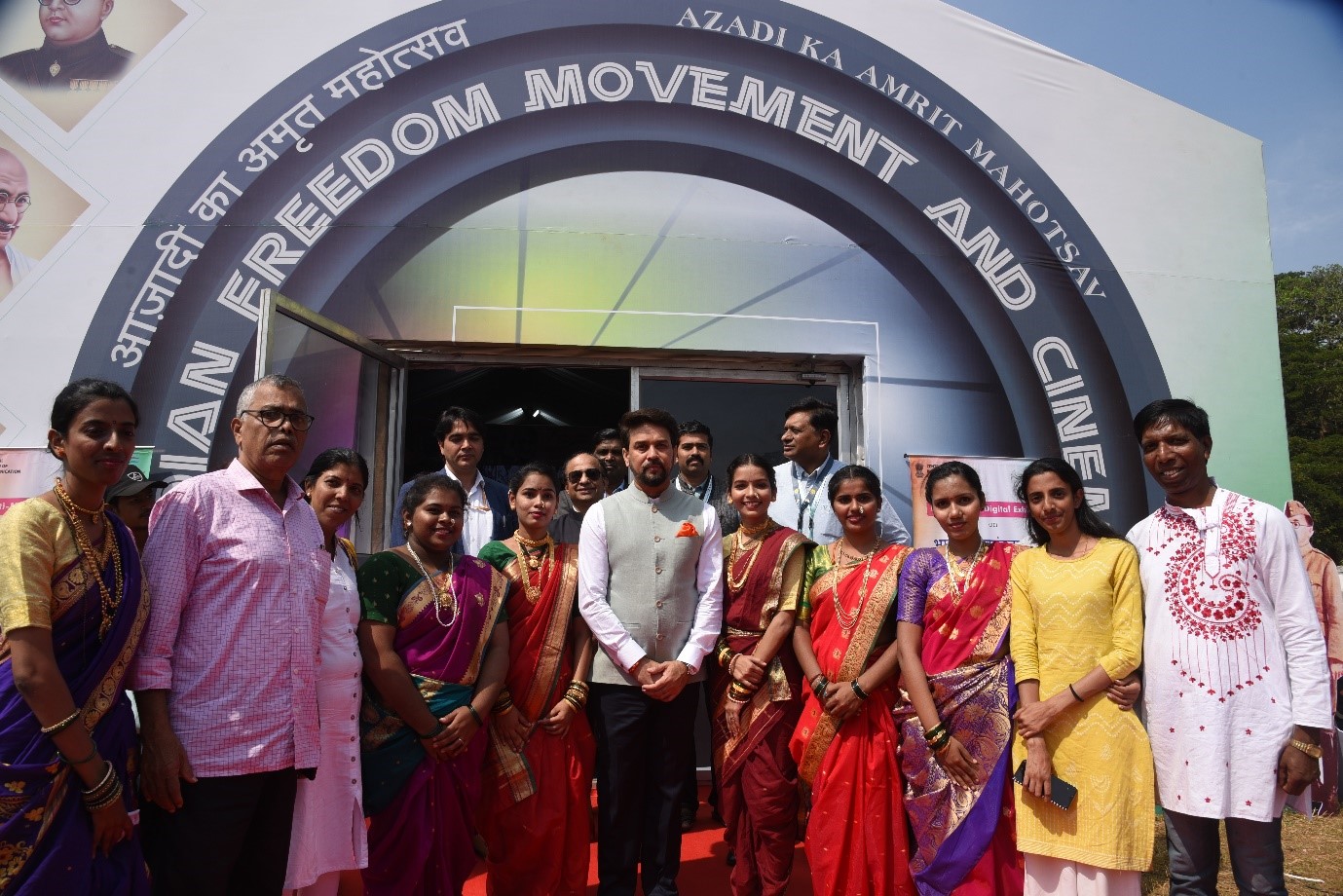
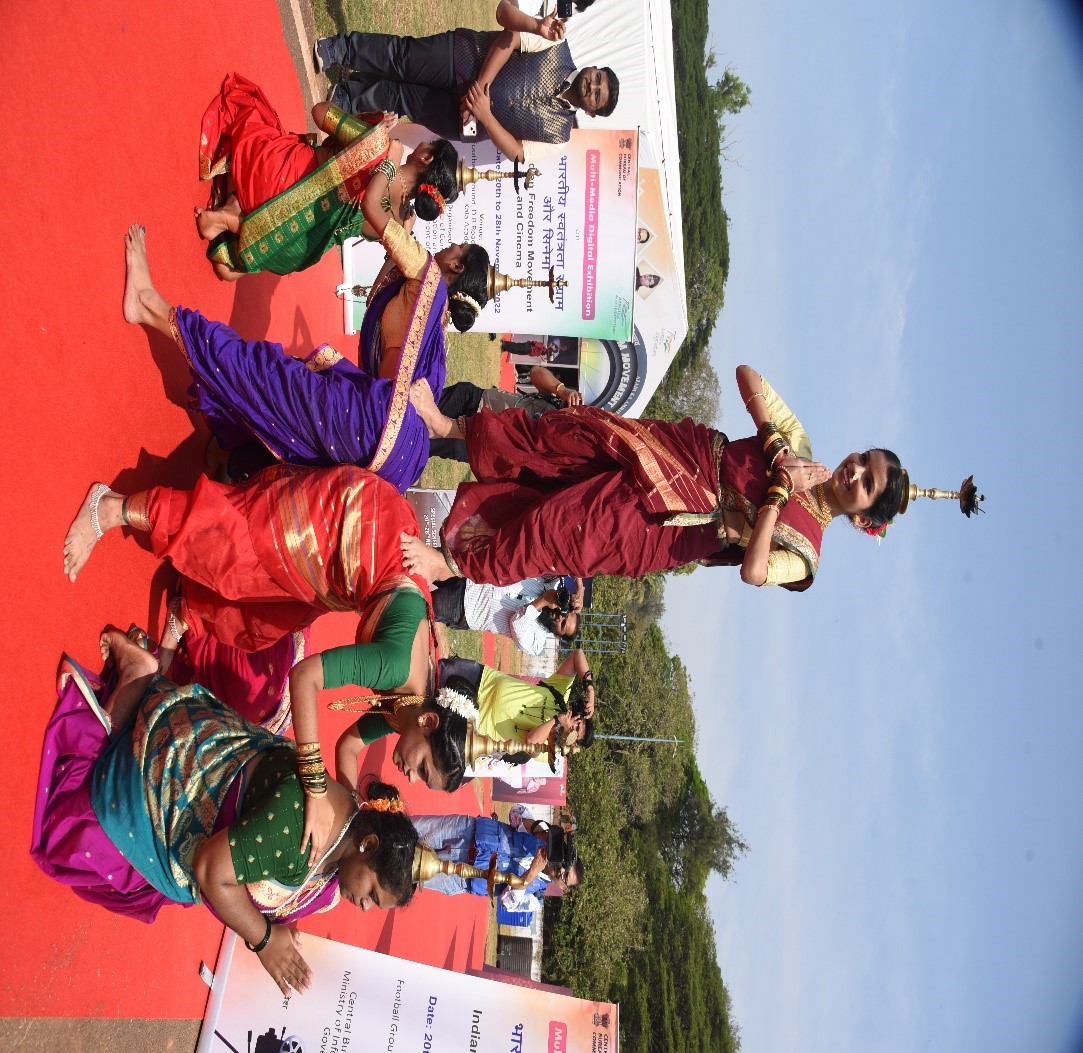
The Exhibition conceived by CBC team under the overarching theme of ‘Azadi Ka Amrit Mahotsav’ sports a facade in the form of camera- lens. As one enters the Exhibition hall, a large 12 x 10 feet LED screen displays clips of the popular Doordarshan series 'Swaraj' which profiles life and contributions of various freedom fighters against colonial rule.
Moving forward, rare footages related to the Freedom Movement covering 1857 War of Independence, Raja Ram Mohan Roy, Netaji Subhash Chandra Bose, Kalapaani, Bhagat Singh and Chandrashekhar Azad are displayed. Most of these footages have been sourced from the rich archive of the Films Division.
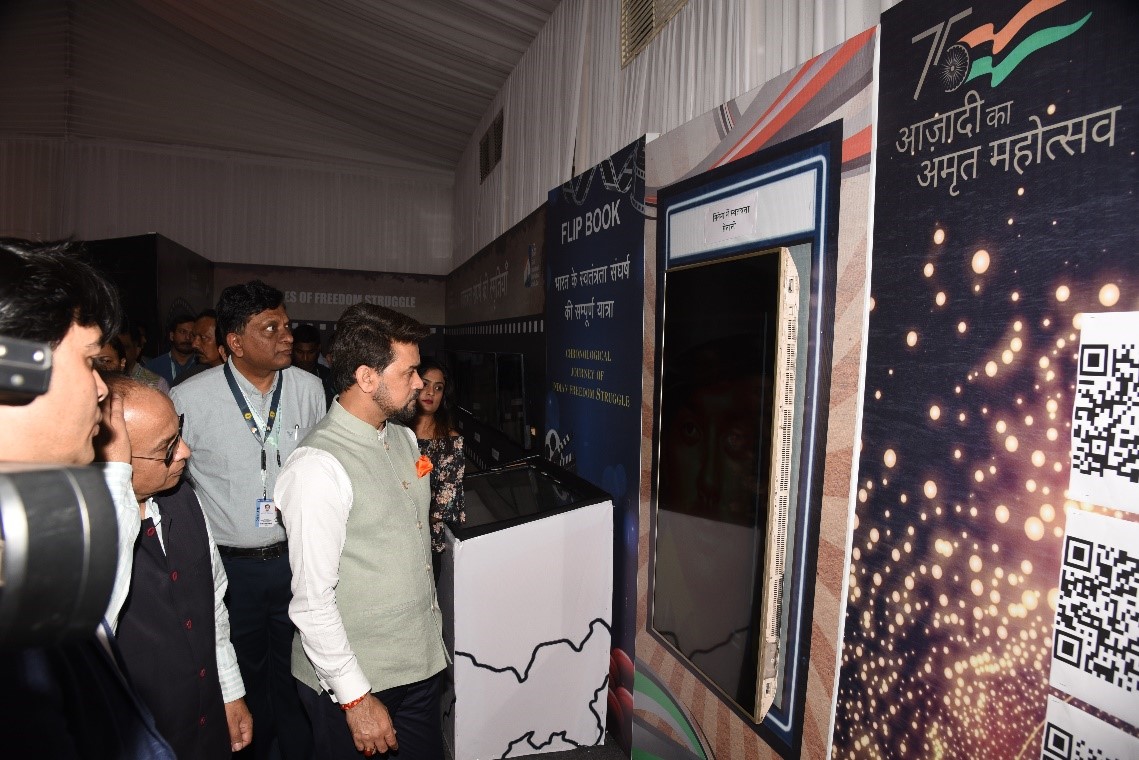
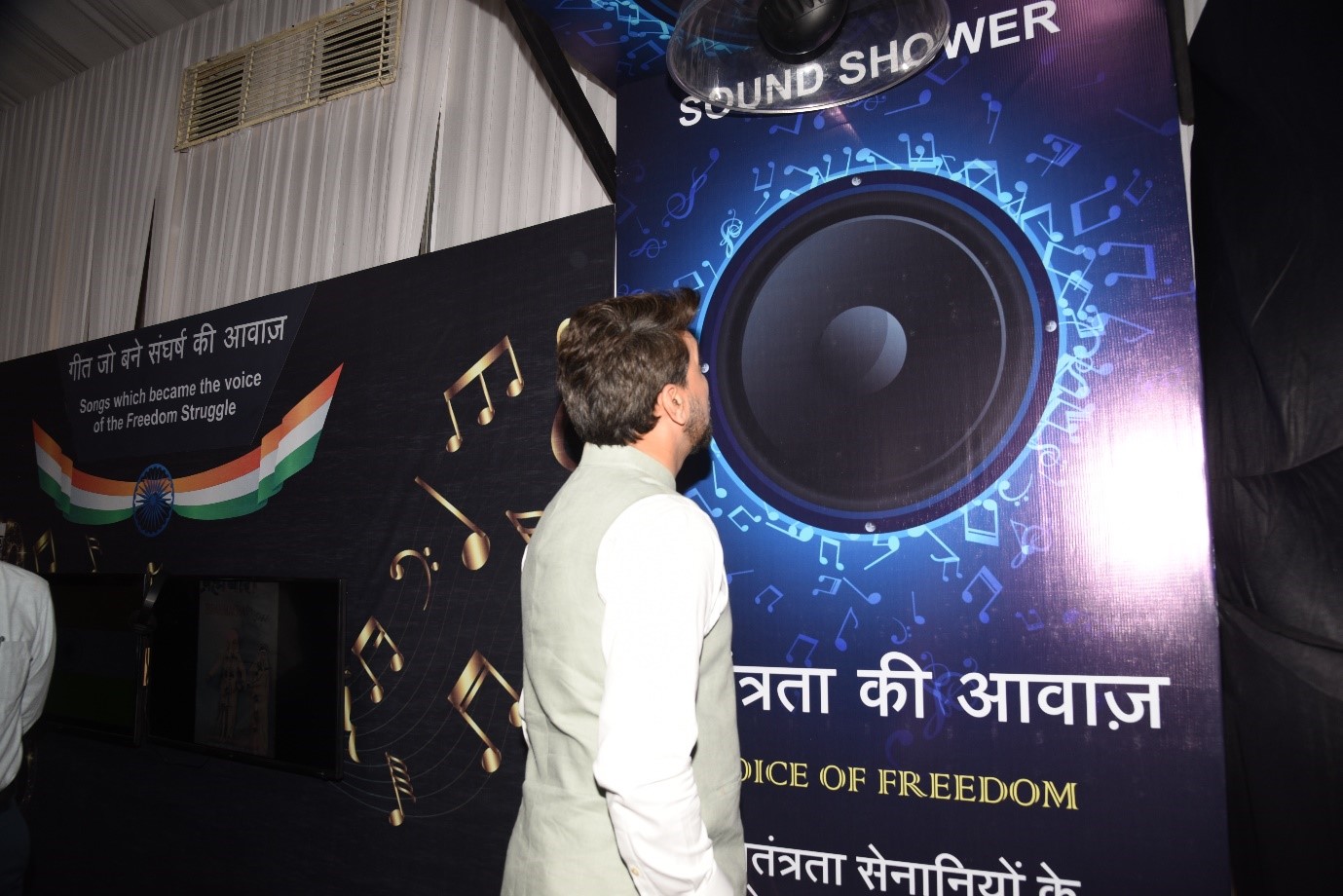
A Digital Flip-book displays Chronological journey of Indian Freedom Struggle in the form of posters curated by CBC. Songs which became the voice of freedom struggle can be listened to, even as the adjacent Sound Shower lets you listen to the speeches of the Indian Independence leaders.
Kadam Badhaaye Ja’-March with Netaji is an Augmented Reality experience, where one can March with India's inspirational leader in Azad Hind Fauz uniform and get his or her image captured.
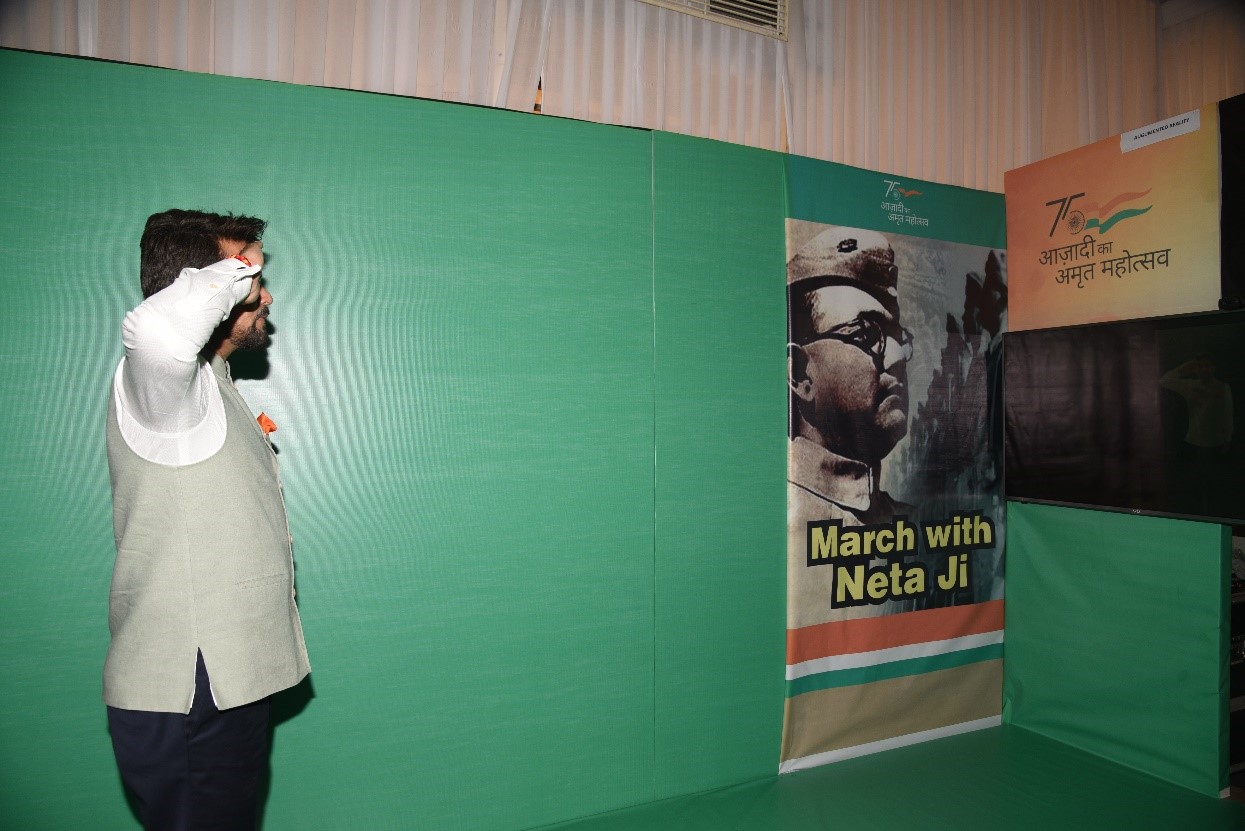
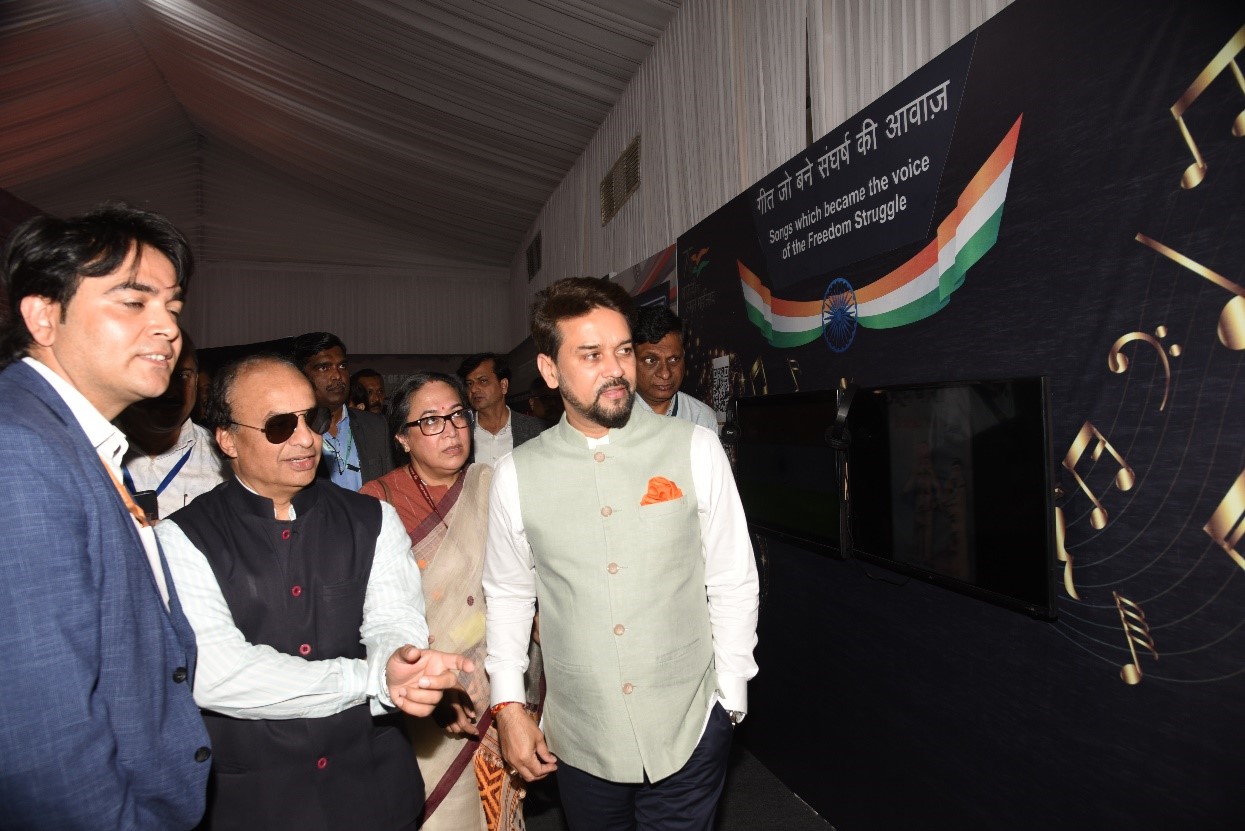
An Immersive Theatre on 1857 War of Independence is a unique experience that is to be seen and felt, even as the virtual reality set helps you witness the Kakori Train Action in a new way.
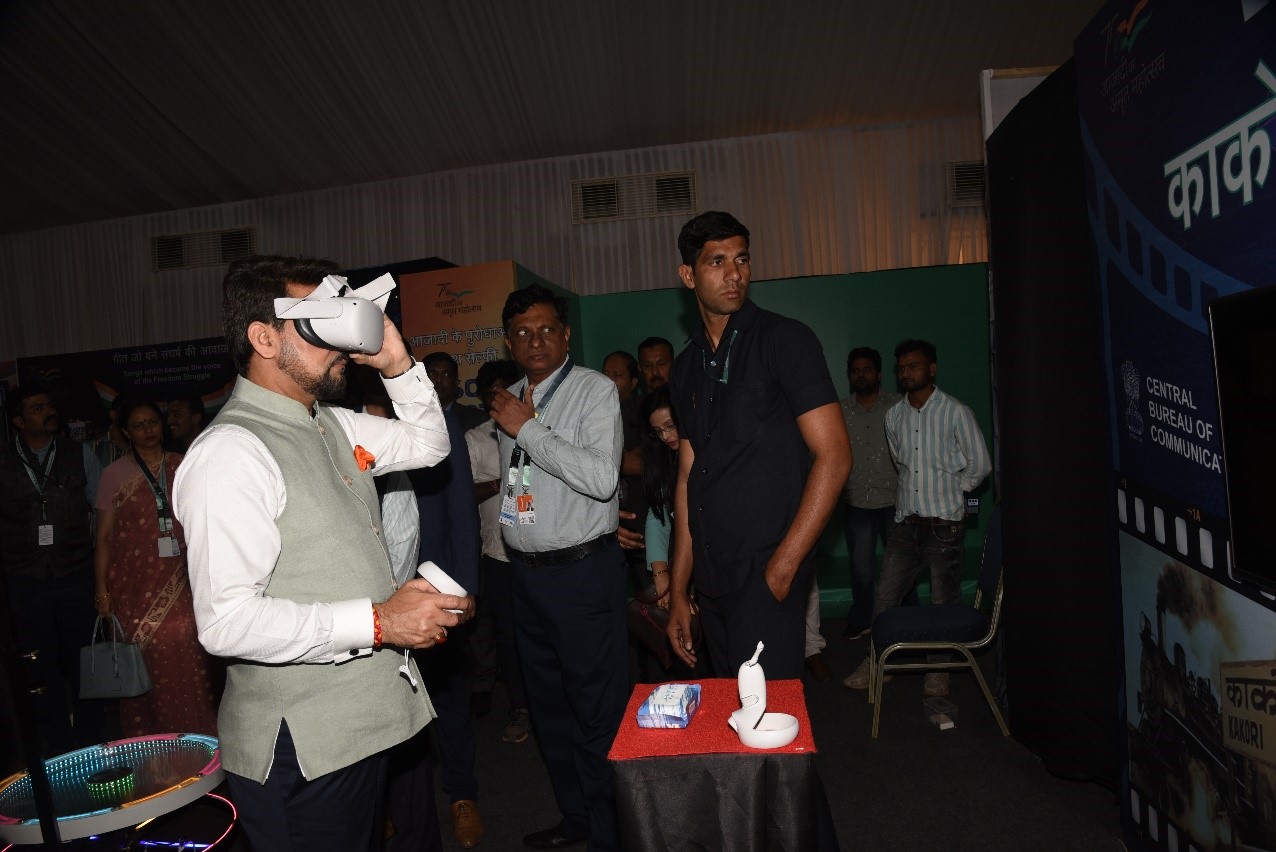
A flip poster exhibition depicts the films that were inspired by the Freedom struggle and that contributed in nation building. Udaykaal, Upkaar, Mother India, Bose, the Forgotten Hero are some of the examples.
The CBC Exhibition also displays the Azadi Quest game and the newly launched Netflix animation series on freedom fighters.
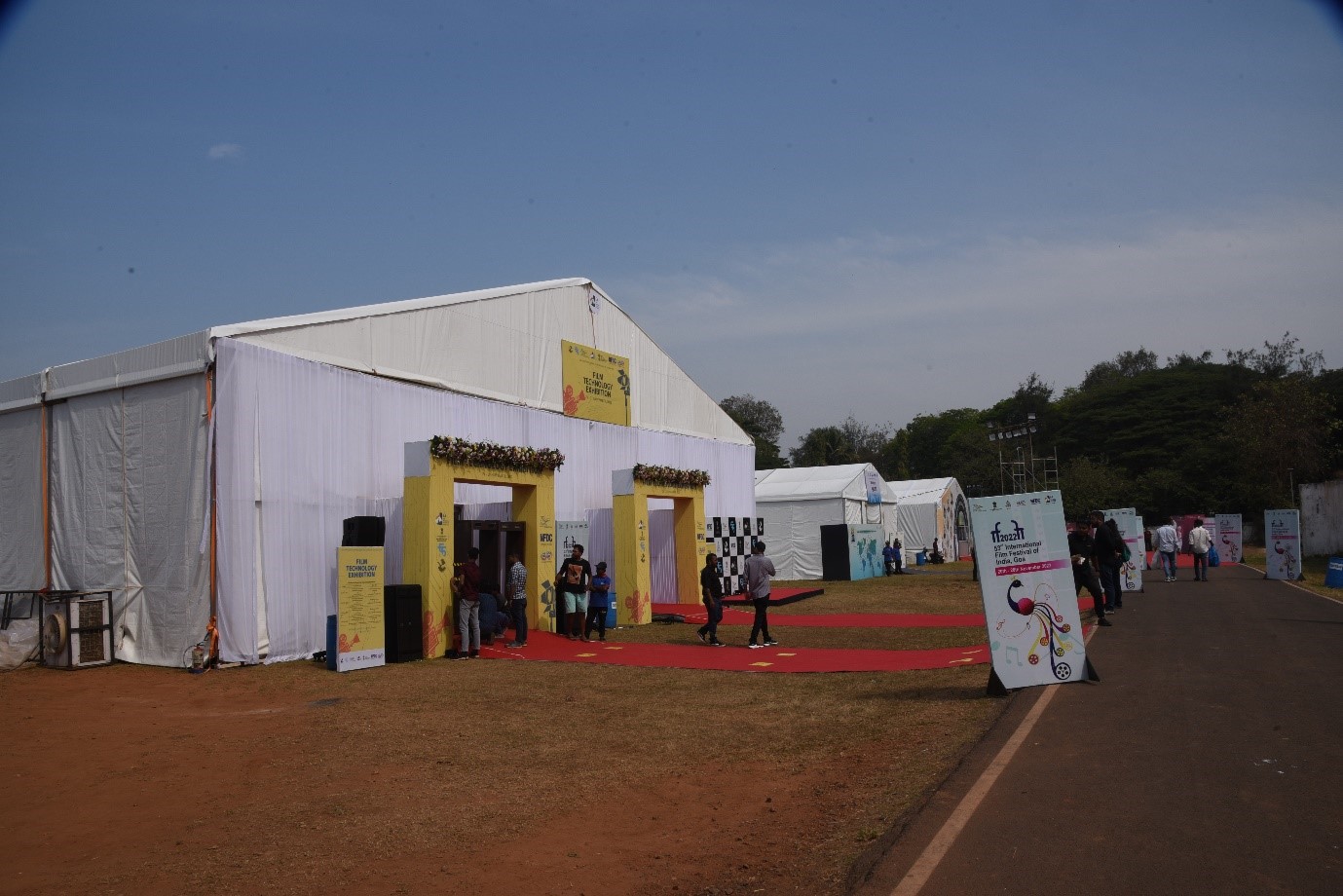
The display part of Exhibition ends with the Discovery's Journey of India, which tells the story of how the nation has progressed in multi- dimensional fields.
At the Centre of the Exhibition Hall is the symbolic Shahidi Kuan or Martyr's Well of Jalianwala Bagh, where one can pay tributes to all the well-known and unsung heroes of India's Freedom Struggle.
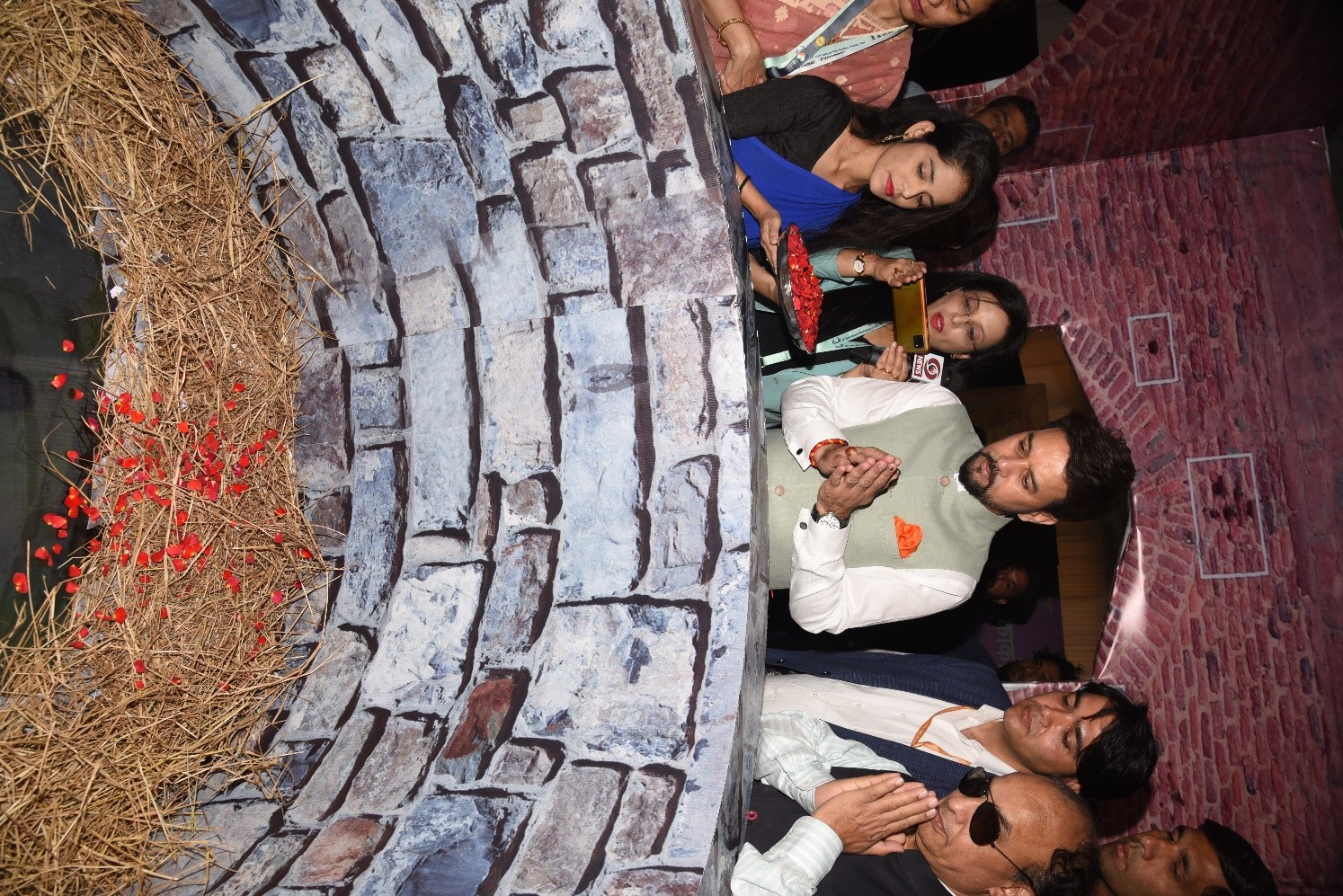
Union Minister for Information & Broadcasting Anurag Singh Thakur inaugurated @CBC_MIB
— Central Bureau of Communication (CBC) (@CBC_MIB) November 21, 2022
Multi-media Exhibition 'Freedom Movement and Cinema' at the #IFFI2022 in #Goa.
The Exhibition captures the depiction of the spirit of freedom movement in Cinema. pic.twitter.com/ITGR2LULIH
Let the Truth be known. If you read VB and like VB, please be a VB Supporter and Help us deliver the Truth to one and all.
Congress using hijab issue to pacify minority anger, alleges Karnataka LoP R Ashoka

Bengaluru: Leader of Opposition in the Assembly R. Ashoka has accused the Congress government of using the hijab issue to placate what he described as discontent among minority voters after the Davanagere by-election.
In a post on X on Wednesday, Ashoka alleged that the state government, instead of addressing issues such as price rise, corruption, farmers’ distress and law and order, was attempting to retain its minority vote base by reviving the hijab issue.
Referring to the 2022 dress code introduced by the BJP government, which prohibited hijab in schools and colleges, Ashoka said the Karnataka High Court had upheld the policy and emphasised the importance of discipline in educational institutions.
He questioned the Congress government’s move to revisit the issue and asked whether setting aside the court-backed policy to benefit one community could be described as secularism.
Ashoka further alleged that while the government was willing to permit hijab, it continued to prohibit saffron shawls.
He accused the government of dividing students on religious lines rather than treating schools and colleges as spaces of equality.
Drawing a comparison with Mamata Banerjee’s government in West Bengal, Ashoka claimed that excessive appeasement politics had harmed the state and warned that the Congress in Karnataka could face a similar political response.
He said voters in Karnataka would teach the Congress a lesson for what he termed “vote-bank politics” and for compromising constitutional and judicial principles.


