
12th annual Medical and Science Exhibition: Over 5000 students visit Gulf Medical University
Young Scientists Display Innovative Projects

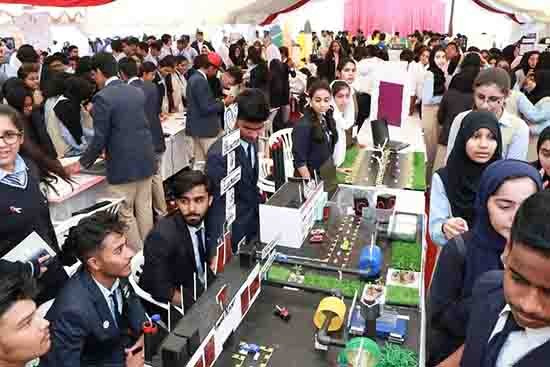
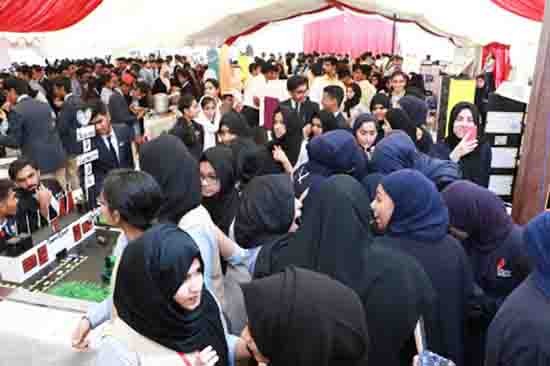
An automated device to prevent children being left inside locked cars, a method to generating electricity from doors, a smart helmet which gives bike riders a 360 degree vision of their surroundings and a system that prevents children from falling off balconies were some of the projects on display at the Gulf Medical University’s 12th annual Medical and Science Exhibition (MASE) on 24th and 25th October 2018, where around 2000 students from 65 schools vied for prizes in the projects, posters and paintings categories.
Prof. Manda Venkatramana, Vice Provost - Academics, Gulf Medical University, in the presence of the Deans and students of the University and participating students and school authorities, inaugurated the event on Wednesday.
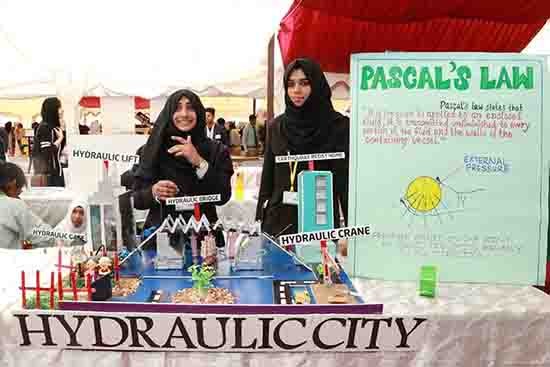
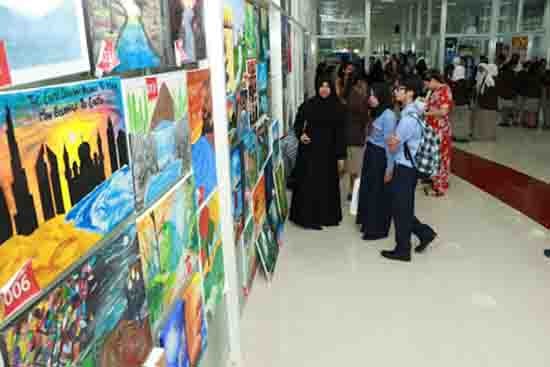
Students of grades 10, 11 and 12 from across the country exhibited around 300 projects, 300 posters and around 250 paintings based on science and medicine, vying for total cash prizes of AED 25,000, in addition to trophies and certificates. A panel comprising of leading doctors, professors, and medical science professionals judged the competitions.
Explaining the aim of the annual exhibition, Prof. Hossam Hamdy, the Chancellor of Gulf Medical University (GMU) said, “Every year GMU MASE stimulates the creative talents of young scientists and instills in them an interest in medical and science-based careers. GMU MASE gives students the chance to see and experience theoretical concepts in action. This infuses scientific temper in them and transforms their perspectives and approaches.”
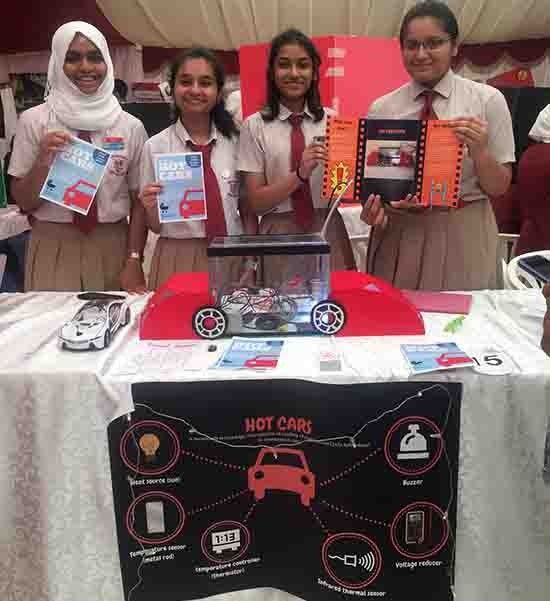
Projects included many innovative prototypes, most of them attempting to solve the challenges and issues of everyday life. Ruchika, Sakshi, Nashita and Samrin, grade 11 students from The Millennium School Dubai displayed an advanced project called ‘Hot Cars’ to ensure the safety of children in the summer heat. “Every year, an average of 156 children die in overheated cars. Our project presents an electronic system which senses the presence of children in a locked car and maintains a safe temperature within. It works even when the engine is switched off,” they explained.
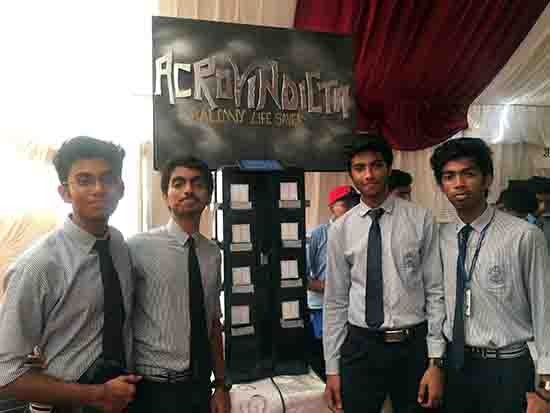
The ‘Balcony Life Saver’ by Thomas, Jason, Allen and Niju, grade 12 students of Indian School Ajman was yet another notable project. Seeking to address the issue of children falling off balconies, the working model demonstrated how the parent would receive an instant alert on his/her mobile phone as soon as a child enters the balcony, at the same time activating a self-deploying net which would ensure the child’s safety in case of a fall.
Rishab and Rahil from The Millennium School Dubai presented the ‘DynaDoor Project’, a unique way of generating electricity form of doors, by converting the physical energy generated from opening/closing doors to electrical energy. “Considering that our school has around a hundred doors which are used every day, the electricity thus generated can be used to light up a one-bedroom flat for a week,” explained Rishab. The project had won the people’s choice award at the DEWA Conservation Awards.
Apart from working models, students also presented still models and charts about various medical and scientific advancements, diseases, lifestyle issues etc. The paintings on display also won the admiration of visitors.
The winners were declared and prizes awarded at the closing ceremony on Thursday. Apart from the overall championship, prizes were awarded to 35 team and individual categories, including viewers’ choice awards.
Let the Truth be known. If you read VB and like VB, please be a VB Supporter and Help us deliver the Truth to one and all.
Karnataka approves AI Centre of Excellence in Bengaluru's Electronics City

Bengaluru (PTI): The Karnataka government has approved the establishment of a CoE for AI in Biotechnology at IBAB in Electronics City (Phase 1), here.
The decision, taken by the state Cabinet on Thursday night, marks a significant step towards strengthening Karnataka’s leadership in emerging technologies, IT and biotechnology, Karnataka Minister Priyank Kharge said on Friday.
The centre will be established over four years with a total outlay of Rs 20 crore, in partnership with the Institute of Bioinformatics and Applied Biotechnology and the Centre for Cellular and Molecular Platforms (C-CAMP), according to a statement from the minister’s office.
"Karnataka has consistently been at the forefront of technological innovation. As we enter the decade of deep tech, our focus is on building future-ready capabilities at the intersection of artificial intelligence and biotechnology," Minister for IT and Biotechnology said.
"This Centre of Excellence will strengthen our research ecosystem, accelerate innovation and enable Karnataka to lead in high-impact next-generation technologies," he added.
Priyank added that the state government, through the Departments of Electronics, IT, Biotechnology, and Science & Technology, is actively investing in emerging technologies and taking steps to strengthen Karnataka’s AI and deep-tech ecosystem.
The minister said the Cabinet has also approved the transfer of a 51 per cent stake in the Karnataka Technology & Innovation Museum Foundation (KTIMF) to the Unboxing BLR Foundation.
KTIMF was established by the Government of Karnataka as a not-for-profit organisation to promote innovation, technological awareness, startup culture and public engagement in science and technology, aligned with the state’s vision of building a robust innovation ecosystem, he said.
The Technology & Innovation Museum will be developed at the NGEF campus in Baiyappanahalli, Bengaluru, under a Public-Private Partnership (PPP) model, with a total project cost of Rs 100 crore. Of this, Rs 49 crore will be contributed by the state government and Rs 51 crore by the private partner, he said.


