
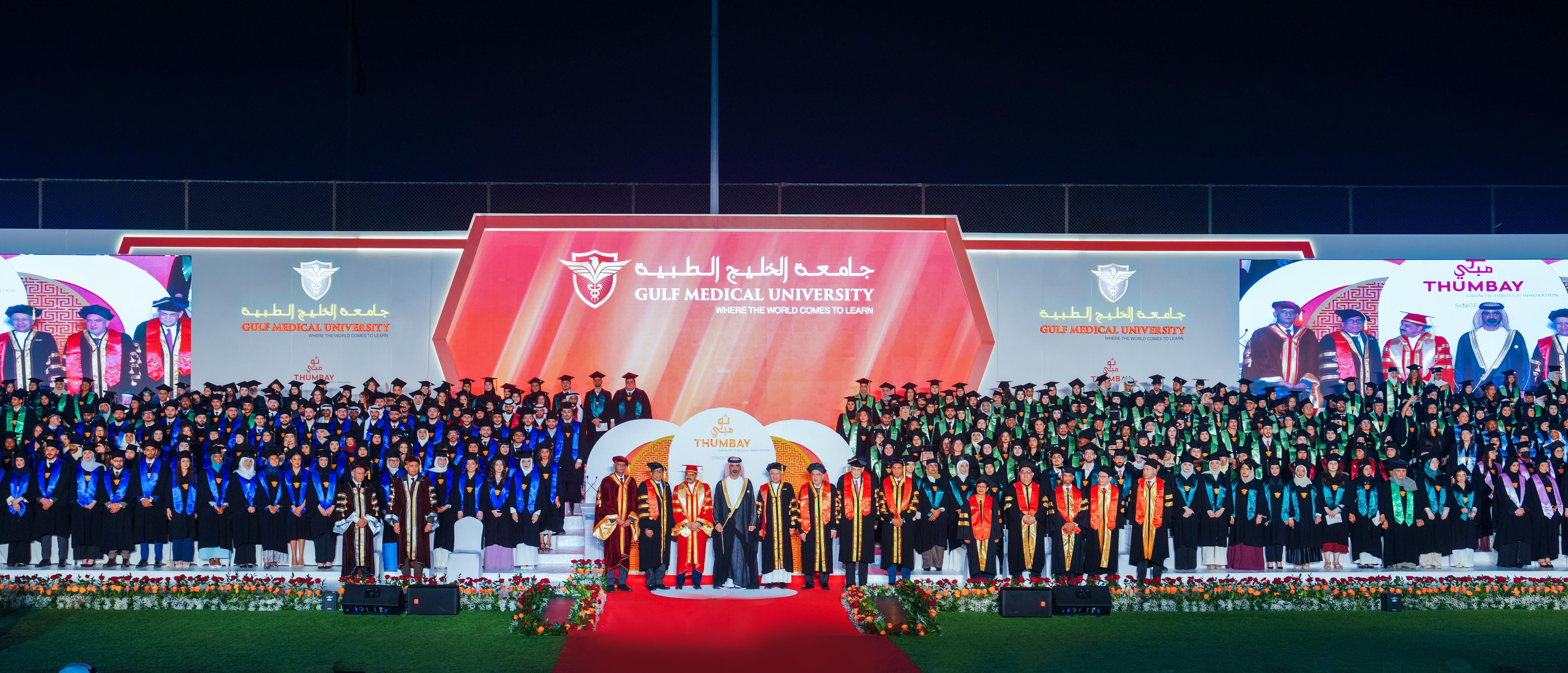
GMU holds Convocation 2025; 630 graduates awarded degrees in presence of Ajman Crown Prince

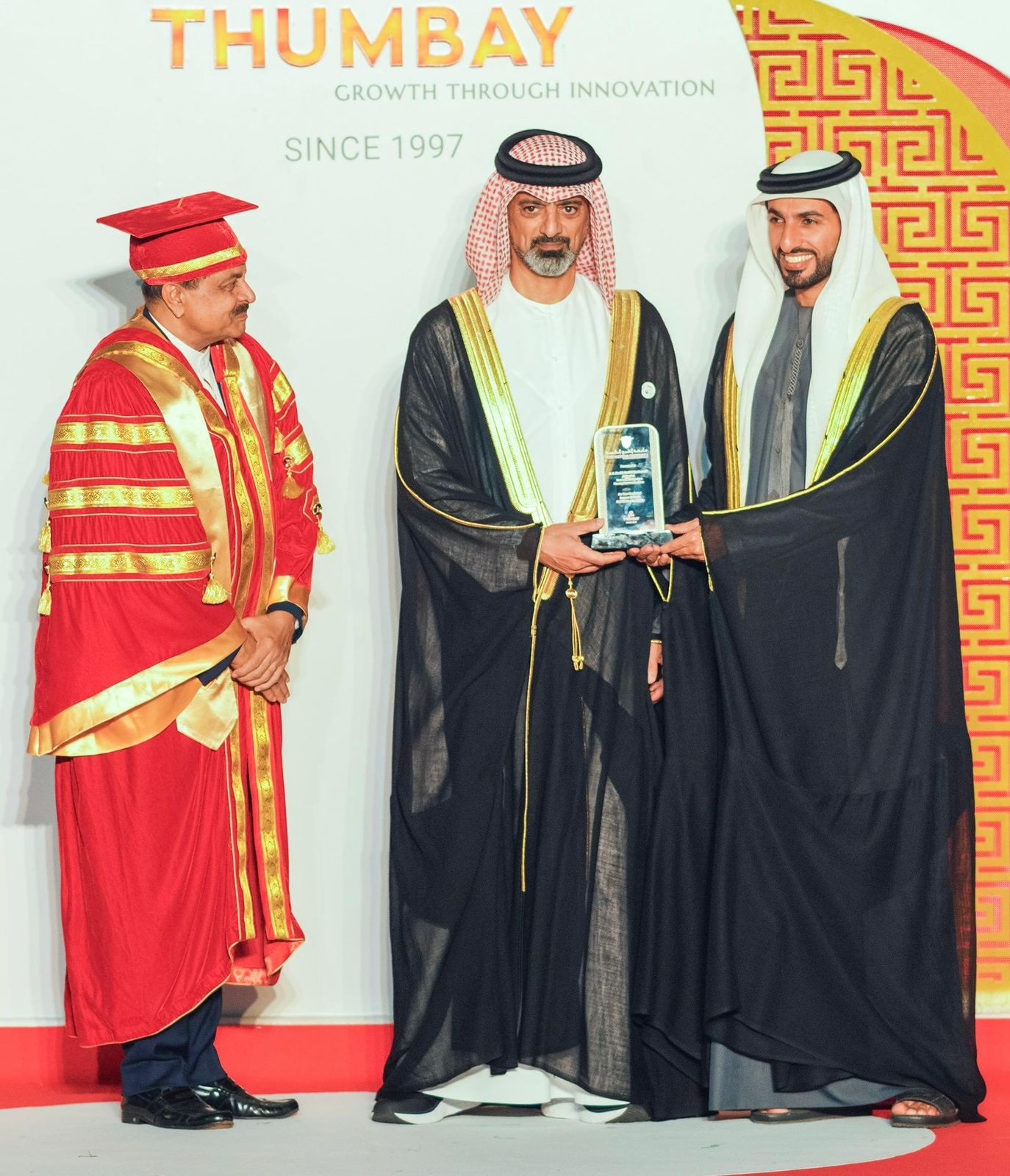
Ajman: Gulf Medical University (GMU), Ajman, held its Convocation 2025 ceremony at Thumbay Grounds, Thumbay Medicity, where 630 students from various health science disciplines received their degrees. The event was held in the presence of His Highness Sheikh Ammar bin Humaid Al Nuaimi, Crown Prince of Ajman and Chairman of the Ajman Executive Council.
Graduates from medicine, dentistry, pharmacy, nursing, physiotherapy, healthcare management, and other allied health programs attended the ceremony along with their families, faculty members, and healthcare leaders.
The event began with the “GMU At a Glance” presentation followed by the formal awarding of degrees and the administration of the Graduate Oath.
Presiding over the convocation, Dr. Thumbay Moideen, Founder President of Thumbay Group, congratulated the graduating class and spoke about GMU’s expanding academic and clinical ecosystem. He noted that the university continues to grow through its integrated facilities at Thumbay Medicity, including advanced teaching hospitals, research centres, and simulation-based training environments.
GMU Chancellor Prof. Manda Venkatramana commended the graduates for their dedication and hard work. He also expressed gratitude to parents, faculty members, and clinical preceptors for their support in shaping a new generation of healthcare professionals equipped to serve globally.
As part of the ceremony, GMU conferred Honorary Doctorates on H.E. Mirza Al Sayegh and Mr. Feroz Allana, acknowledging their notable contributions to society. The university also awarded Honorary Professorships to four distinguished figures in the medical and healthcare sector: Dr. Samih Tarabichi, Dr. Abdulla Al Khayat, Dr. Abdulrahim Mustafawi, and Dr. Humaid Al Shamsi. Their work in clinical excellence, academic medicine and healthcare innovation was recognised during the event.
GMU officials highlighted that students would continue to benefit from hands-on training across the Thumbay Academic Health System, which includes Thumbay University Hospital, Thumbay Dental Hospital, Thumbay Physical Therapy & Rehabilitation Hospital, long-term care facilities, and other teaching environments serving diverse patient communities.
As the graduates prepare to begin their careers in hospitals, research institutions and healthcare organisations across the world, the Convocation 2025 ceremony reaffirmed GMU’s commitment to advancing healthcare education and strengthening the global health workforce.
The ceremony concluded with an address by the Student Council President, followed by the formal dissolution of the convocation.
Let the Truth be known. If you read VB and like VB, please be a VB Supporter and Help us deliver the Truth to one and all.
Bengaluru (PTI): Karnataka Minister Priyank Kharge met a high-level delegation from Chile, led by Chilean Foreign Minister Francisco Pérez Mackenna, at Vidhana Soudha on Thursday to discuss collaboration in emerging technologies, clean energy, and startup ecosystems, officials said.
The delegation’s visit to Bengaluru, as part of its India engagements, underscores Karnataka’s growing prominence as a preferred partner for global collaborations in technology, innovation, and startup ecosystems, officials added.
The discussions reflected strong alignment between Chile’s evolving technology-focused growth strategy and Karnataka’s established leadership in innovation and deep-tech ecosystems, according to a statement.
Both sides explored opportunities to build partnerships that move beyond traditional sectors and focus on innovation-led growth, talent exchange, and market access.
The meeting focused on opportunities in renewable energy, including green hydrogen and sustainable industrial innovation.
Other potential areas of collaboration included marine biotechnology, aquaculture technologies, and AI applications across traditional industries.
According to the state IT minister, Karnataka is now a global hub for deep-tech, AI, biotech, aerospace, and advanced research, backed by one of the world’s strongest talent pipelines.
“As partners under the global innovation alliance, we must move beyond agreements on paper to actionable collaboration,” Kharge said.
“We are keen to work with Chile on startup exchanges, market access programmes, and building joint innovation corridors, including R&D centres, incubators, and accelerators. Chile’s position as a gateway to Latin America presents a significant opportunity for our startups to scale globally,” he added.
Officials said the engagement builds on the Letter of Intent signed between the Government of Karnataka and the Government of Chile during the Bengaluru Tech Summit, which established a framework for collaboration in startups, emerging technologies, research, and skill development under the Global Innovation Alliance.
Mackenna, Chile’s Minister of Foreign Affairs, said the country is actively advancing its transition toward a knowledge- and technology-driven economy.
“Our engagement with Karnataka reflects our interest in building strong innovation partnerships that enable technology exchange, talent collaboration, and access to dynamic startup ecosystems,” he added.
“We see significant potential to work together in sectors such as clean energy, digital technologies, and emerging industries, while also strengthening Chile’s role as a bridge between India and Latin America,” he said.


