
Gulf Medical University’s White Coat ceremony welcomes new batch of future healthcare professionals

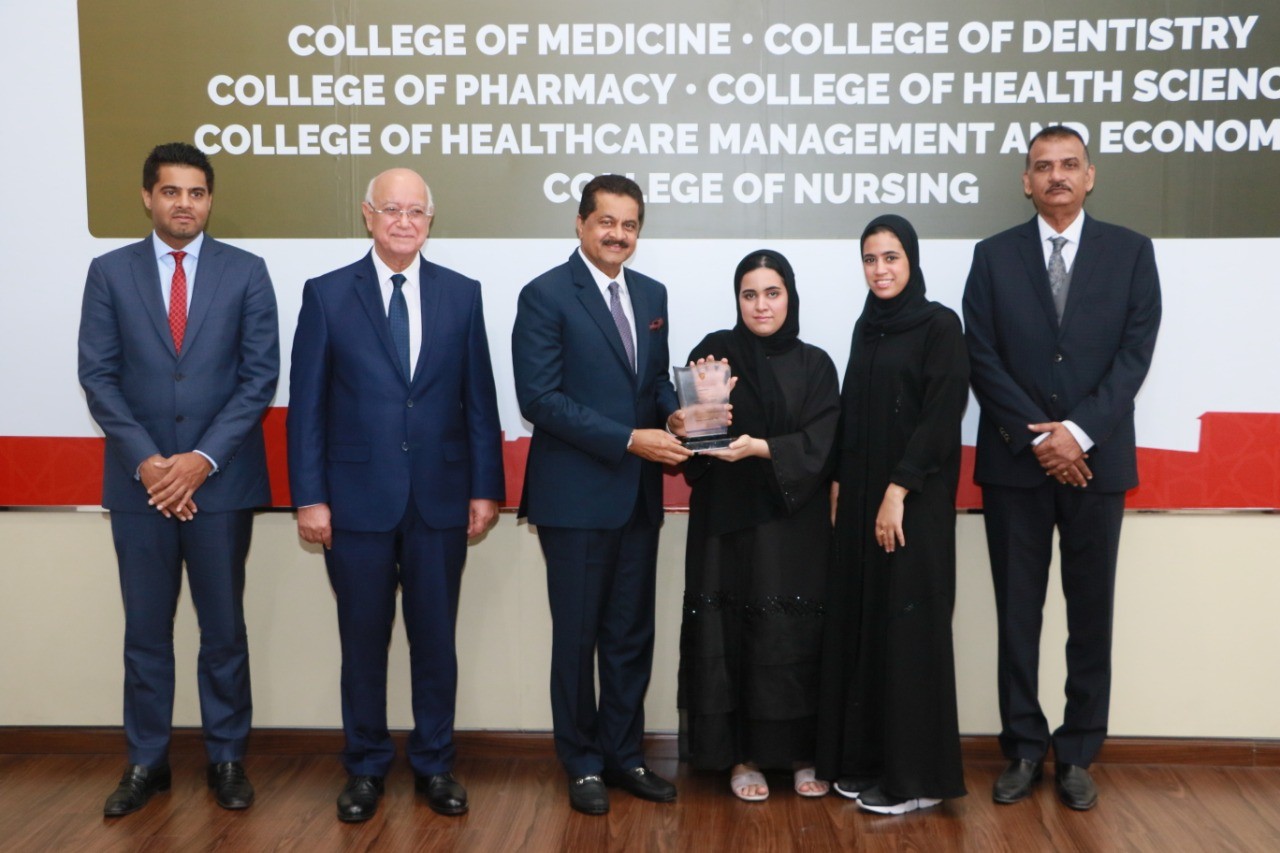
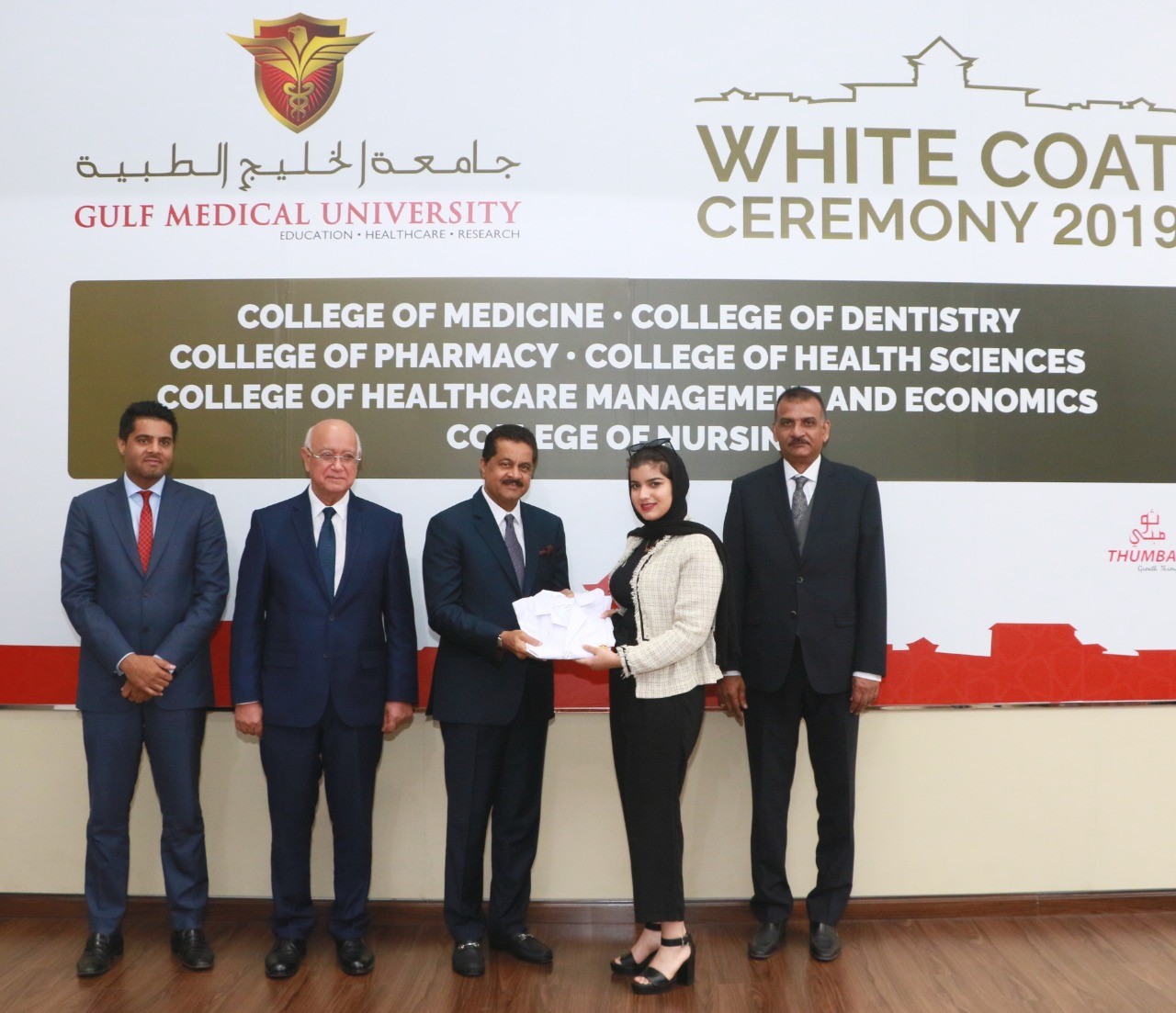
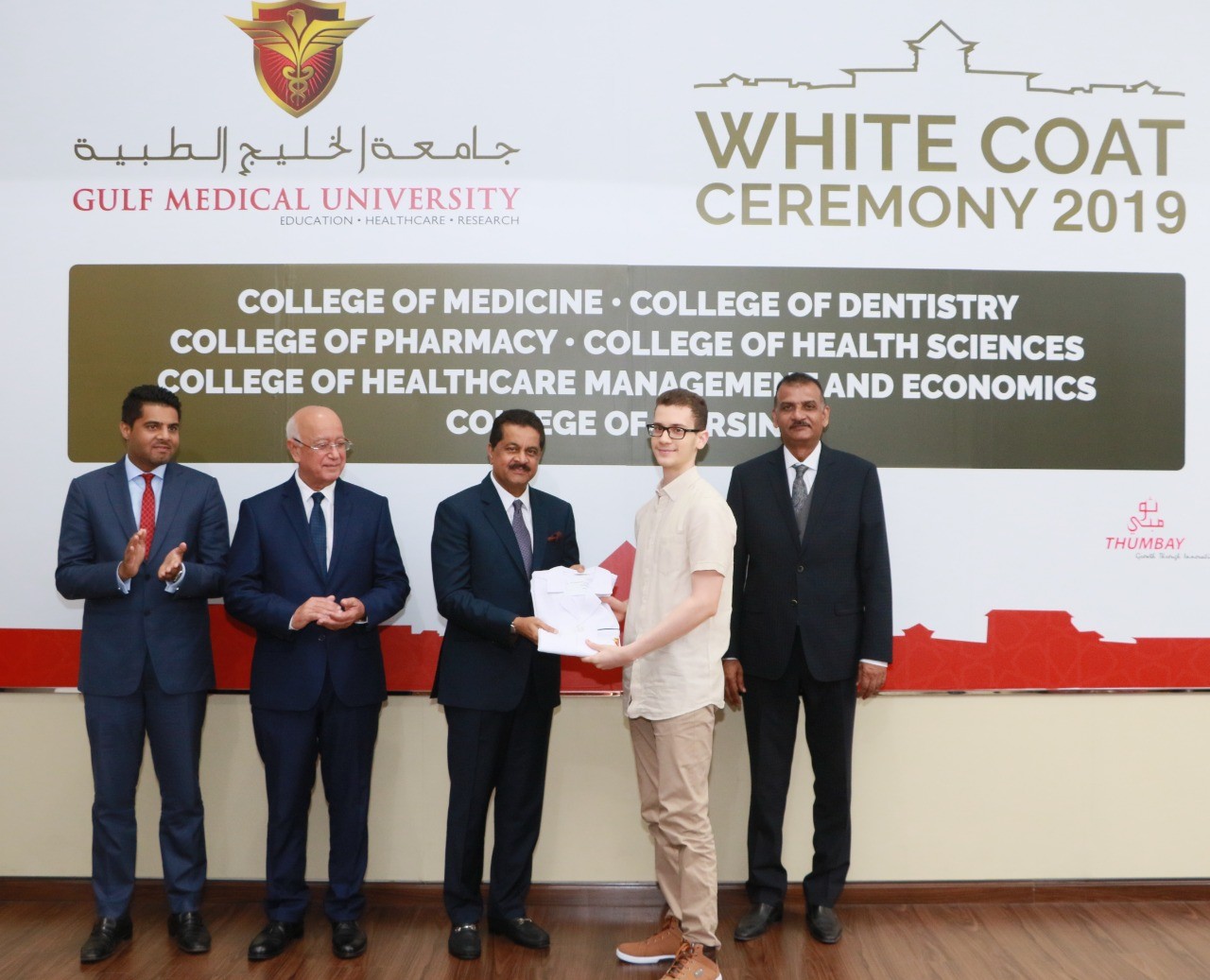
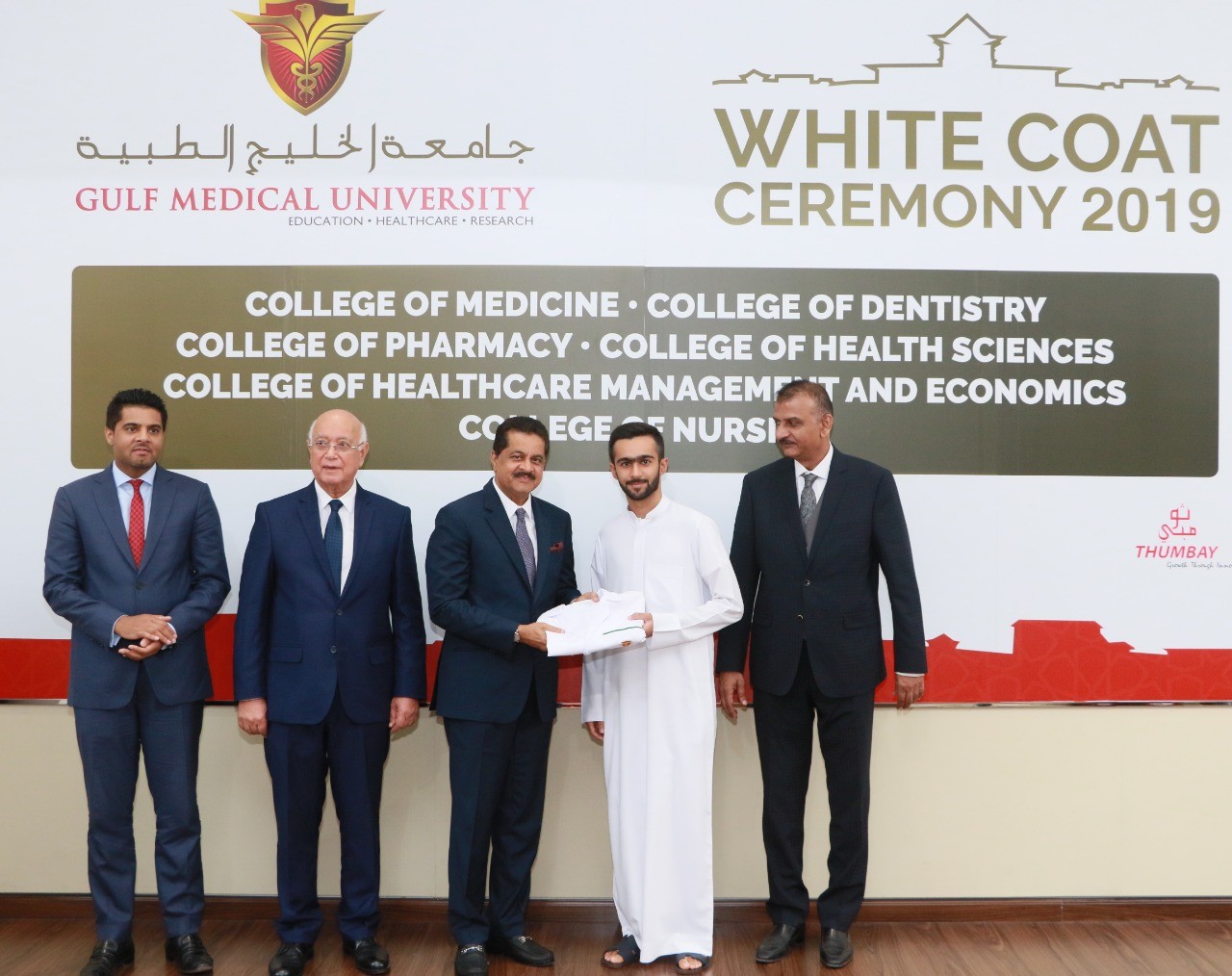
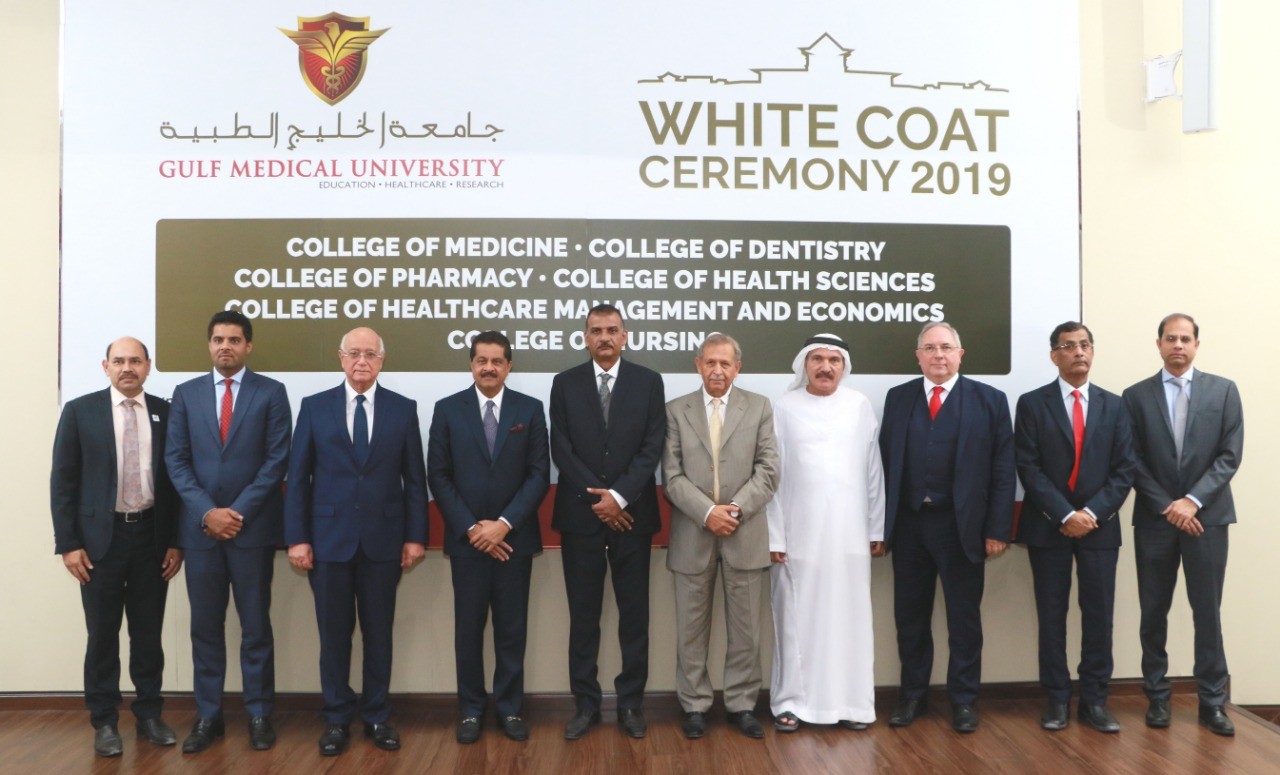
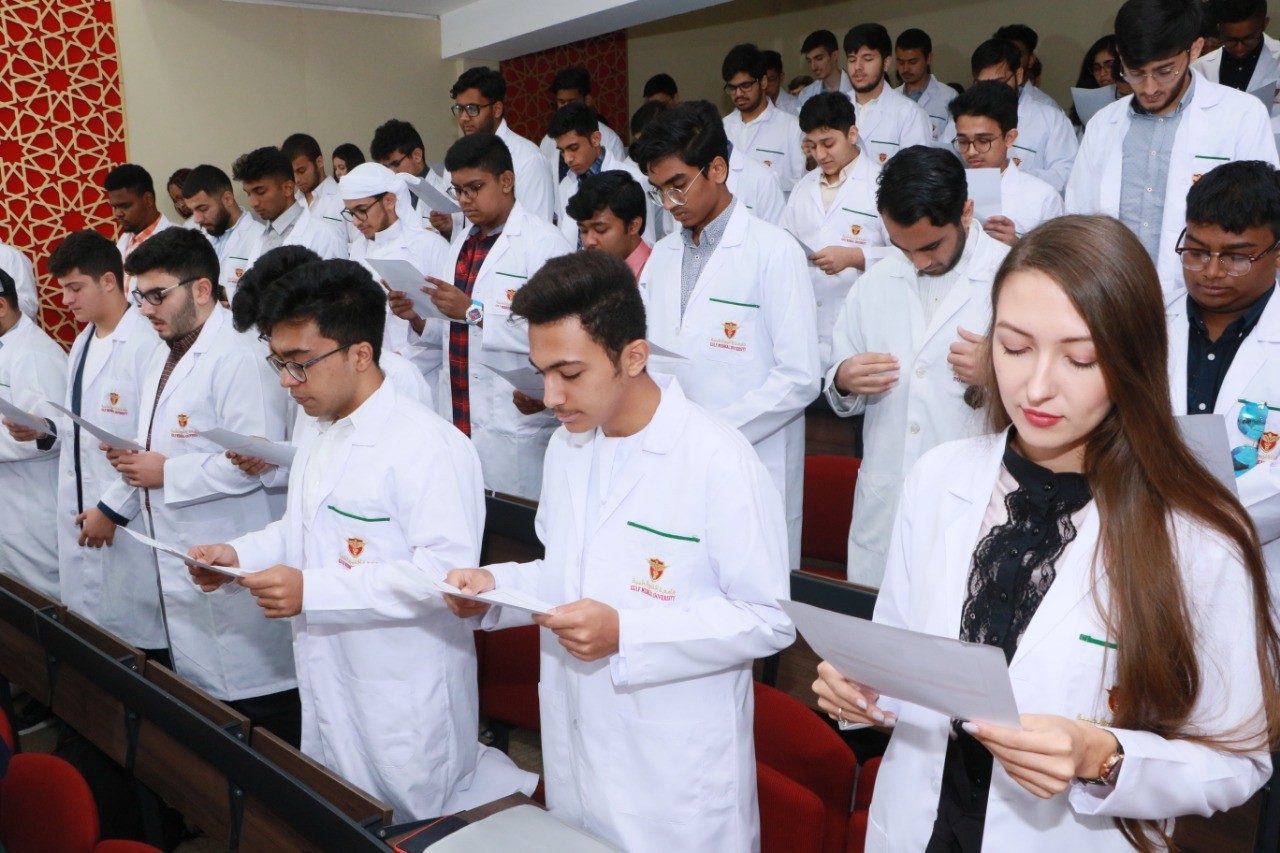
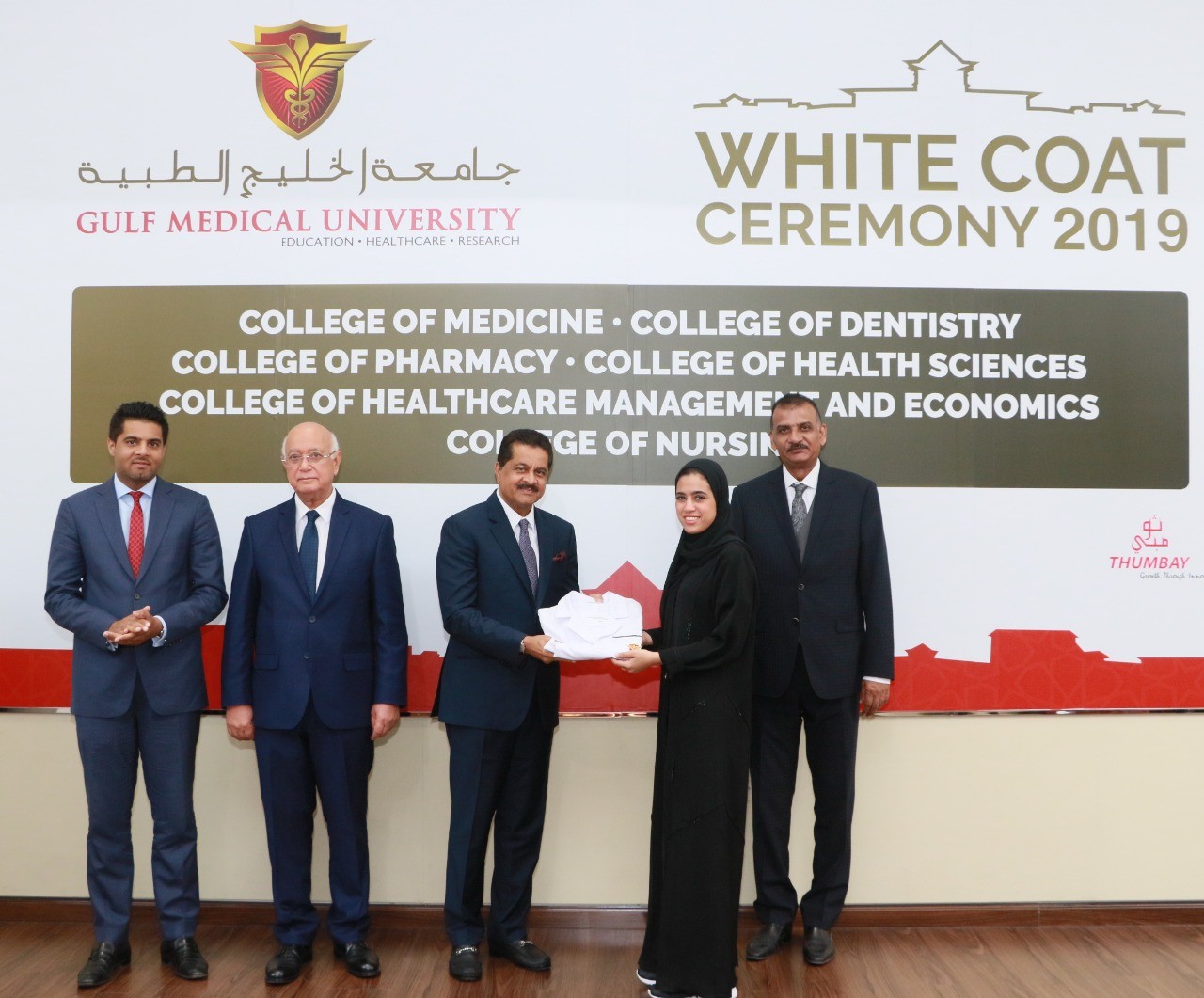
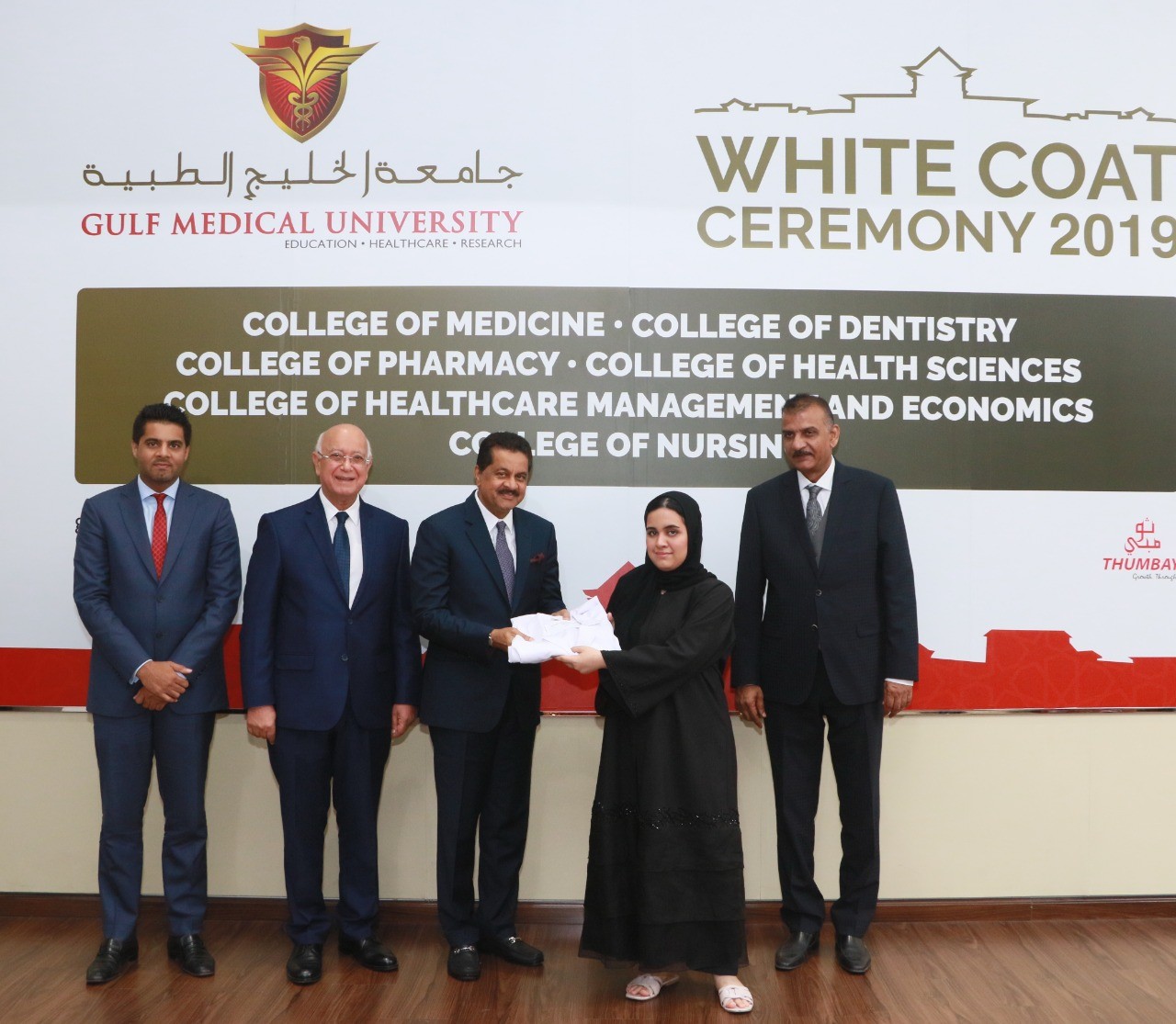
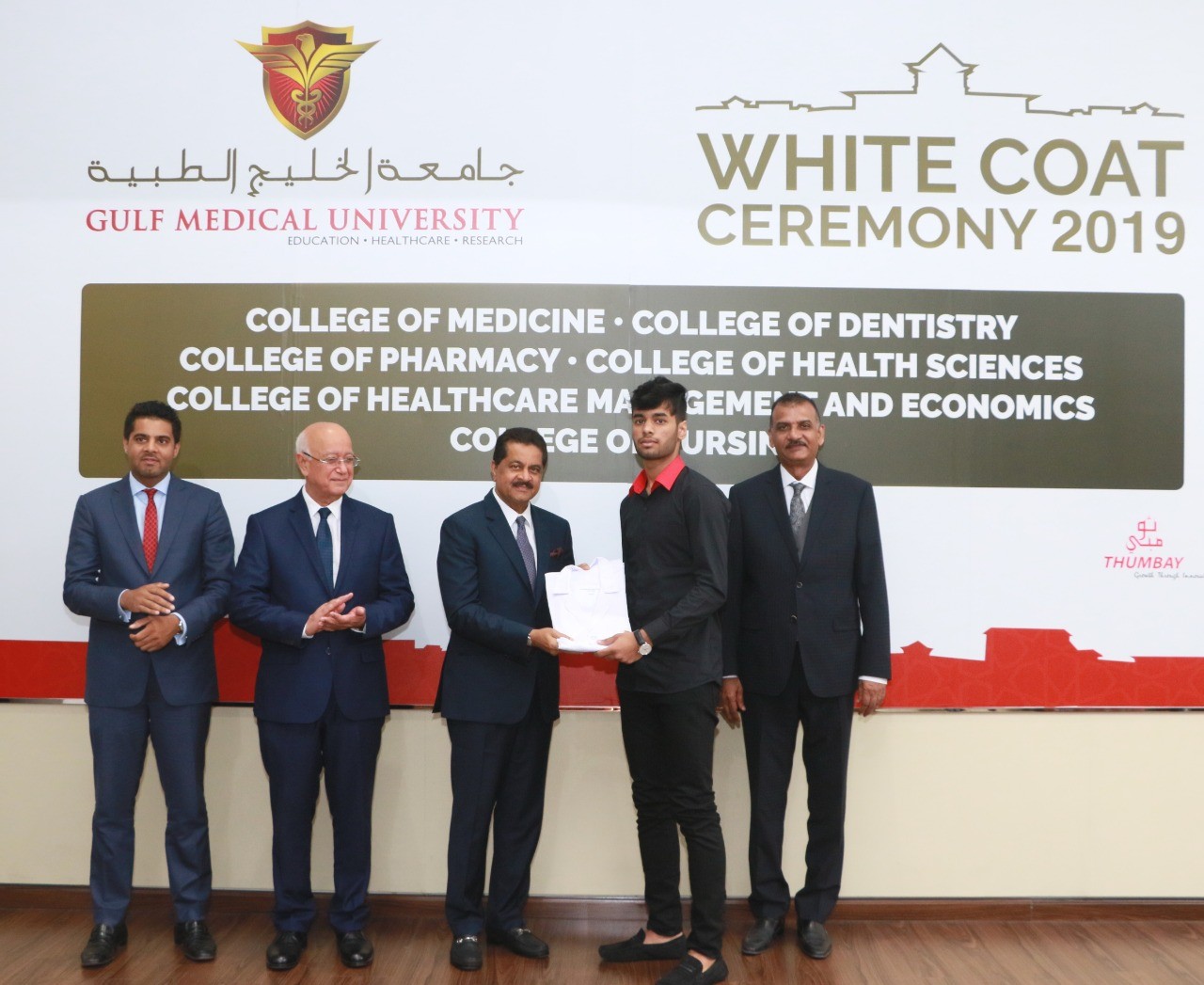
The new batch of students of Gulf Medical University (GMU) – Ajman, the leading medical university in the Middle East region, participated in a time-honored tradition – the White Coat Ceremony – on 12th September 2019, receiving their first white coats as a rite of passage to their respective healthcare careers. Dr. Thumbay Modeen, Founder, President Board of Trustees, GMU was the chief guest of the ceremony. Prof. Hossam Hamdy, the Chancellor of GMU presided.
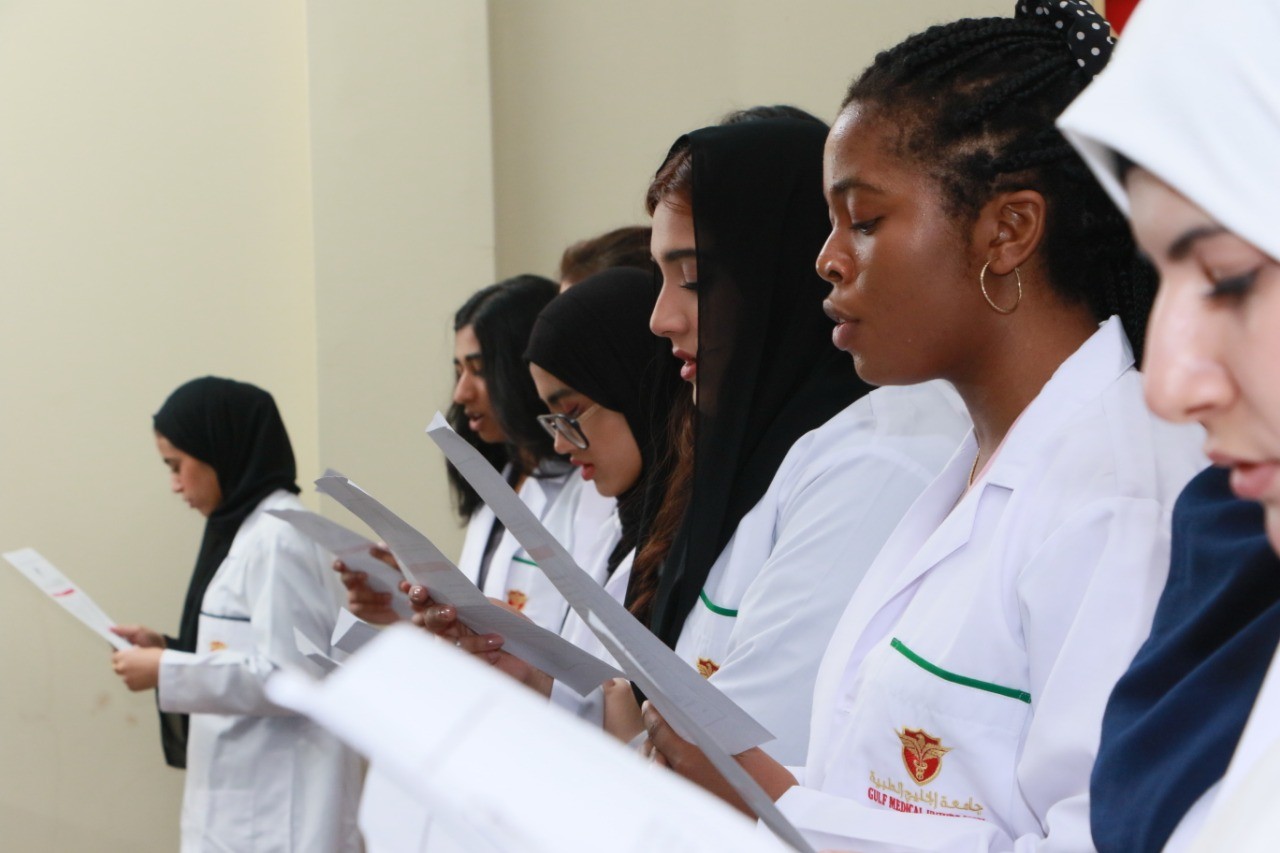
The incoming batch of 472 students joins the international community of GMU comprising of students from 80+ nationalities, pursuing various medical and healthcare courses across 6 colleges. Those receiving their white coats were students in the first year of various programs: Bachelor of Medicine and Bachelor of Surgery (MBBS), Bachelor of Biomedical Sciences (BBMS), Associate Degree in Pre-Clinical Sciences (ADPCS), Doctor of Dental Medicine (DMD), Doctor of Pharmacy (PharmD), Bachelor of Physiotherapy (BPT), Bachelor of Science – Medical Laboratory Sciences (B.Sc. MLS), Bachelor of Science – Medical Imaging Sciences (B.Sc. MIS), Bachelor of Science - Anesthesia Technology (B.Sc. AT), Bachelor of Science in Nursing (BSN) and Bachelor of Science in Healthcare Management and Economics (B.Sc. HME). The incoming students belong to various nationalities. For the students, donning the white coat symbolized their transition into healthcare professionals of the future, committed to providing compassionate care to patients.
Addressing the students, Prof. Hossam Hamdy reminded them that the world around them was changing rapidly in terms of communication, travel, treating patients, use of technology etc. “An important competency which will remain unchanged is the communication between human beings. The patients, the students, the healthcare providers and the medical educators are all humans. How to communicate, connect and interact and feel will play a key role in educating health professionals,” he said.
Emphasizing on the importance of teamwork, Prof. Hossam Hamdy said, “Medical practice is no longer a case of a single doctor caring for his or her patients. You are part of a team, bringing in the expertise of a larger group of professionals, working within a health care system. Teamwork is the one of the important competency you have to acquire during your studies and beyond.”
This academic year marks the first ever batches of GMU’s newly launched colleges; the College of Healthcare Management & Economics - the first full-fledged college of its kind in the Middle East region offering Bachelors and Executive Masters programs in healthcare management & economics, and the College of Nursing.
GMU has collaboration agreements with around 68 top international universities in Europe, United States, Japan and Far East, giving the students opportunities for trainings abroad. Graduate programs are now being offered jointly and in collaboration with the University of Arizona, United States, Virginia Commonwealth University, United States, Medical College of Wisconsin, United States, FAIMER, United States, CenMedic, United Kingdom and Tokyo Medical and Dental College, Japan. GMU also provides merit-based scholarships to students.
Offering a total of 26 accredited programs through its 6 colleges, the University has been at the forefront of attaining international recognitions, some of the recent ones being the College of Medicine’s recent accreditation based on ‘World Federation of Medical Education’ standards, becoming the first in the UAE and the Gulf region to achieve this feat. The Doctor of Pharmacy (PharmD) program offered by our College of Pharmacy was recognized by the Accreditation Council for Pharmacy Education (ACPE), making it the first internationally certified entry-to-practice PharmD program in UAE. Recently, GMU also hosted the prestigious MRCPUK PACES (Practical Assessment of Clinical Examination Skills) exam in collaboration with the Federation of the Royal Colleges of Physicians of the United Kingdom, joining the exclusive list of international PACES exam centers in the region.
GMU uses cutting-edge technology in the classrooms to enrich the learning experience of students. The Virtual Patient Learning (VPL) developed by the university and the recently launched 3D classroom uses Artifical Intelligence and Virtual Reality to give GMU students an interactive learning experience.
Gulf Medical University also has the distinction of being the only private Academic Health System (AHS) in the region, linking the healthcare, education and research functions. Among some of the most recent notable achievements is the operations of the state-of-the-art Thumbay Medicity, which includes the Thumbay Dental Hospital, the Thumbay Rehabilitation and Physical Therapy Hospital, and the Thumbay University Hospital. The University’s advanced research facility, the Thumbay Research Institute for Precision Medicine (TRIPM) drives its transformation into a research-based University. The institute is focused on conducting real time cancer and diabetes research with a focus on postgraduate studies and incorporating the research findings in our curriculum.
Let the Truth be known. If you read VB and like VB, please be a VB Supporter and Help us deliver the Truth to one and all.
Navy ensures security of Indian commercial ships, oil tankers: Defence Minister Rajnath Singh

Visakhapatnam (PTI): Pointing out that 95 per cent of the country’s trade, including energy supplies, is conducted through sea, Defence Minister Rajnath Singh on Friday noted the Indian Navy's indispensable role in securing commercial shipping lanes and oil tankers against emerging maritime threats.
Speaking at the commissioning ceremony of INS Taragiri here, the Defence Minister said the Indian Navy continuously maintains its presence in the Indian Ocean--whether it is the Persian Gulf or the Malacca Strait.
Singh’s comments assume significance following the disruption of oil supplies and blockage of oil tankers in view of the prevailing situation in West Asia.
According to him, a strong and capable navy is not an option for the country, but a necessity.
“There are many sensitive points in the sea where our Navy has continuously made its active presence to ensure the smooth supply of goods. Whenever there is a situation of tension there, the Indian Navy has ensured the security of our commercial ships and oil tankers,” he said.
The Indian Navy has proven that it is not only capable of protecting the interests of the country, but if necessary, can also take every step to ensure the safety of its citizens and trade routes around the world, he added.
Citing history, he said without strengthening the naval power, no country can be considered powerful in the right sense and therefore, when Prime Minister Narendra Modi talks about Viksit Bharat by 2047, the basis of marine power becomes very important.


