
With Saudi's new travel restrictions, stranded Indians in UAE awaits relief from their plights

Dubai: Awaiting relief from the government and authorities of India and Saudi Arabia, hundreds of Indians are stranded in Dubai after Saudi Arabia announced a temporary ban on non-citizens’ entry into the kingdom from 20 foreign countries.
Saudi Arabia announced the restriction after the kingdom witnessed a surge in the number of COVID-19 cases. Saudi-bound Indians who were eager to finish their 14-day quarantine in Dubai in order to enter the country are now hit by uncertainty due to the sudden ban.
The passengers had arrived in UAE after the restrictions imposed by Saudi stated foreigners can't enter until they undergo a 14-day quarantine in any of the neighboring countries like UAE, Bahrain, Oman, Kuwait, etc.
Ever since the imposition of the restriction, passengers are left high and dry in UAE with neither the Indian nor Saudi government authorities paying heed to their hues and cries. Most of the passengers who fall into the ‘blue-collar employees’ are now running out of finances and resources to afford an extended stay in Dubai.
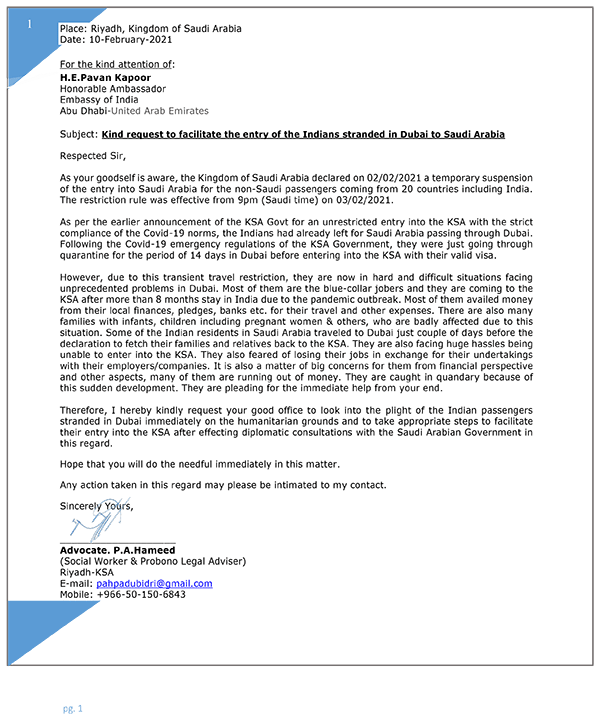
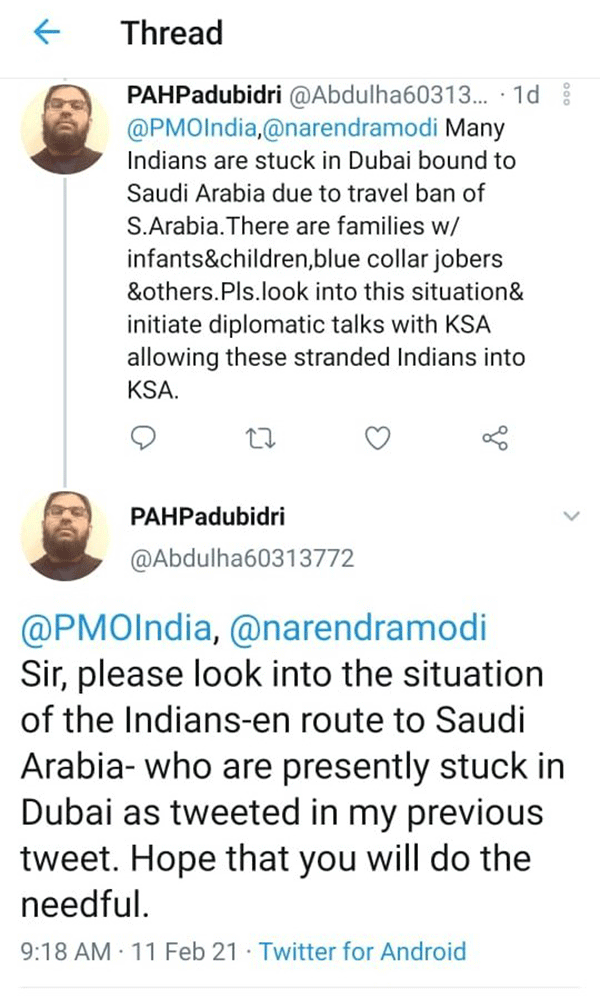
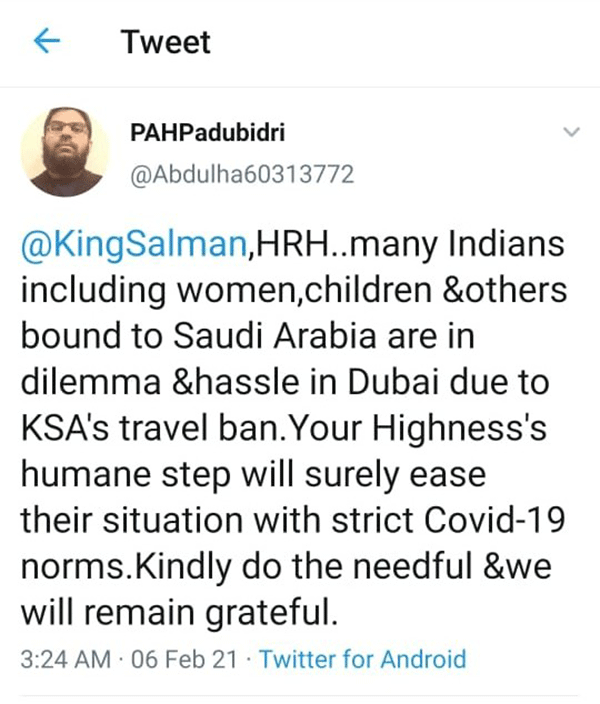
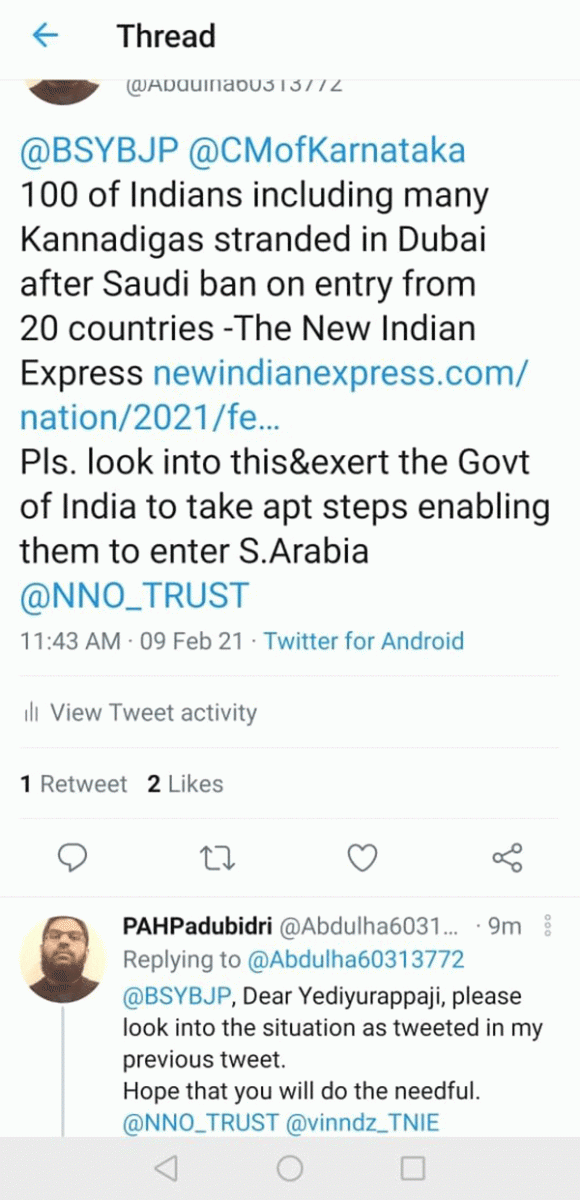
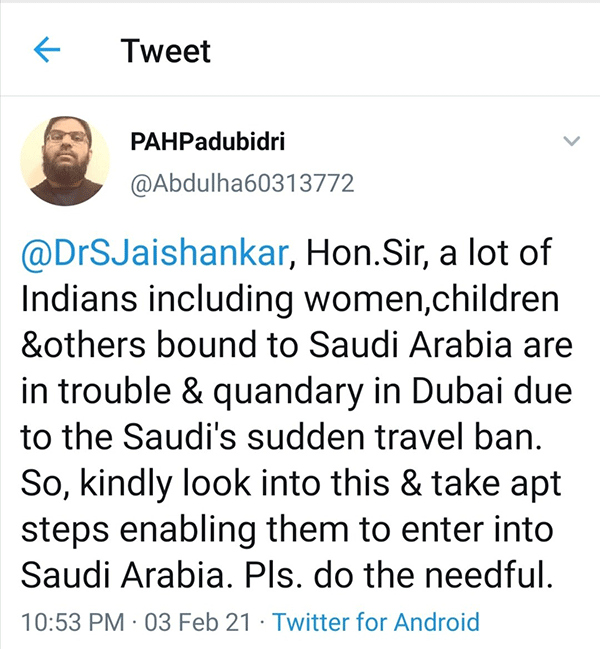
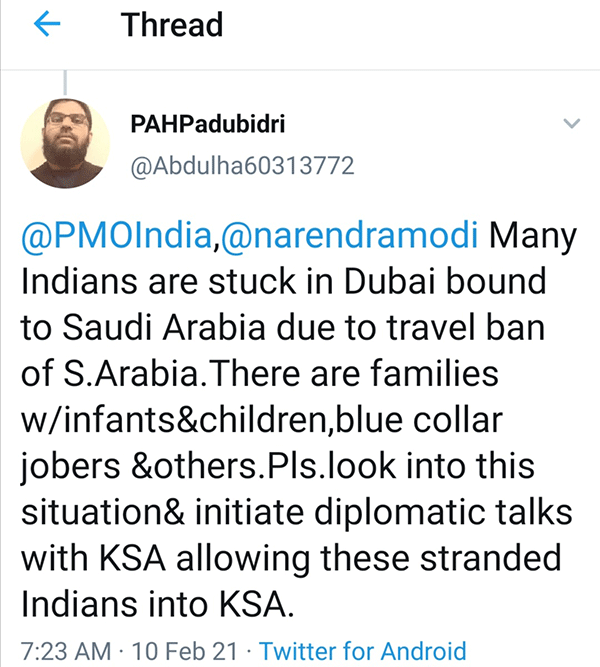
PA Hameed, an advocate and social worker in Riyadh, has written a letter to External Affairs Minister S Jaishankar seeking his intervention and has also tagged Prime Minister Narendra Modi in multiple tweets to bring the issue to his notice.
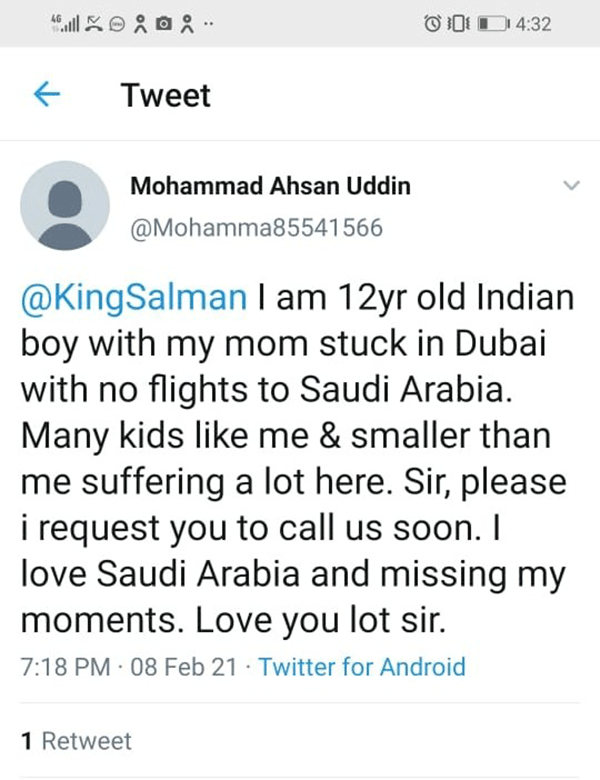
The letter says those stranded include families, children, and pregnant women. "Some Indian residents in Saudi Arabia who traveled to Dubai a couple of days back to fetch their families and relatives are also stranded due to the sudden development. All of them are in a hapless situation and are pleading for immediate help from the Indian government," it said.
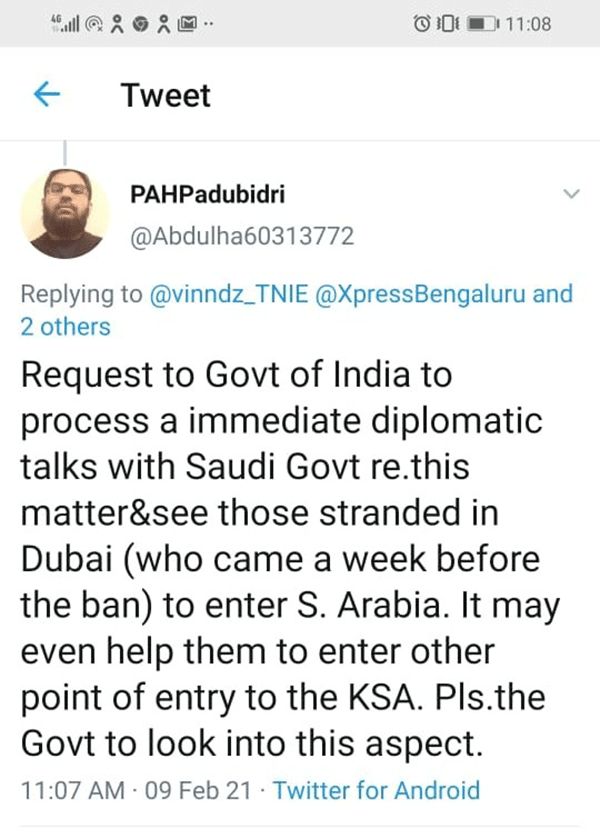
Recently, both Indian Embassies in UAE & Saudi Arabia issued an advisory to the people stranded in Dubai to return back to India. Hameed said the move was unexpected and unusual, asking people to go back to India is the last thing the government should be doing. The embassy should try and come with a plan and diplomatic dialogue insisting the Saudi authorities to allow these stranded Indians into the kingdom.
“"I request the Government of India & other concerned authorities to look into this issue immediately & to facilitate them to be landed in Saudi Arabia by effecting diplomatic consultations with the Saudi Arabian Government in this regard,” he said.
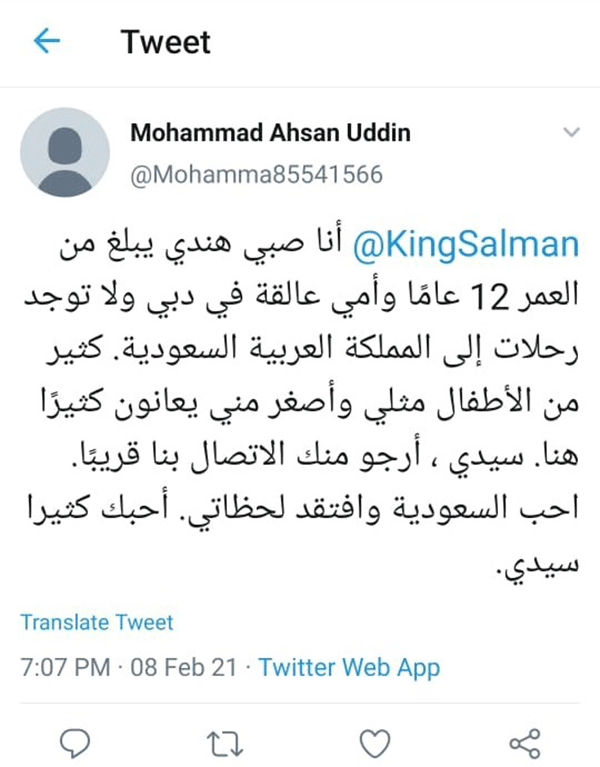
Several passengers who are stranded in UAE have called for help adding that they have run out of money for an extended stay. Many of them have also added that they had to resort to taking loans to facilitate their journey to Saudi Arabia via Dubai for quarantine and now they’re left with uncertainty as there is no guarantee when Saudi will lift the temporary ban.
“We can only hope that the Indian government bails us out from the crisis” one of the stranded passengers Sufyan who hails from Mangaluru said.
Let the Truth be known. If you read VB and like VB, please be a VB Supporter and Help us deliver the Truth to one and all.
Deepika Kumari leads Indian recurve archery team to dramatic World Cup gold

Shanghai (PTI): The Indian trio of Deepika Kumari, Ankita Bhakat and teenager Kumkum Mohod held their nerve in a tense shoot-off to beat home favourites China and clinch the women's recurve team gold medal at the Archery World Cup Stage 2 here on Sunday.
In a final marked by fluctuating fortunes, India edged past the home side 5-4 (28-26) in the shoot-off after the four-set regulation ended 4-4.
The victory was especially sweeter as India had earlier stunned record 10-time Olympic champions South Korea in the semifinals en route to their first World Cup women's team gold since 2021.
Deepika, who was also part of India's World Cup-winning teams in Guatemala City and Paris in 2021, now has seven World Cup team gold medals to her name since 2010.
It was also the Indian women recurve team's first World Cup medal in three years, its previous podium finish coming in Stage 4 in Paris in 2023 where Ankita was a member of the winning team.
India's campaign in Shanghai has thus already yielded two medals after compound archer Sahil Jadhav opened the country's account, securing a bronze on Saturday.
India also remained in contention for another podium finish later in the day with recurve archer Simranjeet Kaur set to compete in the semifinals. She is a win away from her maiden individual World Cup medal.
Travelling without a full-time national coach amid the continuing impasse over appointments, it was the vastly experienced Deepika who led from the front, constantly motivating her teammates during breaks and changeovers.
Prafull Dange, who was the designated women's recurve coach after his ward Kumkum topped the national trials, largely remained in the background as Deepika guided the side through the pressure moments against a hostile home crowd and vocal Chinese support staff.
Against a young Chinese side comprising Zhu Jingyi, Huang Yuwei and teenage archer Yu Qi, who all made their World Cup debuts only last year, India looked in control initially but nearly let the match slip after taking the opening set (54-53).
Shooting last in the Indian order, Deepika set the tone with successive 10s as India edged the first set despite Ankita (8-8) and 17-year-old Kumkum (10-8) putting up an inconsistent show.
Deepika continued her fine rhythm in the second set with another perfect 10 as India briefly held a one-point advantage (28-27) midway through the end. But China responded strongly with two 9s and a 10 in their final three arrows of the second set to post 55.
Ankita replied with a 9, but Kumkum managed only an 8, leaving Deepika needing a 10 to level the set.
The four-time Olympian, however, slipped to a 7 as India lost the set 52-55 and China drew level at 2-2.
The hosts then moved ahead in the third set. The teams were initially tied at 56, but a review upgraded China's final arrow from 8 to 9, handing them the set 57-56 and a 4-2 lead.
India appeared on the verge of defeat in the fourth set despite Deepika rediscovering her touch with two 10s. Kumkum's final arrow landed in the 7-ring as India posted a modest 54.
China required two 10s and a 9 from their last three arrows to seal the match.
Zhu and Huang delivered perfect 10s, leaving 18-year-old Yu Qi needing a 9 for victory in front of the home crowd.
But the youngster shot an 8, allowing India a dramatic escape and forcing a shoot-off.
The Indians peaked at the right moment in the decider. Ankita opened with a 9, Kumkum followed with a superb 10, and Deepika calmly delivered a 9 when only an 8 was needed to seal the title.


