
Action on 'war footing' for conserving Taj Mahal: Government

New Delhi, July 16: After being rapped by the Supreme Court over the condition of the Taj Mahal, the government on Monday said that it will take action on "war footing" to deal with air and water pollution in and around the world-famous 17th-century Mughal monument.
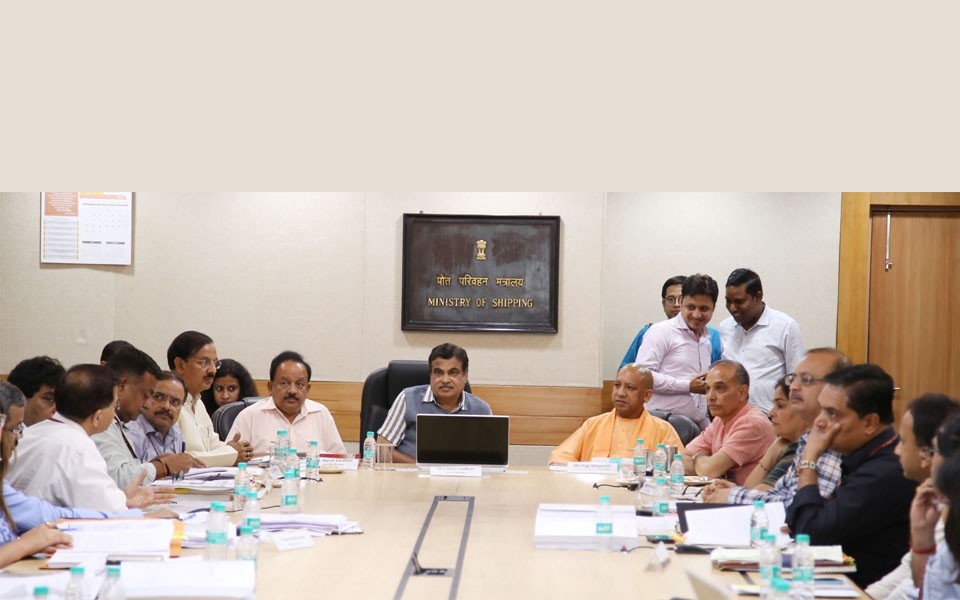
The assurance came after a a high-level inter-ministerial meeting here, chaired by Union Transport Minister Nitin Gadkari and attended by Uttar Pradesh Chief Minister Yogi Adityanath, Union Environment Minister Harsh Vardhan and Culture Minister Mahesh Sharma and state Minister Satyapal Singh, where the steps to tackle yellowing of the Taj Mahal and controlling Yamuna pollution were discussed.
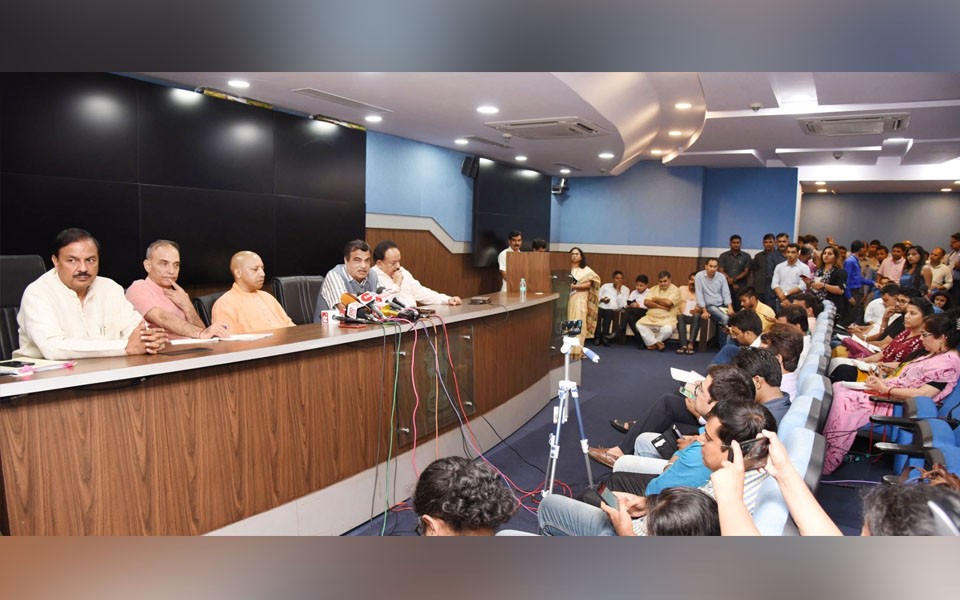
Addressing a press conference, Gadkari announced that the Centre has decided to adopt several measures for preserving the heritage such as introduction of green fuels, e-buses, opening more ethanol industries and cleaning of river Yamuna.
"To deal with air pollution the use of bio fuel, green fuel and electric vehicles will be popularised in Agra," he said.
"An ethanol policy will be introduced for Agra which will include conversion of bio mass to ethanol during the crop burning season and use of ethanol in auto rickshaws combined with introduction of mass rapid transport system as a part of policy of zero tolerance to pollution," he added.
A committee to be headed by headed by Union Environment Secretary C. K. Mishra will be formed to look into the issue of industrial pollution which will also include experts from NEERI, IITs and other environment oriented organizations
"The committee will study on case to case basis and take a tough stand on hazardous industries in the vicinity of the Taj Mahal," the minister said.
To deal with the water pollution in the Yamuna, Gadkari said the cleaning of the Yamuna falls under the Namami Ganga project and several projects are already been taken up to make the river pollution free.
"(A total of) 36 projects of Rs 4,000 crore on the river Yamuna have been identified and it is hoped that the DPRs (detailed project reports) will be completed in next few months. Already 11 projects have started in Delhi on the river Yamuna and the tender for the 12th project will be finalised soon," he added.
Let the Truth be known. If you read VB and like VB, please be a VB Supporter and Help us deliver the Truth to one and all.
AIITA welcomes Karnataka’s ban on obscene songs in school events

Bhatkal: The Karnataka unit of the All India Ideal Teachers Association (AIITA) has welcomed the Karnataka government’s decision to strictly ban school children from dancing to obscene songs during educational and cultural programmes in government, aided, and private schools across the state.
AIITA Karnataka State President M. R. Manvi congratulated the government for taking what he termed an important step to preserve the sanctity of education.
“Such decisions to safeguard the dignity of school children and uphold the values of education are the need of the hour. This rule should not be limited to government schools alone but must be strictly implemented in all private educational institutions as well,” he said.
He further urged the government to address other concerns within school programmes.
“The government should not only prohibit obscene dances in the name of school anniversaries, but also ensure that plays and dialogues that incite religious hatred are avoided. Schools should be centres of harmony, not platforms for spreading hatred,” he added.
According to a recent circular issued by the Department of School Education and Literacy, obscene dances are adversely affecting the mental health and moral values of students.
In this regard, schools have been advised to use songs that promote nationalism, positive thinking, the greatness of Kannada culture, and value-based traditions instead of inappropriate content during programmes.
The circular also emphasises that students should be dressed in decent attire.
AIITA also backed the department’s warning that disciplinary action would be taken against head teachers if such guidelines are violated. The association has further demanded that district Deputy Directors of Public Instruction strictly monitor the implementation of these rules.


