Ban on import of fish may be extended: Parrikar

Panaji, July 23 : Goa Chief Minister Manohar Parrikar on Monday said the government is willing to extend the 15-day ban on import of fish "to remove fear and confusion" among people, while urging legislators to stop politicising the issue.
Citing laboratory tests, he also ruled out the use of formalin by traders to preserve fish in the state. More than 116 samples drawn from various markets and different variety of fish since July 14, indicated that no added formaldehyde was used to preserve fish. The reports about its usage to preserve fish had triggered a drop in tourism in the coastal state, Parrikar said.
"The government is ready to consider extending this ban for a further period in the interest of the health of the Goans, if the prevailing circumstances remain the same", he said while replying to a calling attention motion moved by Bharatiya Janata Party MLA Nilesh Cabral in the ongoing monsoon session of the Goa legislative assembly.
The 15-day ban on import of fish from other states was imposed by the Chief Minister on July 18.
Quoting guidelines by the central government's Food Safety and Standards Authority of India (FSSAI), he said that while only additional application of formalin was considered an offence, many commonly consumed foods inherently contained the chemical as part of their natural metabolism.
"Formaldehyde is documented to be naturally present in many common food items, including fruits and vegetables (approximately 20 to 60 mg per kg in fruits and vegetables), meats (approximately 5-20 mg per kg), fish (approximately 5 to 140 mg per kg), crustacean (approximately 10 to 100 mg per kg) and mushrooms (approximately 60 mg in fresh to as high as 400 mg per kg in dried shitake mushrooms), etc," Parrikar told the Goa legislative assembly in a written reply.
"In most marine fishes, formaldehyde is a natural breakdown product of a chemical known as trimethylamine oxide (TMAO) that exists in their bodies. Once the fish is harvested, TMAO breaks down into formaldehyde and dimethylamine in equal parts during the post mortem. It can also accumulate in certain marine fish and crustacean during frozen storage," he added.
Urging the legislators to speak responsibly on the formalin controversy, Parrikar said the furore caused over alleged use of formalin had even resulted in a drop in the number of tourists visiting the state.
"Irresponsible statements have an impact on tourism. Tourists are refusing to eat fish now," Parrikar said, saying that legislators were making statements out of ignorance. Banning of fish imports will severely impact tourism, he also said.
"Because of our ignorance and political oneupmanship, we are destroying Goa's image," Parrikar said, while promising to set up a "robust mechanism" to check the use of formalin in fish before the temporary ban on import of fish from other states is lifted on August 3.
The BJP-led coalition government in the state has been on the backfoot ever since the controversy erupted, more so after two cabinet ministers, namely Town and Country Minister Vijai Sardesai and Health Minister Vishwajit Rane, tried to downplay the use of formalin in fish, claiming it was within "permissible limits". The claim was disputed by several experts including marine scientists at the Goa-based National Institute of Oceanography.
Let the Truth be known. If you read VB and like VB, please be a VB Supporter and Help us deliver the Truth to one and all.
National Synodal Assembly 2026 begins in Bengaluru with over 220 delegates

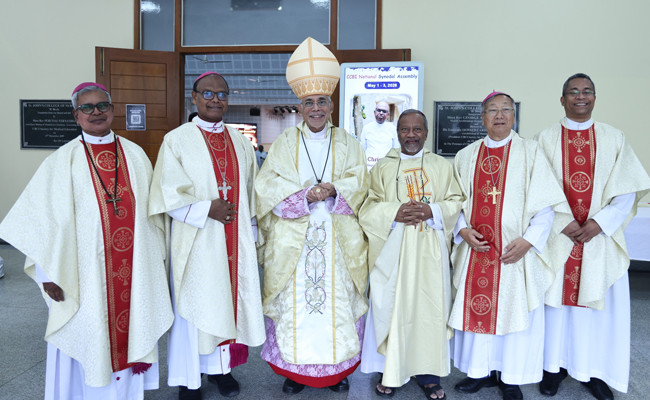
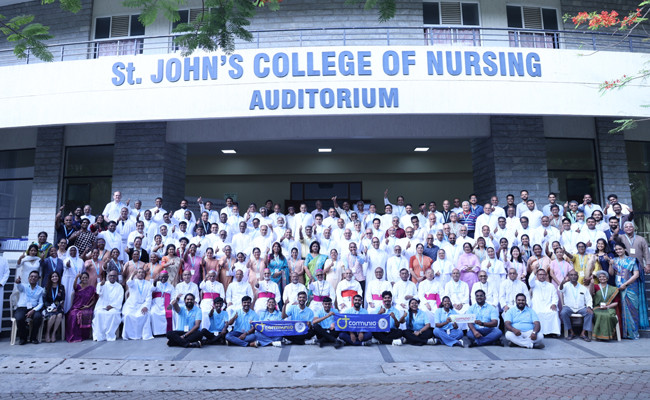
Bengaluru: The Conference of Catholic Bishops of India (CCBI) on May 1 inaugurated its National Synodal Assembly 2026 at St. John’s Medical College, bringing together more than 220 delegates from across the country under the theme Synodal Pilgrims of Hope.
The assembly is part of the global synodal process initiated in 2021 by Pope Francis, which calls for greater participation, dialogue and shared responsibility within the Church. In India, the process has involved consultations at diocesan, regional and national levels.
Participants at the assembly include two Cardinals, 25 Bishops, 65 priests, more than 20 women religious, and over 100 lay faithful, including youth and women leaders.
The gathering began with a Eucharistic celebration led by Filipe Neri Ferrão. In his homily, he described the assembly as a moment of grace and discernment and called on delegates to walk together in prayer, listening and missionary commitment.
He spoke about the importance of the Risen Christ in the mission of the Church and urged the faithful to be witnesses of the Gospel. Referring to the conversion of St Paul, he said every baptised person has a role in spreading the message of Christ. He also highlighted the example of St Joseph the Worker, stressing the dignity of labour and the call to holiness in everyday life.
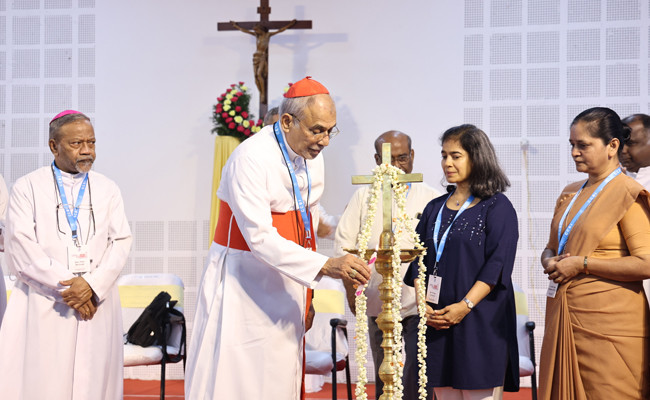
The formal inauguration included the invocation of the Holy Spirit through Veni Creator Spiritus and the lighting of the ceremonial lamp. Deputy Secretary General Fr. Stephen Alathara welcomed the delegates and described the gathering as a spiritual journey.
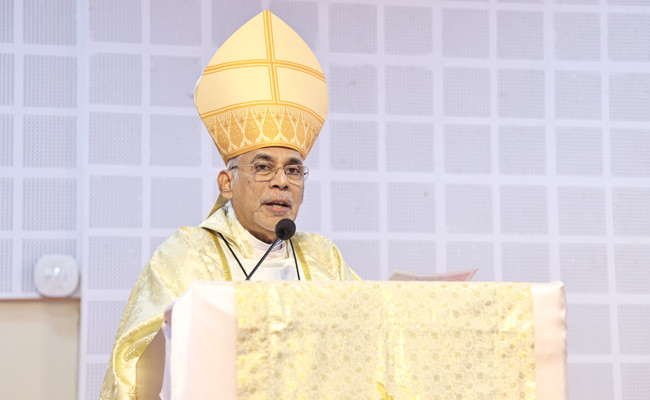
In his presidential address, Cardinal Ferrão referred to the CCBI pastoral plan titled Journeying Towards a Synodal Church: Mission 2033 and called on participants to build on the vision outlined at the 36th Plenary Assembly held in Bhubaneswar in 2025.
Delegates will reflect on four key themes identified from 16 pastoral priorities: interreligious dialogue and peacebuilding, inclusion of the excluded, poverty and integral ecology, and support for children and youth.
The discussions are being conducted through a method of spiritual conversation aimed at encouraging listening, dialogue and collective decision-making. The focus is on translating these discussions into practical actions within the Church.
The assembly also looks ahead to the Jubilee Year 2033, which will mark 2,000 years of the Redemption, and aims to strengthen the Church’s mission in the coming years.
Further consultations are scheduled for September 2026, with the process expected to conclude at the 38th Plenary Assembly of the CCBI in January 2027.
Organisers said the assembly seeks to strengthen unity within the Church and promote participation of all sections, including women and youth, in shaping its future direction.