
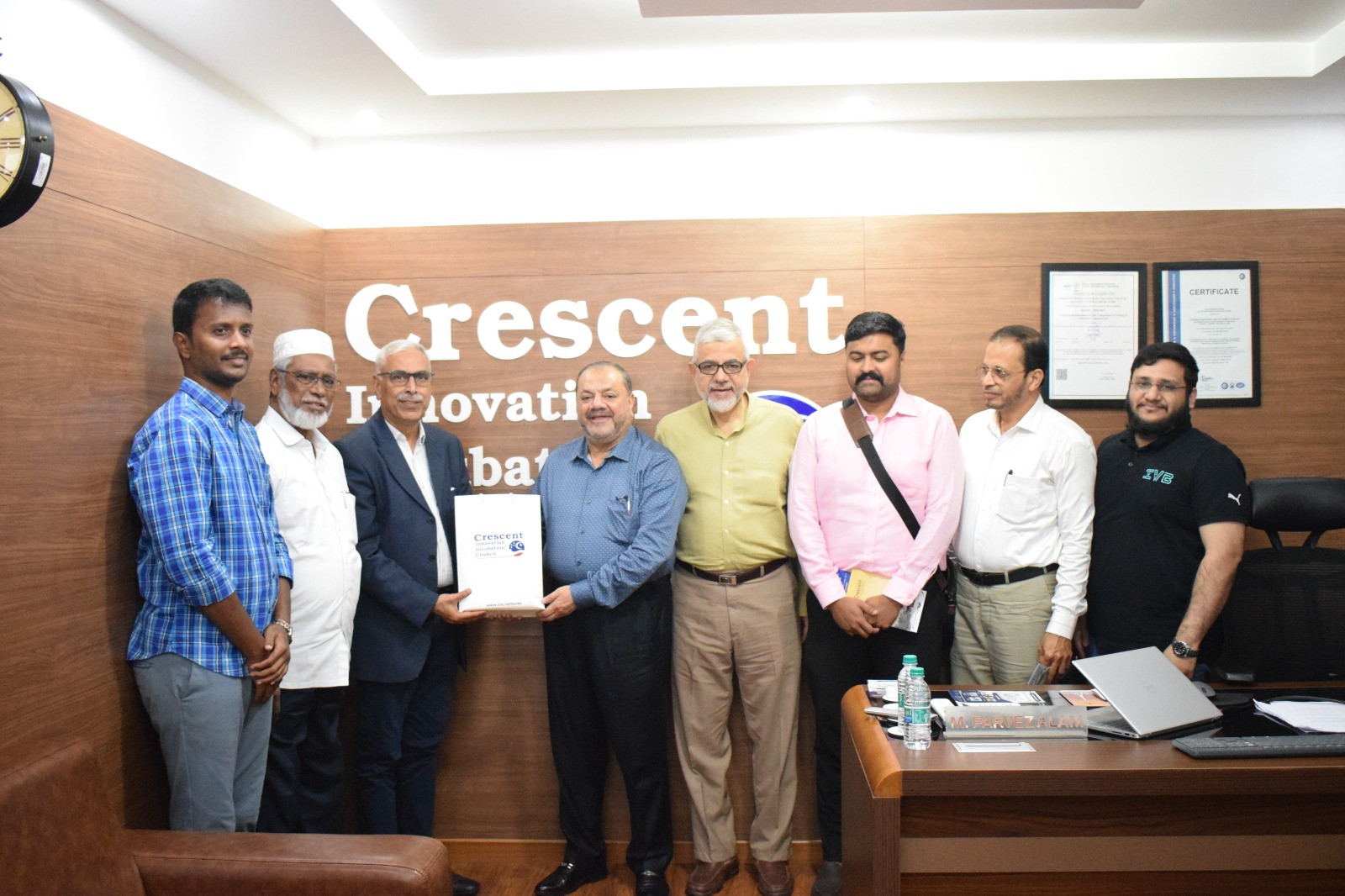
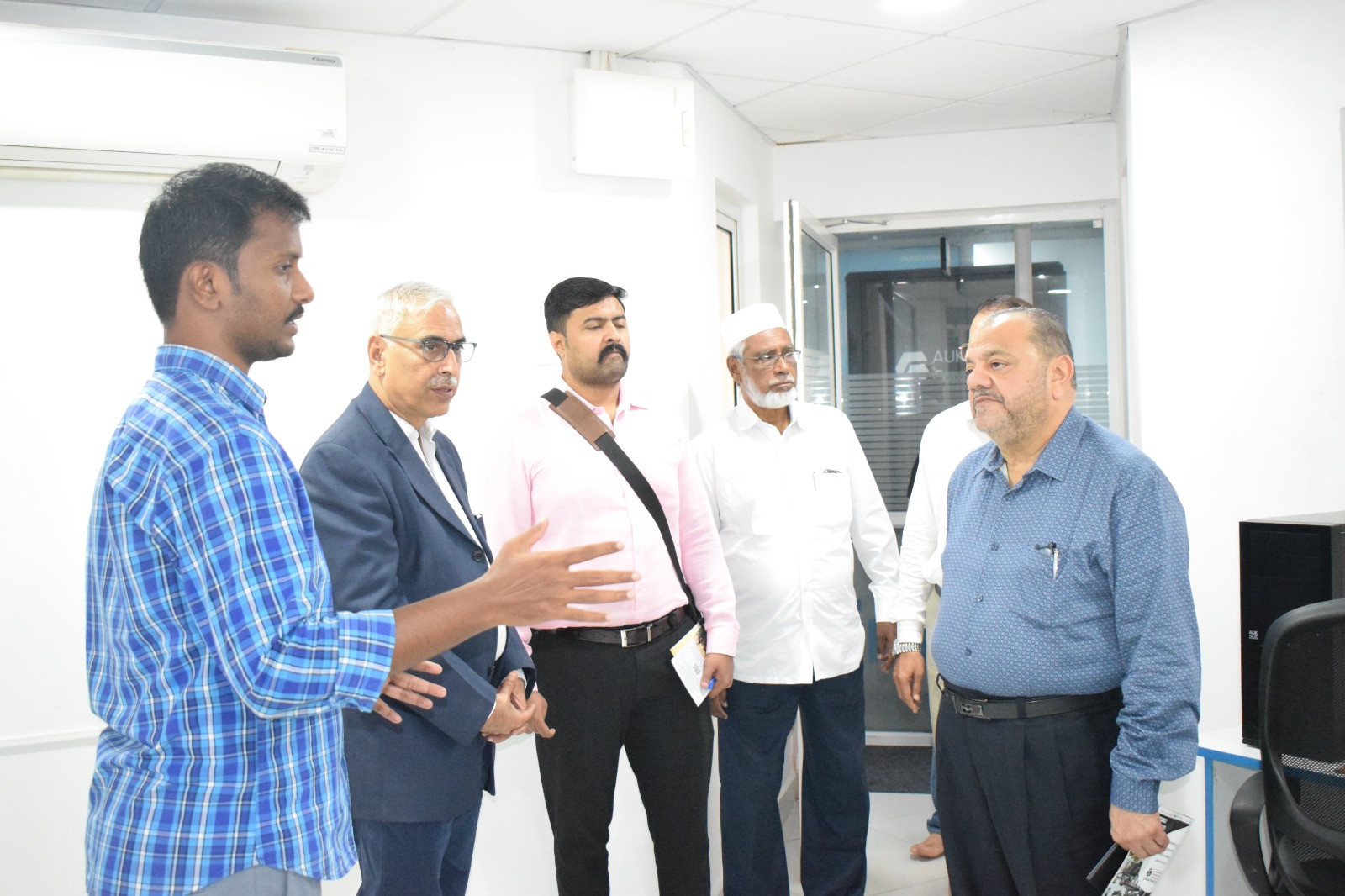
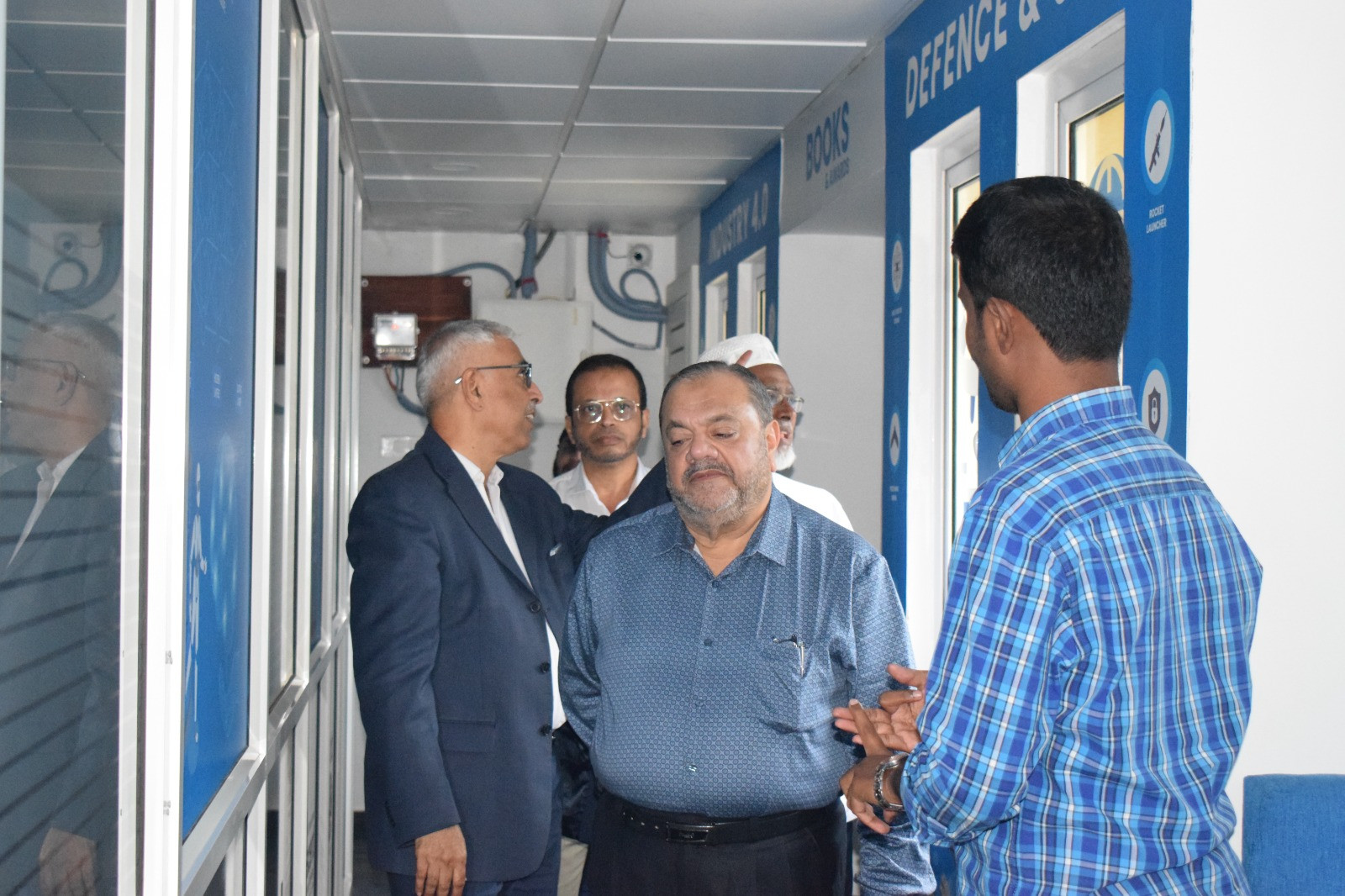
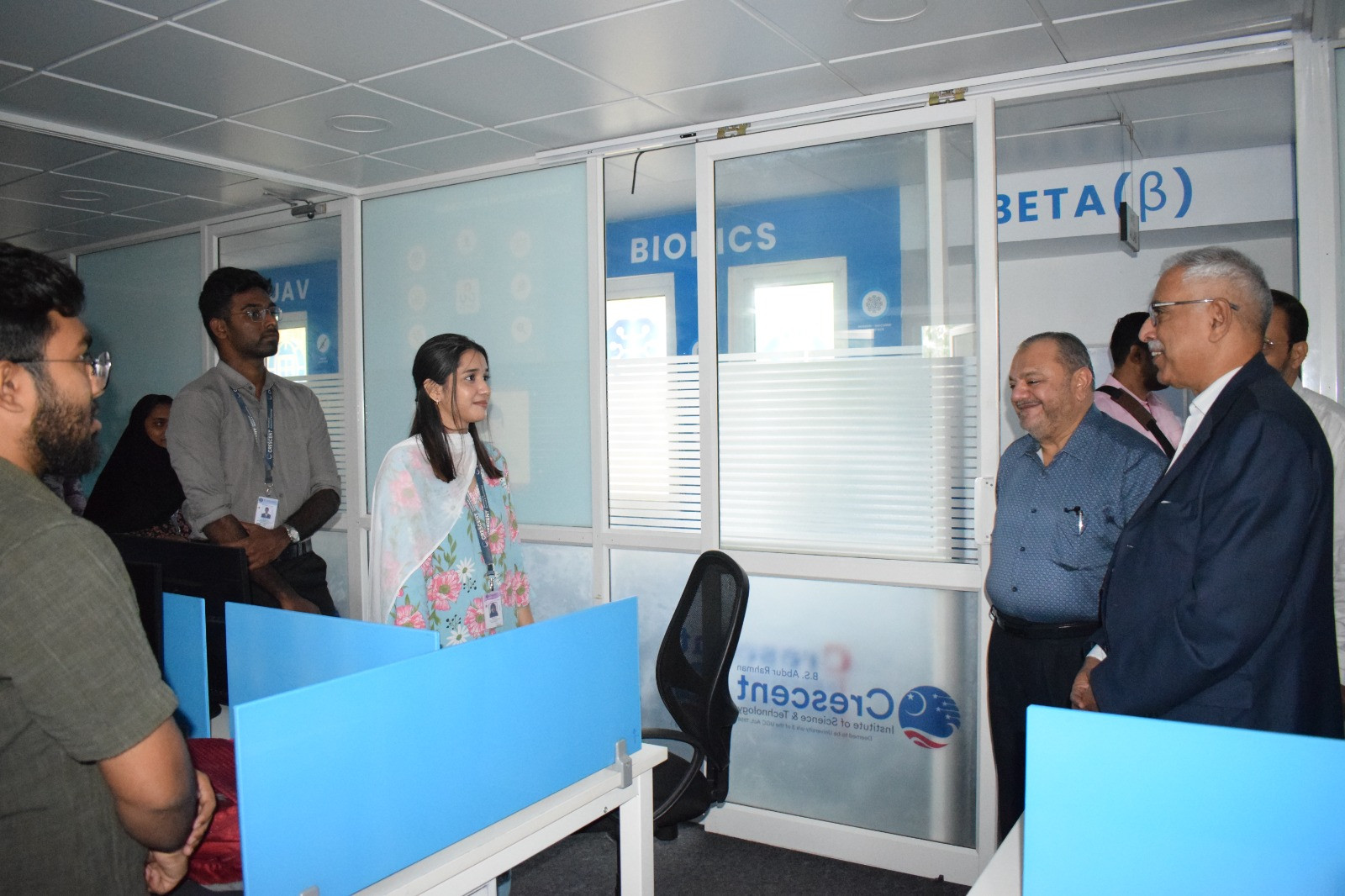
CIIC hosts Anjuman Hami-e-Muslimeen Bhatkal’s president Yunus Kazia

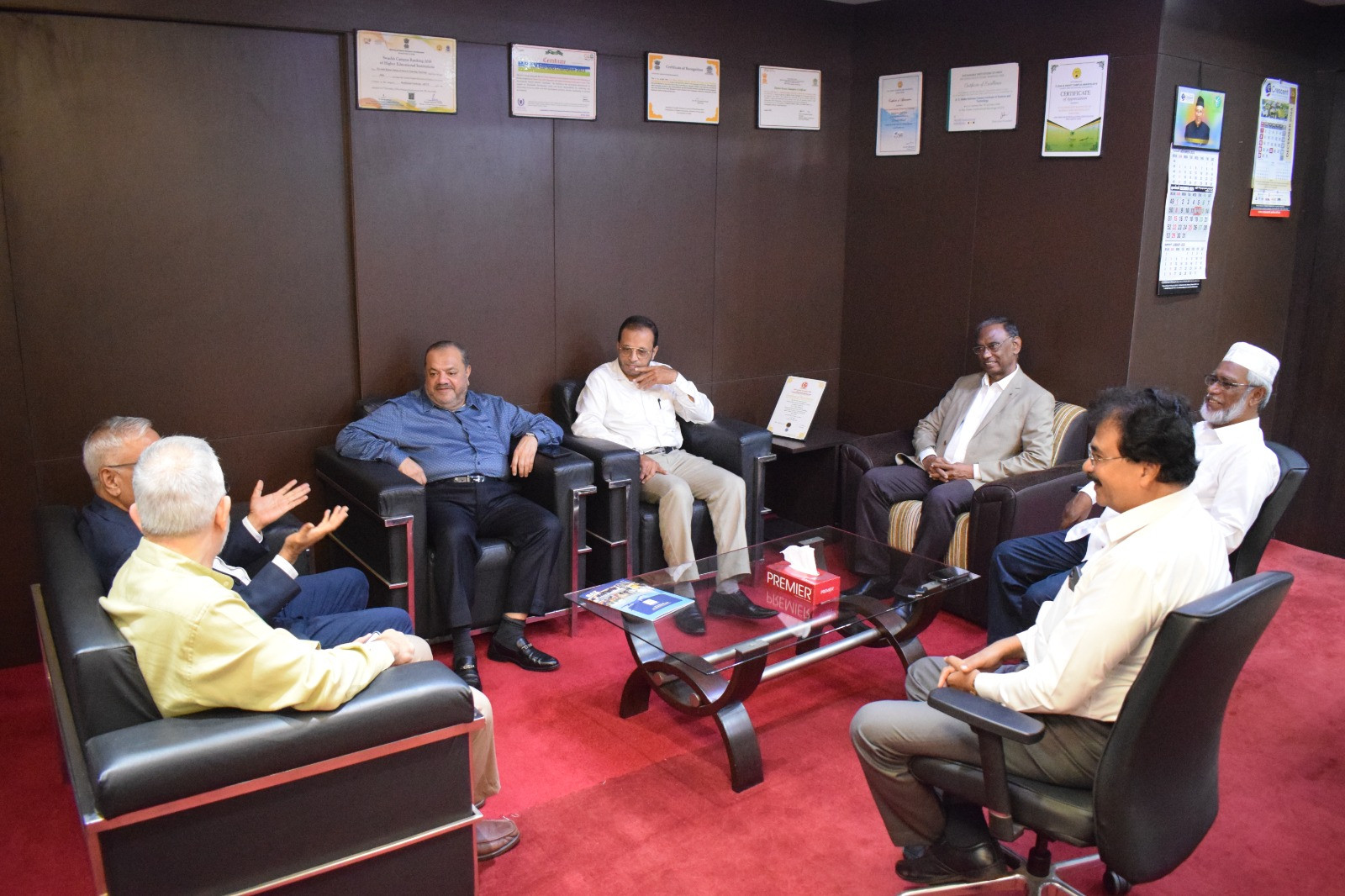
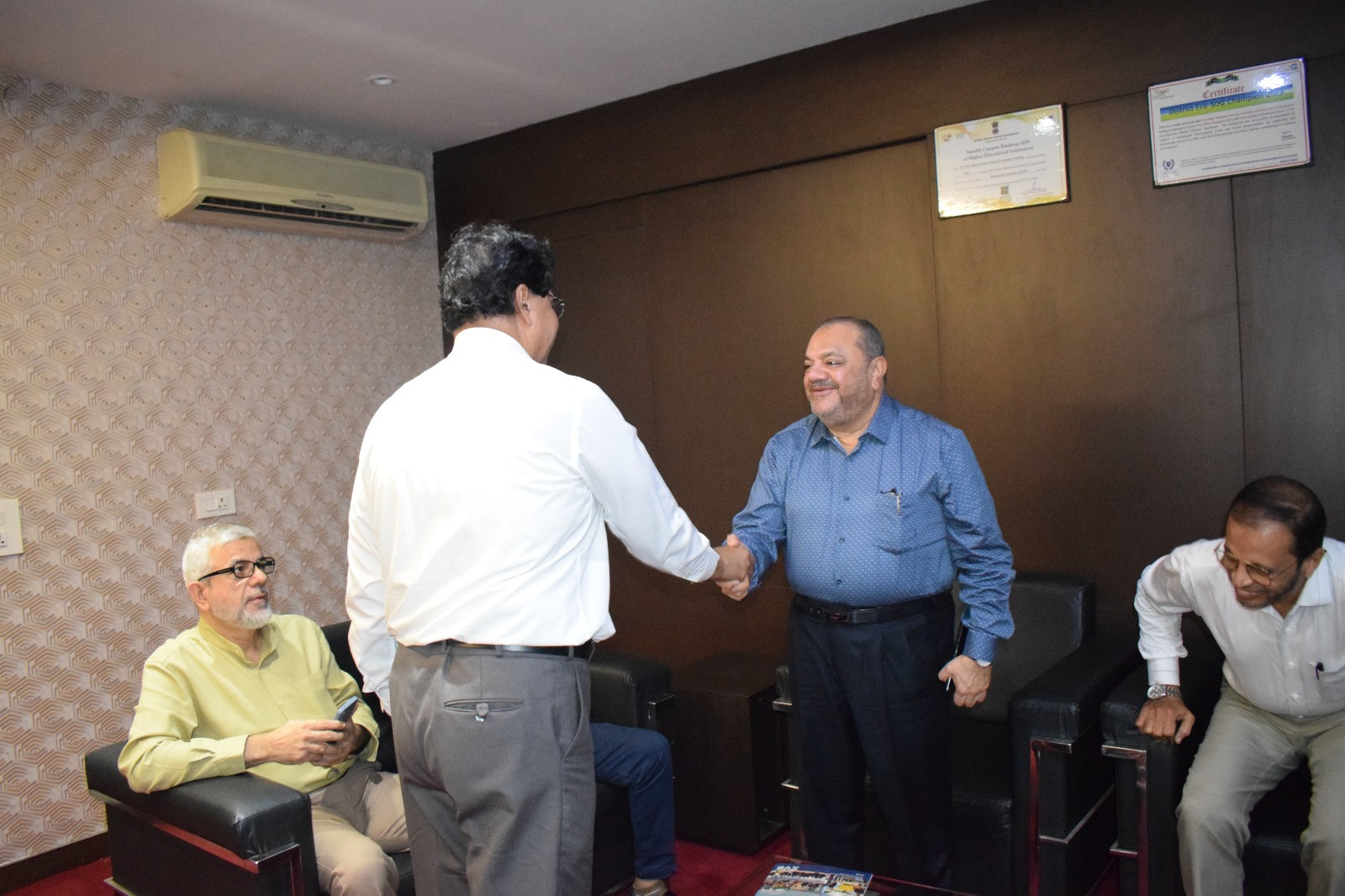
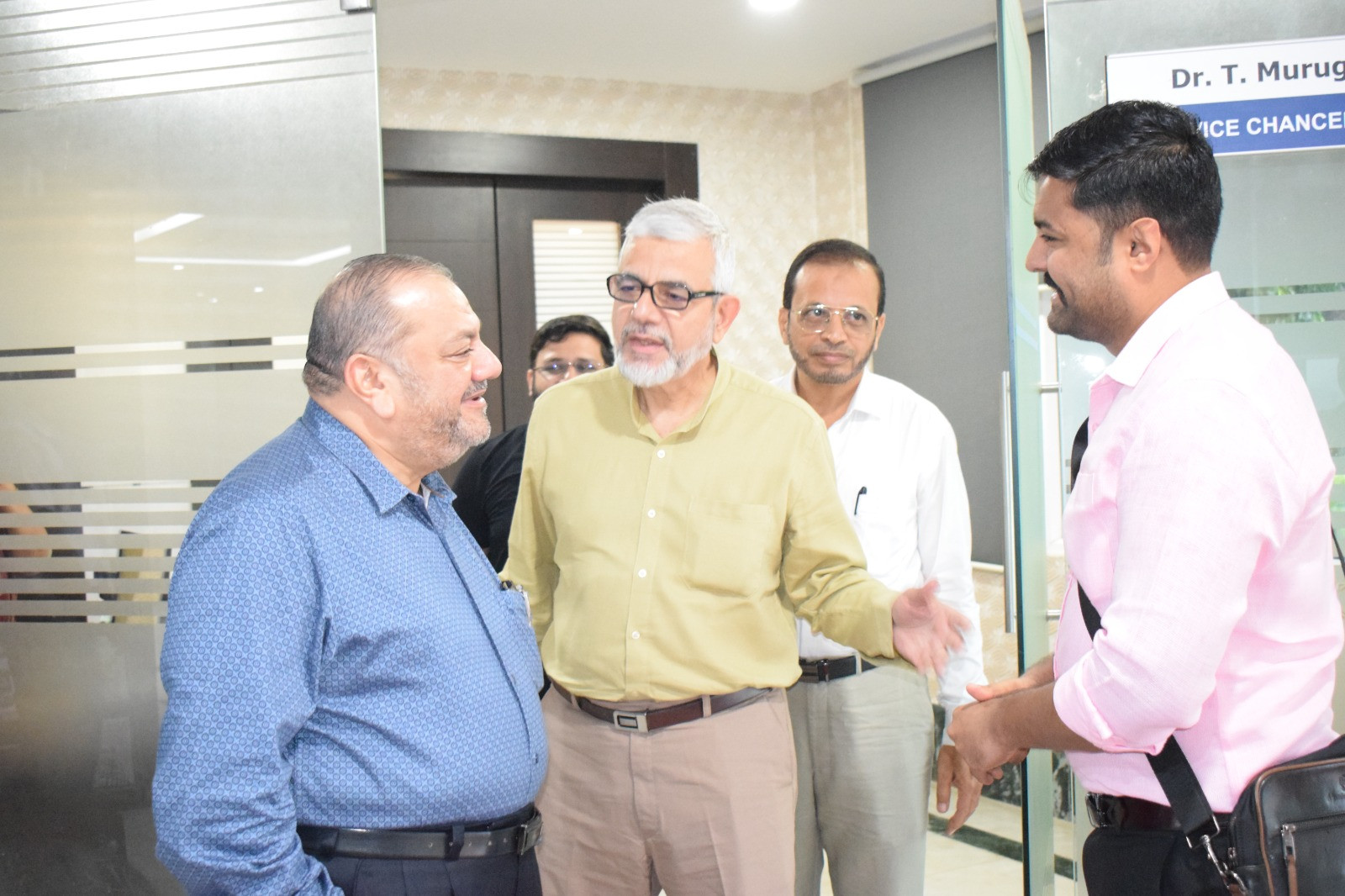
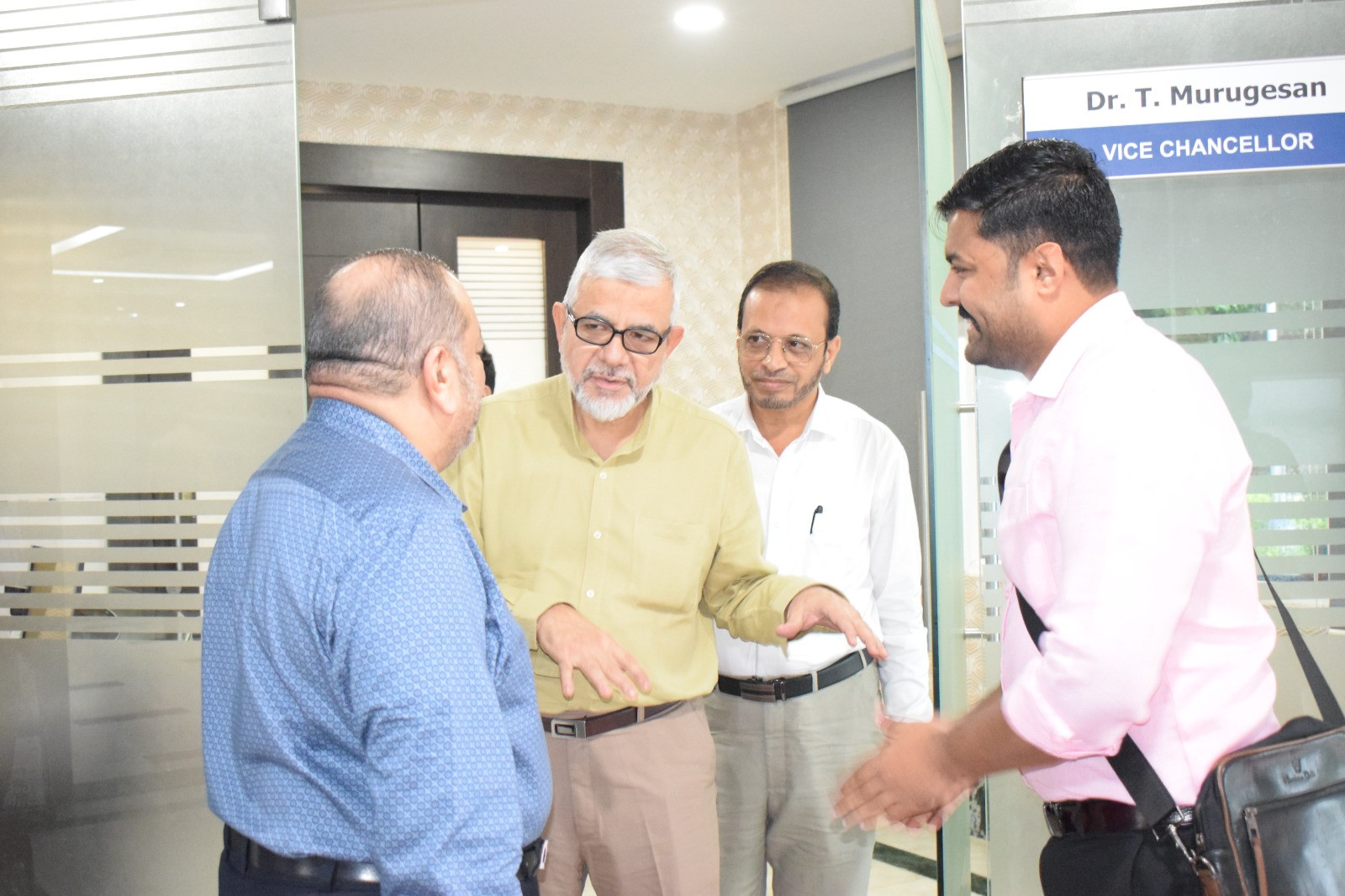
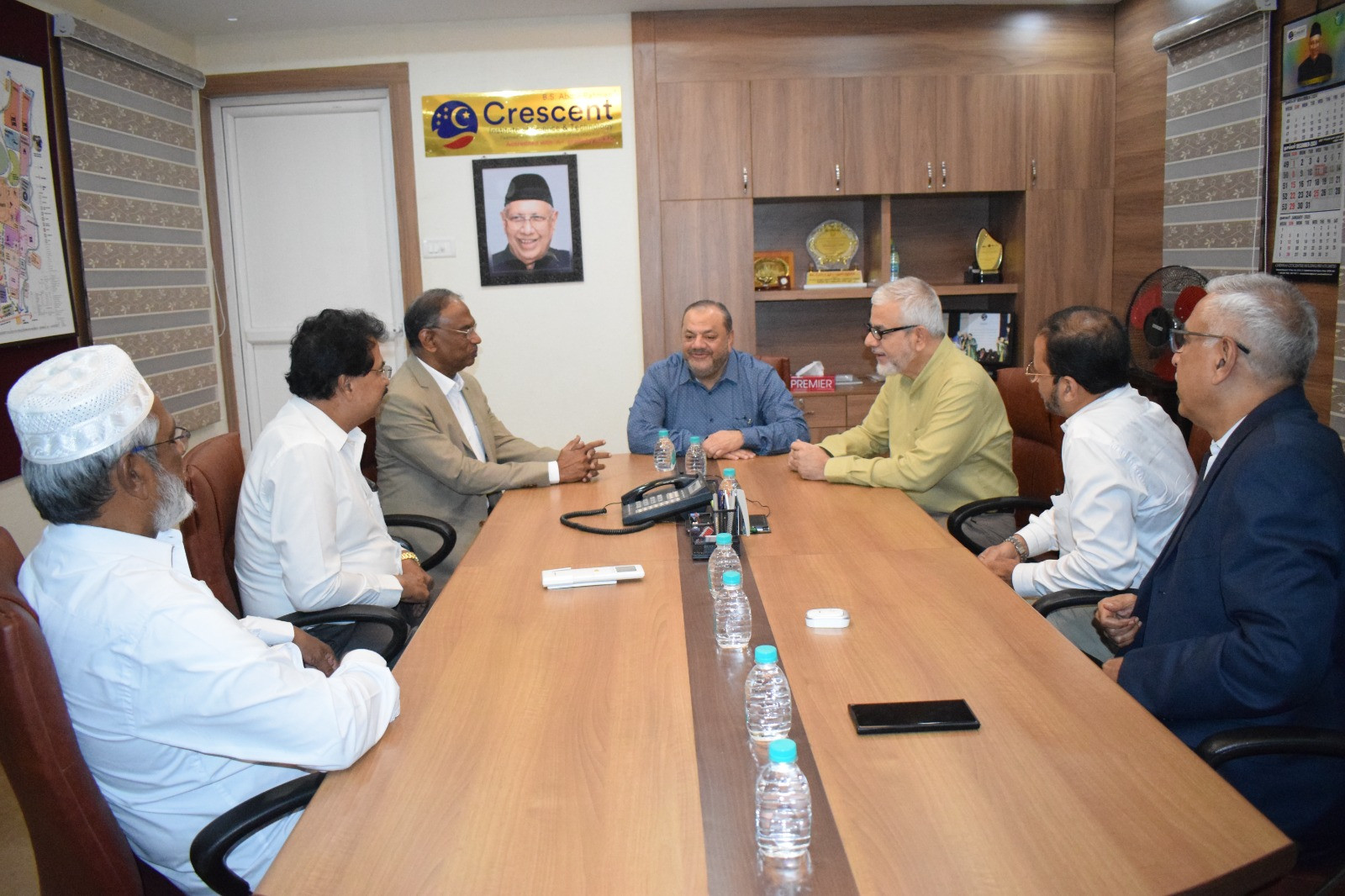
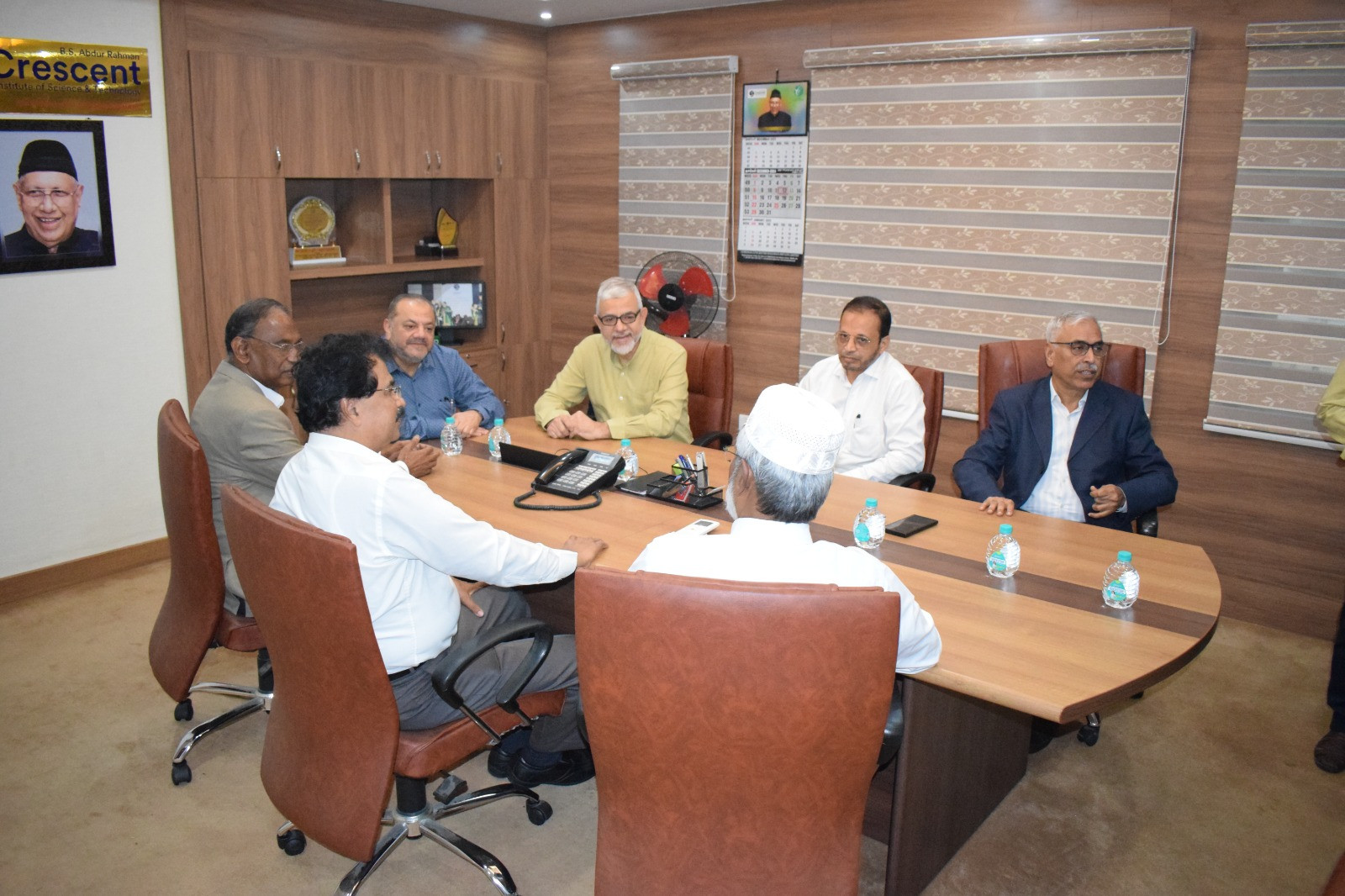
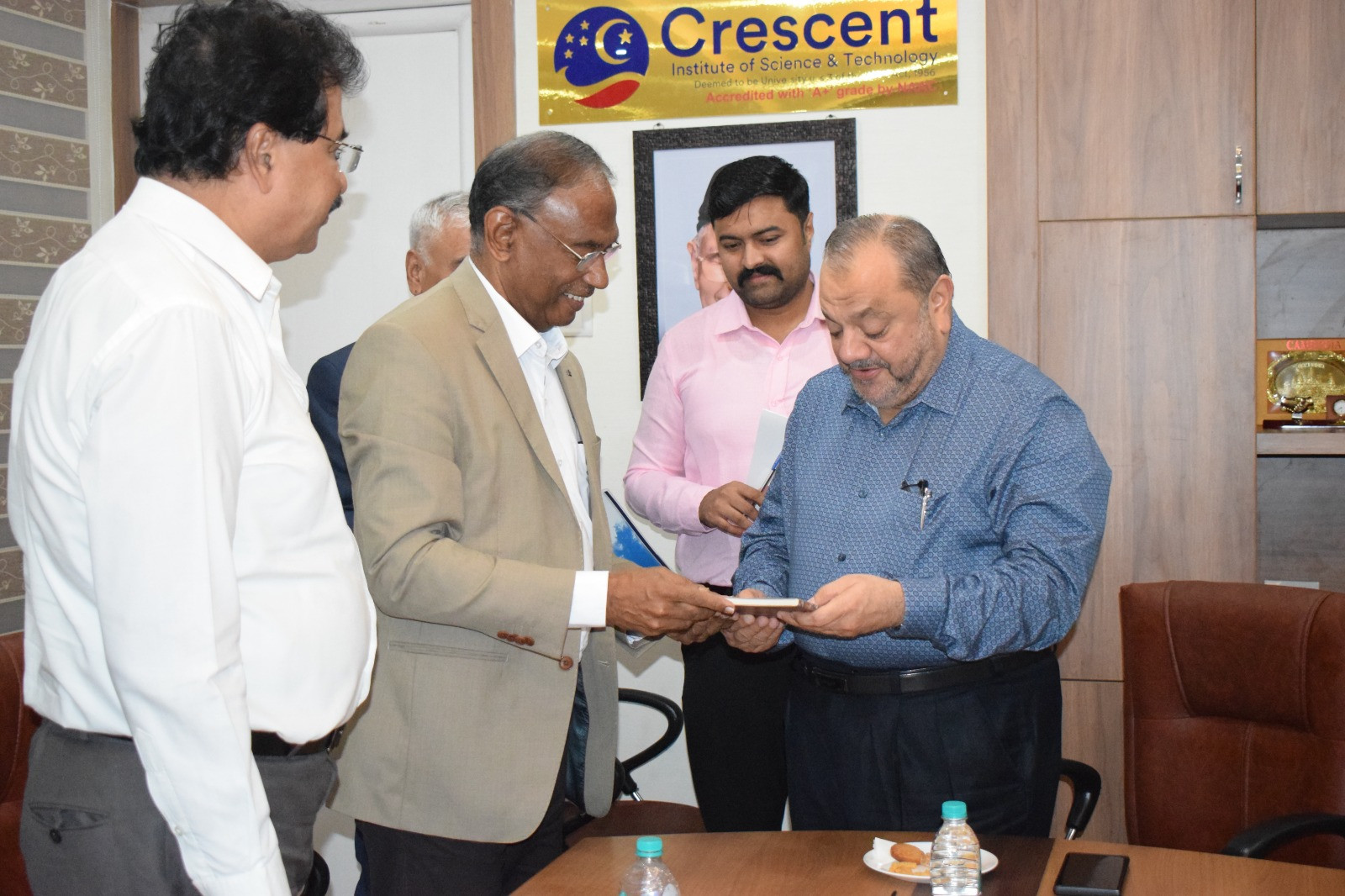
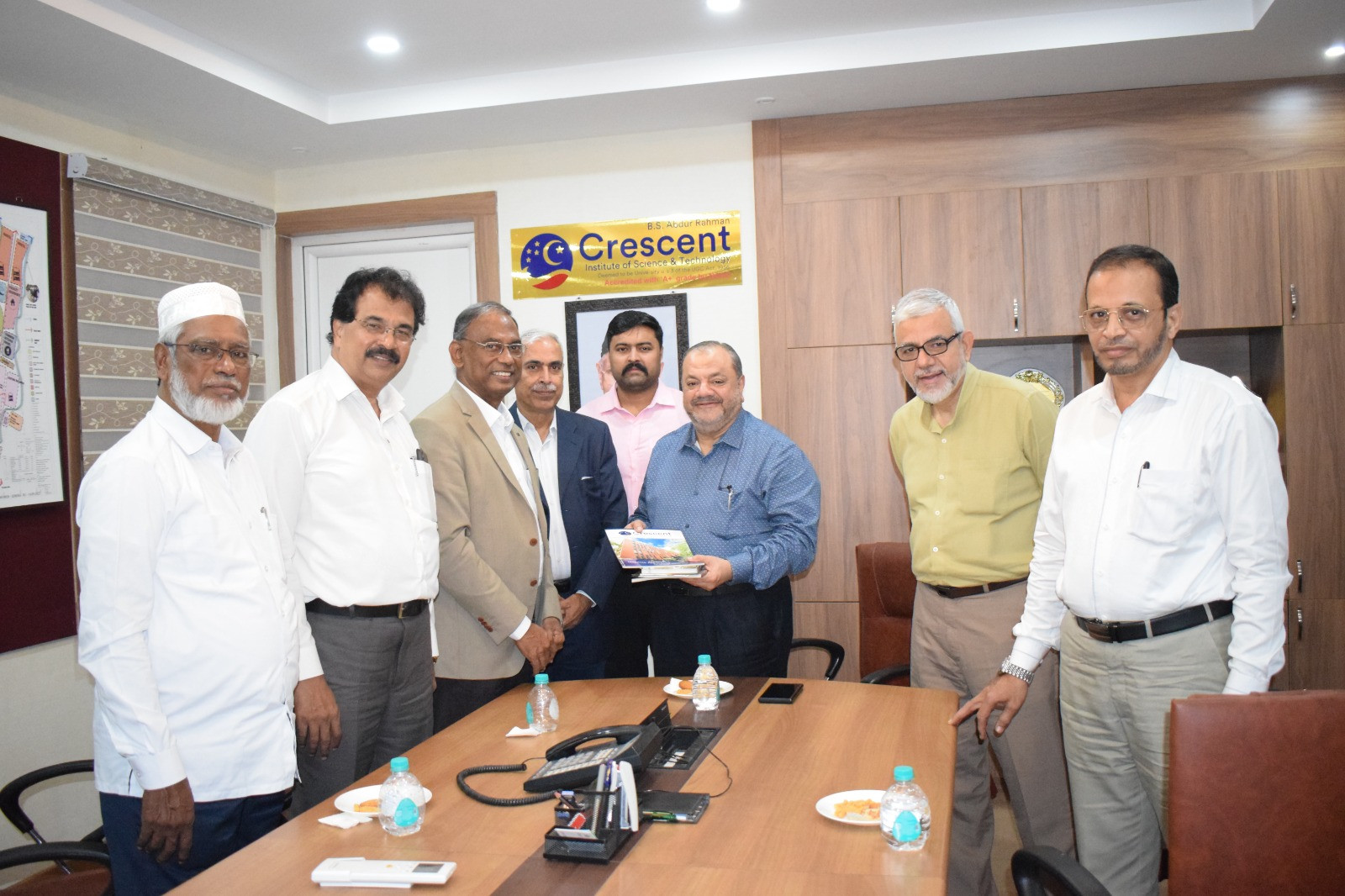
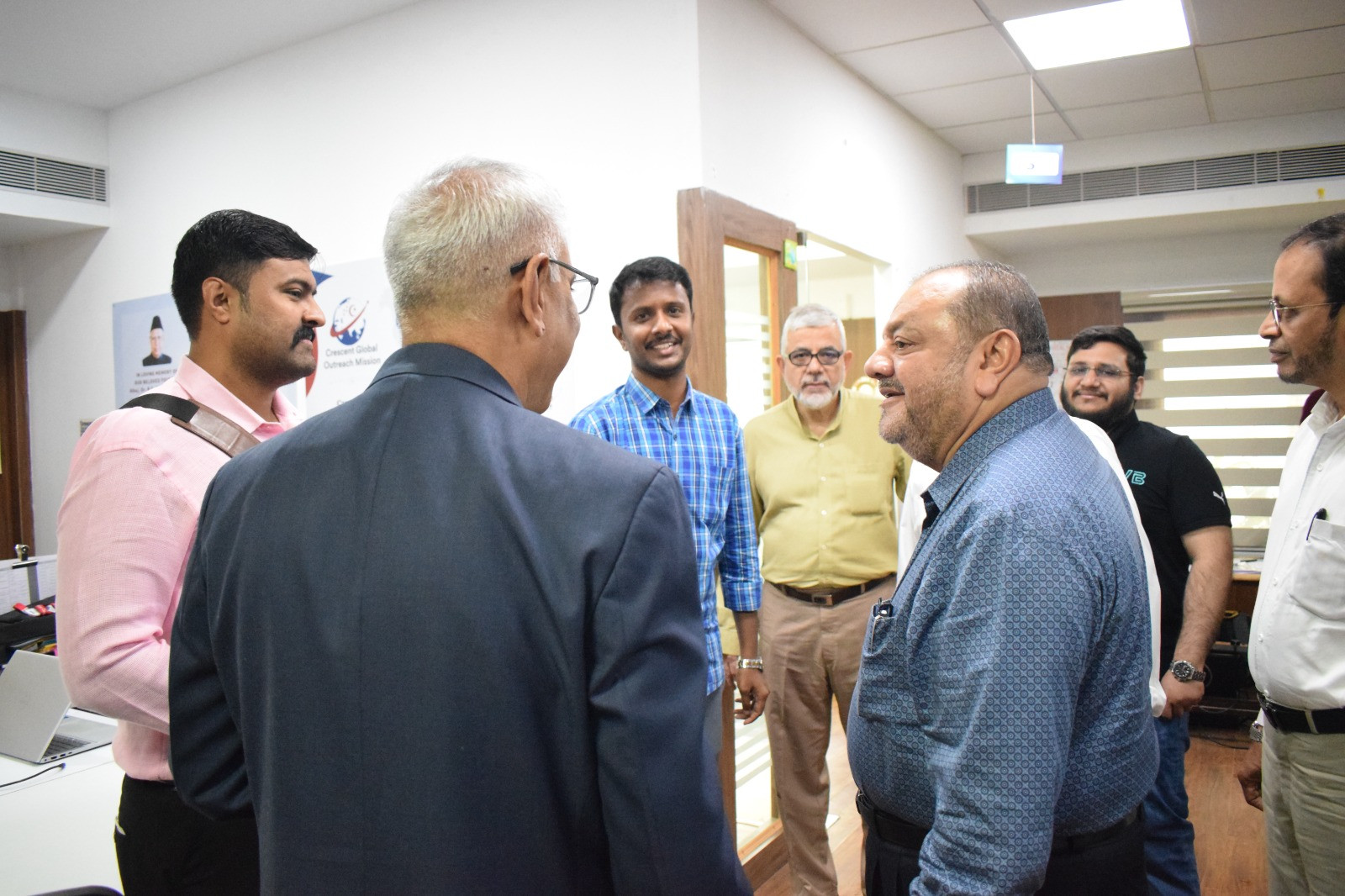
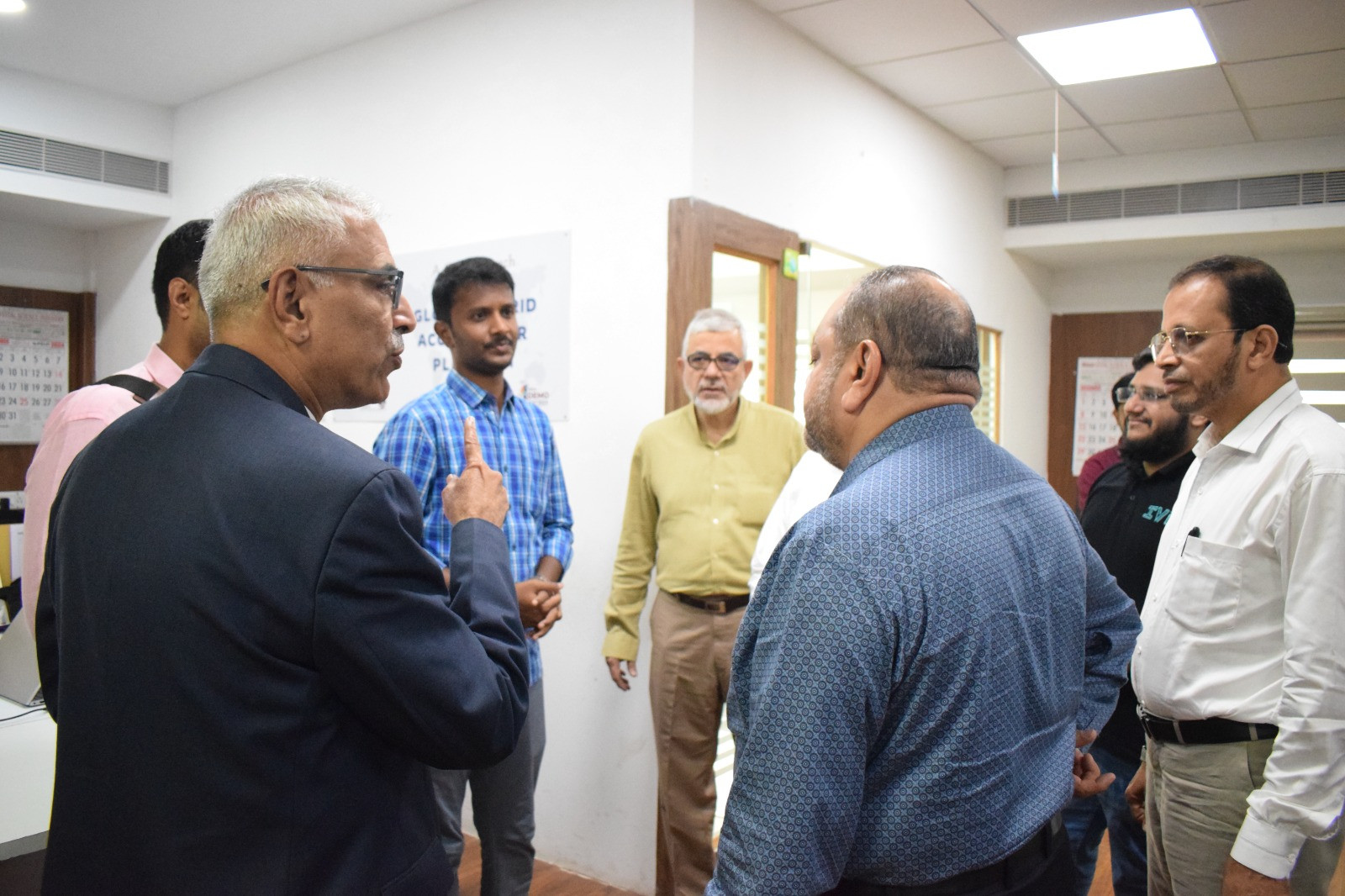
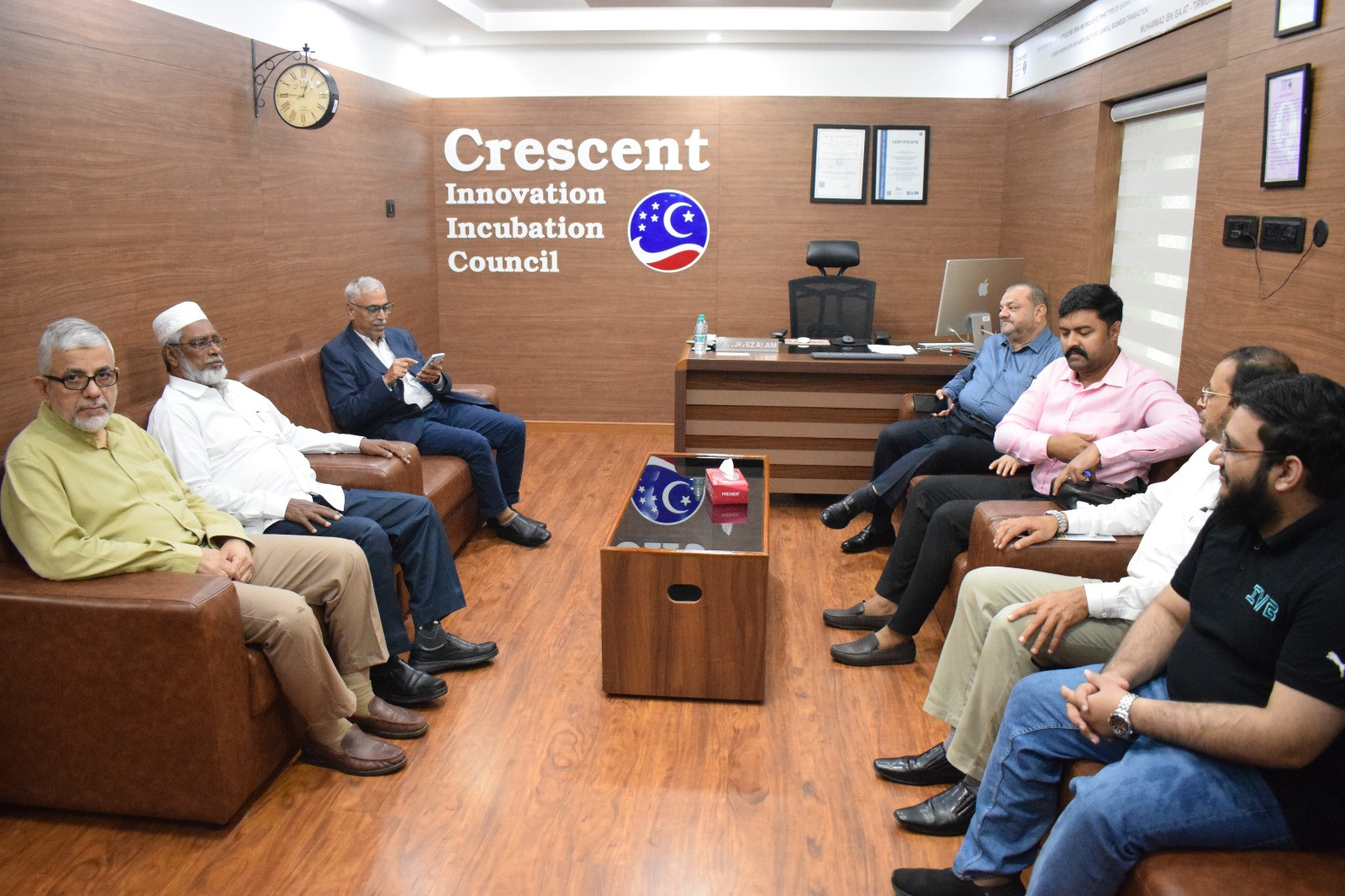
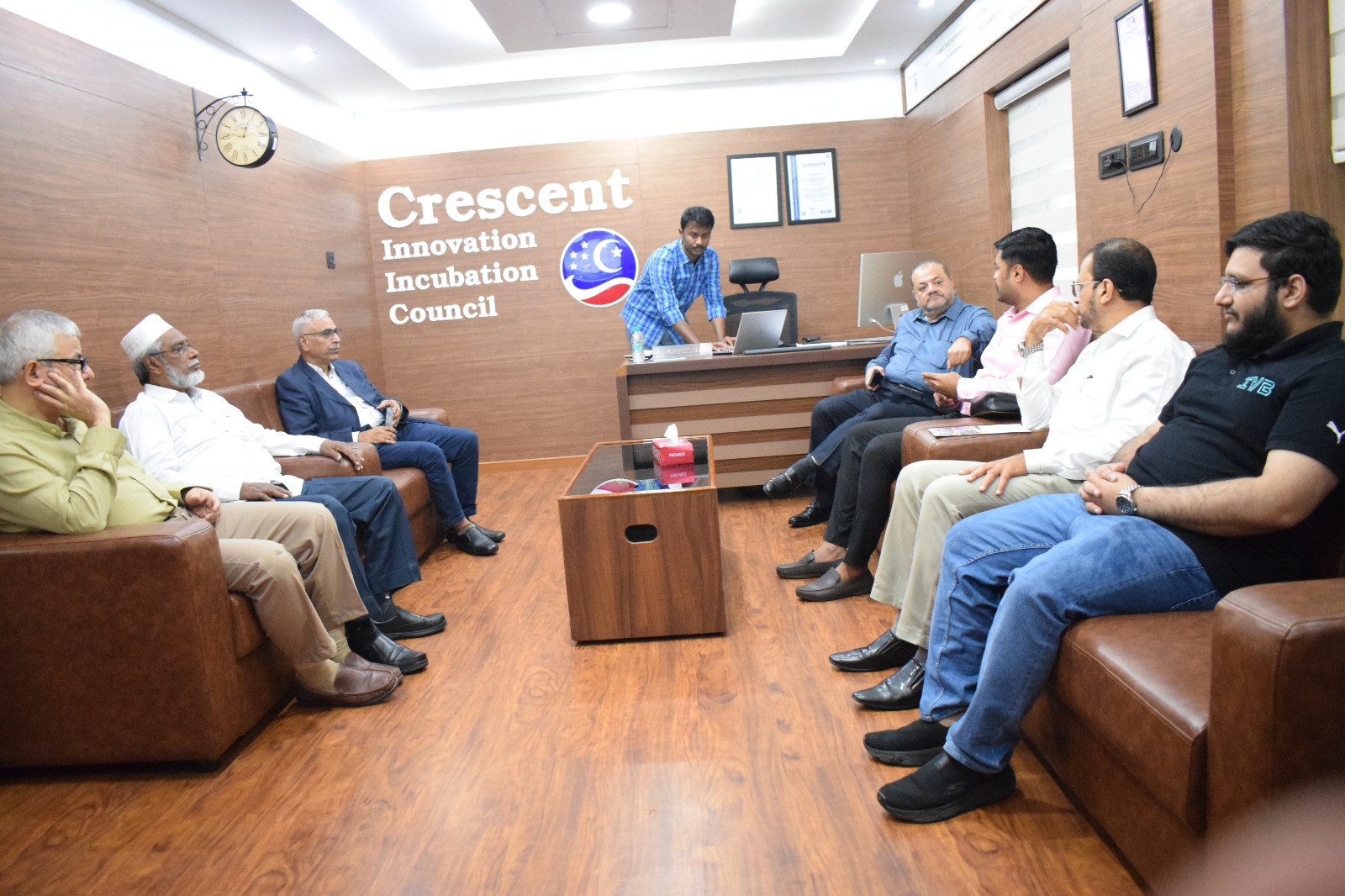
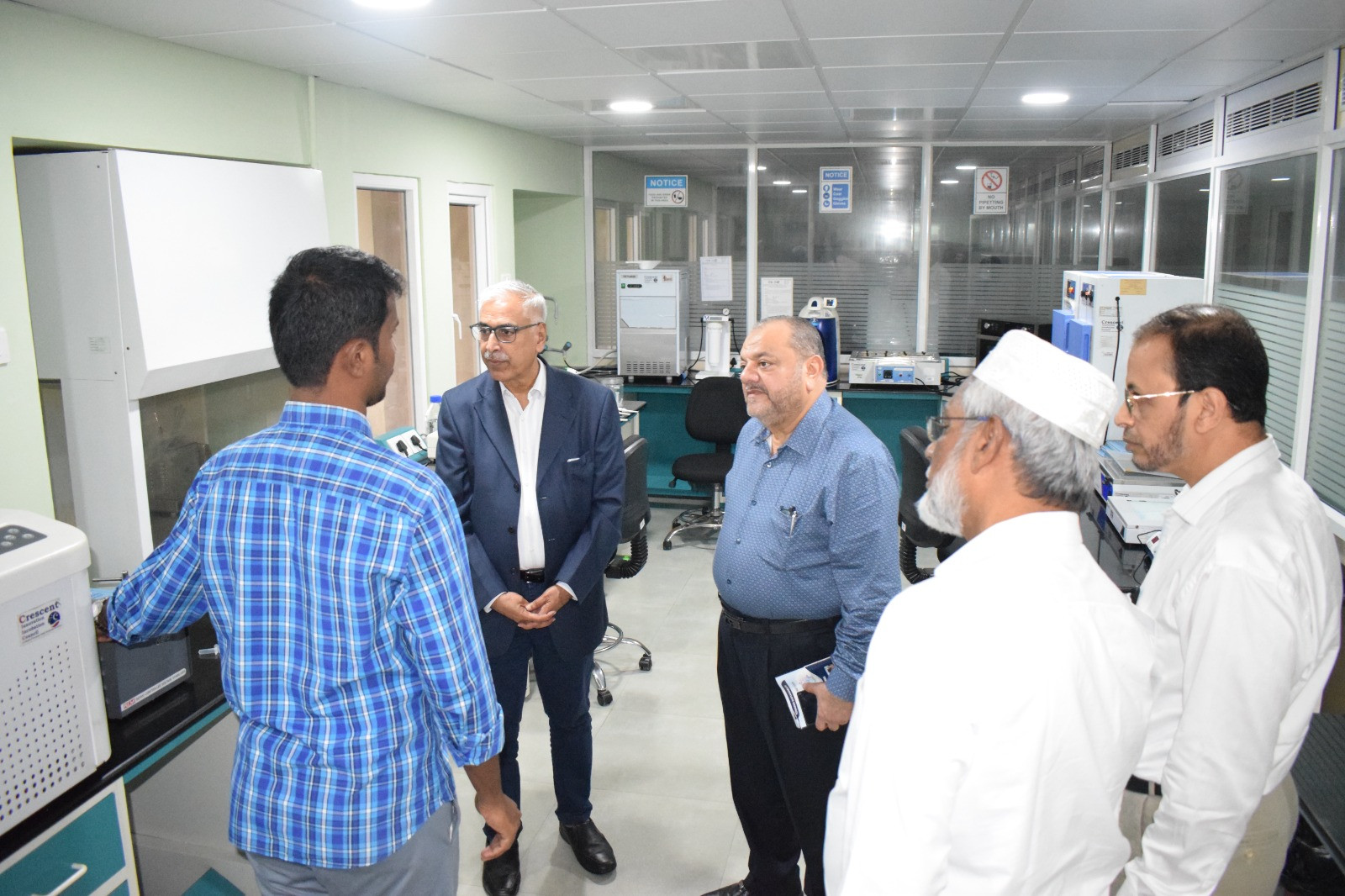
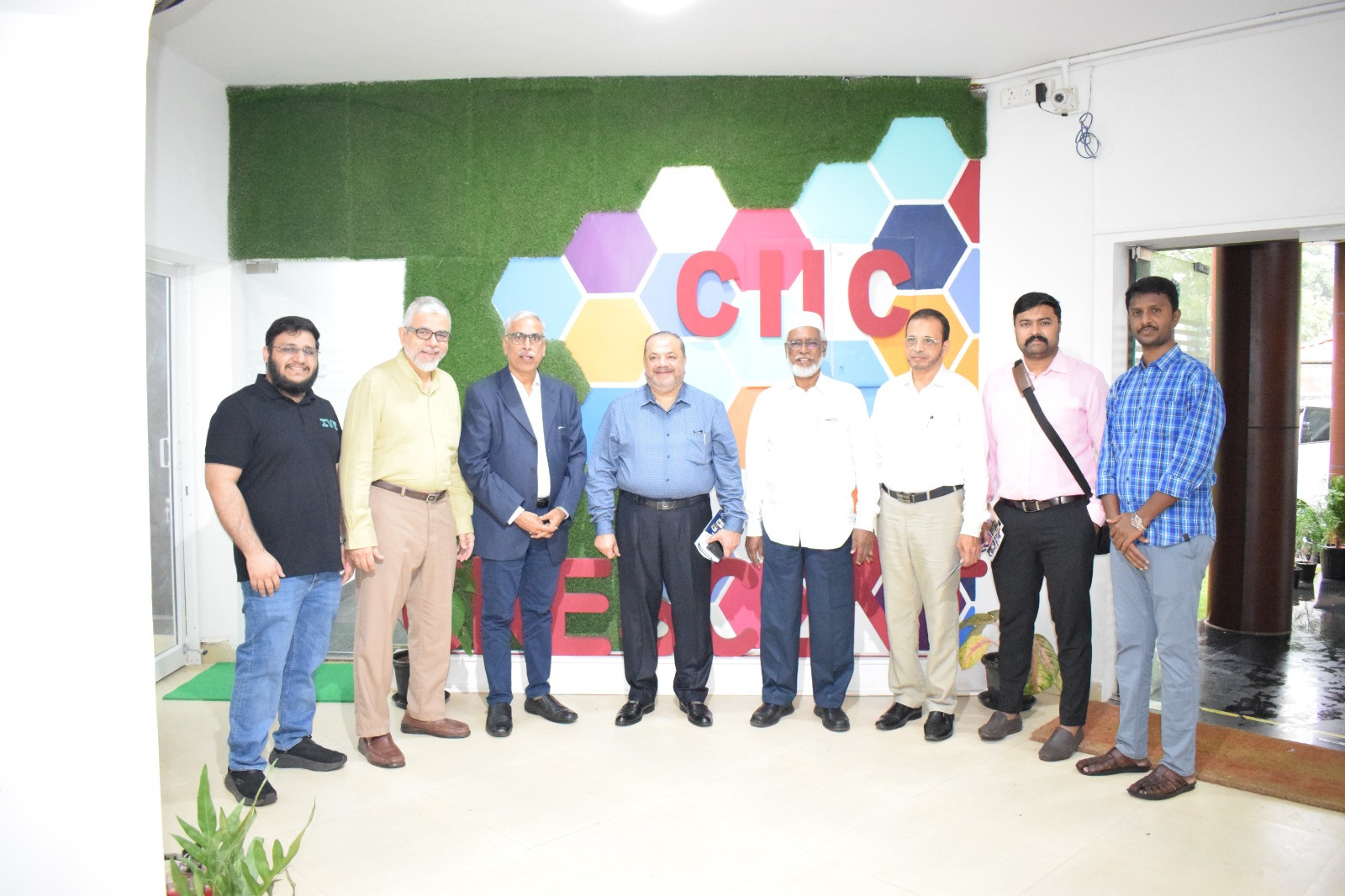
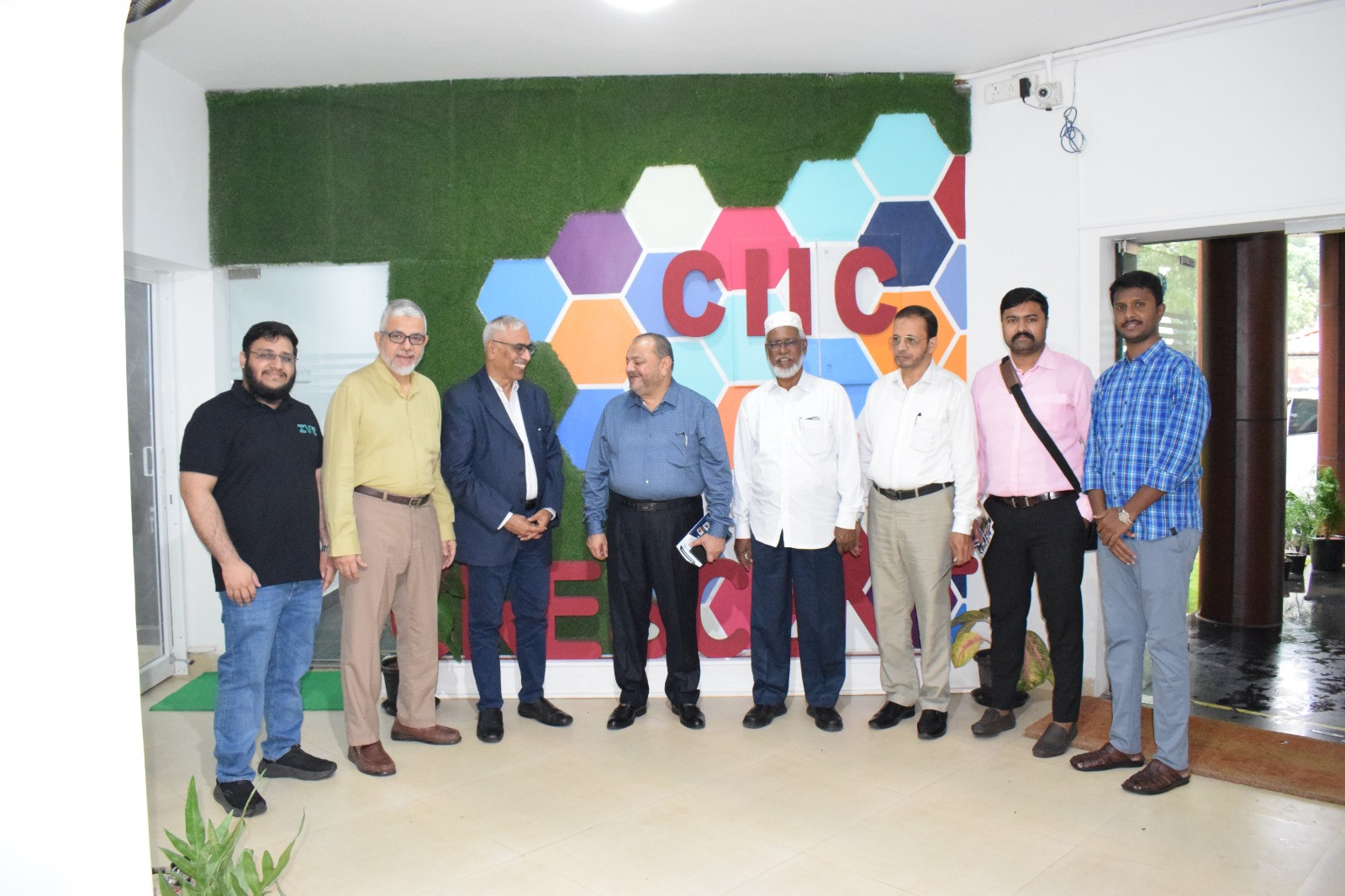
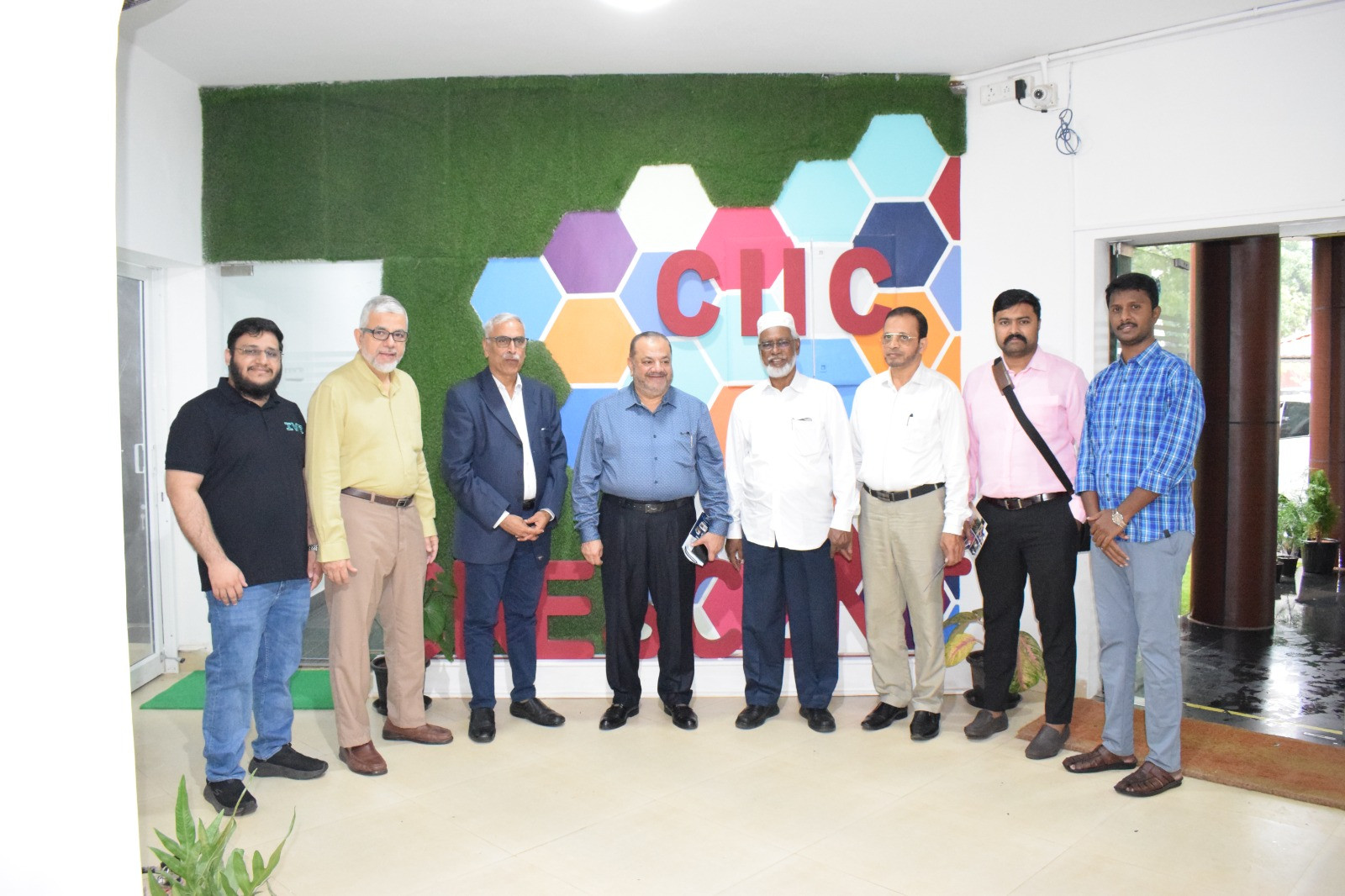
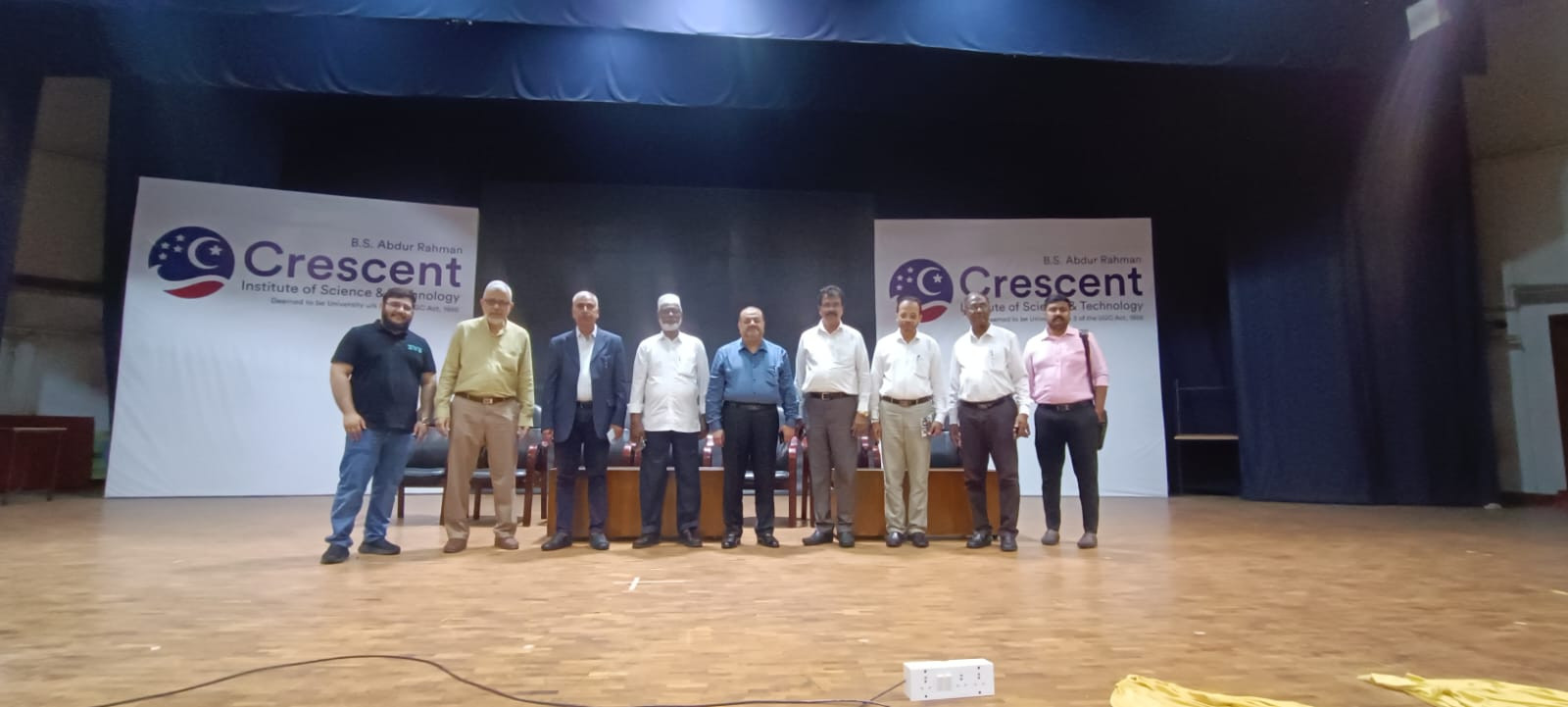
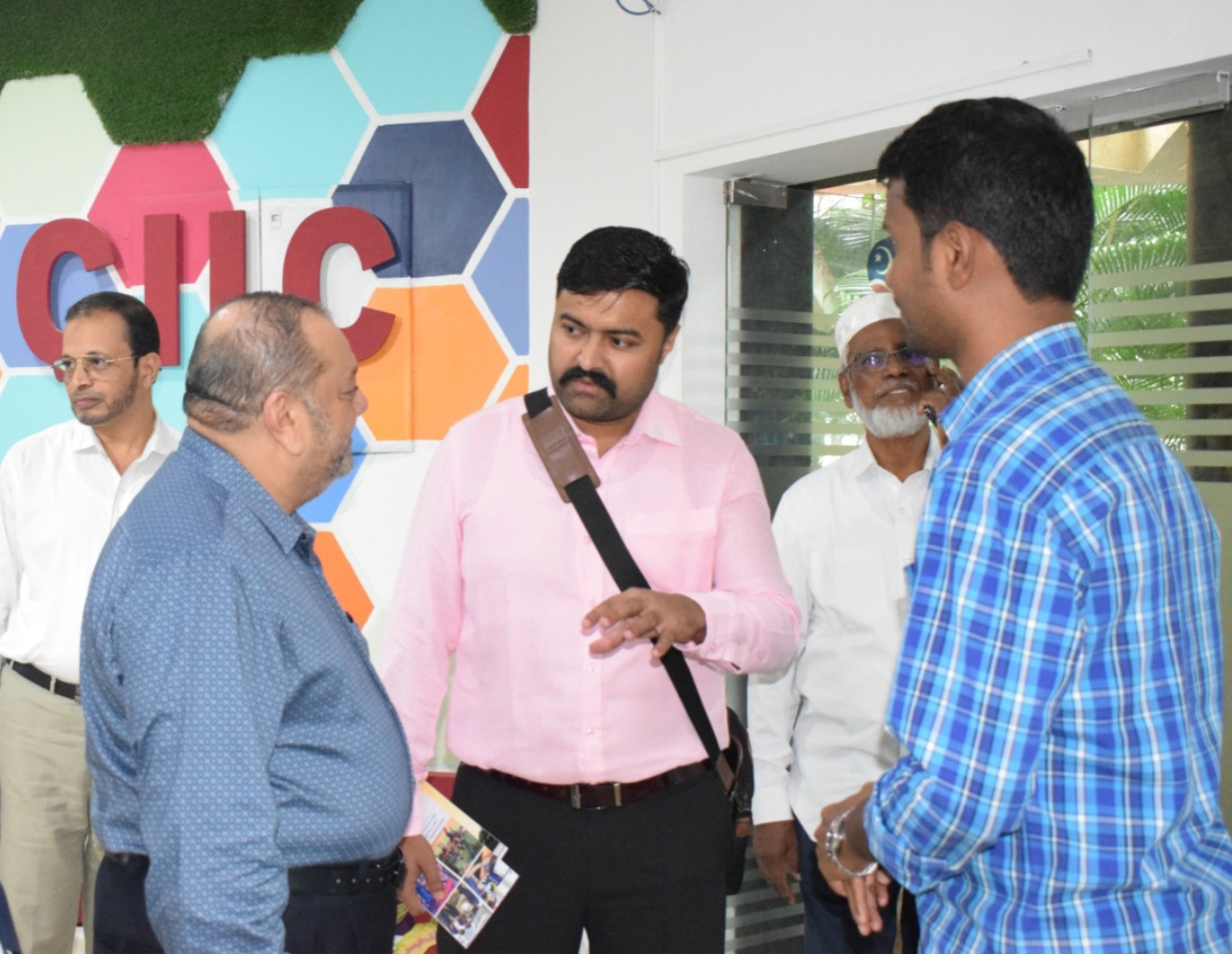
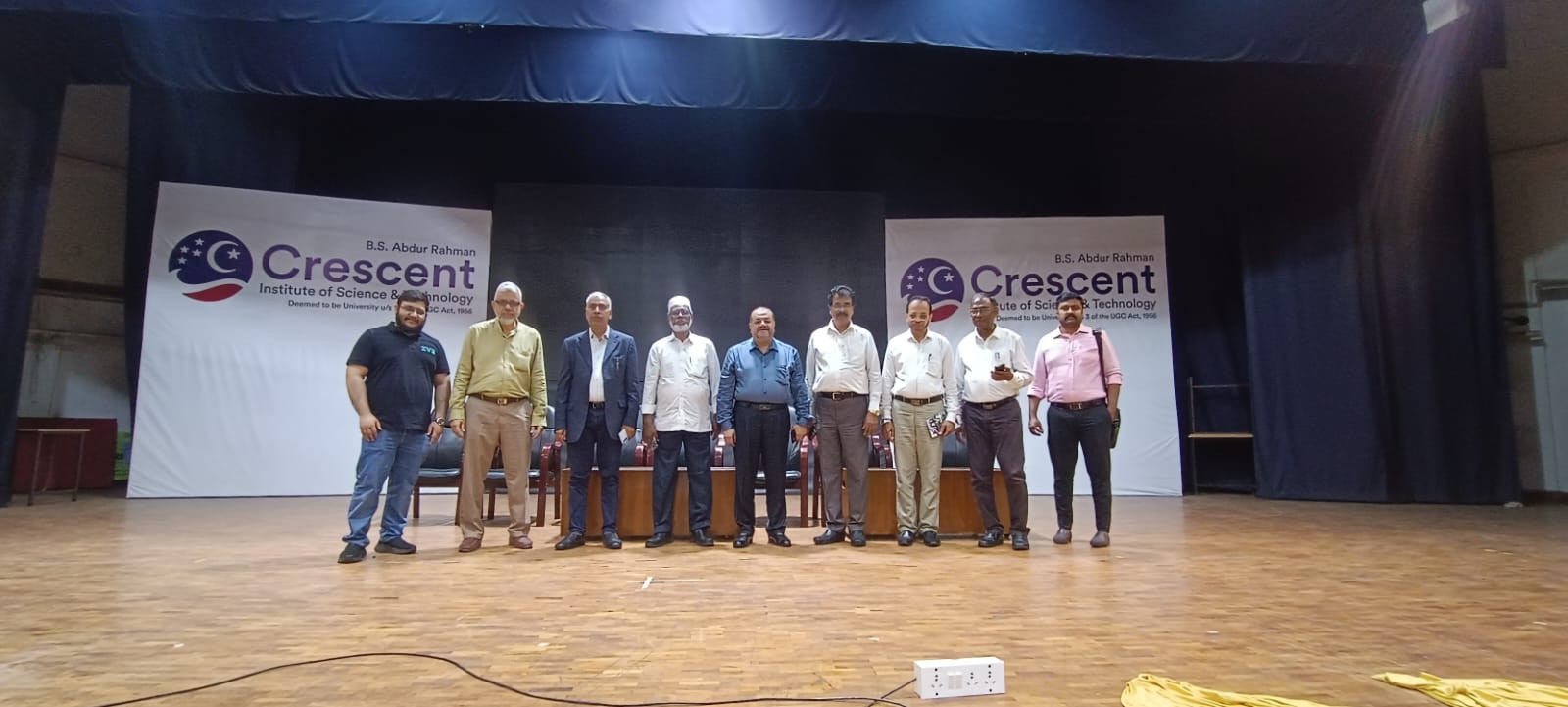
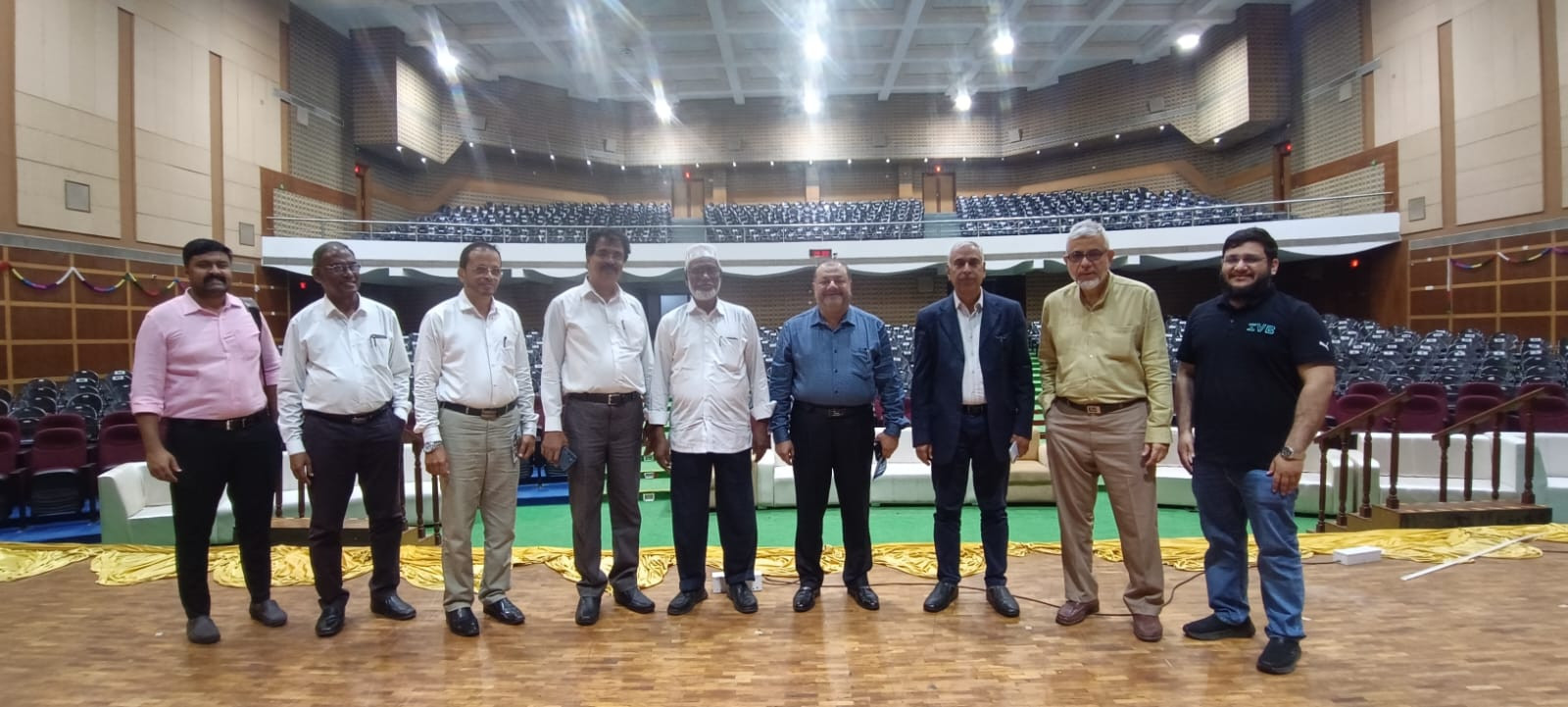
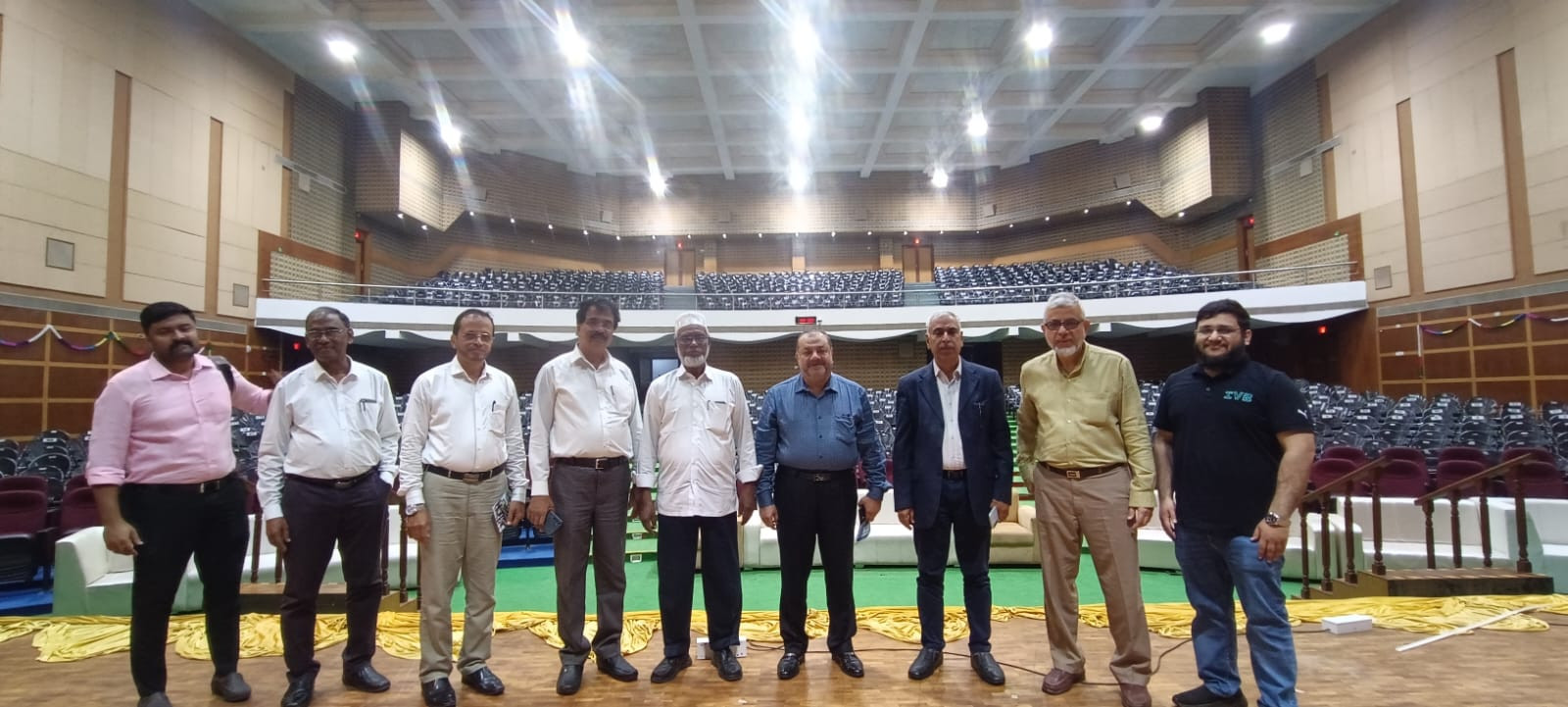
Chennai: The Crescent Innovation and Incubation Council (CIIC) hosted Yunus Kazia, Chairperson of Imam Abdul Rahman Bin Faisal University, Dammam, Saudi Arabia and President of Anjuman Hami-e-Muslimeen, Bhatkal, and Ameen Moshin, Trustee of Anjuman Hami-e-Muslimeen, Bhatkal, for a strategic meeting to explore avenues for cross-border collaboration in fostering innovation and economic development.
The discussions centered around establishing an Innovation Hub in Saudi Arabia, leveraging global best practices in research and technological advancements. The proposed collaboration aims to strengthen ties between India and Saudi Arabia in innovation, entrepreneurship, and economic growth.
Yunus Kazia and Ameen Moshin were welcomed by the CIIC team, including its registrar and senior representatives. During the meeting, CIIC outlined a strategic vision for creating an Innovation Hub in Saudi Arabia. The proposed initiative would facilitate the exchange of ideas, technology, and resources between the two countries, foster the growth of startups and entrepreneurial ventures, and support the commercialization of research through advanced technological collaboration.
The meeting also focused on knowledge exchange in emerging technologies and innovation practices. CIIC highlighted its expertise in building structured innovation ecosystems, emphasizing its role in training programs to enhance research and innovation capabilities. Collaborative research and the sharing of best practices in incubation, mentorship programs, funding models, and international partnerships were discussed as critical areas of focus.
Both parties explored the potential for bridging the gap between the two countries in technological innovation and economic development. The discussions included plans for fostering startups in technology, healthcare, education, and sustainability sectors. The partnership aims to create a global ecosystem of innovation while contributing to economic prosperity by aligning with emerging industrial trends.
A shared vision for the future emerged from the meeting, with both sides expressing a commitment to advancing innovation and entrepreneurship. Plans to develop a roadmap for the proposed Innovation Hub include conducting a feasibility study, drafting a formal Memorandum of Understanding (MoU), and initiating joint research, workshops, and conferences to ensure knowledge transfer.
The visit was described as a significant step toward strengthening India-Saudi ties in technological development and fostering a culture of innovation.
Abdul Rahman Badar, Secretary, Bhatkal Muslim Association Chennai was also present during the visit.
Let the Truth be known. If you read VB and like VB, please be a VB Supporter and Help us deliver the Truth to one and all.
Trump says EU has until July 4 to approve last year's trade deal or it will face higher tariffs

Washington (AP): President Donald Trump has said in a social media post that goods from the European Union would face higher tariff rates if the 27-member bloc fails to approve last year's trade framework by July 4.
The announcement on Thursday appeared to be a deadline extension after the president said last Friday that EU autos would face a higher 25 per cent tariff starting this week. Trump made the updated announcement after what he described as a "great call" with European Commission President Ursula von der Leyen.
Still, the US president was displeased that the European Parliament had yet to finalize the trade arrangement reached last year, which was further complicated in February by the US Supreme Court ruling that Trump lacked the legal authority to declare an economic emergency to impose the initial tariffs used to pressure the EU into talks.
"A promise was made that the EU would deliver their side of the Deal and, as per Agreement, cut their Tariffs to ZERO!" Trump posted. "I agreed to give her until our Country's 250th Birthday or, unfortunately, their Tariffs would immediately jump to much higher levels."
It was unclear from the post whether Trump was implying that the tariff rates would jump on all EU goods or the increase would only apply to autos.
His latest statement indicates he might be backing away from his earlier threat on EU autos by giving the European Parliament several more weeks to approve the agreement.
Under the original terms of the framework, the US would charge a 15 per cent tax on most goods imported from the EU.
But since the Supreme Court ruling, the administration has levied a 10 per cent tariff while investigating trade imbalances and national security issues, aiming to put in new tariffs to make up for lost revenues.


