
Doctors remove 52kg plastic from cow's stomach in Tamil Nadu

Chennai, Oct 21: A team of veterinarians removed 52 kilograms of plastic waste from inside the stomach of a cow through a surgery that lasted over five hours in Vepery, Chennai.
Surgeons from Tamil Nadu Veterinary and Animal Sciences University (TANUVAS) operated on the bovine to remove the plastic which was ingested by the bovine over a period of two years probably while foraging for food.
Apart from plastic waste, surgeons also found a coin, a screw and two nails from inside the cow, which had delivered some 20 days ago.
Its owner said he had purchased the cow when it was around six months pregnant and although it delivered a calf 20 days ago, it was having problems in passing dung and urine. The cow also had difficulties yielding milk and frequently kicked its stomach with its legs, according to its owner.
After observing the problem, the owner took the cow to a local veterinarian who advised him to take it to TANUVAS.
An X-Ray and Ultrasound scan revealed that plastic had occupied 75 per cent of the rumen (one of the four chambers of the cow's stomach).
Dr Velavan, Assistant Professor and Surgeon told ANI: "We gave region-specific anaesthesia instead of general anaesthesia. The rumen was completely occupied by the plastic. We removed the plastic. The problem was that the wastes were attached to the walls of the rumen, we had to be very careful that we do not damage the wall."
"After the surgery, the rumen was filled with 5 kg of bran, jaggery and pro-biotic bolus which will help in the fast recovery," Dr Velavan added.
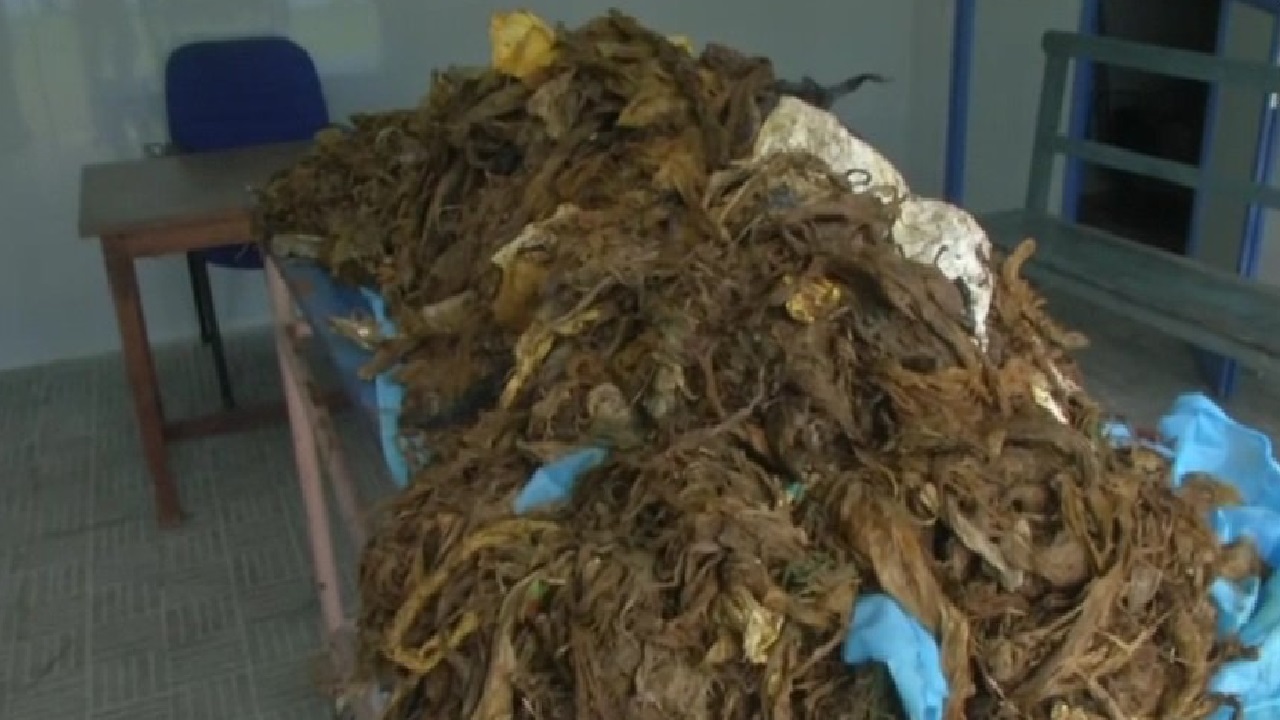
Dr S Balasubramanian Director of clinic, TANUVAS, said: "The surgery was performed on October 18. The amount of material undigested was huge at around 52 kg. The surgery began at 11 am and ended at 4:30 pm. The surgery normally takes two hours but the problem they faced was these materials probably have been inside for around two years and were attached to the walls of the rumen. It was a challenging surgery for the surgeons."
The cow is currently undergoing treatment.
On October 2 central government has announced the ban of single-use plastic.
Courtesy: www.aninews.in
Let the Truth be known. If you read VB and like VB, please be a VB Supporter and Help us deliver the Truth to one and all.
Two arrested in K'taka for assaulting minors, uploading CSAM content

Bengaluru (PTI): Two men were arrested for allegedly sexually assaulting two minor girls, recording the acts on mobile phones and uploading the videos online as child sexual abuse material, police said on Thursday.
The accused have been identified as Kiran Kumar (29), hailing from Chitradurga district, and Aditya M K (20), hailing from Shivamogga district, they said.
A probe was initiated after information was received from the NCRP portal regarding a suspected instance of creation of Child Sexual Abuse Material (CSAM) for online dissemination, police said.
Accordingly, a case was registered at Kaggalipura Police Station under relevant sections of the IT Act on May 10, they added.
Investigation revealed that two minor girl victims were exploited and videos were created and uploaded to the internet. The child victims have subsequently recorded their statements as per procedure and further necessary legal steps have been taken, Pronab Mohanty Director General of Police, Cyber Command, said in a statement.
Based on the statements of the victims, the accused persons, who allegedly assaulted the minors, recorded the acts on mobile phones and uploaded the videos online, were arrested, he said.
Following the probe, sections 65(2) (rape) and 70 (gangrape) of the Bharatiya Nyaya Sanhita, along with relevant sections of the POCSO Act, have been added to the FIR, police said.
Officials collected relevant information and on May 12, arrested the accused persons and seized three mobile phones belonging to them, in which the videos had allegedly been recorded, he said.
The accused were later produced before the court and taken into police custody for further investigation, he added.
According to him, in CSAM cases, police usually apprehend offenders who have downloaded such content or have kept them in their possession after obtaining them from elsewhere, usually the internet.
"The present case is one of the very few instances where content creators and uploaders have been apprehended," Mohanty added.


