
"Laser Beam Breakthrough: Revolutionizing Cancer Treatment with High-energy Electrons"

Ultrafast laser technology is a significant advancement in the field of medicine, particularly in cancer treatment. Scientists at the "Institut national de la recherche scientifique" (INRS) and McGill University Health Centre in Montreal, Canada, have made a groundbreaking discovery. They have shown that powerful laser pulses can be utilized to accelerate electrons to energy levels similar to those used in radiation therapy.
The term "powerful laser pulses" refers to concentrated bursts of intense light emitted by a laser device. These bursts are highly energized and can be precisely targeted at specific cells or tissues during medical treatments. The high energy of these pulses allows the electrons to move faster and reach the desired levels necessary for medical purposes.
Remarkably, this electron source's strength lies in its simplicity. By employing just one lens in a regular air environment, a concentrated beam of electrons can be generated. Astonishingly, this electron beam is capable of delivering an entire year's worth of radiation dose in less than a second to someone standing just one meter away.
The concept of "one lens in regular air" implies that only a single optical component, like a lens, is used in a normal atmospheric setting without any specialized conditions or additional equipment. The laser pulses, focused through the lens, interact with a target, leading to the emission of electrons. The lens plays a crucial role in shaping and directing these emitted electrons into a focused beam, much like a magnifying glass concentrating sunlight onto a specific point.
Key Features
The key discovery is that a laser beam focused in ambient air can generate a plasma, which in turn can accelerate electrons to megaelectronvolt (MeV) levels. This is a substantial increase from the previously known limit of a few kiloelectronvolts (keV).
"The director of the EMT Centre at INRS, François Légaré, stated that for the first time, they have shown that a laser beam tightly focused in ambient air can accelerate electrons, allowing them to reach energies in the MeV (megaelectronvolt) range. This energy level is comparable to the irradiators used in cancer radiation therapy."
Flash Radiotherapy
High-energy electrons generated using this laser technology could be crucial in a cutting-edge cancer treatment called FLASH radiotherapy. This method aims to treat challenging tumors more efficiently while minimizing harm to nearby healthy tissues.
The researchers have found that the FLASH effect, although not fully understood, appears to involve a quick reduction of oxygen in healthy tissues. This reduction makes these tissues less sensitive to radiation, which can help protect them during cancer treatment.
Safer Practises
The researchers at INRS and MUHC highlight that their discovery is not only important for medical purposes but also emphasizes the need for safer laboratory practices. The laser beams used in this research can produce high levels of radiation that can be harmful to health.
The high energies of the electrons (MeV) observed in this research enable them to travel a significant distance, over three meters in air or several millimeters beneath the skin. This poses a risk of radiation exposure for those using the laser source.
Additionally, when the team measured the radiation near the source, they found that the electron doses were much higher, three to four times greater than those typically used in regular radiation therapy. This discovery emphasizes the need for safer practices in laboratories to protect researchers and staff.
Improved radiation treatments
The study paves the way for more research on the FLASH effect in cancer treatment and the creation of better methods to combat the disease. It demonstrates how scientific research can have practical and life-saving applications.
Although the nature of the FLASH effect is still not fully understood, the electrons produced using this laser technology have similar characteristics to those used in FLASH radiotherapy. This similarity suggests that our method of focusing the laser in regular air could help researchers study and potentially harness the benefits of FLASH effect in cancer treatment.
Once we have better control over the radiation source, additional research can be conducted to understand what exactly causes the FLASH effect. This understanding will then help us develop improved radiation treatments for individuals battling cancer, ultimately offering them more effective and targeted care.
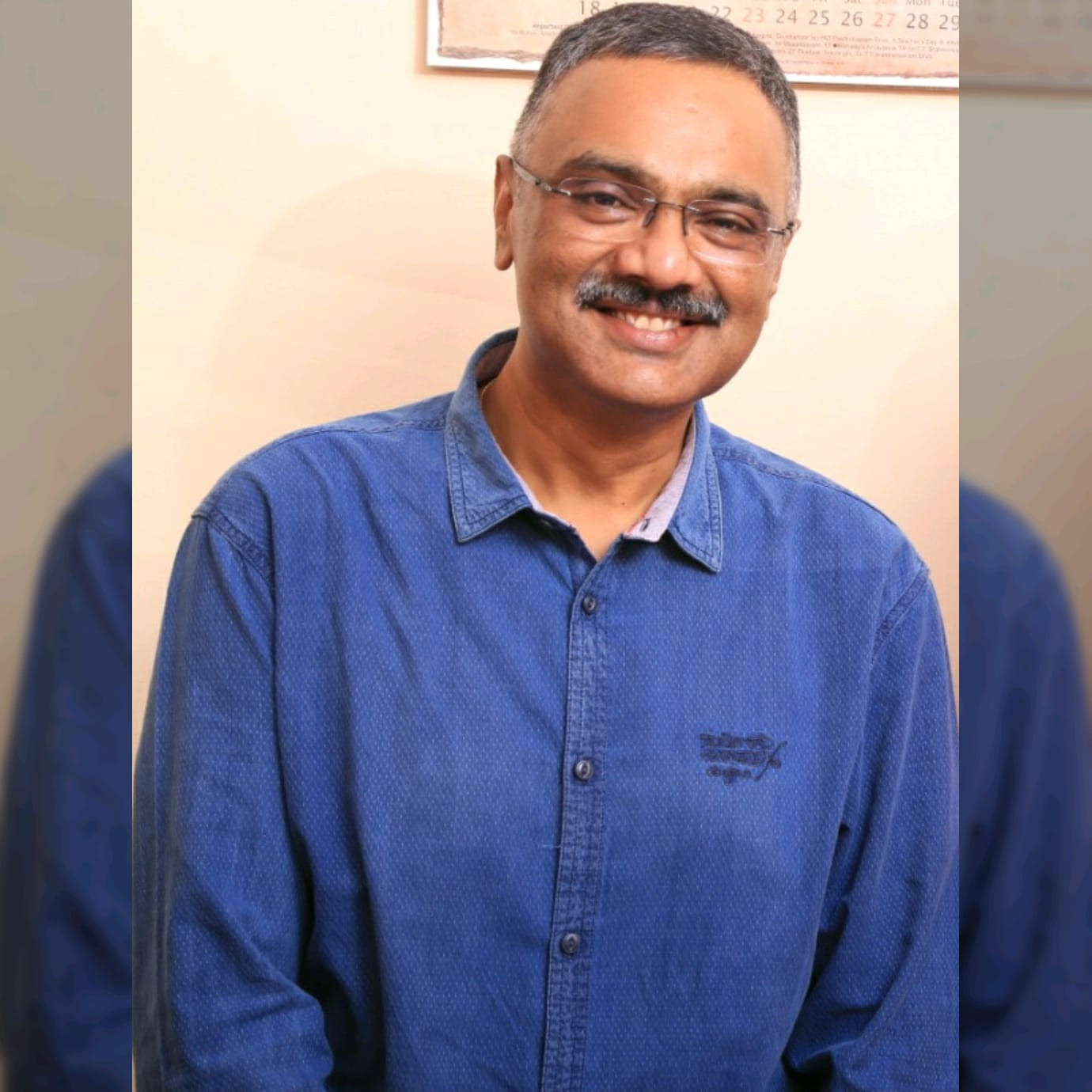
Girish Linganna, Aerospace & Defence Analyst
Let the Truth be known. If you read VB and like VB, please be a VB Supporter and Help us deliver the Truth to one and all.
Karnataka to approach SC seeking permission to continue MGNREGA

Bengaluru (PTI): The Karnataka Cabinet on Thursday decided to approach the Supreme Court seeking permission to continue implementation of MGNREGA in the state, contending that the Centre had repealed the rural employment guarantee law without consultation and failed to put in place any alternative mechanism under the VB-G RAM G Act.
Briefing reporters after the Cabinet meeting, Karnataka Law and Parliamentary Affairs Minister H K Patil said the state would immediately move the apex court seeking permission to prepare and implement the annual action plan for rural employment works, while also challenging what it described as an infringement on the constitutional rights of states.
The parliament passed VB-G RAM G in December that replaces MGNREGA.
Patil explained that the Cabinet decided to approach the court seeking permission for the State Government to prepare an action plan in this regard. Since the Centre’s stand interferes with the constitutional rights of state governments, the Cabinet has also decided to challenge this issue before the appropriate court
“There are two points here. One is that they have come in the way of our constitutional right of providing the right to work. That has been halted, and, therefore, the State Government has decided to approach the Supreme Court. The second point is that the Government of India has not provided any alternative,” the Minister said.
The Central Government has not yet issued a notification to implement the VB-G RAM G Act, nor has it made any alternative arrangements and hence continuing Mahatma Gandhi National Rural Employment Guarantee Act (MGNREGA) is unavoidable in the public interest, the Minister said.
“Therefore, in the interest of the public, farmers and agricultural labourers, we must continue MGNREGA. For that purpose, the Cabinet has decided to approach the court seeking permission for the State Government to prepare the action plan for this year,” he added.
The Minister also said the Centre had only permitted continuation of pending and spillover MGNREGA works without releasing grants or announcing a fresh action plan.
“The Centre itself has said that pending, spillover and half-done MGNREGA works can continue. That means MGNREGA is actually still functioning in practice. But there is no new action plan,” he said.
Patil said the state had already passed a resolution on the issue, while Chief Minister Siddaramaiah had written to the Prime Minister and the Rural Development Minister had held discussions with Union Ministers.
Replying to questions, the minister said the state would move court “as immediately as possible.”
He clarified that the state was seeking permission to formulate and implement this year’s action plan under the existing framework.
“What we are asking the Supreme Court is to allow us to have the action plan for this year and implement it,” he said.
The Cabinet also held detailed discussions on the final report submitted by the State Education Policy Commission headed by former UGC chairman Professor Sukhadeo Thorat.
Patil said a Cabinet sub-committee would be constituted to examine the report and recommend measures for implementation.
“No decision has been taken yet. The Cabinet sub-committee will recommend what should be accepted and what should be modified,” he said.
He said the report comprised around eight volumes and covered issues relating to financial implications, human resources, curriculum reforms, deemed universities, unitary universities and newly established universities. The Chief Minister has been authorised to constitute the sub-committee.
The Cabinet also approved the Karnataka Motor Transport and Other Related Workers’ Social Security and Welfare Amendment Bill, 2026, transferring welfare administration of transport-related workers from the Labour Department to the Transport Department.
The Cabinet further approved establishment of three new industrial estates in Kalaburagi, Yadgir and Surpur under the Karnataka State Small Industries Development Corporation and Kalyana Karnataka Region Development Board schemes at an estimated cost of Rs 200 crore.
The Cabinet also approved amendments to Karnataka Civil Services (General Recruitment) Rules, 2026, providing two per cent reservation in state civil services appointments for sportspersons.


