
Renovation time for India’s historic mosque, with Mecca connection

A 17th-century mosque in India’s historic city of Hyderabad, which is said to have been built with granite and bricks brought from Mecca in Saudi Arabia, is undergoing restoration to restore its pristine glory.
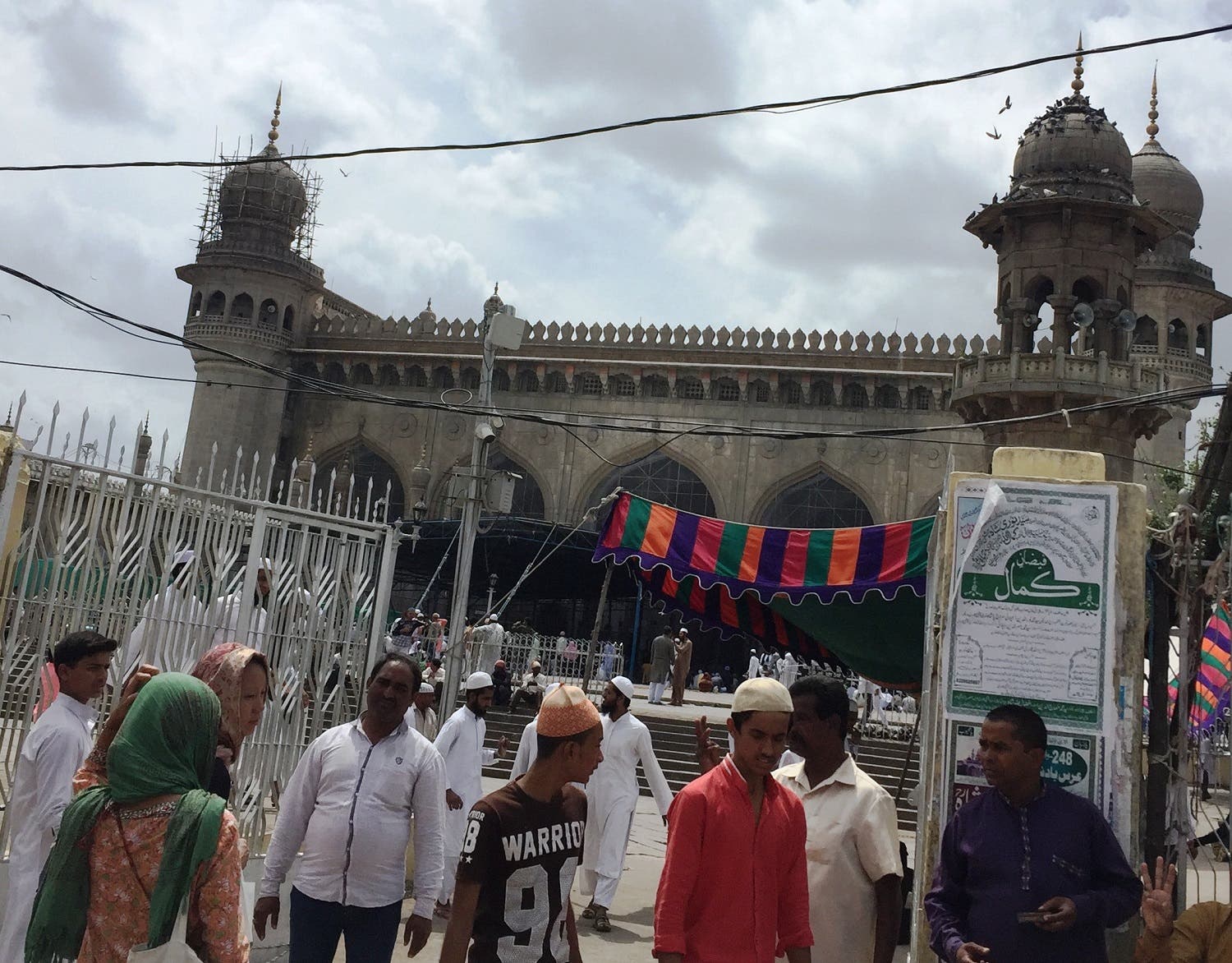
The Makkah Masjid stands meters away from the city’s defining landmark, the Charminar. The restoration is being done to conserve the mosque’s splendid structure. Chandeliers from the high roof have been fully wrapped using pieces of cloth while the tall minarets of the mosque has been covered with scaffolding.
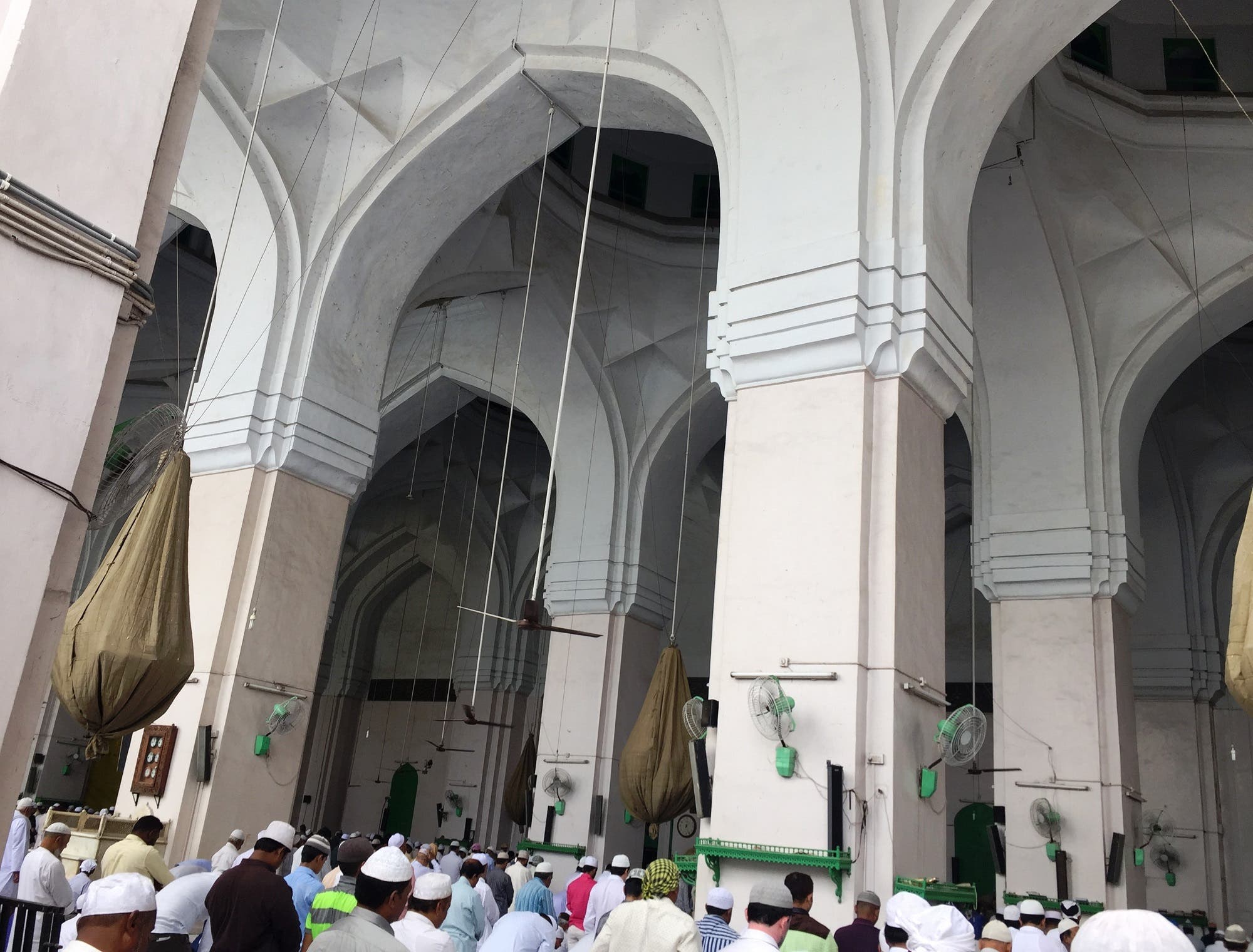
The mosque is said to have been built with granite and bricks brought from Mecca in Saudi Arabia. (Supplied)
A team from Archaeological Survey of India (ASI) started the restoration work more than a year ago and it is likely to take some more time to complete. The ASI had last worked on Makkah Masjid in 2007 under a special arrangement since 1956.
According to Telangana Tourism, “The construction of Makkah mosque started in the year 1614 by Sultan Muhammad Qutb Shah and it was Aurangzeb who completed it in 1693. The mosque has a length of 225 feet and is 180 feet wide with a height of 75 feet. The roof is rested on 15 arches.”
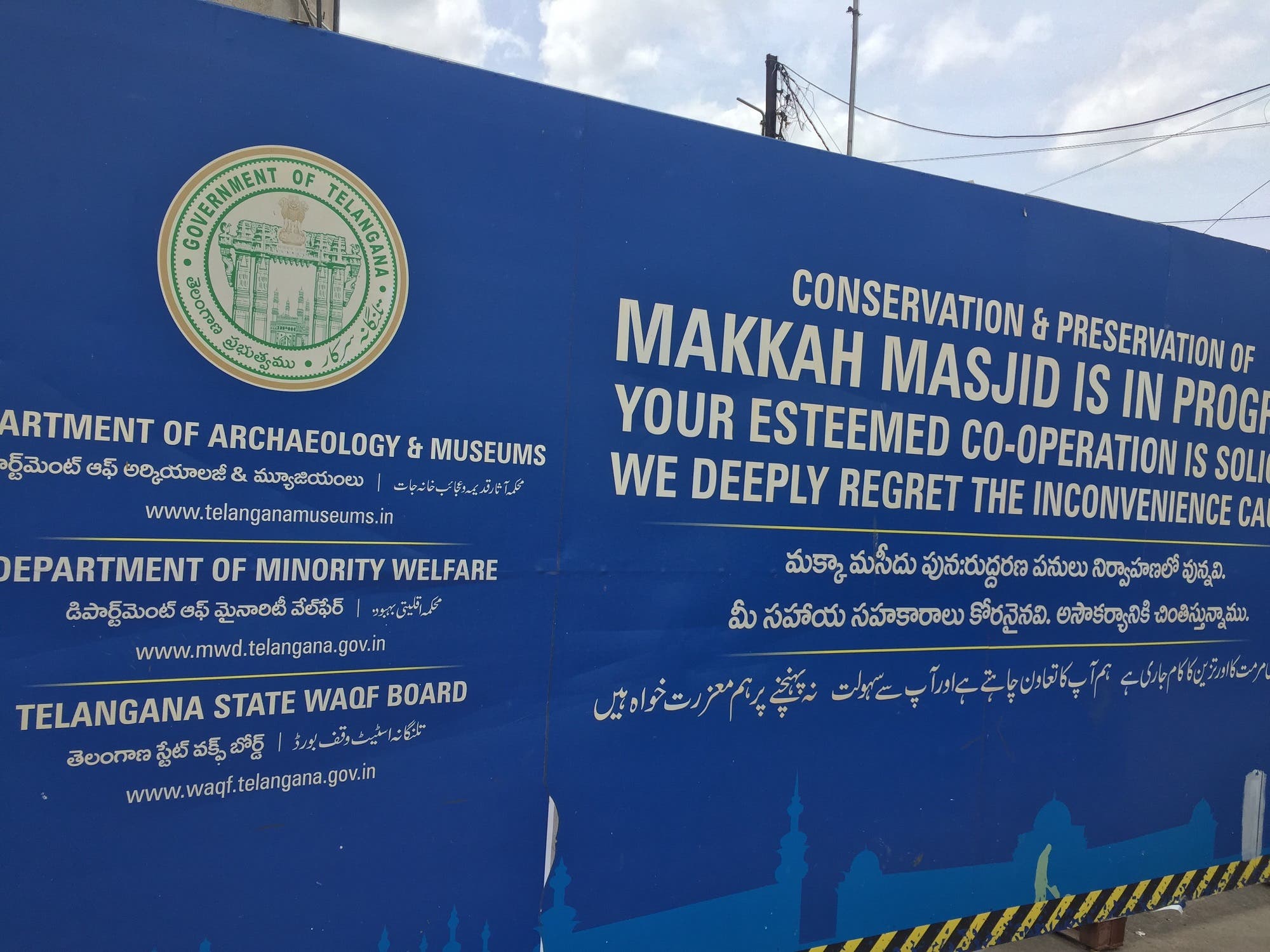
A team from Archaeological Survey of India (ASI) started the restoration work more than a year ago. (Supplied)
The mosque has two huge octagonal columns, created from a single piece of granite and topped by an arched gallery crowned by a dome. The mosque can accommodate 10,000 worshipers at any time. It is believed that bricks used for its construction where also brought from Makkah.
It is said that the fifth Sultan of Qutb Shahi dynasty, Muhammad Quli Qutb Shah, was a great patron of art and culture.
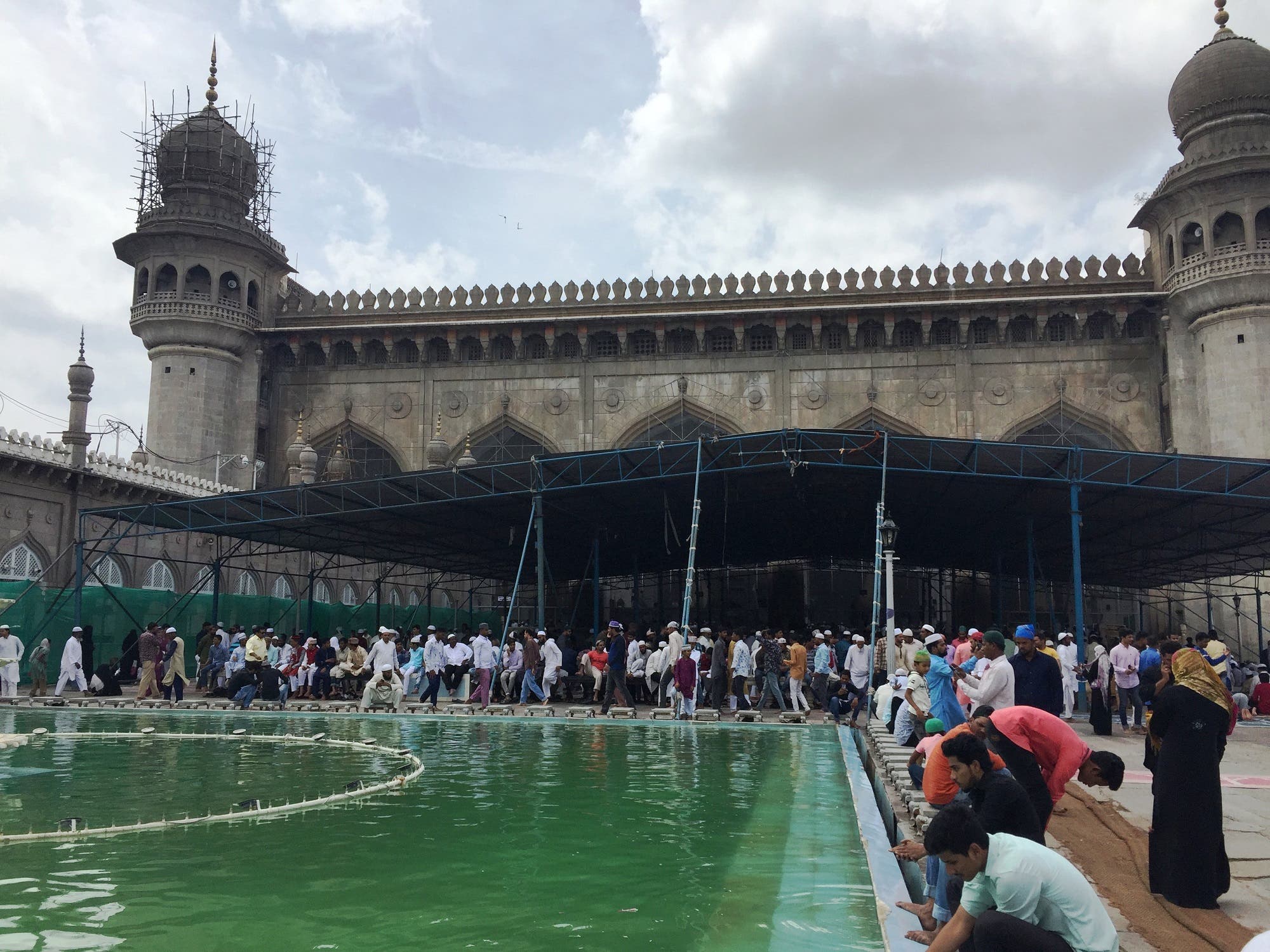
The mosque has two huge octagonal columns, created from a single piece of granite. (Supplied)
Makkah Masjid was under construction when renowned French traveler of the 17th-century, Jean-Baptiste Tavernier, traveled to Hyderabad. “It is about 50 years since they began to build a splendid pagoda in the town which will be the grandest in all India when it is completed.”
Qutb Shah is known to have personally laid the foundation stone of the mosque, while 8,000 workers were part of its construction. The three arched facades were carved out of a single piece of granite, which took five years to quarry.
The mosque can accommodate 10,000 worshipers at any time. (Supplied)
Every year before the commencement of Ramadan, authorities set in process annual maintenance work to provide a facelift to the mosque. However, the ongoing work is a major exercise and is expected to beautify the mosque as well.
The people Hyderabad are hoping that the work will get completed sooner than later.
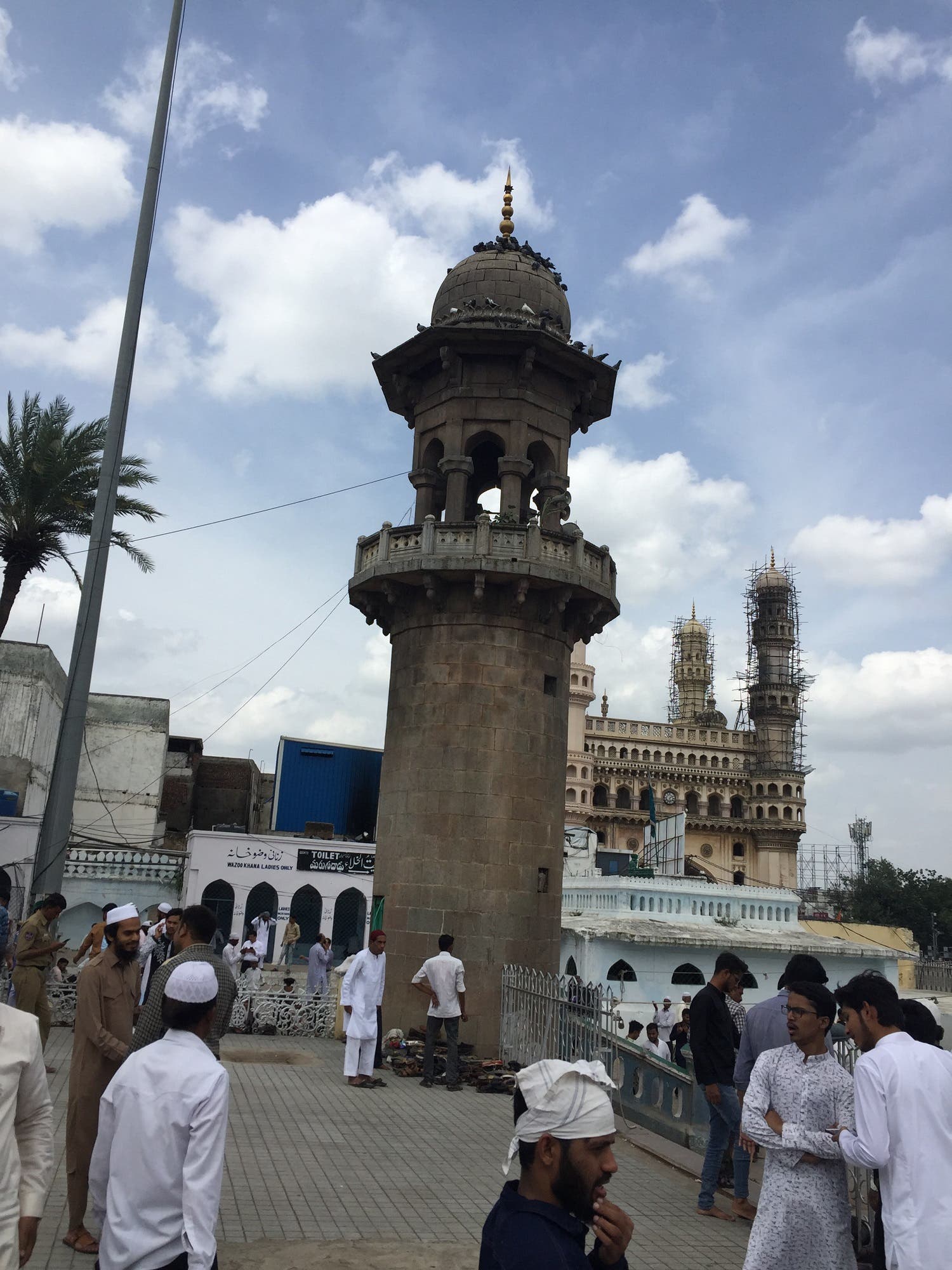
Ongoing work is a major exercise and is expected to beautify the mosque as well. (Supplied)

Courtesy: english.alarabiya.net
Let the Truth be known. If you read VB and like VB, please be a VB Supporter and Help us deliver the Truth to one and all.
Man kills woman lecturer, sets car ablaze; dies by suicide in Karnataka

Bengaluru (PTI): A 46-year-old man allegedly killed a woman lecturer by setting fire to the car with her inside, before dying by suicide; his severed body was found by railway police the next day, police said on Tuesday.
The deceased, identified as Ramanjinappa, a resident of Doddaballapura, was a contract worker in the tahsildar’s office, they said.
Police said the man, who was married and had apparently separated from his wife, was in an illicit relationship with a woman identified as Saroja, whose charred body was found inside a gutted car in an isolated area near the Bashetty Industrial Area in Doddaballapura taluk on the outskirts of Bengaluru.
Saroja was also married and had a son, police said.
According to police, on Saturday, the man allegedly borrowed a car from an acquaintance, claiming he had a medical emergency and needed to visit a hospital.
Citing preliminary investigations, a senior police officer said the man picked up the lecturer from a bus stop in Devanahalli. The two spent a couple of hours driving around Nandi Hills and nearby areas.
Later, they reached a secluded spot in Doddaballapura, where it is suspected that an argument ensued inside the car, following which he allegedly hit her on the head with a hammer, the officer said.
He then set the car on fire, reportedly using petrol, and is believed to have died by suicide thereafter, police said.
Locals who saw the burning car alerted the police and fire department, who rushed to the spot, extinguished the fire, and found the woman’s body completely charred inside the vehicle, the officer added.
His severed body was found near railway tracks in Bidadi by the railway police on Sunday, he said.
The motive and whether the crime was premeditated or impulsive are under investigation, he said.
Saroja’s husband filed a complaint accusing Ramanjinappa of killing her, police said, adding that a detailed investigation is underway to establish the exact sequence of events.


