
Results delayed as Imran Khan’s PTI leads, opponents cry foul

New Delhi, July 26: In the directly contested 272 seats in Pakistan’s Parliament, 137 is the halfway mark for a simple majority.
Counting of votes is on after polling in the high-voltage Pakistan elections ended at 6 pm on Wednesday. Early trends show that Imran Khan’s Pakistan Tehreek-e-Insaf (PTI) is in the driver’s seat with ousted prime minister Nawaz Sharif’s party Pakistan Muslim League-Nawaz at the second spot followed by Bilawal Bhutto Zardari’s Pakistan Peoples Party.
Earlier in the day, voting was marred by reports of violence and a deadly suicide blast near Quetta, that killed over 35 people and left 67 injured. Meanwhile, the Election Commission of Pakistan has sent a notice to PTI chairman Imran Khan for voting in full public view and in front of the cameras — a violation of the code of conduct. However, the party said Khan did not violate any rules and urged the Election of Commission of Pakistan to take note of the “fake news” being circulated, Dawn reported.
Latest election trends: PTI-113, PML-N-64, PPP-43, MQM-5, MMA-9
PTI workers sense victory, celebrate on streets in Pakistan
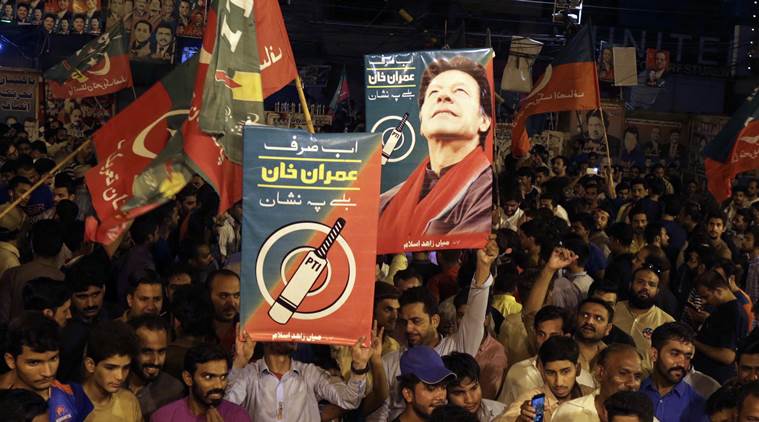
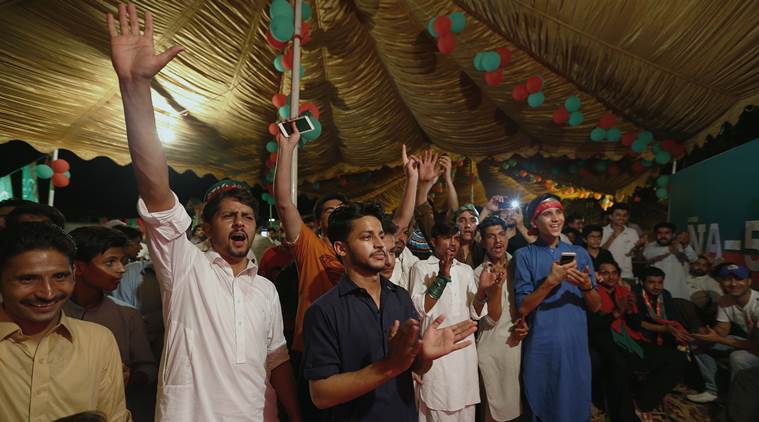
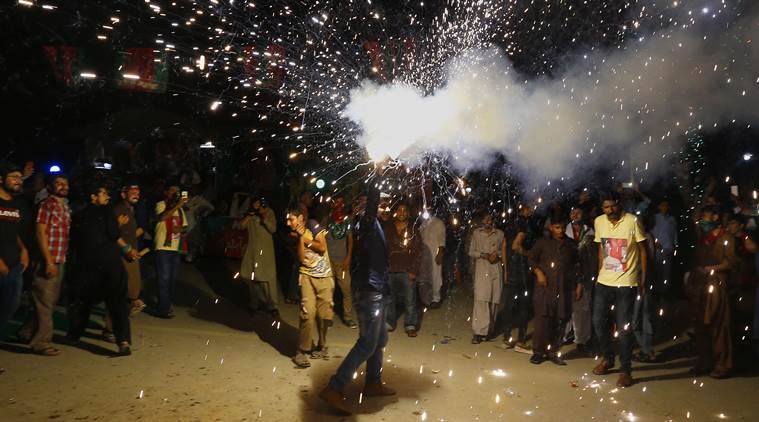
(SOURCE: AP)
We reject the #PakistanGeneralElection2018 results: Shehbaz Sharif, President, Pakistan Muslim League-N #PakistanElections2018 pic.twitter.com/z2uqN57Fz5
— ANI (@ANI) July 25, 2018
Courtesy: indianexpress.com
Let the Truth be known. If you read VB and like VB, please be a VB Supporter and Help us deliver the Truth to one and all.
Power struggle in ruling Cong has 'created massive confusion' in Karnataka: BJP leader Ashoka

Bengaluru (PTI): BJP leader R Ashoka on Friday claimed that the ongoing power struggle between Chief Minister Siddaramaiah and his deputy D K Shivakumar has created massive confusion in Karnataka.
He remarked that the proverb “when two people fight, the third one benefits” has come true, as AICC President Mallikarjun Kharge is also now making efforts to become Chief Minister.
Speaking to reporters here, Ashoka said the entire government has turned into a house of confusion due to the alleged power tussle.
Kharge’s new statement has only added to the chaos, he said.
Congress chief Mallikarjun Kharge had on Friday said that no date has been fixed yet to discuss possible leadership change in Karnataka.
This came a day after Kharge said there was no change of CM in Karnataka "for now" and that the leadership issue in the state would be resolved soon.
The BJP leader said that Kharge too has aspirations and that he was cheated earlier.
"Perhaps he has received a green signal from the Congress high command to become CM. Everyone is already saying Kharge should become CM. Kharge himself has declared, “I am ready to become CM.” Despite many attempts in the past, he never became CM. Now he is trying to seize the opportunity," the Leader of Opposition in the state assembly said.
According to him, the situation in Congress has perfectly become a case of “two people fighting, third one benefits.”


