
Sunny Leone, Elephant, Pigeon: Voter List In East UP Stumps Officials

LUCKNOW: An exercise of updating voter lists in eastern Uttar Pradesh's Ballia district has produced some disastrous results. Officials in the state faced tough questions after two leaked pages of the updated lists showed photographs of an elephant, a pigeon, a deer and film actress Sunny Leone next to the name of residents of the district.
In the two pages leaked to the media, a photograph of the movie star appears next to the name of a 51-year-old woman while the photo of the elephant appears next to the name of a 56-year-old-man.
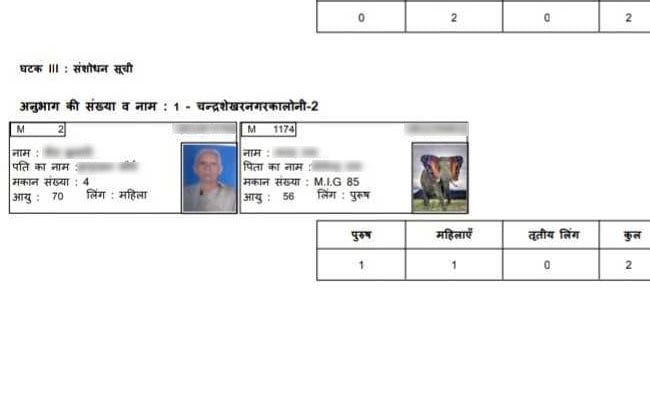
These updated voter lists are still being scrutinised and have not been made public. The leaked pages eventually made it to local journalists who sought a clarification from district officials. "This was done by one of our data entry operators. He was recently transferred from a city area to a rural one. We have filed an FIR against this person and we are modifying these details," said Manoj Kumar Singhal, a senior officer with the Ballia district administration.
Voter lists are being updated across Uttar Pradesh before the 2019 Lok Sabha polls. In Ballia, the first deadline was July 15, according to reports in local newspapers. The data for the lists is provided by booth-level officers appointed by the district administration. This data is then entered and matched online by data entry operators. The final list is cleared by senior officers and sources say the errors were discovered when this cross-checking of data was happening.
courtesy : ndtv.com
Let the Truth be known. If you read VB and like VB, please be a VB Supporter and Help us deliver the Truth to one and all.
Delhi to adopt fully digital system for time bound traffic challan disposal

New Delhi (PTI): The Delhi government will soon implement amended Central Motor Vehicles Rules, 1989, making the traffic challan process completely digital and time-bound, to curb violations and enhance road safety, Chief Minister Rekha Gupta said on Sunday.
Under the new framework, avoiding challans will no longer be possible and timely resolution will be mandatory for all citizens. Importantly, violators will not be able to approach courts directly to contest a challan without first going through the prescribed process, said a Delhi CMO statement.
Anyone committing five or more traffic violations within a year will be classified as a "serious offender" and will risk suspension or disqualification of their driving licence under the amended rules, it said.
Gupta noted that the issuance of challans will now be fully modernised.
Police or authorised officers can issue challans either physically or electronically. In addition, violations captured through cameras and digital surveillance systems will automatically generate challans. The e-challans will be delivered within three days to the violators through their mobile numbers, and a physical notice will be delivered within 15 days.
Once a challan is issued, the violator will have 45 days to either pay the fine or challenge it before a grievance redressal officer through the online portal, supported by documentary evidence. If no action is taken within this period, the challan will be deemed accepted, and payment must be made within the next 30 days, the statement said.
If a challenge is rejected, the individual can either pay the fine within 30 days or approach the court after depositing 50 per cent of the challan amount.
Failure to act within the stipulated time will result in the challan being treated as accepted, with payment required within 15 days thereafter.
Payments can be made through electronic modes. The grievance redressal officer will be required to upload a decision on the portal within 30 days, it said.
The chief minister made it clear that once deadlines lapse, daily electronic notices will be issued. Continued non-payment will lead to restrictions on all vehicle-related services, including payment of taxes and processing of driving licence or registration-related requests.
The vehicle will be flagged on the official portal as 'not to be transacted,' effectively blocking any further transactions until the dues are cleared. In cases where necessary, and subject to court orders, police or authorised officers may also impound vehicles involved in violations.
All challans will be issued in the name of the registered vehicle owner, who will be notified via SMS, email or other digital means, it added.


