
BIT’s IEEE student branch, CEABIT organises technical talk on clinical machine learning

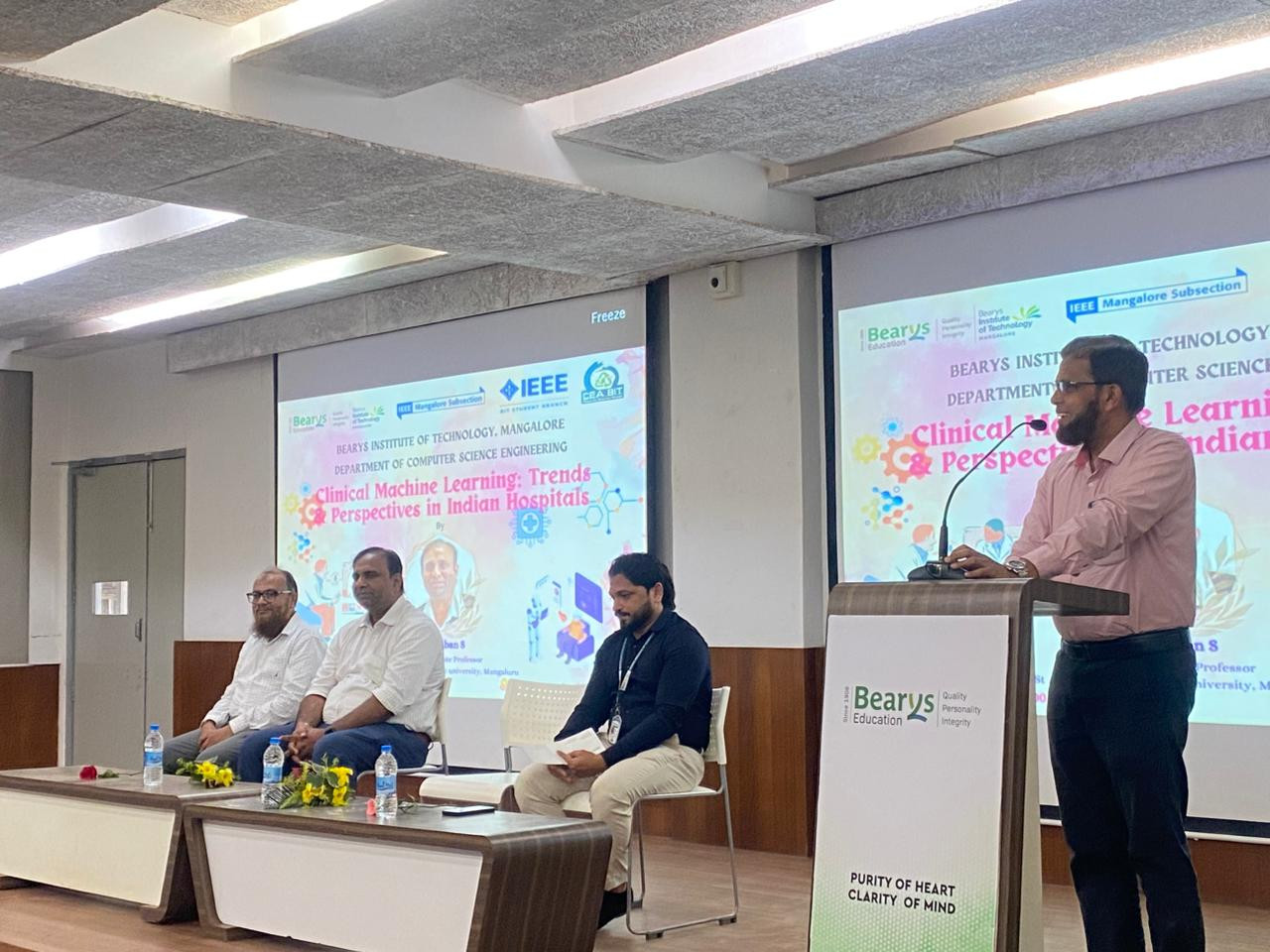
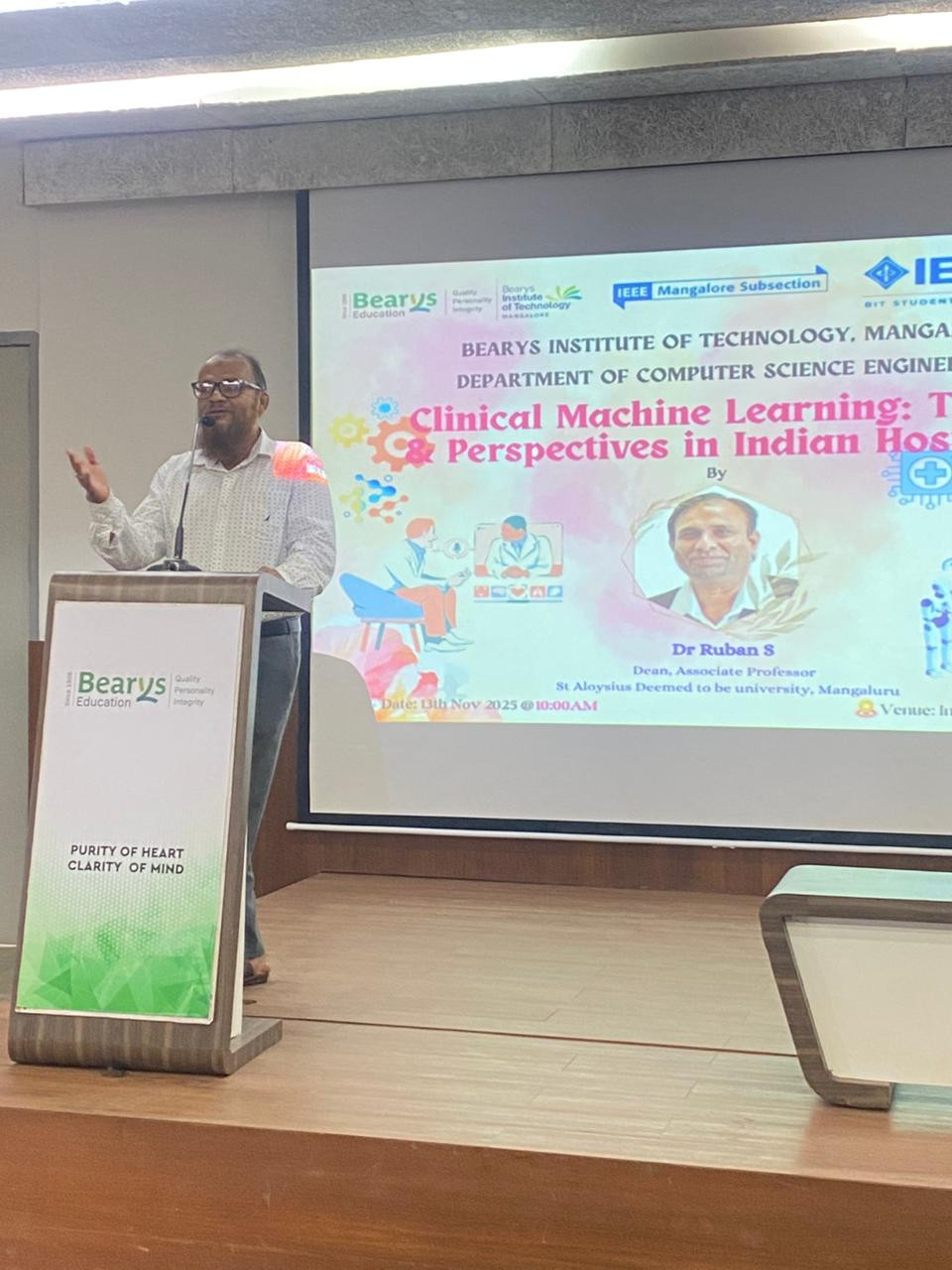
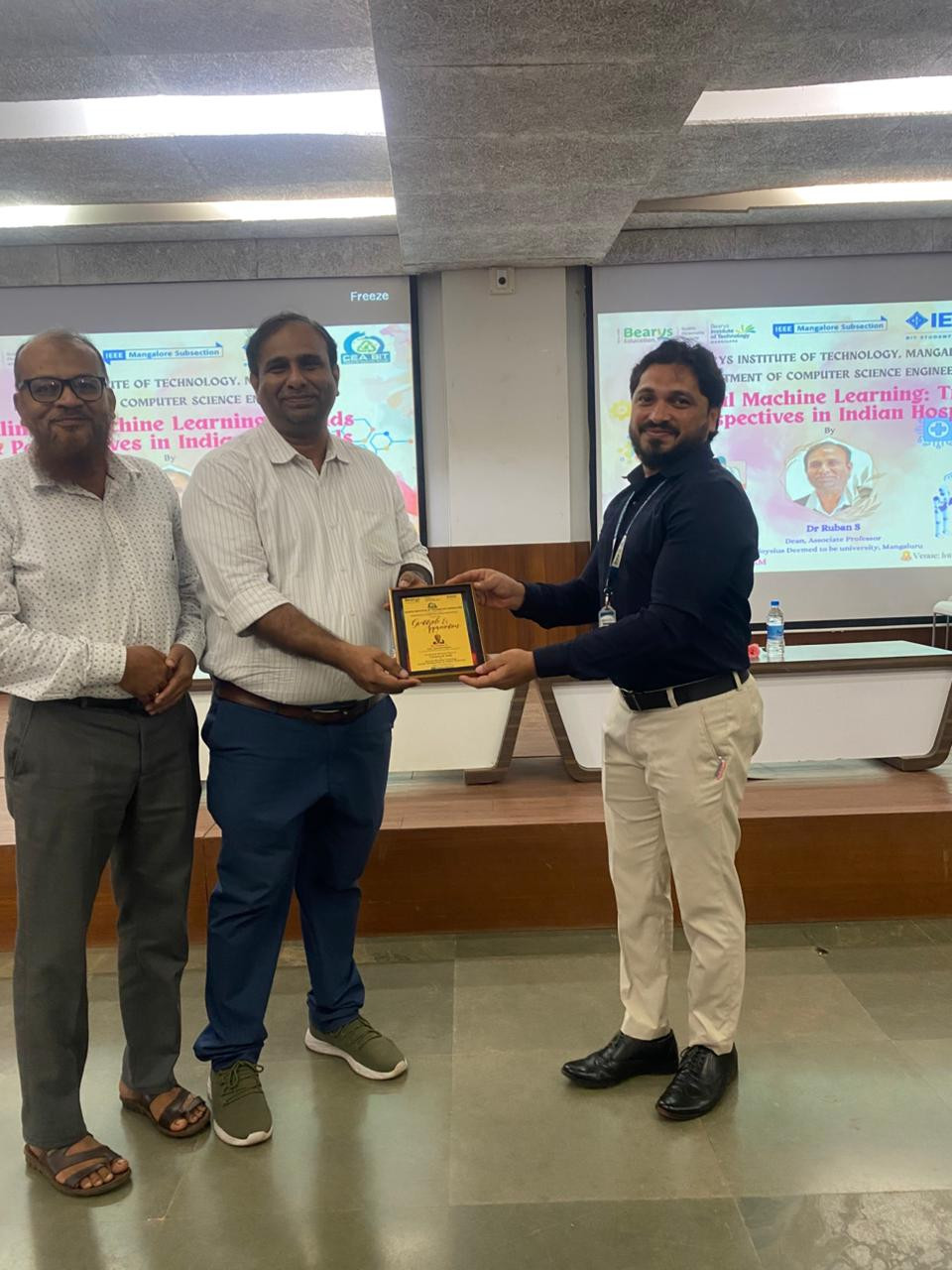
Mangaluru: The IEEE Student Branch and CEABIT Student Association of CSE of Bearys Institute of Technology organised an insightful technical talk on 13th November, featuring Dr. S. Ruban S, Associate Professor and Dean, School of Engineering, St Aloysius (Deemed to be University), Mangalore.
Dr. Ruban delivered the talk on the topic titled, “Clinical Machine Learning: Trends & Perspectives in Indian Hospitals.”
Shanaz, a student from the CSE department, extended a warm welcome to the gathering.
Ahsanath, another student from the department compered the event.
Dr. S I Manjur Basha, Principal of BIT, during his keynote address, emphasized on the growing importance of machine learning in healthcare and encouraged students to deepen their involvement in emerging technologies.
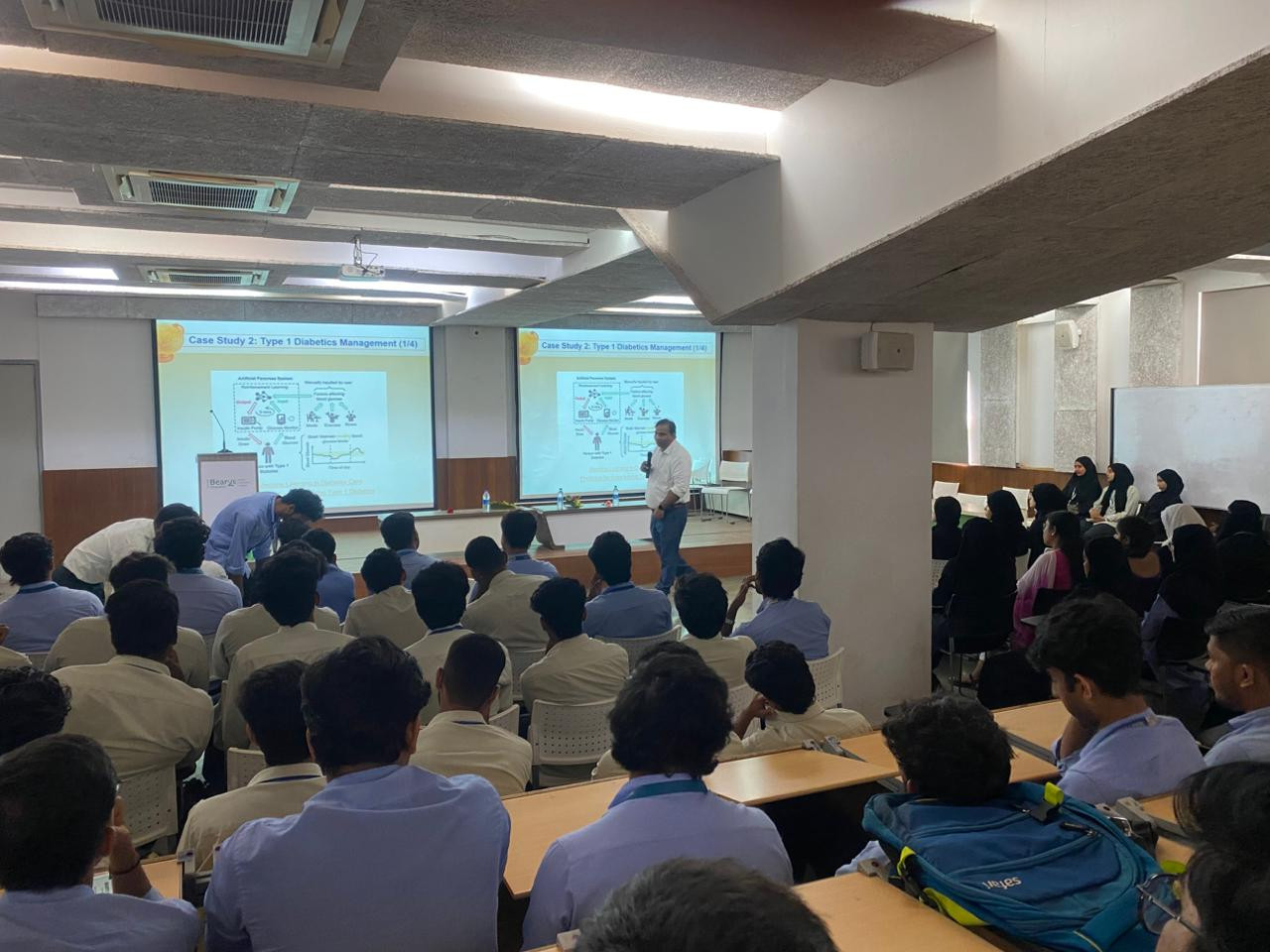
Meanwhile, delivering the expert talk, Dr. Ruban discussed the role of machine learning in clinical decision support systems, patient monitoring, and diagnostic accuracy.
He highlighted real-world applications in Indian hospitals, the challenges in medical data processing, and the potential for AI-driven improvements in patient care.
Through his presentation, he introduced the students to research opportunities and industry trends.
Speaking on the occasion, Prof. Sinan ,HOD-CSE also addressed the gathering, appreciating the IEEE team for arranging academically enriching events and motivating students to pursue innovation in interdisciplinary domains.
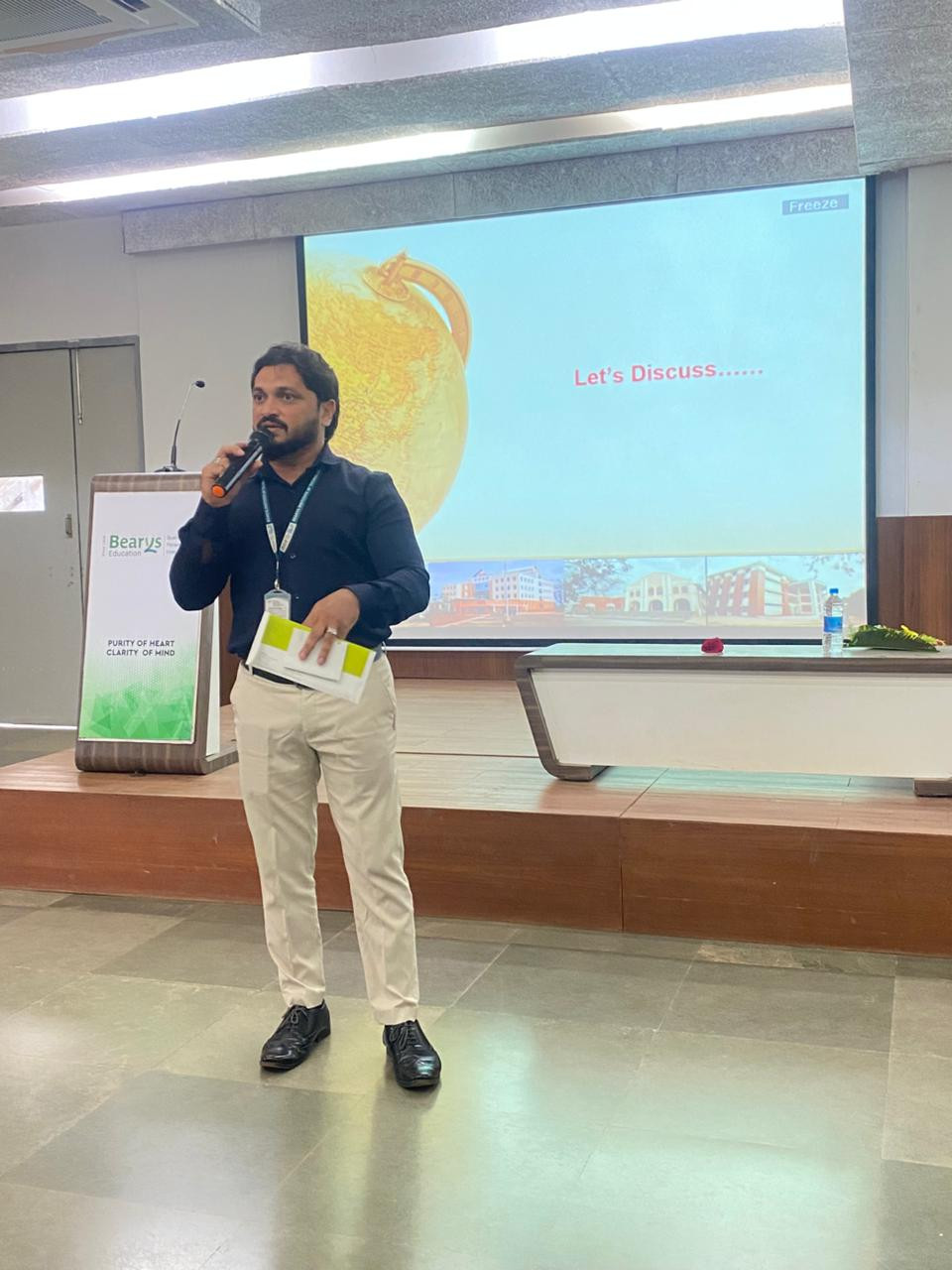
Dr. Abdullah Gubbi delivered rendered the vote of thanks.
Let the Truth be known. If you read VB and like VB, please be a VB Supporter and Help us deliver the Truth to one and all.
Two arrested in K'taka for assaulting minors, uploading CSAM content

Bengaluru (PTI): Two men were arrested for allegedly sexually assaulting two minor girls, recording the acts on mobile phones and uploading the videos online as child sexual abuse material, police said on Thursday.
The accused have been identified as Kiran Kumar (29), hailing from Chitradurga district, and Aditya M K (20), hailing from Shivamogga district, they said.
A probe was initiated after information was received from the NCRP portal regarding a suspected instance of creation of Child Sexual Abuse Material (CSAM) for online dissemination, police said.
Accordingly, a case was registered at Kaggalipura Police Station under relevant sections of the IT Act on May 10, they added.
Investigation revealed that two minor girl victims were exploited and videos were created and uploaded to the internet. The child victims have subsequently recorded their statements as per procedure and further necessary legal steps have been taken, Pronab Mohanty Director General of Police, Cyber Command, said in a statement.
Based on the statements of the victims, the accused persons, who allegedly assaulted the minors, recorded the acts on mobile phones and uploaded the videos online, were arrested, he said.
Following the probe, sections 65(2) (rape) and 70 (gangrape) of the Bharatiya Nyaya Sanhita, along with relevant sections of the POCSO Act, have been added to the FIR, police said.
Officials collected relevant information and on May 12, arrested the accused persons and seized three mobile phones belonging to them, in which the videos had allegedly been recorded, he said.
The accused were later produced before the court and taken into police custody for further investigation, he added.
According to him, in CSAM cases, police usually apprehend offenders who have downloaded such content or have kept them in their possession after obtaining them from elsewhere, usually the internet.
"The present case is one of the very few instances where content creators and uploaders have been apprehended," Mohanty added.


