
Constitutional morality must rise above customs, traditions, social ills: Justice Govind Mathur

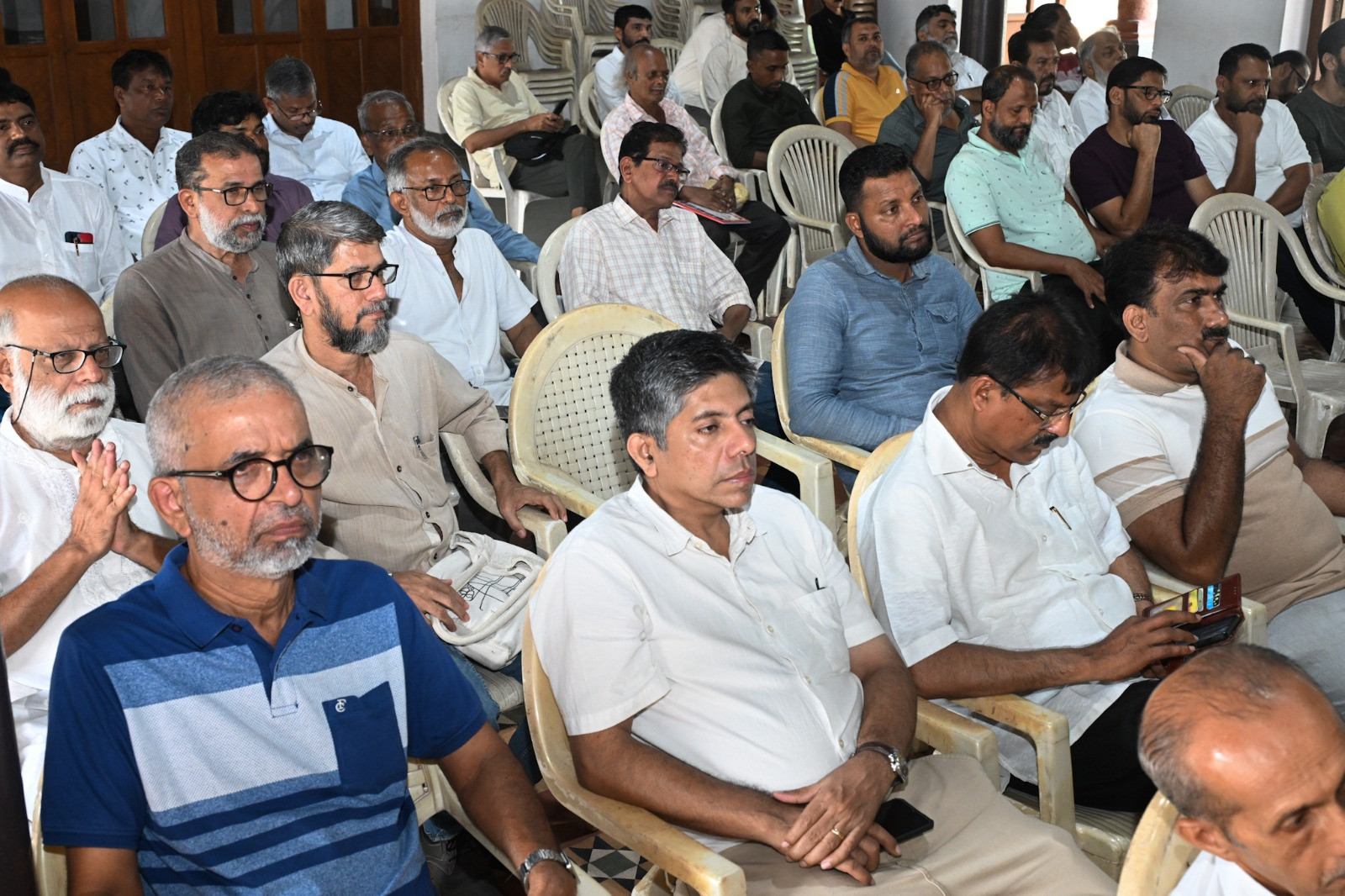
Mangaluru: “Judiciary is ultimately a tool of the system. We have to buckle up and stand against social ills,” said Justice Govind Mathur, former Chief Justice of the Allahabad High Court, delivering the B.V. Kakkilaya Inspired Oration 2025 at Ravindra Kalabhavana, University College campus, Mangaluru, on Sunday. He stressed that communalism, casteism, gender discrimination, and glorification of practices like Sati, among other issues, continue to undermine the values enshrined in the Constitution.
The lecture, organised as part of the National Conference on Secular and Social Justice Movements in Indian Democracy, focused on the theme ‘Balancing Constitutional and Social Morality in the Indian Context’. Justice Mathur argued that democracy cannot be reduced to periodic elections alone. “Certain people sitting in Parliament deciding the fate of scores of citizens is not merely constitutional democracy,” he said, adding that true democracy must ensure justice, equality, and fraternity as envisioned in the Preamble.
He further pointed out how B.R. Ambedkar emphasised that the Constitution is not merely a legal document but “a vehicle of life,” cautioning that it would fail if its principles were not applied to everyday living.
Describing the present scenario as alarming, he said India is in ‘a very sorry state of affairs,’ where forces promoting social ills are continuously giving them the colour of custom and tradition.
“While an Indian may adhere to their own religion, they must also create space for the freedom of other religions. No custom or tradition can go against constitutional morality; it is constitutional morality that is supreme, and the very nature of democracy is rooted in it,” he added.
Reflecting on 79 years of independence, Justice Mathur questioned whether India has truly reached the stature envisioned by the framers of the Constitution. “Not at all,” he said, pointing out that practices like Sati are still glorified in parts of Rajasthan, Madhya Pradesh and Gujarat. He reminded that the Directive Principles of State Policy urge the nation to develop a scientific temper.
Calling for urgent action, Justice Mathur requested citizens to “protect healthy traditions and finish social ills,” warning that courts alone cannot dismantle regressive practices disguised as customs. “We have crossed the time of social crisis, there is real danger now,” he said, stressing that public awareness and collective will are essential to preserve secularism and equality.


Let the Truth be known. If you read VB and like VB, please be a VB Supporter and Help us deliver the Truth to one and all.
Ordinance issued to increase number of Supreme Court judges from 34 to 38

New Delhi (PTI): The government has promulgated an ordinance to increase the strength of the Supreme Court from the present 34 judges to 38, including the Chief Justice of India.
The law ministry notified the ordinance on Saturday, which amended the Supreme Court (Number of Judges) Act, 1956, to increase the sanctioned strength of the top court.
So far, the sanctioned strength of the top court was 34, including the Chief Justice of India (CJI). Now, the number of judges has been increased by four, taking the sanctioned strength to 38.
The top court will now have 37 judges, other than the CJI.
With the apex court having two vacancies at present, and the ordinance coming into force immediately, the Supreme Court Collegium will now have to recommend six names for appointment as judges in the top court.
A bill will be brought in the Monsoon Session of Parliament to convert the ordinance – an executive order – into a law passed by Parliament.
The Union Cabinet had cleared a draft bill on May 5 to increase the number of apex court judges.
The strength of the Supreme Court was last increased from 30 to 33 (excluding the CJI) in 2019.
The Supreme Court (Number of Judges) Act, as originally enacted in 1956, put the maximum number of judges (excluding the CJI) at 10.
This number was increased to 13 by the Supreme Court (Number of Judges), Amendment Act, 1960, and to 17 by another amendment to the law.
The Supreme Court (Number of Judges) Amendment Act, 1986, augmented the strength of judges from 17 to 25, excluding the CJI.
A fresh amendment in 2009 further increased the strength from 25 to 30.
Article 124(3) of the Constitution lists the qualifications required to become a Supreme Court judge.
An Indian citizen who has either served as a high court judge for at least five years, or as an advocate for 10 years, or is a distinguished jurist, can be appointed to the top court.
The strength of the Supreme Court is increased based on the recommendations of the CJI, who writes to the Union law minister. After consulting the finance ministry, the Department of Justice under the law ministry moves the Cabinet with a draft bill.


