
Deep sea fishing to begin from tomorrow

Mangaluru, July 31: The two-month-long ban on deep sea fishing, which was in force to safeguard fishes, will come to an end on July 31. The fishermen, along with their boats, are ready to move to the deep sea to resume the fishing from August 1. Traditional fishing was allowed from the ports despite the ban on deep sea for two months during the breeding season. But, the massive storm and high tides did not yield good results for the traditional fishers. Now, once again the fishermen's mood is towards deep sea fishing. The deep sea fishing will resume in the Karavali from Wednesday onwards.
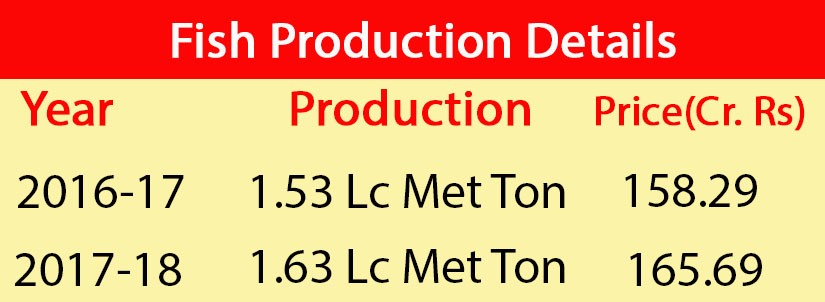
In all, there are 1,077 motorized boats, including 65 Persians and 1,012 Trawls registered in the district in 2017-18. There are 1,376 engine driven ports and 526 non-automated ports.
61 days’ Ban: The government had imposed a 61-day ban for mechanized fishing as the Monsoon is the time for reproduction of fish species in the coastal region. This will be a high time for the boats to be trapped amid the massive storm and high tides. It is also a time of raising fish species, due to which the government prohibits deep sea fishing in June-July.
Boat Parking Problems: Harbor and Gateways lack the space for the boat parking. The number of boats has increased dramatically in recent days. Shortage of fishermen workers too exist. The third phase of the jetty construction may resolve this problem in the future.
Various fishing ban
The use or installation or operation of surface or submerged artificial lights/LED lights, fish light attractors, or any other light equipment; bull trawling, purse-seining, and gill-netting operations and illegally catching of other fishes have been prohibited. The license of the fishing boat will be cancelled if found fishing in such a prohibited period. The diesel supply will also be stopped to such ships.
According to Karnataka Maritime Fishing (Regulation) Act, 1986; the fine of five times the value of the fish will be collected, said senior officials of the fisheries department in its order issued recently.
Let the Truth be known. If you read VB and like VB, please be a VB Supporter and Help us deliver the Truth to one and all.
Union government assumes full control over TV ratings, TRAI role curtailed: Report

New Delhi: The Union government has assumed full control over television audience measurement, removing the Telecom Regulatory Authority of India (TRAI) from oversight of the ratings system that underpins the country’s ₹36,000 crore television advertising market, according to a report published on Wednesday.
The report in Mint said the Ministry of Information and Broadcasting (MIB) now has exclusive authority over the framework governing how television ratings are measured and regulated. TRAI had been entrusted with oversight of TV ratings in 2012 during the UPA government’s tenure. TRAI is no longer mentioned in the relevant policy document, effectively vesting sole authority in the MIB.
The report said TRAI will continue to regulate other aspects of broadcasting, including channel pricing, advertising caps, interconnection and distribution norms, service quality and compliance standards. Its role in determining how ratings agencies track viewing behaviour has been withdrawn.
Television Rating Points (TRPs), which reflect viewership patterns, guide advertisers in deciding where to allocate spending across channels and time slots.
A government source quoted in the report said the ministry could modify TRAI’s decisions even when the regulator oversaw broadcasting.
A former CEO of Prasar Bharati told the newspaper that the MIB has historically regulated rating agencies through licensing and guidelines, and by holding them accountable under existing norms.
During its tenure overseeing ratings, TRAI had taken decisions affecting the broadcast sector, which included capping advertising time at 12 minutes per hour following complaints about excessive commercial breaks and it now remains unclear how these matters will be addressed under the revised arrangement.
Satya N. Gupta, former principal advisor at TRAI, was quoted as saying that merging regulatory functions with policy oversight and removing an independent regulator from the process was a retrograde step.
TRAI’s involvement in broadcasting had earlier attracted criticism as well. In 2012, its consultation paper on quantitative limits on television advertising was viewed by some as overlapping with the Advertising Standards Council of India’s code. Subsequent recommendations covering television audience measurement, ownership of news channels and issues such as paid news had also raised concerns among sections of the industry.
Television ratings have faced scrutiny in recent years, including during the controversy involving the Broadcast Audience Research Council (BARC), where officials of the ratings body were prosecuted over allegations of manipulation of viewership data.


