
Only an educated person is alive, rest are only breathing: Dr. Saud Alam tells students in Bhatkal
Rabita Educational Excellence Award ceremony’s first session held

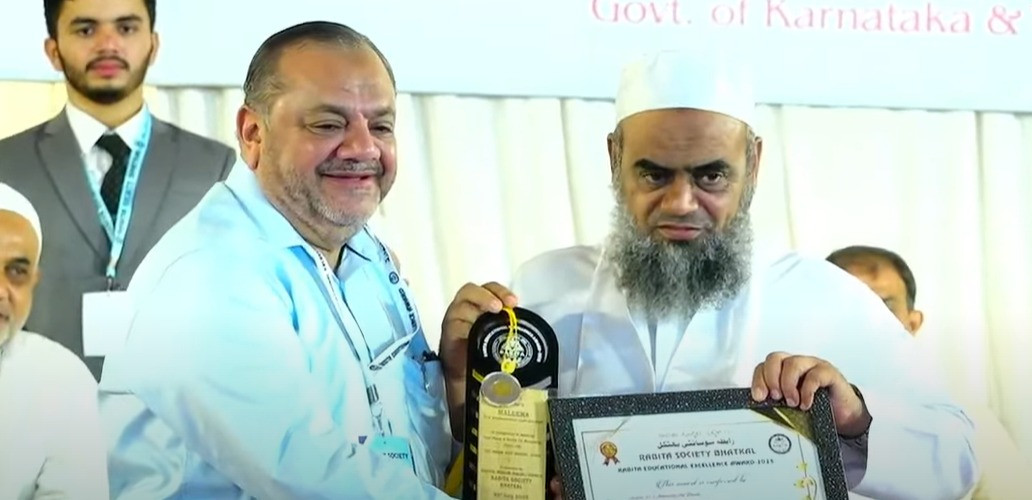
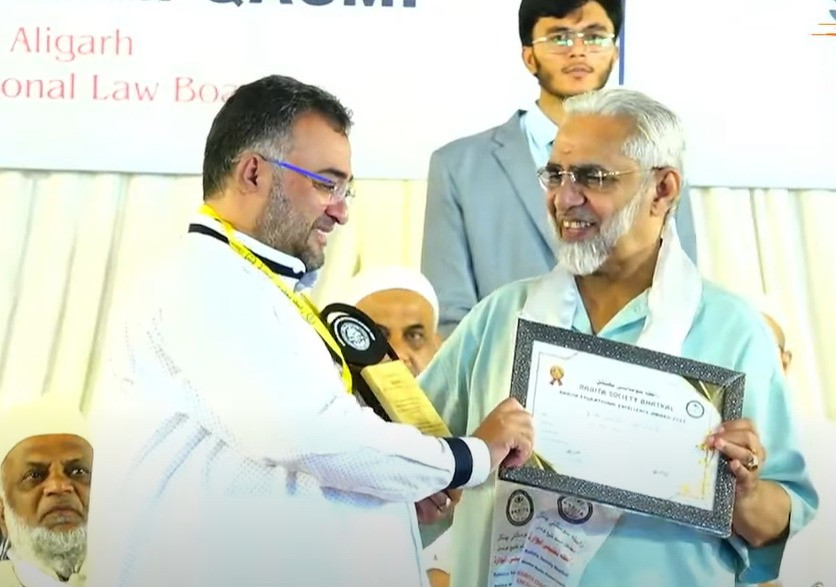
Bhatkal: The first session of the much-awaited Rabita Educational Excellence Award 2025 was held on Thursday morning at the Anjuman Islami Anglo Urdu High School Ground in Bhatkal. Organised by the Bhatkal Muslim Khaleej Council (Rabita Society), the ceremony witnessed a large gathering of students, parents, scholars, and community leaders who came together to honour meritorious students from the region.
The programme began with the recitation of the Holy Qur’an by Hafiz Maaiz, setting a spiritual tone for the day. The event was compered by Abdul Raqeeb Pillor.
The first session was presided over by Umar Farooque Musba, President of the Bhatkal Muslim Khaleej Council (Rabita Society), under whose leadership the Council continues to promote education as a vital pillar for community upliftment.
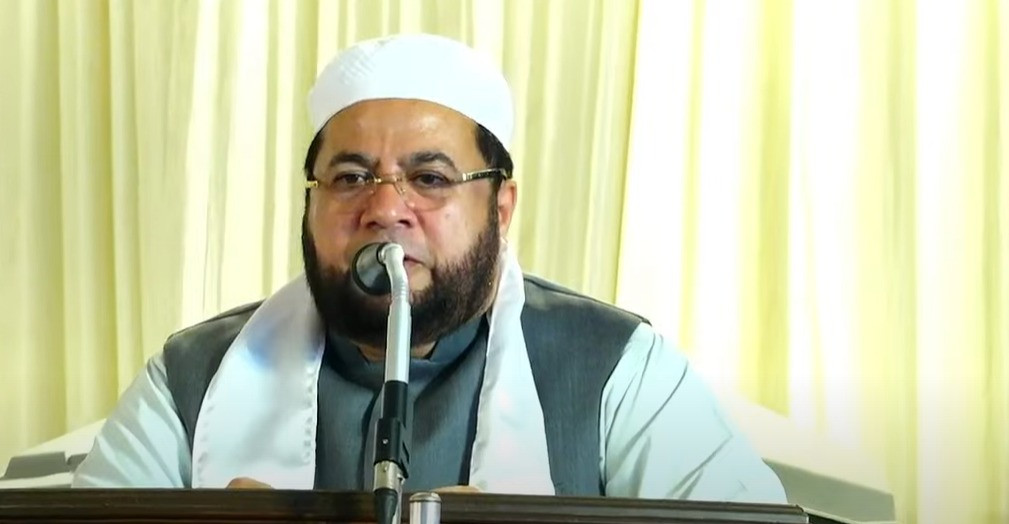
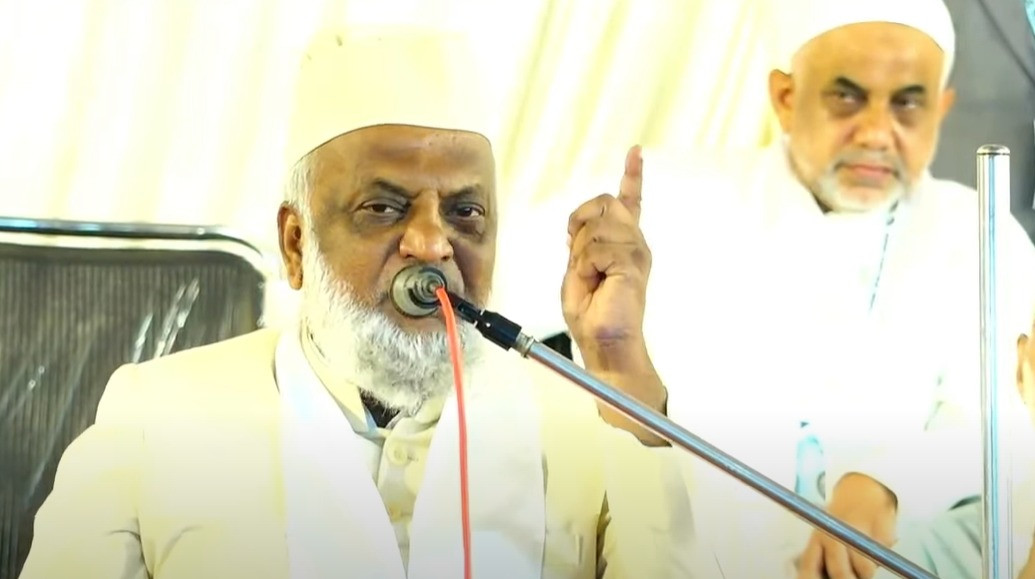
Delivering the keynote address, Dr. Saud Alam Qasmi appreciated the scale and consistency of the Rabita Educational Excellence Awards. He said, “The very concept of this award and its execution year after year shows the commitment of the community towards education.”
Addressing the students, he urged them to remember the leaders and elders of the community who made such platforms possible. “When you reach greater heights in life, don’t forget the support and encouragement you received in the form of the Rabita Award,” he told the students.
Dr. Qasmi further reflected on the deeper meaning of education in society. “Whether the heart is beating or not, a person without knowledge is not truly alive. It is only education that keeps a society alive.” He highlighted how Islam considers education not just a right, but a religious obligation. “While the modern world says education is a right, Islam declares it as farz—compulsory,” he noted, urging students to value their youth by dedicating themselves to meaningful learning.
Welcoming the guests and awardees, Ateequr Rahman Muniri paid tribute to the founding vision of the Rabita Society. He recalled the contributions of community leaders like Dr. Khalil ur Rahman, who laid the foundation for an education-driven future in Bhatkal and nearby areas.
He compared the Society to a tree planted by the elders that has now grown tall and strong, offering shade to the next generation. “The vision of our elders is now a reality. What they sowed is what we are reaping today,” he said.
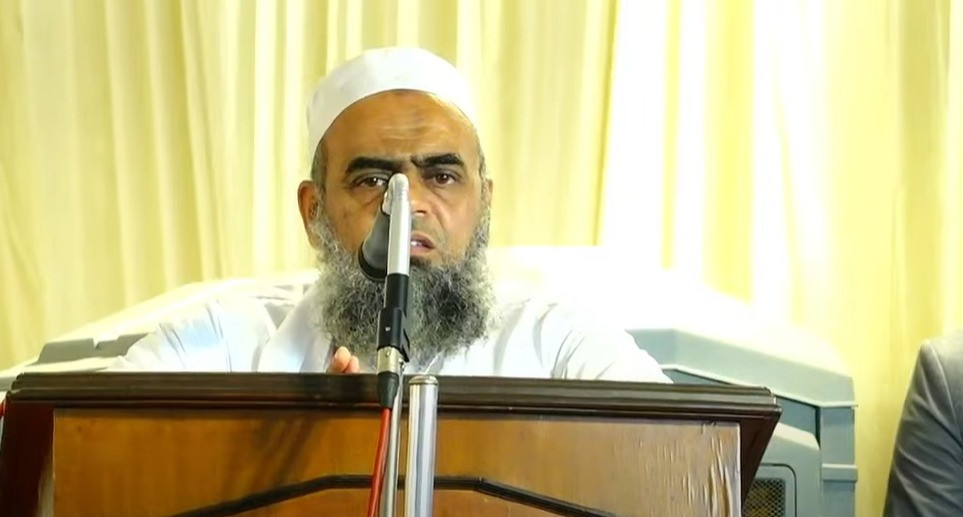
Moulana Khaja Akrami, in his address, praised the Rabita Society for keeping the tradition alive despite the logistical challenges faced by the team, many of whom are based in Gulf countries. “These officials come home once a year, yet they devote their vacation, time and resources to organise such a valuable event. That deserves respect,” he said.
He reminded students that while winning awards is special, it is the consistency in efforts and a sincere pursuit of knowledge that will take them far in life. “Education is the foundation of a fulfilling life. Keep your focus and work hard to achieve your dreams,” he added.
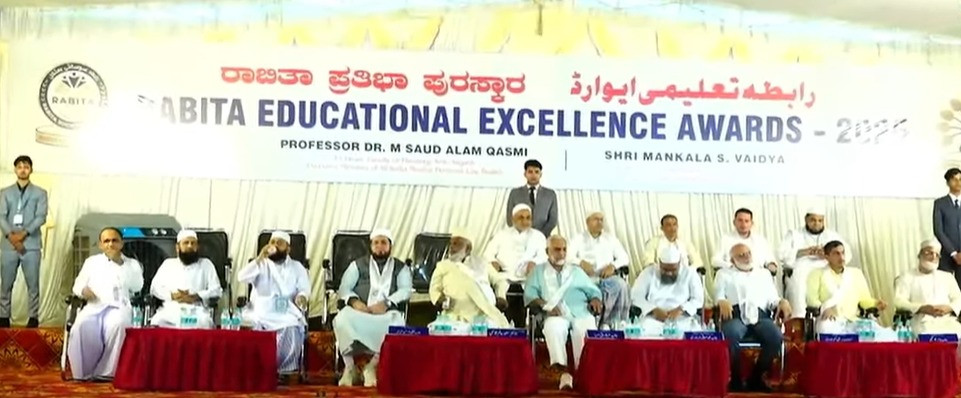
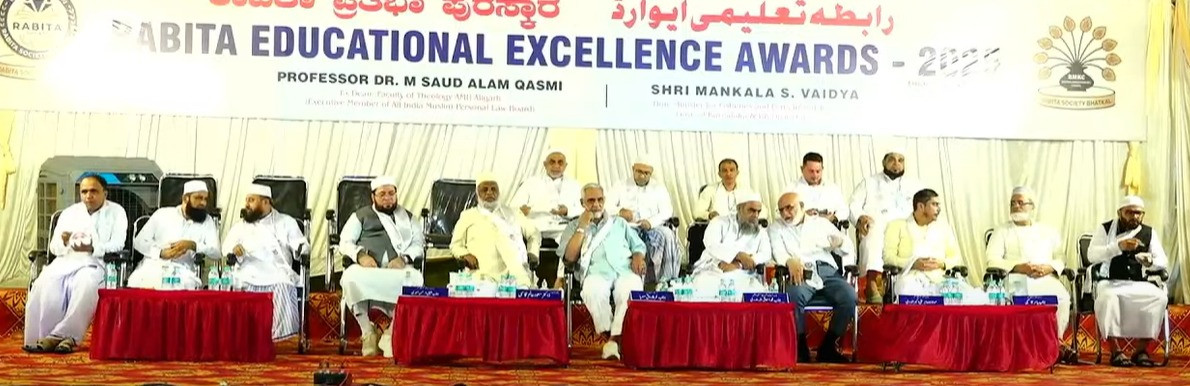
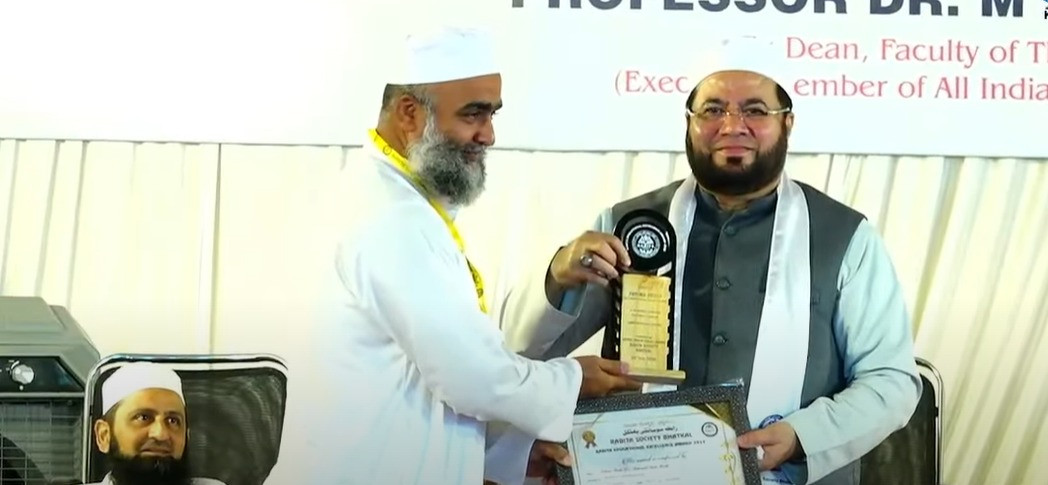
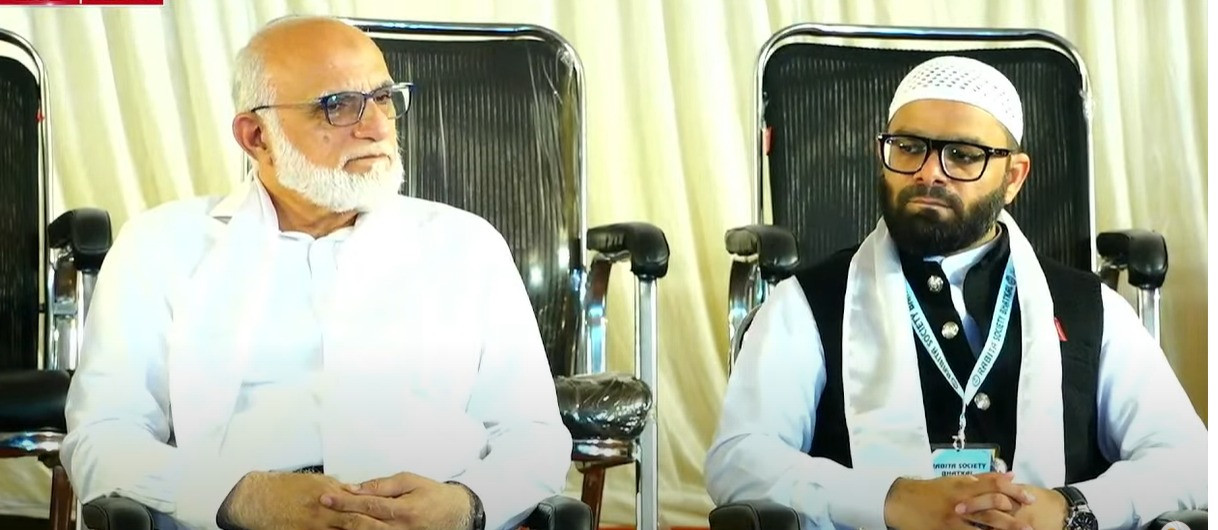
Among the dignitaries seated on the stage were Ateequr Rahman Muniri (General Secretary, BMKC), Prof. Dr. Saud Alam Qasmi (Ex-Dean, Faculty of Theology, AMU Aligarh and Executive Committee Member, AIMPLB) who attended as the Chief Guest, Qazi Khalifa of Jamatul Muslimeen Moulana Khaja Akrami, Moulana Mohammed Hussain Jukaku (General Secretary, Jamatul Muslimeen), Ismail Jubapu (General Secretary, Khalifa Jamat), Ishaq Shabandri (General Secretary, Anjuman Hami-e-Muslimeen), Abdul Raqeeb MJ (General Secretary, Majlis-e-Islah wa Tanzeem), and Moulana Talha Ruknuddin representing Jamia Islamia Bhatkal.
Also present were Yasir Qasimji (Secretary, BMKC), Sabir Ali Akbara (Treasurer, BMKC), and representatives from various overseas Bhatkal Muslim Jamaats including Jailani Mohtesham (Dubai), Moulana Tanveer Jushiddi (Eastern Region), Abul Ala Mohtesha (Muscat), MJ Faiyaz (Kuwait), and MJ Aftab (Markaz Al Nawayath, Abu Dhabi).
The Rabita Educational Excellence Award was started in 1999 with the aim of encouraging students within the Bhatkali Muslim community and recognising academic excellence. Over the years, it has become a prestigious occasion that celebrates not just high marks but also the spirit of learning and self-growth.
Every year, the award honours students from SSLC, PUC, degree, and post-graduate levels, along with achievers from Gulf countries and other Indian cities. The award categories include gold medals, shields, and recognition for best schools and teachers.
The event concluded with award presentations to top-performing students and heartfelt applause from the audience, setting a positive example for younger generations.
More updates from the second session of the Rabita Awards 2025 will follow.
Let the Truth be known. If you read VB and like VB, please be a VB Supporter and Help us deliver the Truth to one and all.
Skipper Rahane urges KKR to embrace tough days, play with freedom

Ahmedabad (PTI): Winless after six matches, time is running out for Kolkata Knight Riders playoff hopes but their embattled skipper Ajinkya Rahane has urged the side to "embrace tough phases, play with freedom, and focus on one game at a time".
Loss has been one constant for the three-time former champions this season as they endured a five-wicket loss against Gujarat Titans to slump to their fifth defeat from six matches with their solitary point coming courtesy a rain washout against Punjab Kings at Eden Gardens.
“It’s about accepting and embracing these tough days. Every day is a new day... trying to do better, playing with freedom, and backing each other," Rahane was at his philosophical best at the post-match media interaction here on Friday.
A minimum of seven wins is needed from a 10-team league to keep a team's playoff aspirations alive.
With eight matches to go and one point in their kitty, the task will be an improbable one for KKR from here on.
'Nothing to lose'
ALSO READ: ALSO READ: South Africa beat India by six wickets in 1st Women's T20I
Rahane, however, said they have nothing to lose and it's all about playing with freedom.
“We’re thinking one game at a time. It’s tough when you lose games, but everyone is trying their best. No one wants to lose any match -- we all want to win -- but that’s what sport is all about... keep your heads up. For us, it’s about going out there, being positive, and playing with freedom. We’ve got nothing to lose.
“Let me tell you one thing: everyone is working really hard. For us, it’s all about playing for our fans and the people of Kolkata, and we’re trying to do our best.
"After each and every game, there’s discussion about how we can improve. Obviously, when you lose, you tend to think about combinations and the areas we can get better at, so the discussion is always on."
Rahane won a fourth toss from six matches this season, but his decision to bat first once again raised eyebrows. Even his counterpart Shubman Gill said at the toss he would have preferred to bowl, keeping the dew in mind.
The call backfired as KKR slipped to 32 for 3 in four overs before their Rs 25.20-crore acquisition Cameron Green bailed them out with his best innings for the franchise so far, a 79 off 55 balls.
“It’s never easy when things are not going your way, and the courage he showed was fantastic. All credit to him," Rahane said.
“Yes, as a batting team we were thinking about 200 on this wicket. It would have been challenging, but let’s not take anything away from his innings.
“Attacking Rashid Khan and their fast bowlers, he was fantastic tonight for us.”
'Proud of bowlers'
The KKR skipper also admitted in the media interaction that there was a "bit of dew" but he hailed their inexperienced bowlers for taking the match till the final over.
From being 95/1 in nine overs in their chase of 181, GT were made to sweat with Jos Buttler, Washington Sunder, Glenn Phillilps and a well-set Gill falling against the run of play.
Rahul Tewatia and Shahrukh Khan eventually sealed the nervy chase with two balls to spare.
“Special mention to our bowling unit. It’s such an inexperienced attack with just two seniors in Sunil Narine and Varun Chakravarthy, but the kind of improvement they’ve shown, especially in the last three games, has been fantastic," said Rahane.
“Kartik Tyagi, Vaibhav Arora, and Anukul Roy have also been fantastic, bowling tough overs in the powerplay and picking up wickets.
“Our support staff is doing a great job of keeping the environment really good. It’s all about accepting, but we will keep trying our best.”


