
Three-Day Faculty Development Program on Advancing Pedagogy and Professional Growth at BIT

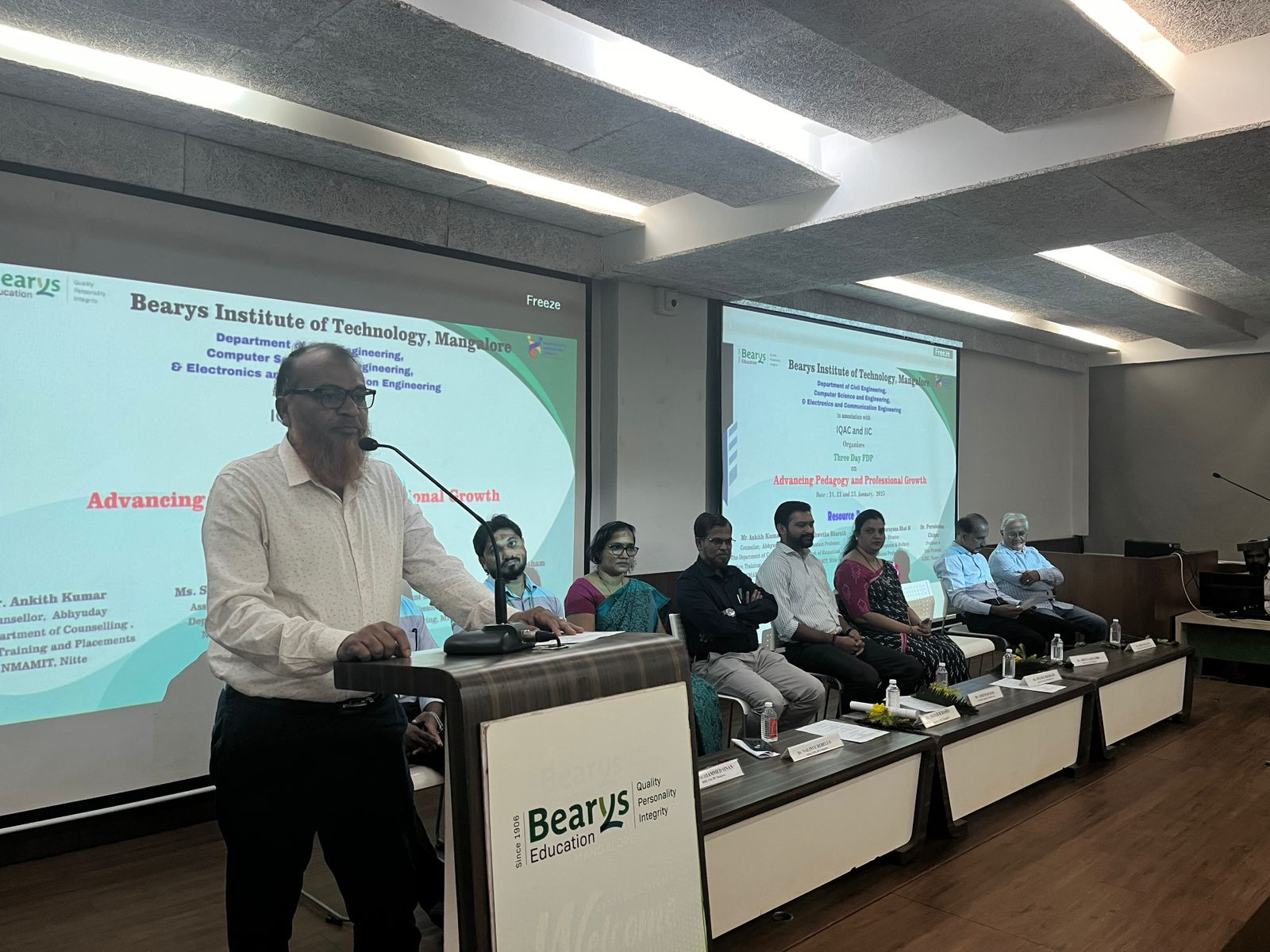
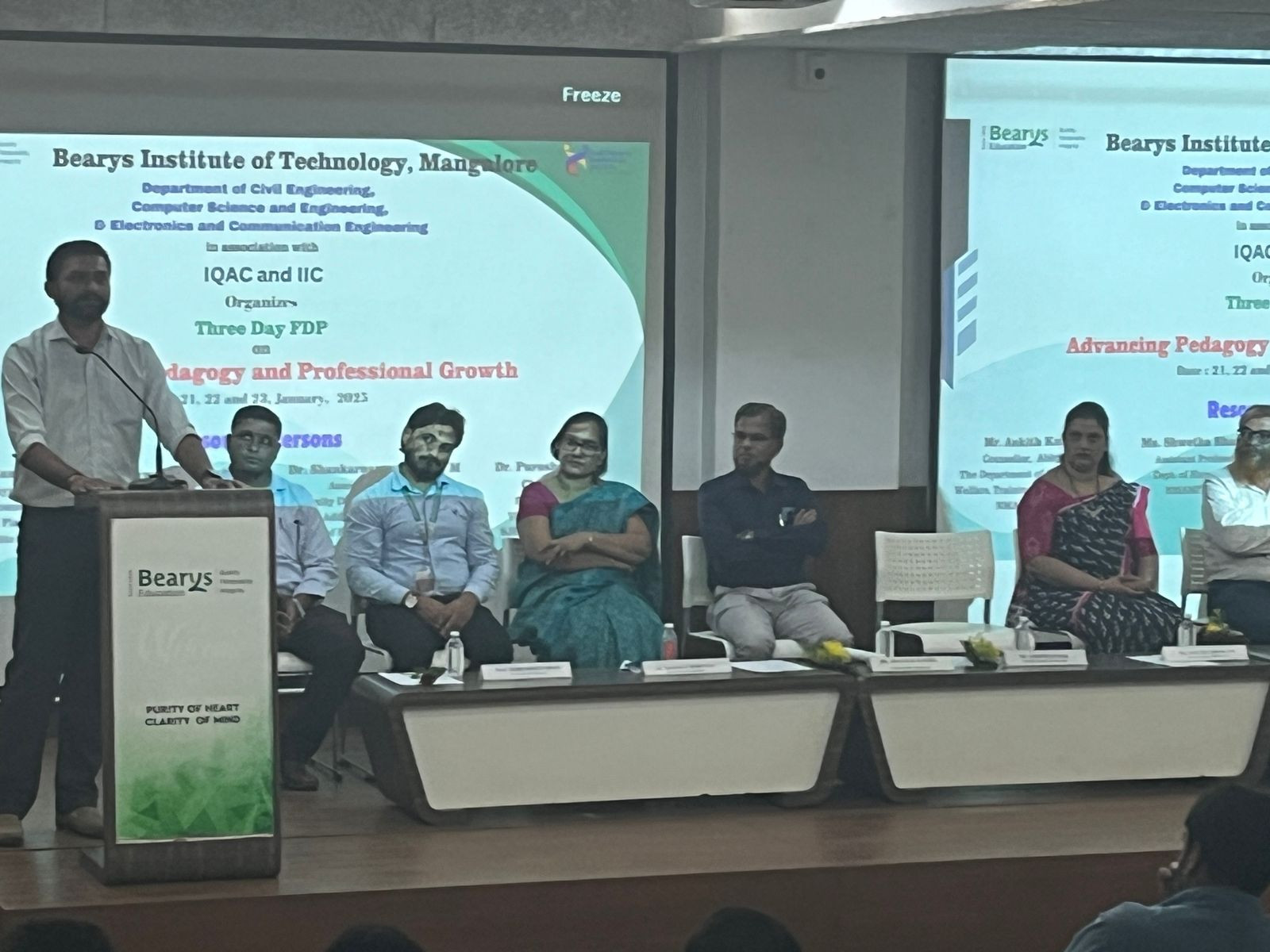
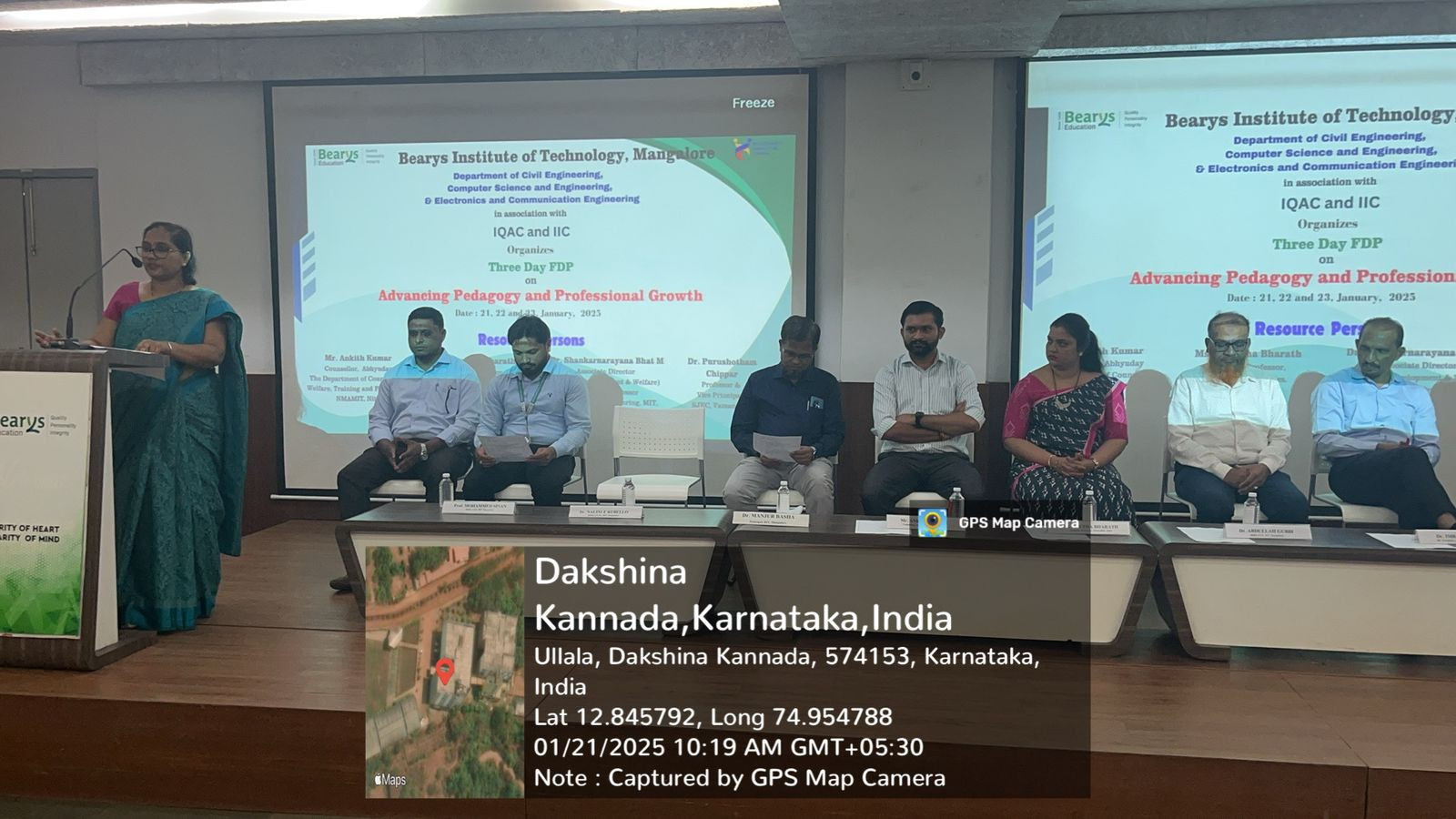
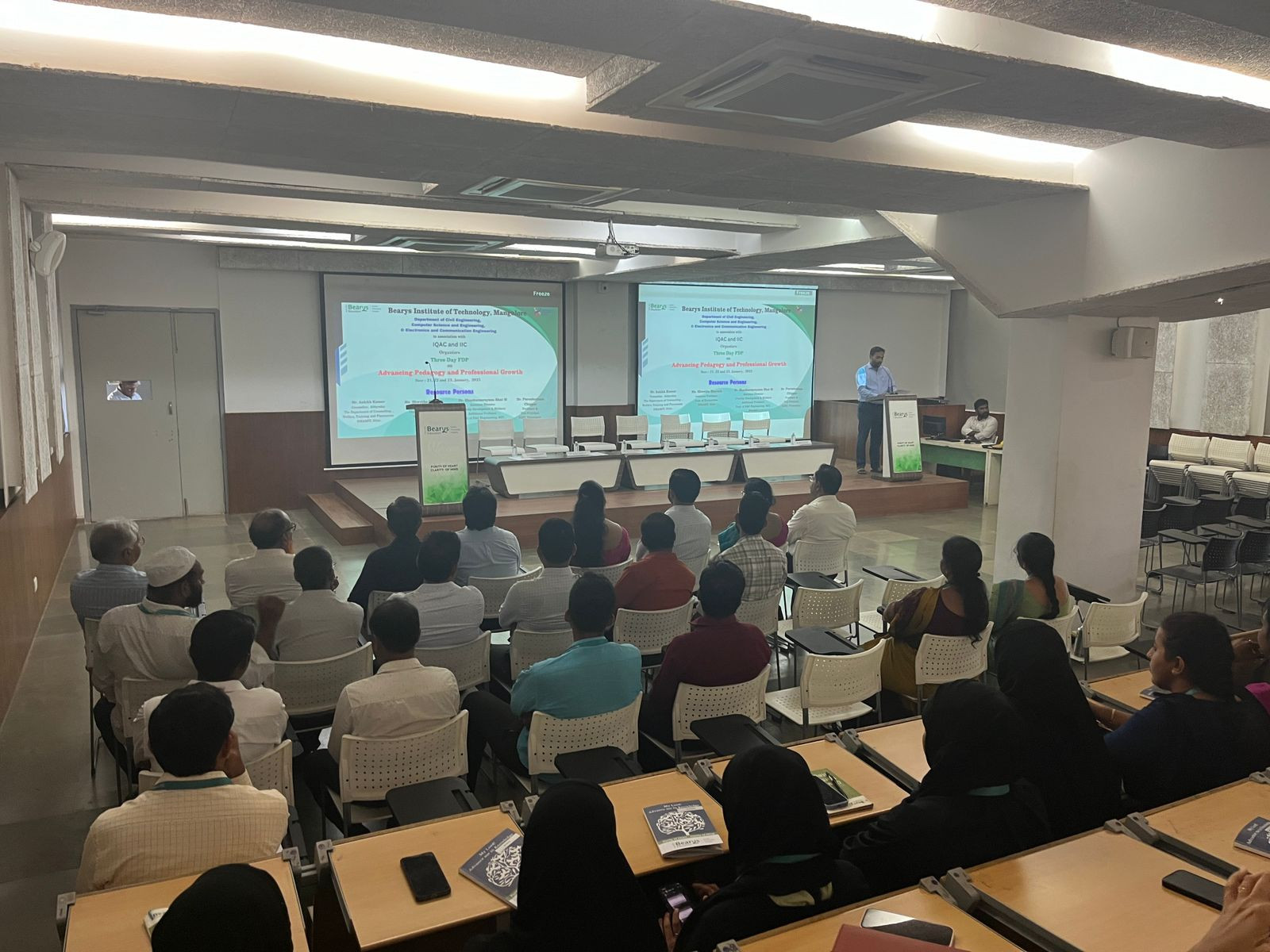
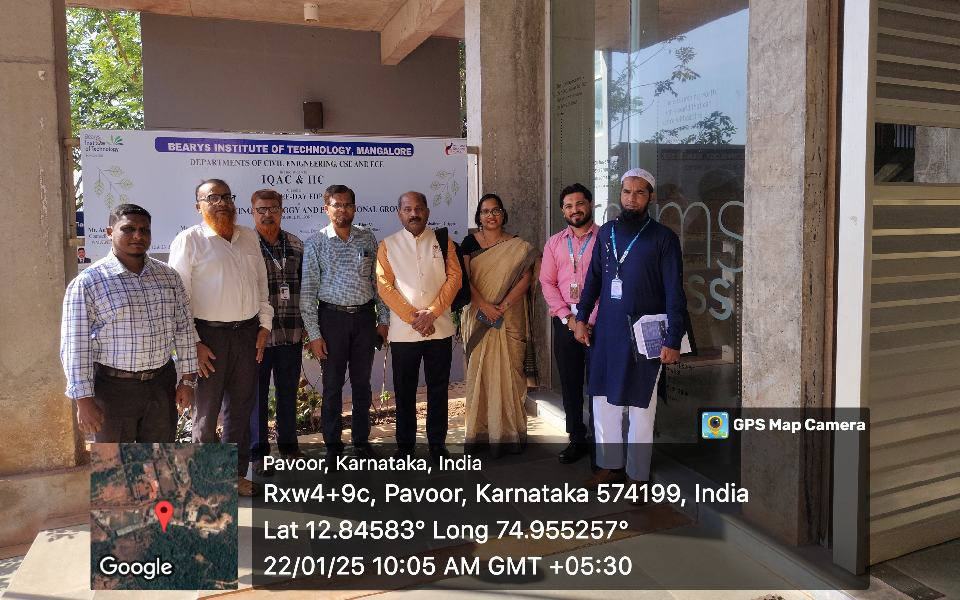
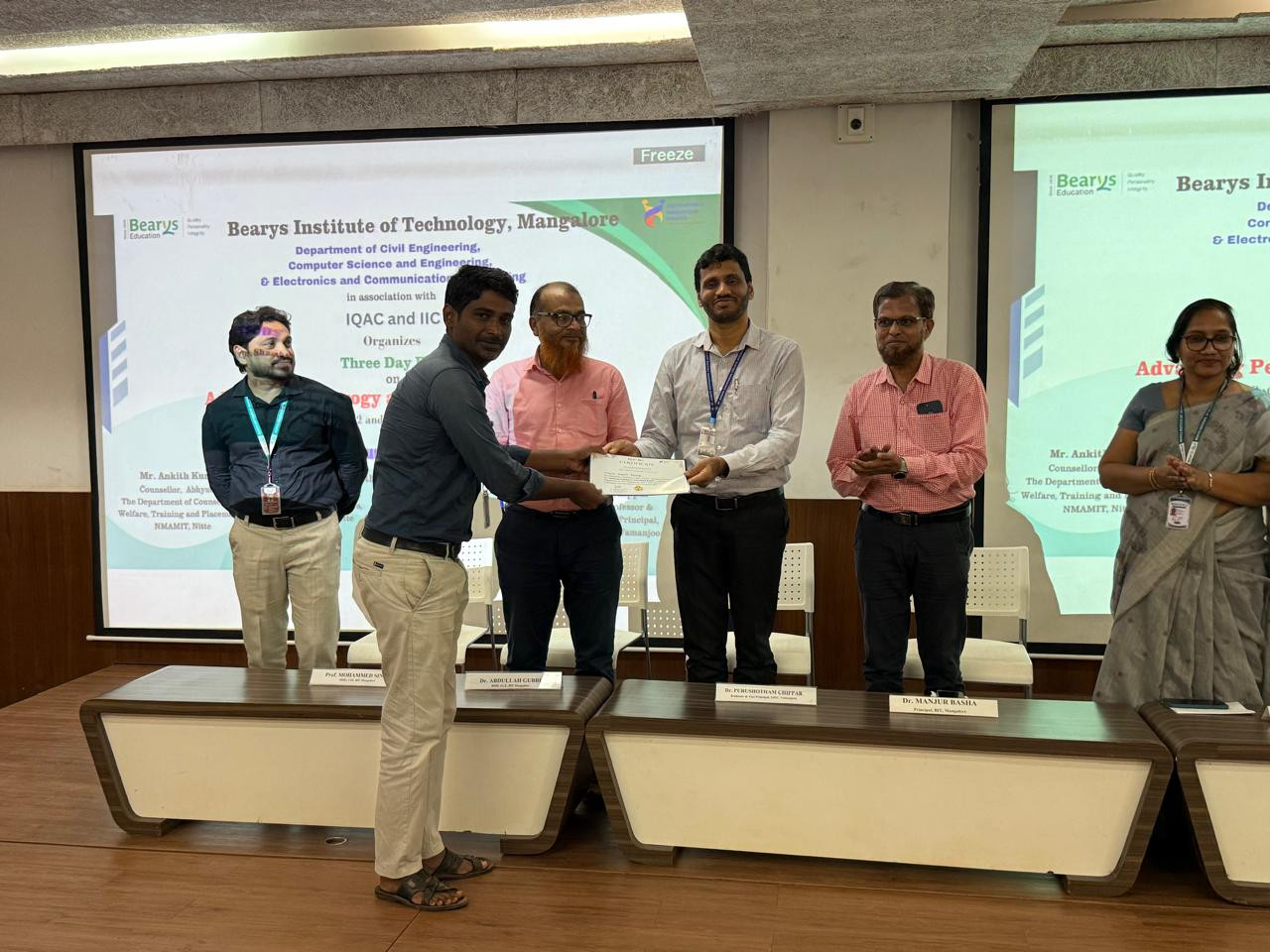
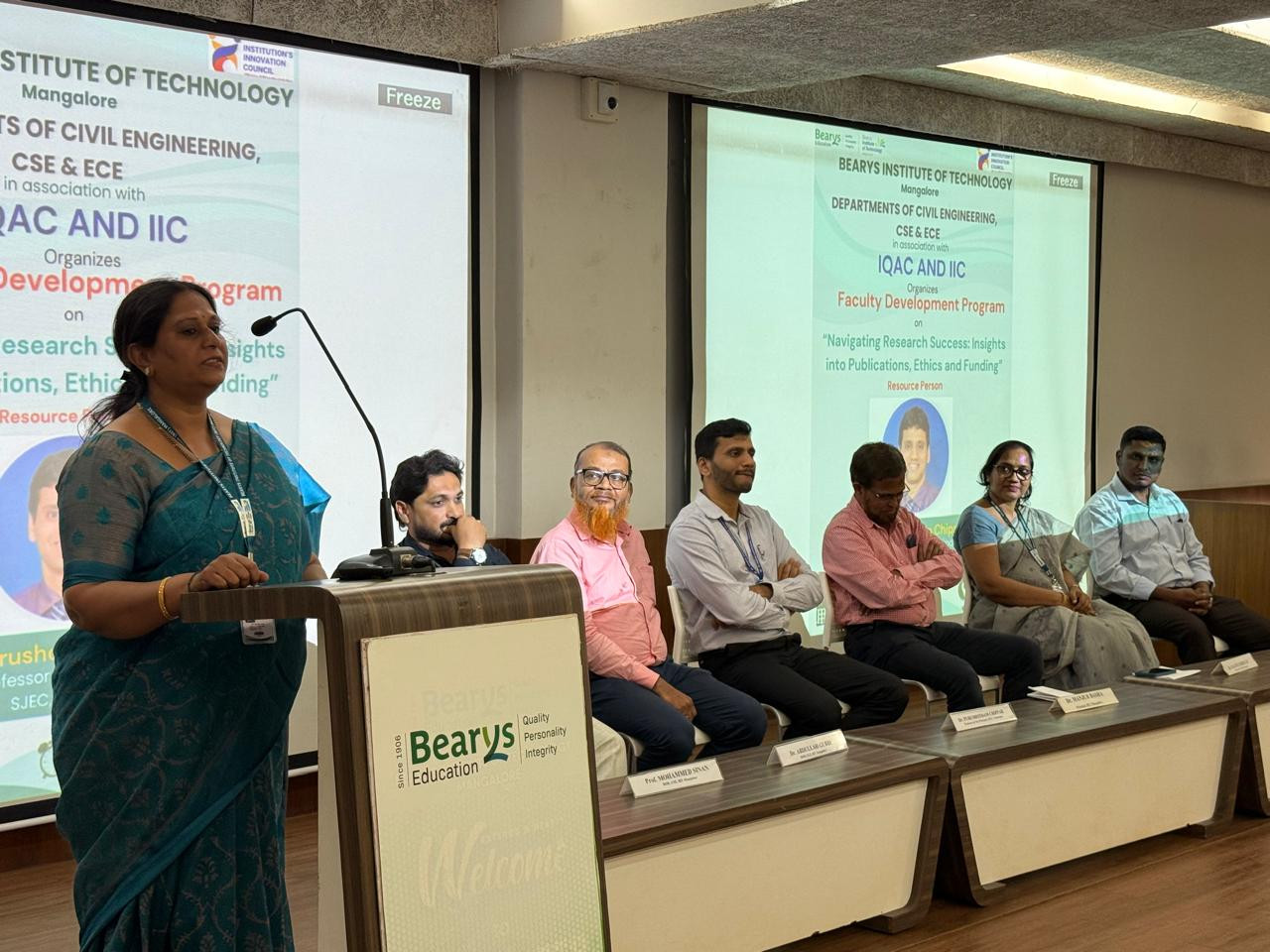
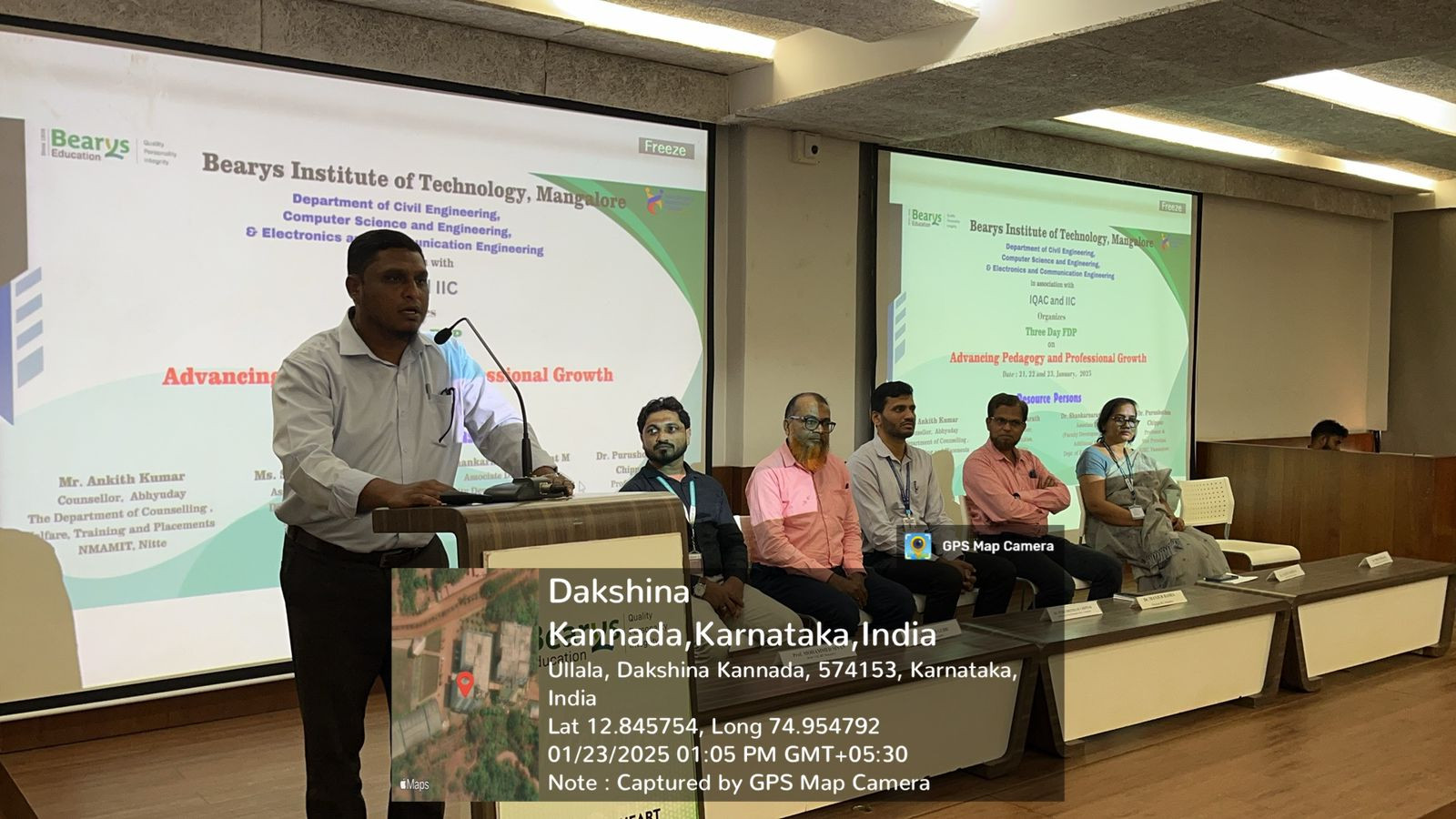
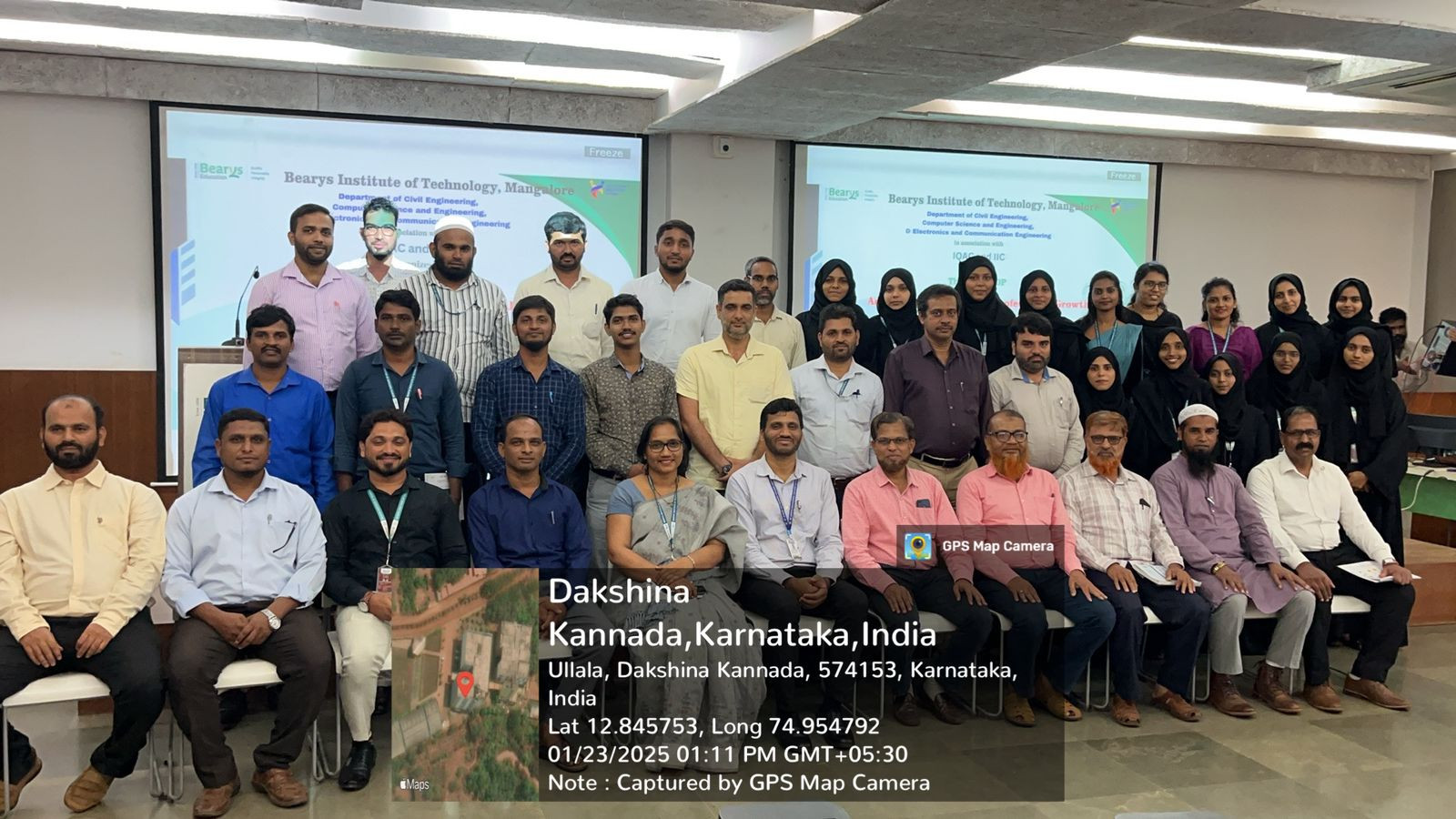
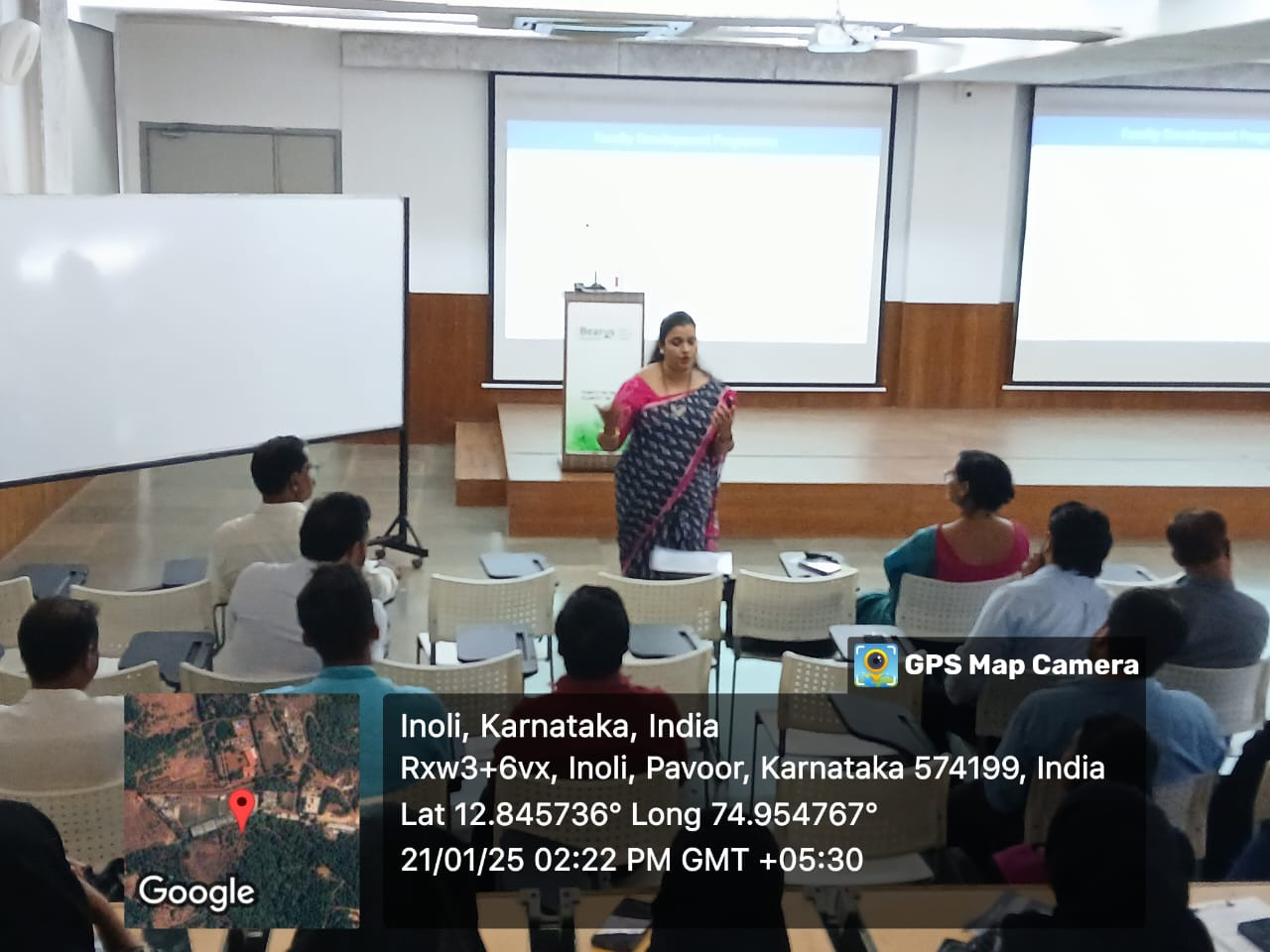
Mangalore, January 21, 2025: A three-day Faculty Development Program (FDP) titled “Advancing Pedagogy and Professional Growth” was inaugurated on January 21, 2025,and concluded on 23rd January 2025 at the Bearys Institute of Technology (BIT), Mangalore. The event was jointly organized by the departments of Civil Engineering, Computer Science and Engineering, and Electronics and Communication Engineering, in collaboration with the Internal Quality Assurance Cell (IQAC) and the Institution’s Innovation Council (IIC).
Dr. Nalini E. Rebello, Head of IQAC, delivered the welcome address, outlining the program’s goals and the need for adopting innovative teaching methodologies to meet the challenges of modern education. The event was graced by the presence of department heads and principals from affiliated institutions. Dr. S.I. Manjur Basha, Principal of BIT, highlighted the importance of professional development programs in shaping faculty members for holistic growth and impactful teaching.
Day 1 Highlights
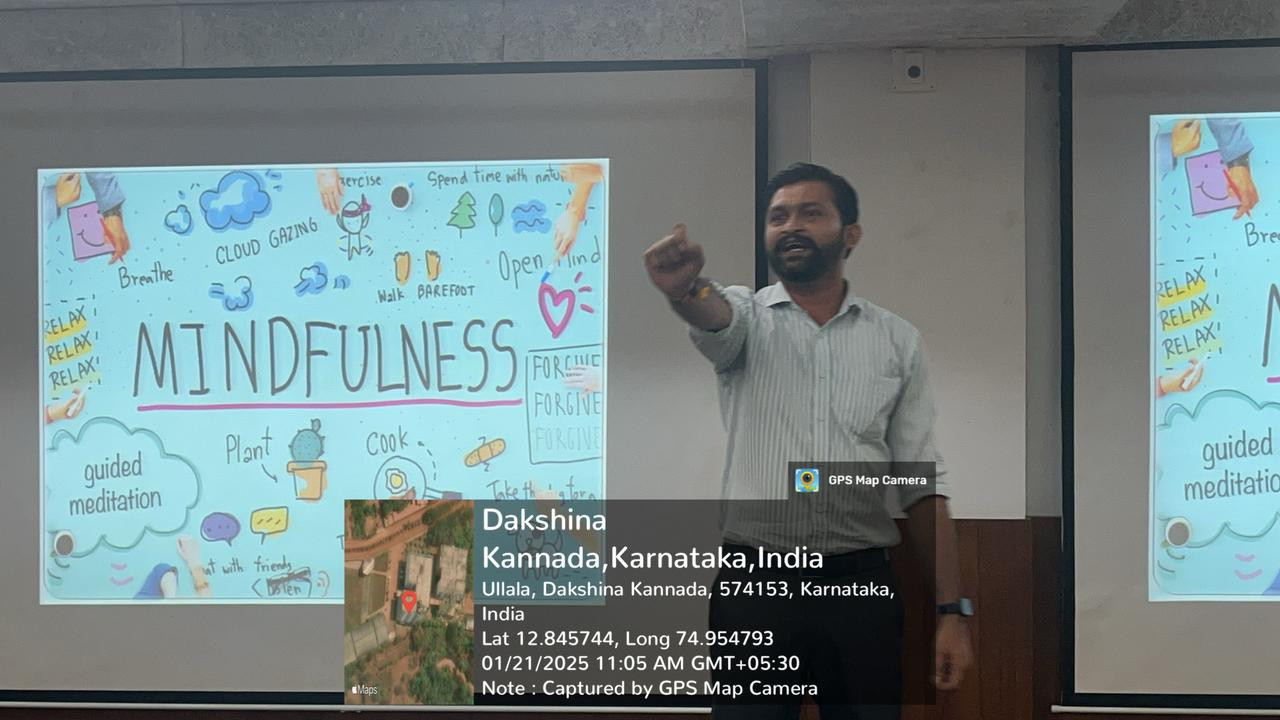
First Half: Mindfulness for Effective Teaching Proficiency
The day began with an engaging session by Mr. Ankith Kumar on strategies for stress management, integrating technology breaks, and fostering empathy towards students. Participants were introduced to mindfulness practices and self-care routines, coupled with interactive exercises that provided practical tools to enhance their teaching proficiency and overall well-being.
Second Half: Teaching Skills for Effective Learning
In the afternoon, Ms. Shwetha Bharath conducted a session that focused on innovative teaching techniques, such as activity-based learning, improving communication, and designing engaging lesson plans. Participants explored the importance of constructive feedback and creative strategies to boost classroom interaction and student engagement.
Day 2 Highlights
Day 2 featured an enlightening session on Outcome-Based Education (OBE) by Dr. Shankarnarayana Bhat, Professor of the ECE Department, MIT, Manipal. The session provided a detailed understanding of OBE’s principles, frameworks, and its role in bridging the gap between academic outcomes and industry expectations. Faculty members gained practical insights into aligning curriculum objectives with measurable student achievements.
Day 3 Highlights
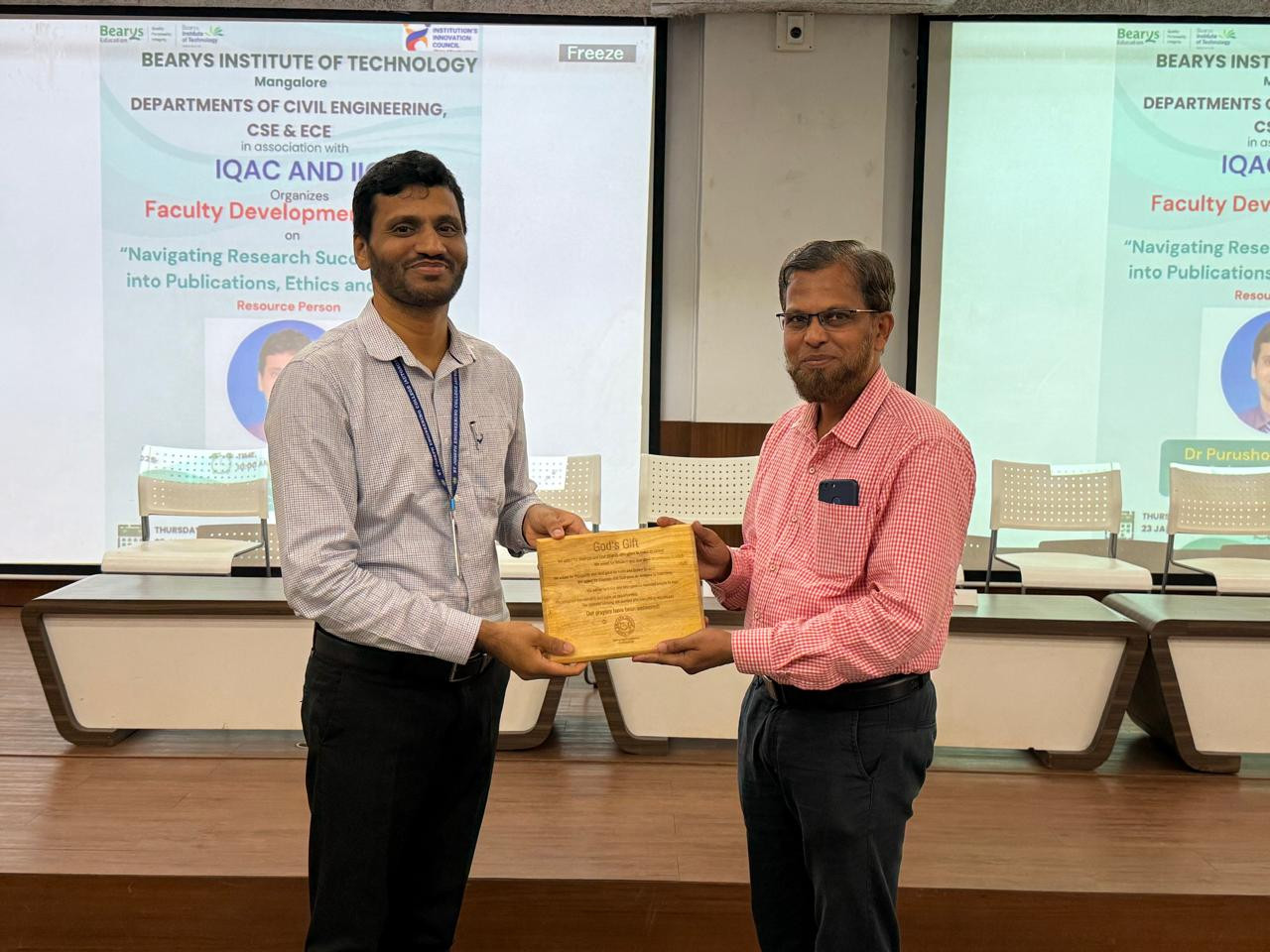
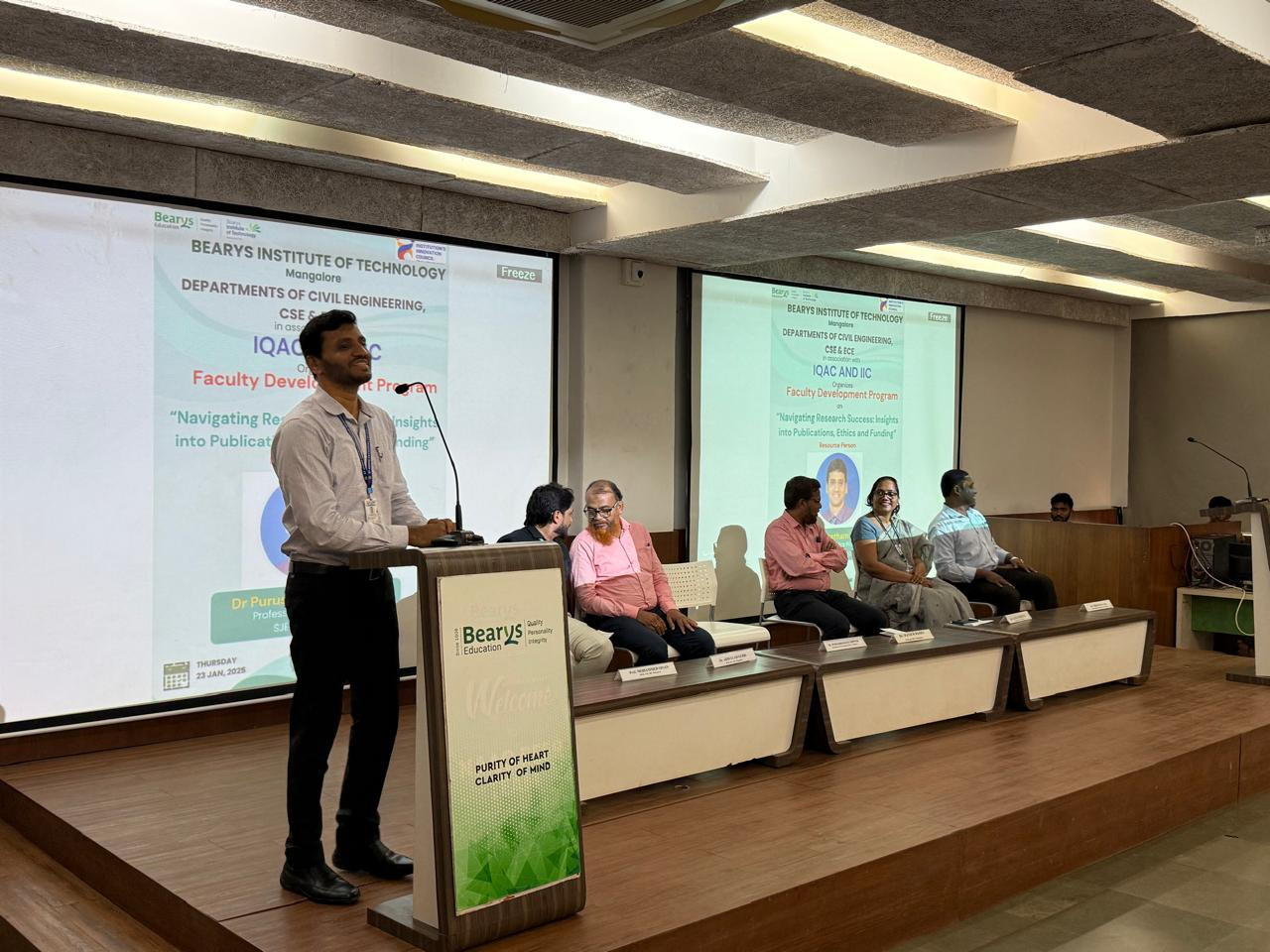
On Day 3, Dr. Purushotham Chippar, Professor at SJEC, Mangalore, delivered a thought-provoking session on “Navigating Research Success: Insights into Publications, Ethics, and Funding.” Dr. Purushotham Chippar elaborated the need for doing Research. Research should be taken up as passion and to balance work and other academic duties there should be a fire within oneself. He emphasized the importance of adhering to ethical research practices, identifying funding opportunities, and producing impactful publications.
He gave ideas how to prepare Research paper starting from Methodology to Abstract writing the various steps were explained. The process of writing Research paper, Submission and Review of papers, and revising takes time but with focused approach and setting deadlines everything is possible.
Further he gave ideas to apply for research funding/ patents, and to select topics from the vast pool of resources using different search engines. The session also included strategies to improve research visibility and collaborative opportunities.
The program concluded with a vote of thanks by Dr. Imran Mokashi, IIC Coordinator, who acknowledged the contributions of speakers, organizers, and participants in making the event a success. The master of ceremony was , Prof. Joyson M. from the Basic Science Department.

Let the Truth be known. If you read VB and like VB, please be a VB Supporter and Help us deliver the Truth to one and all.
Congress using hijab issue to pacify minority anger, alleges Karnataka LoP R Ashoka

Bengaluru: Leader of Opposition in the Assembly R. Ashoka has accused the Congress government of using the hijab issue to placate what he described as discontent among minority voters after the Davanagere by-election.
In a post on X on Wednesday, Ashoka alleged that the state government, instead of addressing issues such as price rise, corruption, farmers’ distress and law and order, was attempting to retain its minority vote base by reviving the hijab issue.
Referring to the 2022 dress code introduced by the BJP government, which prohibited hijab in schools and colleges, Ashoka said the Karnataka High Court had upheld the policy and emphasised the importance of discipline in educational institutions.
He questioned the Congress government’s move to revisit the issue and asked whether setting aside the court-backed policy to benefit one community could be described as secularism.
Ashoka further alleged that while the government was willing to permit hijab, it continued to prohibit saffron shawls.
He accused the government of dividing students on religious lines rather than treating schools and colleges as spaces of equality.
Drawing a comparison with Mamata Banerjee’s government in West Bengal, Ashoka claimed that excessive appeasement politics had harmed the state and warned that the Congress in Karnataka could face a similar political response.
He said voters in Karnataka would teach the Congress a lesson for what he termed “vote-bank politics” and for compromising constitutional and judicial principles.


