
Advocate KV Dhananjay urges Kerala govt. to pass resolution regarding Dharmasthala mass burials case

Bengaluru: Stating that there are reasons that will become evident soon, noted Supreme Court advocate Dhananjay KV, on Wednesday issued a press statement that the Kerala government should pass a resolution in the state assembly that the Dharmasthala Mass Burial Case be investigated to the highest standard of honesty, integrity and competence.
The statement further urged the Kerala government to pass the resolution also stating that the Kerala Police will be afforded the opportunity to assist the aforesaid investigation.
This comes after the complainant in Dharmasthala mass burials case had submitted a detailed complaint to Supreme Court Advocate KV Dhananjay, along with copies of his Aadhaar card, voter ID registered in Dharmasthala-Belthangady, and an ID card issued by the Dharmasthala temple administration, to safeguard the truth in the event of his death or disappearance.
The advocate further recommended that the Kerala Police be allowed to assist in the ongoing investigation, which would require the state government to approach the Hon’ble Supreme Court of India. “It should do so without any delay,” Dhananjay stated in his letter, suggesting that the Kerala government may already be aware of certain crucial facts or could soon come to know of them.
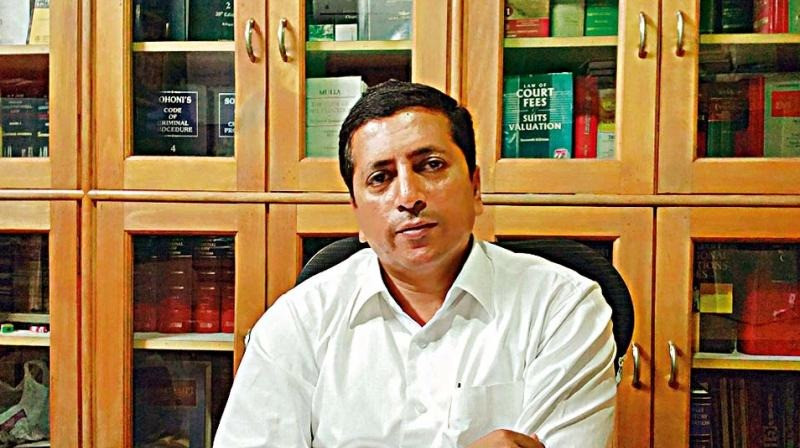
Advocate KV Dhananjay
The case has come under national spotlight following a chilling confession made by a former sanitation worker affiliated with the Dharmasthala temple administration. The individual recently told Dakshina Kannada police that he was coerced into burning and burying the bodies of multiple women, including minor girls, who had allegedly been raped and murdered over a 16-year span.
The worker, whose identity is currently being protected, claimed to have buried more than 100 bodies in and around Dharmasthala under pressure from undisclosed perpetrators. On July 11, he submitted a sworn statement before the Belthangady court, even bringing a skeletal remain, which has since been handed over to authorities for forensic testing. The whistleblower has sought protection for himself and his family, fearing retaliation.
According to advocates Ojaswi Gowda and Sachin Deshpande, who are representing the complainant, the whistleblower also submitted photographic evidence of recently exhumed remains to the police.
Let the Truth be known. If you read VB and like VB, please be a VB Supporter and Help us deliver the Truth to one and all.
Bangladesh court sentences Sheikh Hasina to 10 years in jail in corruption cases

Dhaka (PTI): A Bangladesh court on Monday sentenced deposed Prime Minister Sheikh Hasina to 10 years in jail in two separate corruption cases related to alleged irregularities in allocations of land in a government housing project.
Dhaka Special Judge’s Court-4 Judge Rabiul Alam handed down the verdicts, sentencing Hasina to a total of 10 years’ imprisonment — five years in each case, state-run BSS news agency reported.
The court sentenced 78-year-old Hasina, her nephew Radwan Mujib Siddiq, and her nieces, Tulip Rizwana Siddiq and Azmina Siddiq, and others in the cases over alleged irregularities in the allocation of plots under the Rajuk New Town Project in Purbachol.
The judgment was pronounced at around 12.30 pm.
Tulip Siddiq was sentenced to four years’ imprisonment — two years in each case — while Radwan Mujib Siddiq and Azmina Siddiq were each sentenced to seven years’ imprisonment in both cases.
Rajuk member Mohammad Khurshid Alam, the only accused to surrender before the court, was sentenced to one year’s imprisonment in each case, totalling two years.
The court also fined all convicted persons Tk1 lakh each and ordered them to serve an additional six months in prison in default of payment.
Hasina has been living in India since she fled Bangladesh on August 5 last year in the face of the massive protests. She was earlier declared a fugitive by the court.
The cases were filed by the Anti-Corruption Commission (ACC) over alleged abuse of power in the allocation of two 10-katha plots.
According to the prosecution, the accused manipulated the allocation process and violated existing rules and regulations of the Rajdhani Unnayan Kartripakkha (Rajuk).


