
Vartha Bharati launches Kalyana Karnataka edition, releases 23rd annual special issue in Kalaburagi

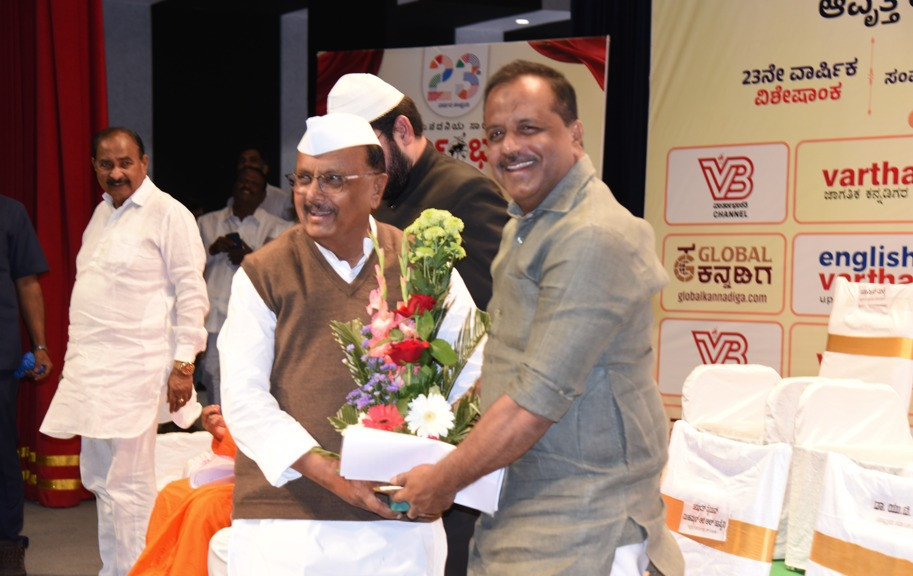
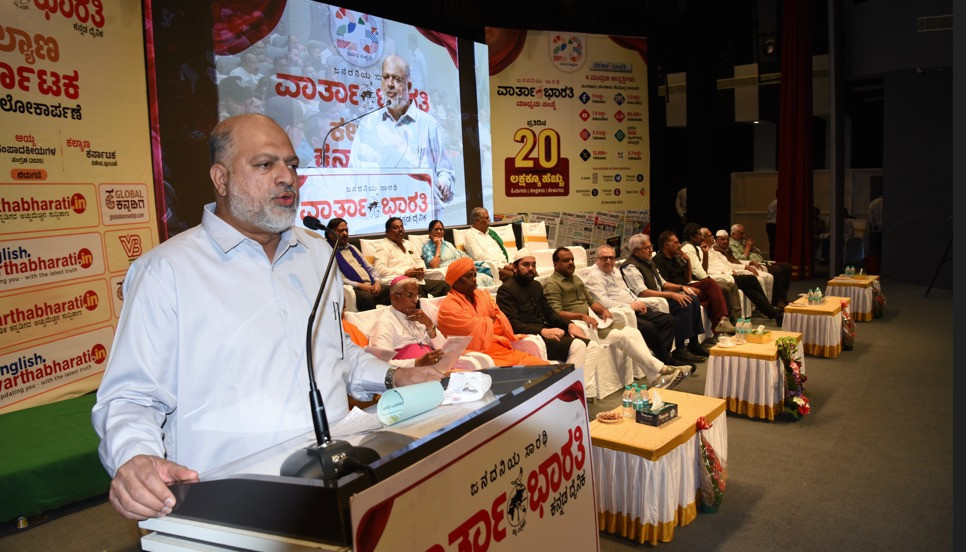
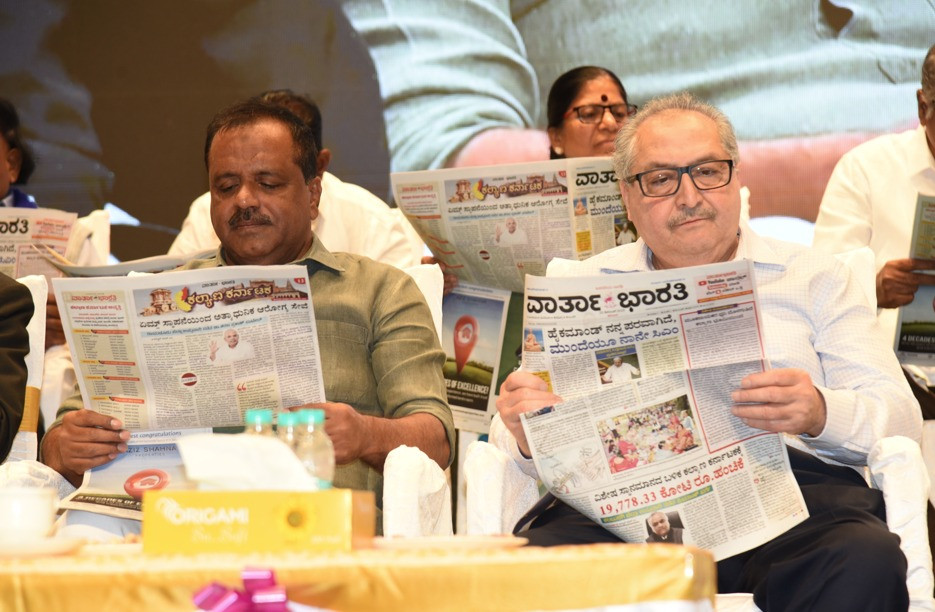
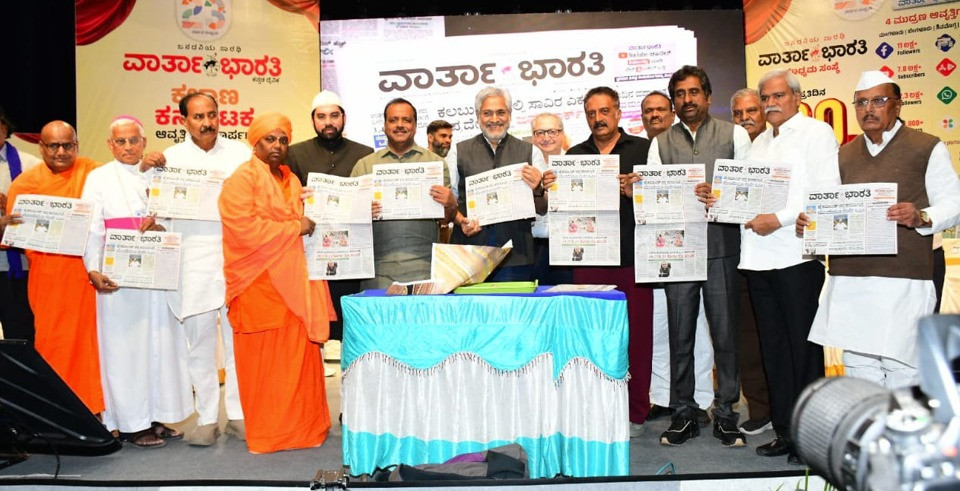
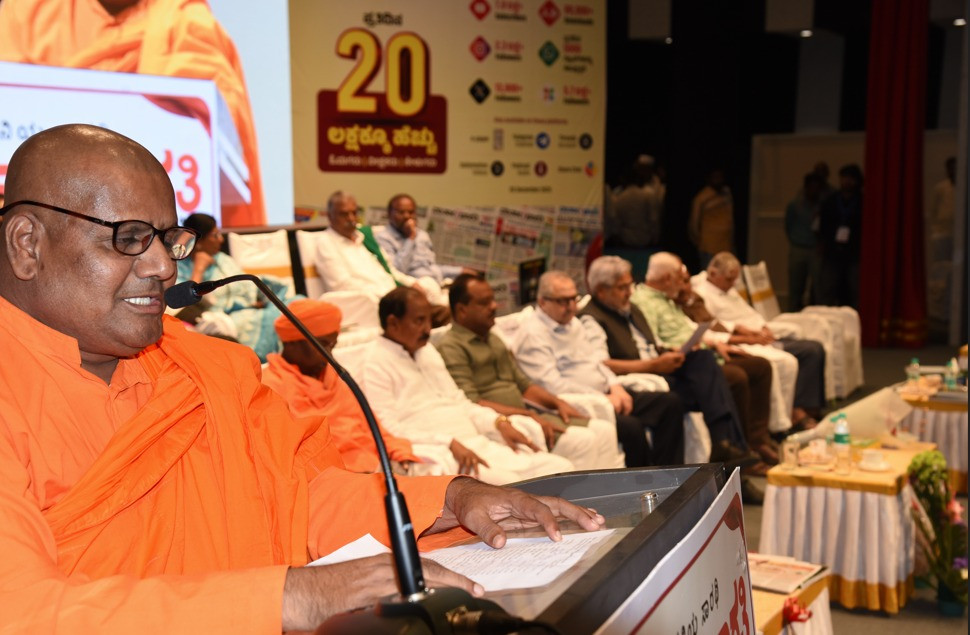
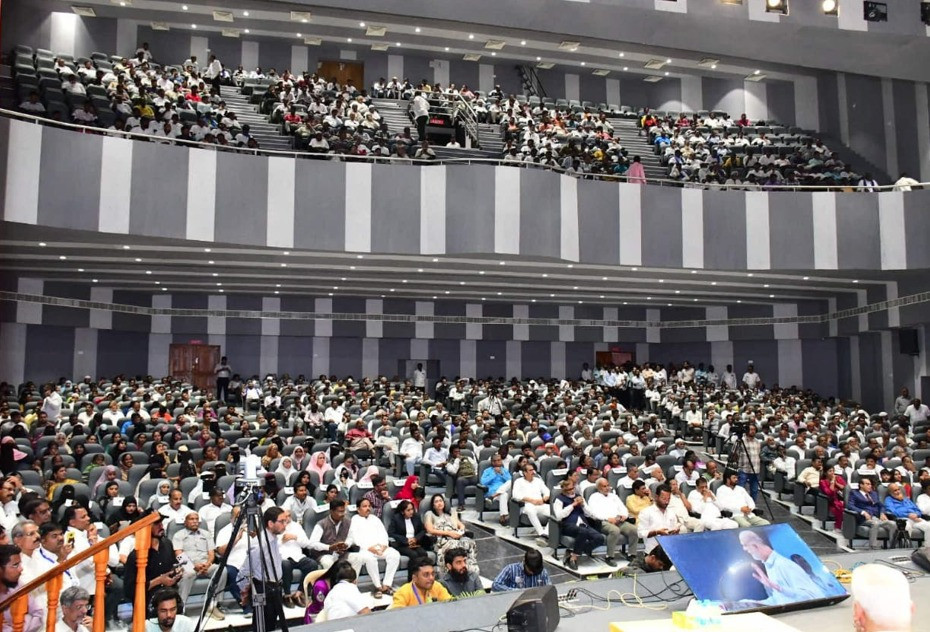
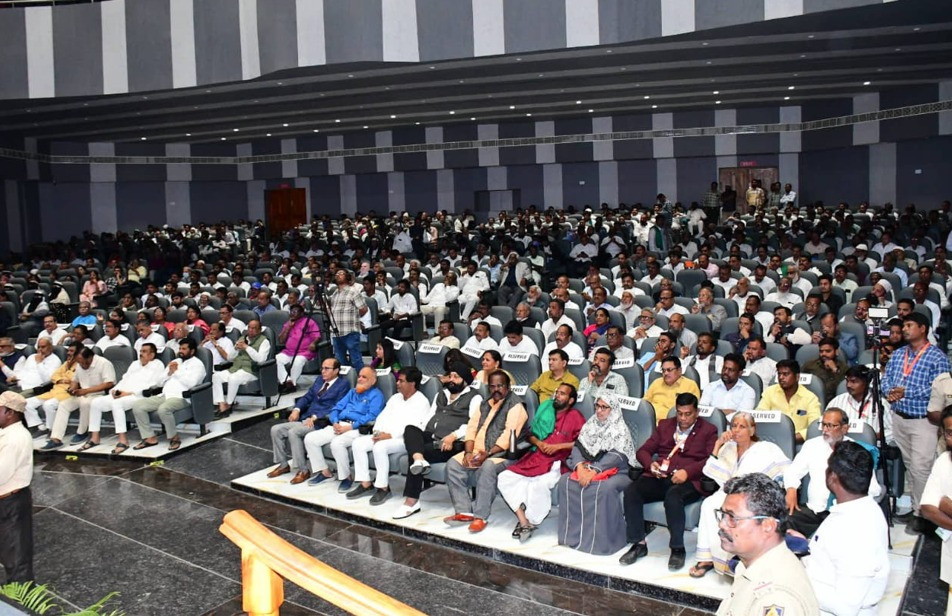
Kalaburagi: The Kalyana Karnataka edition of the Kannada daily Vartha Bharati was formally launched on Saturday at a programme held at Dr S M Pandit Rangamandir in Kalaburagi. The event also marked the release of the newspaper’s twenty-third annual special issue, a compilation of selected editorials, and the Kalyana Karnataka special supplement.
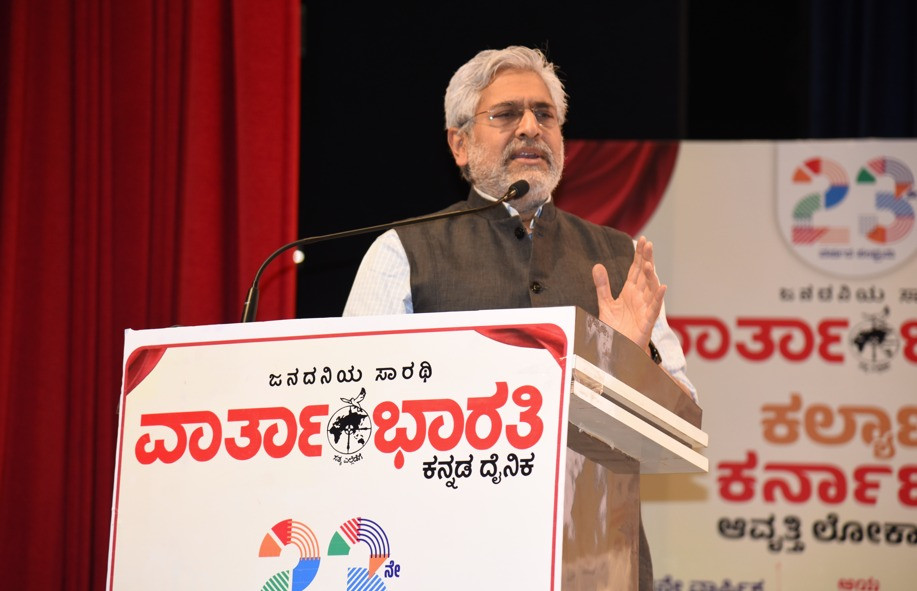
The programme was inaugurated by Karnataka Legislative Assembly Speaker U T Khader. The Kalyana Karnataka edition of Vartha Bharati was unveiled by Siddharth Varadarajan, Editor-in-Chief of The Wire.
The twenty-third annual special issue was released by multilingual actor Prakash Raj. The book compiling selected editorials of Vartha Bharati was released by B R Patil, Vice-Chairperson of the State Policy and Planning Commission and MLA from Aland. The Kalyana Karnataka special supplement was released by Rahim Khan, Minister for Municipal Administration and Haj.
ALSO READ: Kalaburagi: ‘Vartha Bharati’ Kalyana Karnataka edition launched
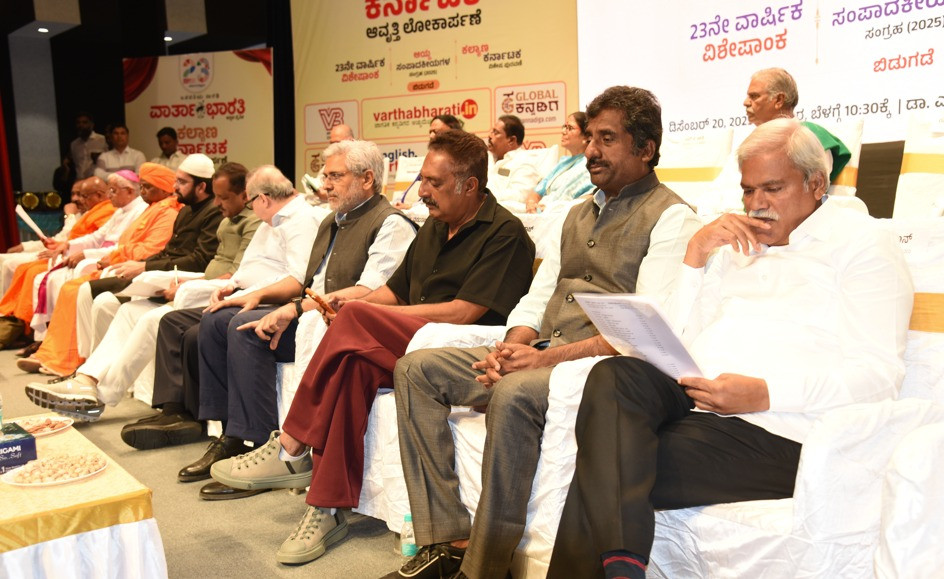
Chairperson of the State Waqf Board and Sajjada Nashin of the Khwaja Bande Nawaz Dargah, Hazrat Syed Mohammed Ali Al Husseini, and Kalaburagi South MLA Allamaprabhu Patil were present as chief guests.
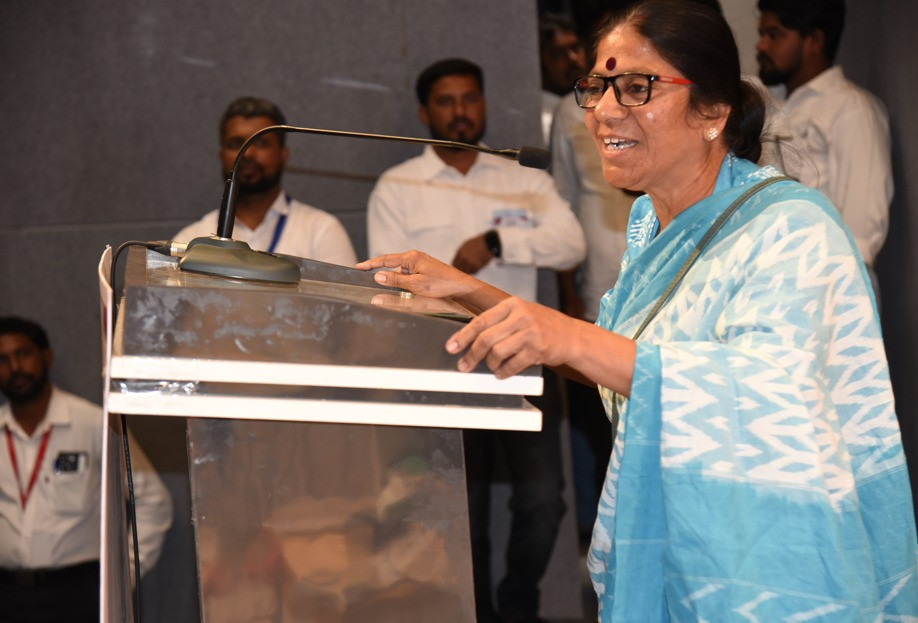
Among the special invitees on the dais were Koraneshwara Mahaswamiji of the Tontadarya Anubhava Mantapa, Aland; Bishop Rev Fr Robert Miranda of Kalaburagi; Bhante Varajyothi of Anandur; social activist K Neela; farmers’ leader Chamarasa Mali Patil; DSS state convenor D G Sagar; and activist and singer Ambanna Arolikar.
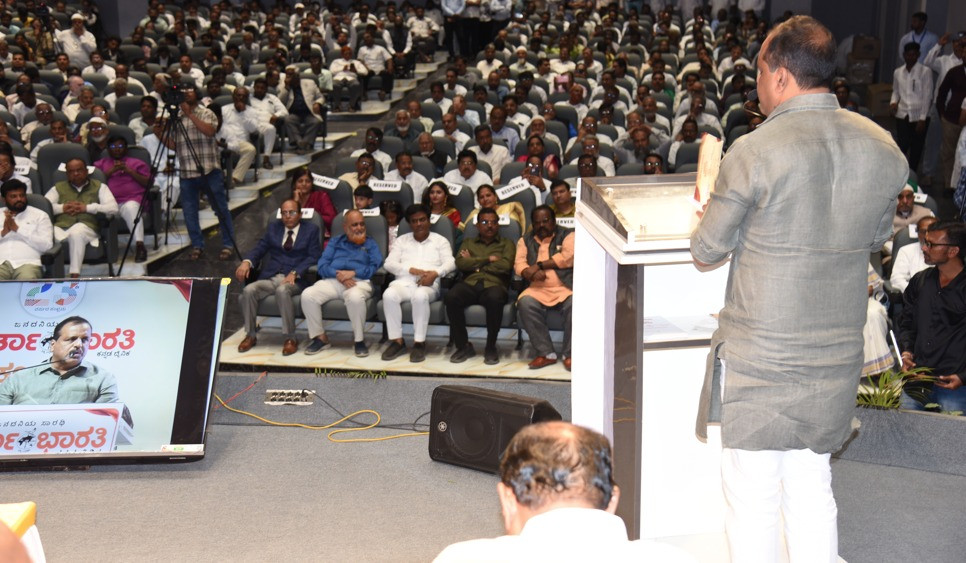
Speaking on the occasion, Assembly Speaker U T Khader said Vartha Bharati had emerged as the voice of the weak and the voiceless in society and had earned the love, trust and confidence of people across the state. He said the newspaper had carved out a distinct identity in the media landscape and expressed happiness that it was now reaching the Kalyana Karnataka region. He added that Vartha Bharati had remained free from political pressures and inducements and expressed hope that it would continue to stand as a support system for the distressed.
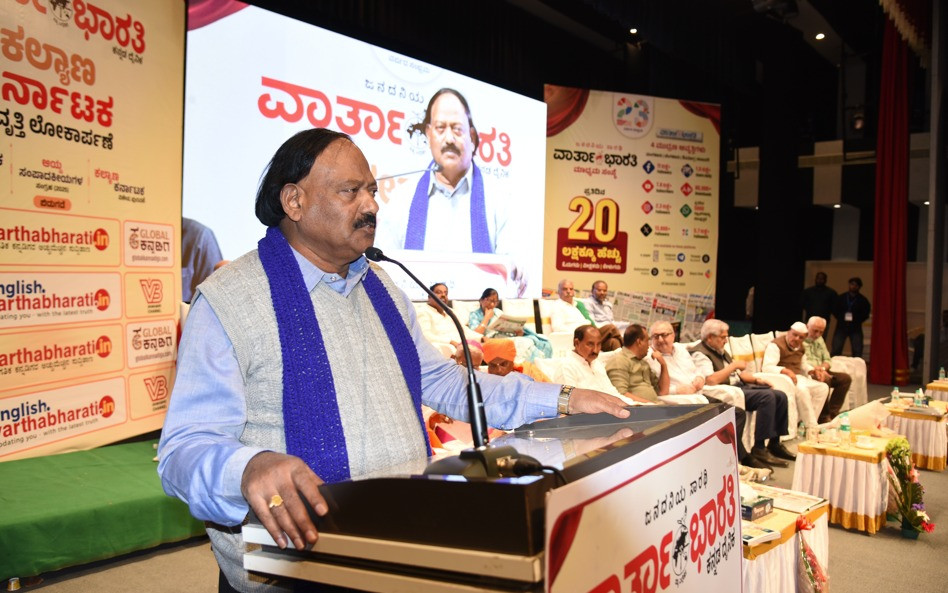
B R Patil said running a newspaper in the present times was not easy, as the media sector had increasingly turned into an industry driven by profit. Amidst such challenges, he said, Vartha Bharati had maintained integrity, honesty and commitment throughout its twenty-three-year journey. He expressed confidence that the newspaper would continue on the same path. Referring to Kalaburagi, he noted that the region frequently witnessed agitations due to the large number of unresolved issues, and said Vartha Bharati should continue to bring the problems and suffering of the people to the attention of the government and contribute to finding solutions.
Let the Truth be known. If you read VB and like VB, please be a VB Supporter and Help us deliver the Truth to one and all.
SC stays UGC regulation pertaining to definition of caste discrimination

New Delhi (PTI): The Supreme Court on Thursday stayed a recent University Grants Commission (UGC) regulation after various pleas were filed contending that the Commission adopted a non-inclusionary definition of caste-based discrimination and excluded certain categories from institutional protection.
A bench of Chief Justice Surya Kant and Justice Joymalya Bagchi issued notices to the Centre and the UGC on the pleas challenging the regulation.
The new regulations mandating all higher education institutions to form "equity committees" to look into discrimination complaints and promote equity were notified on January 13.
The University Grants Commission (Promotion of Equity in Higher Education Institutions) Regulations, 2026, mandated that these committees must include members of the Other Backward Classes (OBC), the Scheduled Castes (SC), the Scheduled Tribes (ST), persons with disabilities, and women.
The new regulations replaces the UGC (Promotion of Equity in Higher Educational Institutions) Regulations, 2012, which was largely advisory in nature.
The pleas assailed the regulation on the grounds that caste-based discrimination is defined strictly as discrimination against members of the SCs, STs and OBCs.
It said that by limiting the scope of "caste-based discrimination" only to SC, ST and OBC categories, the UGC has effectively denied institutional protection and grievance redressal to individuals belonging to the "general" or non-reserved categories who may also face harassment or bias based on their caste identity.
Protests were held at various places against the regulations, with student groups and organisations demanding its immediate rollback.


